Short answer
Wet drywall can usually be dried in place when the water was clean, the wall still feels firm, and there's no insulation behind it or the insulation can be dried. It should be cut out when it was soaked by sewage or outside flood water, when it has softened or sagged, when wet insulation is trapped behind it, or when mold has started.
Drywall wicks water up
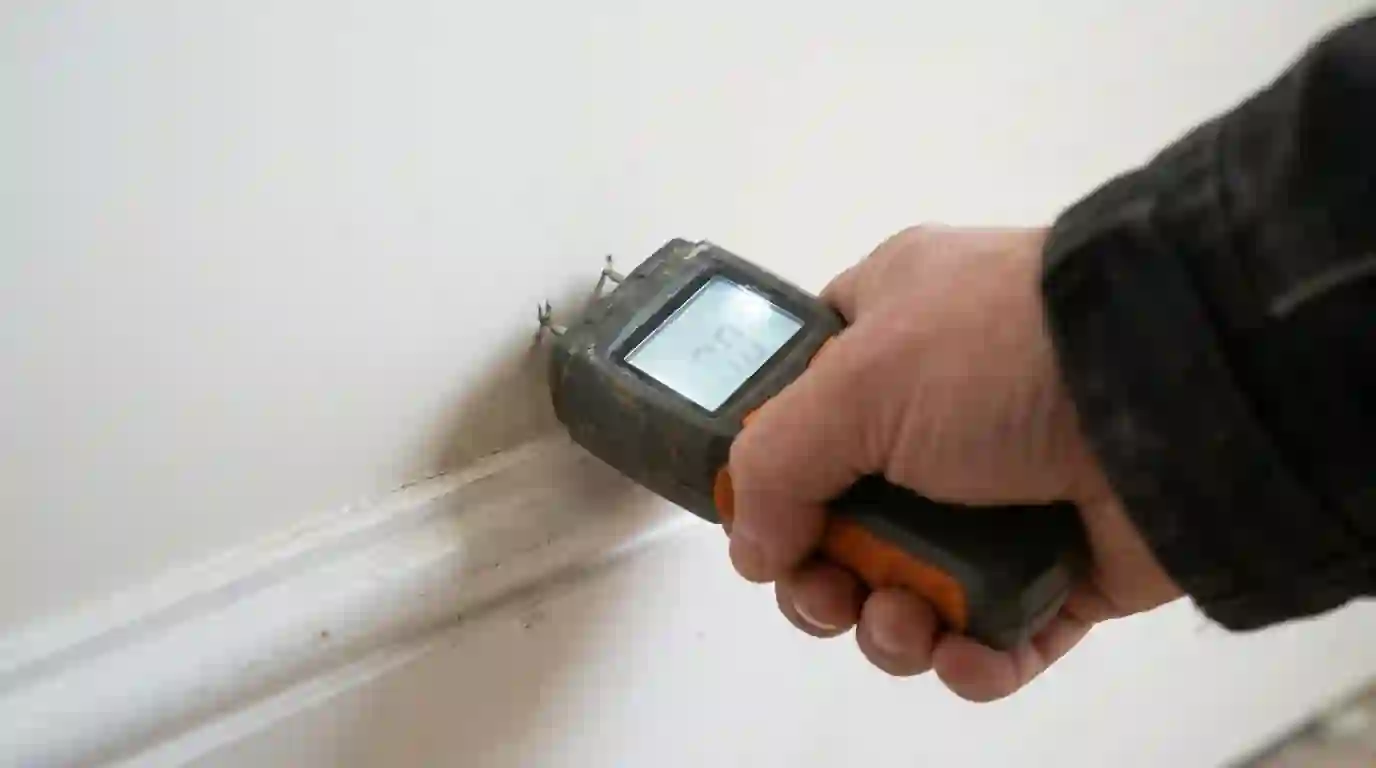
Drywall is a gypsum core between two layers of paper. Standing water on the floor gets drawn up into it like a paper towel, often a foot or more above the water line. That's why a stain on the wall is usually lower than the wet area the meter finds.
The paper facing is also what mold likes to grow on, so how quickly the wall dries matters as much as how wet it got.
When it can stay
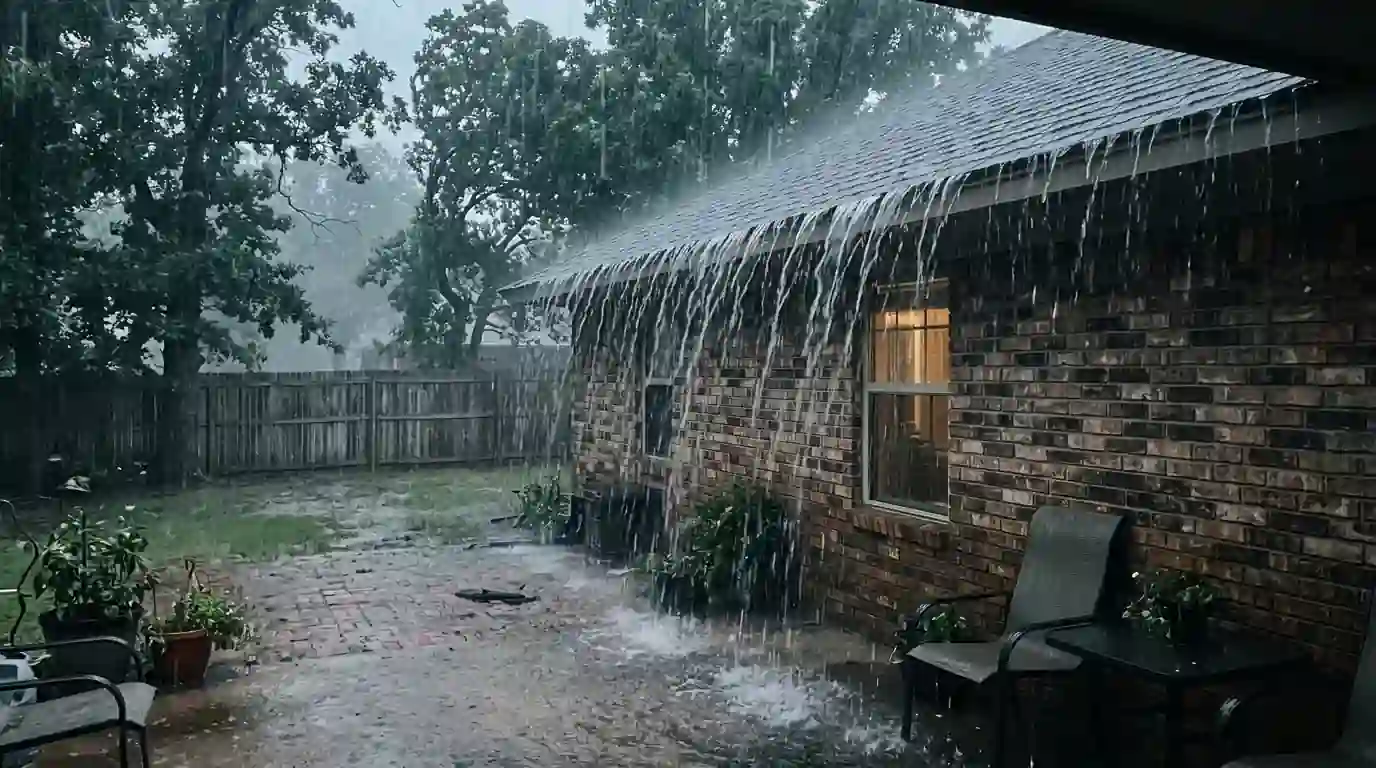
Drywall soaked by clean water, from a supply line or rain through a window, can often be dried in place if drying starts quickly. The wall still feels firm, the paper hasn't delaminated, and the cavity behind it either has no insulation, as with most interior walls, or the insulation can be reached and dried.
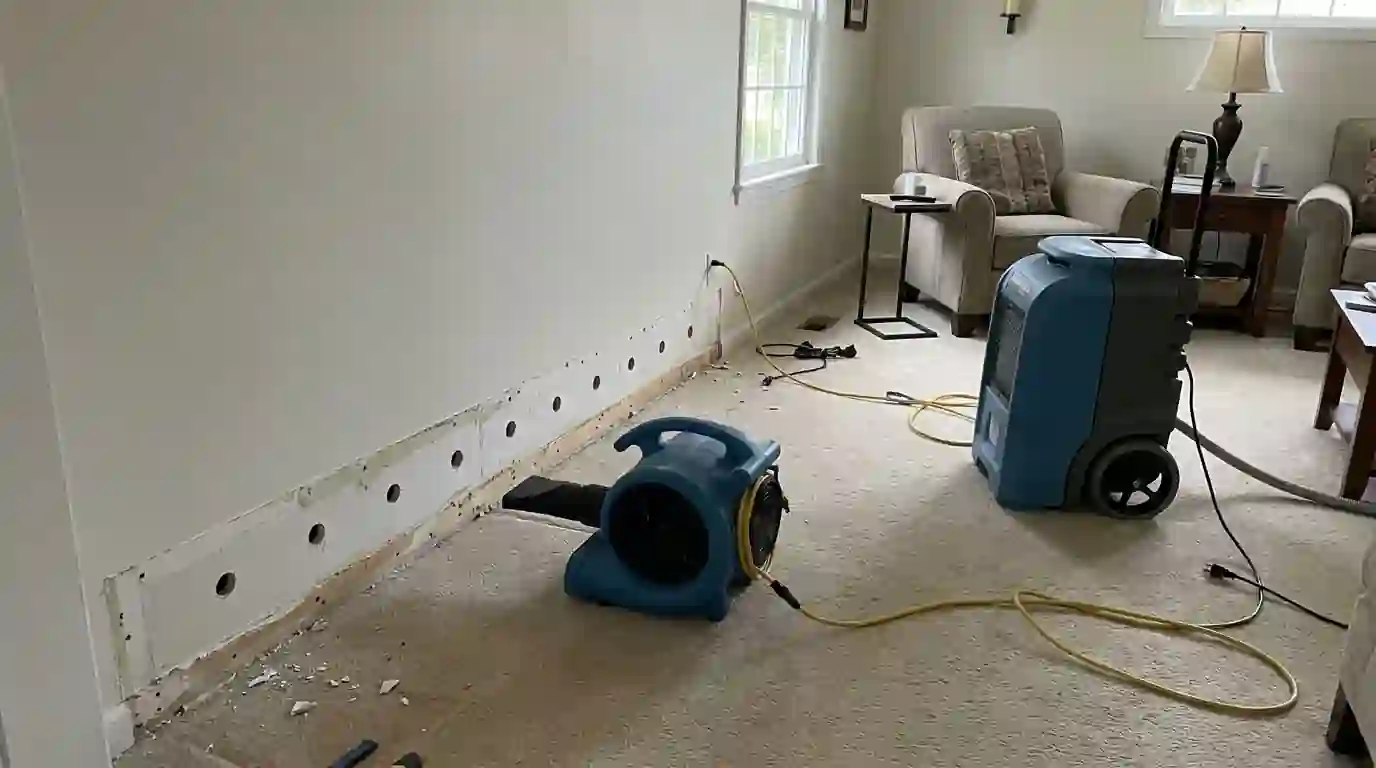
Drying in place usually means taking off the baseboards, sometimes drilling small holes behind where the baseboard sat, and pushing dry air into the cavity while dehumidifiers run in the room.
Water line, open now
Wet wall right now?
Call. The sooner drying starts, the better the odds the wall can stay.
When it has to be cut
Some walls should be opened rather than dried.
- Sewage or outside flood water reached it
- The drywall has softened, crumbled or sagged
- Wet insulation is trapped in an outside wall
- Mold is visible on the surface or suspected behind it
- Drying in place hasn't reached dry readings in a reasonable time
What a flood cut is
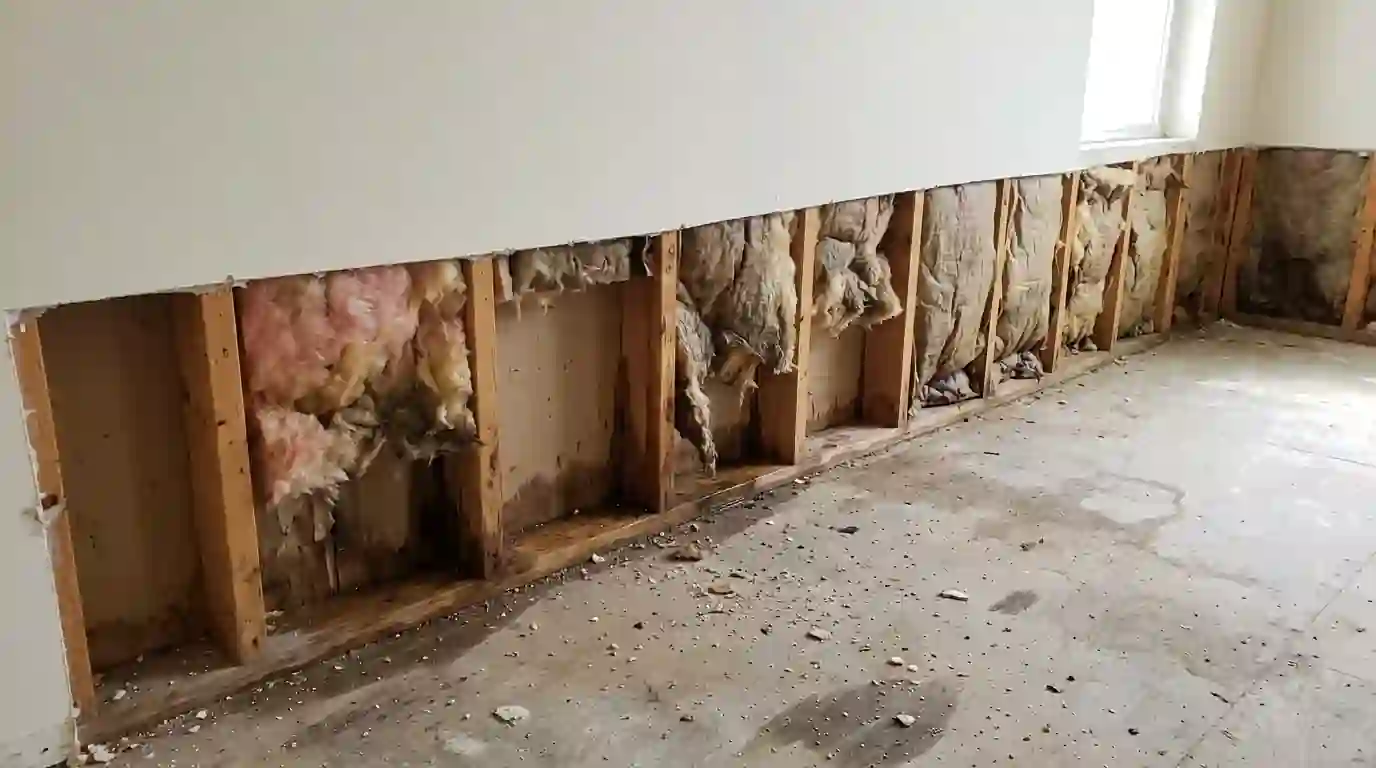
A flood cut is a straight line cut along the wall, usually a couple of feet above the floor or a little above the highest wet reading, with the drywall below it removed. That exposes the bottom plate, the studs and any insulation so they can be dried, cleaned and, after contaminated water, disinfected.
A straight cut at a set height is also easier to repair. New drywall goes in as one strip, gets taped and textured, and the wall is painted corner to corner so the repair doesn't show.
Outside walls and insulation
Exterior walls are the hardest call because they're insulated. Fiberglass batts soaked by water hold it against the drywall and the framing and don't dry well in place. In many cases the bottom of the batt has to come out, which means the drywall in front of it does too.
Interior walls between rooms usually have no insulation, so they're the best candidates for drying in place.
Ceilings are a different call
A wet ceiling is harder to save than a wet wall because gravity works against it. Water pools on top of the drywall, and saturated ceiling drywall sags and can fall in one piece, often with wet insulation on top of it.
A ceiling that only stained and stayed flat can usually be dried from above by moving the wet insulation and drying the space, then sealed and painted. A ceiling that sagged, softened or held standing water is cut out and replaced, after the framing above it dries.
Plaster walls in older homes
Some older homes around the metro still have plaster walls over wood lath or gypsum board lath. Plaster tolerates water better than drywall in some ways, since it doesn't have a paper face for mold to grow on, but it dries much more slowly and can lose its grip on the lath.
Plaster that's still firm and attached is usually dried in place, slowly, with careful readings. Plaster that has bulged, cracked loose or fallen needs to be repaired by someone who works with plaster, or replaced with drywall.
Let the readings decide
The right answer comes from a meter, not a guess. Readings across the wall show how high the water went, readings over time show whether drying in place is working, and the final readings show the wall is ready to close. Most Oklahoma City houses are wood-framed on a slab or crawl space, so the bottom plate on the slab is often the last part to dry.