Can wet drywall be saved?
Short answer
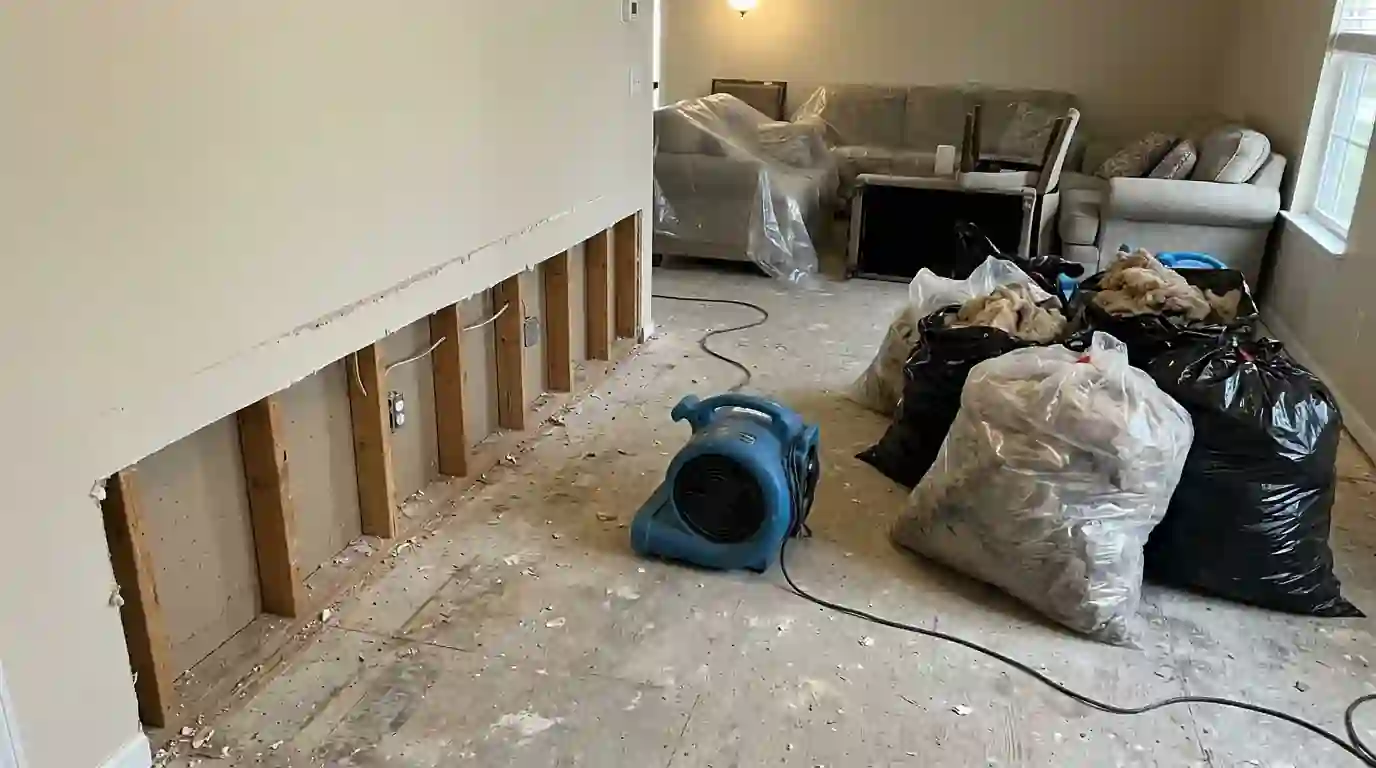
Wet drywall in Oklahoma City can often be dried in place after a clean water leak caught quickly, using baseboard removal and cavity drying. Drywall soaked by gray water, sewage or flood water, or left wet for days, is cut out above the wet line in a flood cut so the framing and insulation behind it can dry.
What the job involves
How water gets into a wall
Drywall wicks water upward like a paper towel. Water on the floor climbs the gypsum and the paper facing several inches, sometimes more than a foot, and soaks the bottom plate and any insulation inside the wall.
From the room, that looks like a faint stain line or bubbling paint just above the baseboard. Inside the wall it's wet insulation and wood that won't dry with a fan pointed at the surface.
The decision is whether to dry the wall in place or open it. Water type, how long it sat and what's inside the wall decide that, and we show you the readings before cutting anything.
What drives the price
What drywall water damage costs depend on
Drying a wall in place costs less than cutting and rebuilding it, but either way the cost scales with how many walls the water reached.
Linear feet of wall
Flood cuts are priced by how much wall comes out and goes back.
Insulation
Exterior walls with insulation add removal and replacement.
Finish matching
Texture and paint have to be matched to the rest of the wall.
Water type
Gray or black water means cutting rather than drying in place.
Angi puts drywall water damage repair at about $300 to $850 per typical repair. Source: Angi, 2026
HomeAdvisor puts drywall replacement at about $1.50 to $3 a square foot. Source: HomeAdvisor, 2025
Your options
Dry in place, flood cut or full removal
| Option | When it fits | What it involves |
|---|---|---|
| Dry in place | Clean water, caught within a day or two, no insulation soaked | Baseboards off, small holes behind them, cavity drying |
| Flood cut at 2 feet | Water wicked under about a foot, or gray water | Lower drywall removed, insulation pulled, framing dried |
| Flood cut at 4 feet | Water wicked higher, or flood or sewage water | Larger section removed for cleaning and drying |
| Full wall removal | Long-term leak with mold through the drywall | Containment, full removal, framing cleaned and dried |
Flood cuts at two or four feet
A flood cut removes the lower part of the drywall in a straight line, usually at two or four feet, a little above the highest wet reading. Cutting at a standard height makes the patch easier to hang and finish later, since drywall comes in four-foot widths. Once the wall is open, wet insulation comes out, the framing is cleaned if the water was dirty, and air goes straight into the cavity. A straight, level cut also gives the repair crew a clean line to work from.
Wet insulation removal
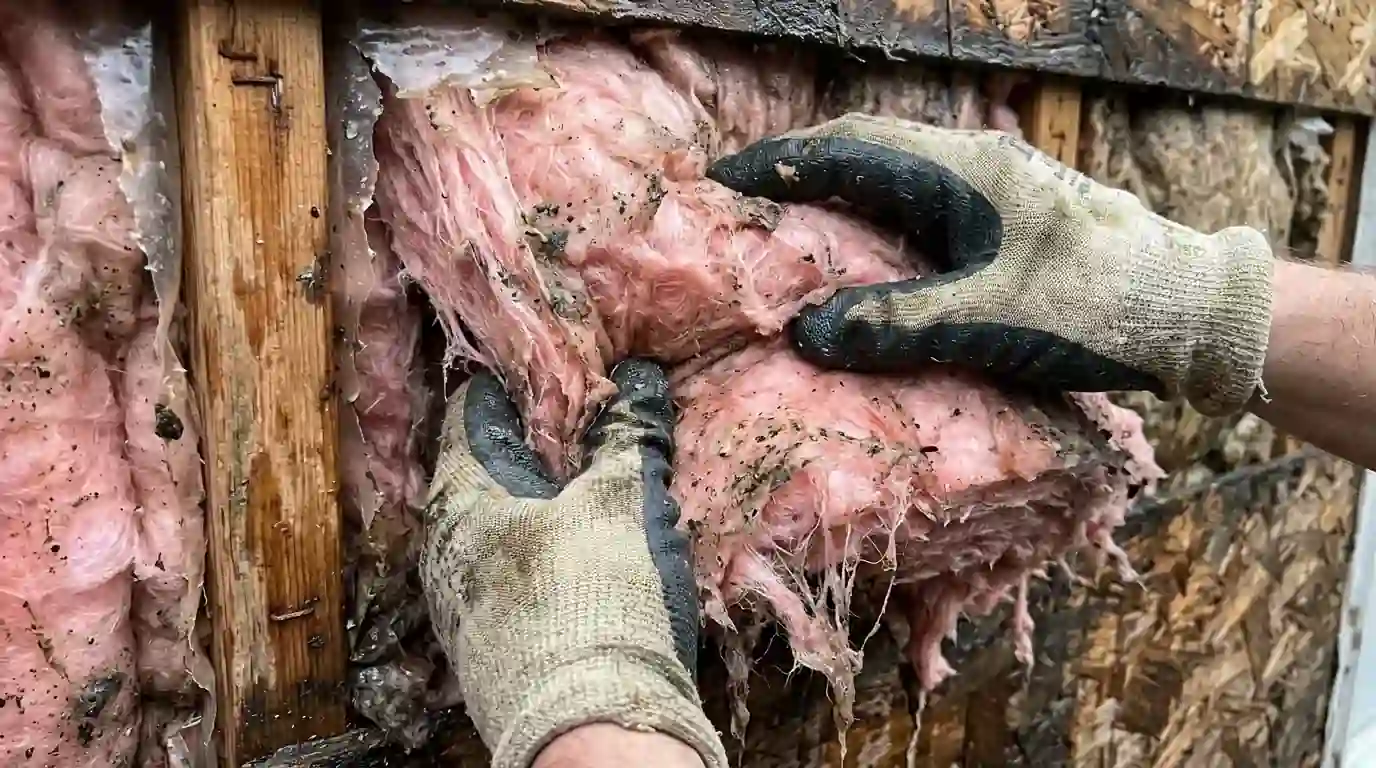
Fiberglass batts inside an exterior wall soak up water and hold it against the studs and the back of the sheathing. Once wet, they lose their insulating value and rarely dry well in place. We pull wet insulation from the opened section and bag it. After the framing reads dry, new insulation goes in before the drywall is replaced, so the wall performs the way it did before the leak.
Baseboard and trim removal
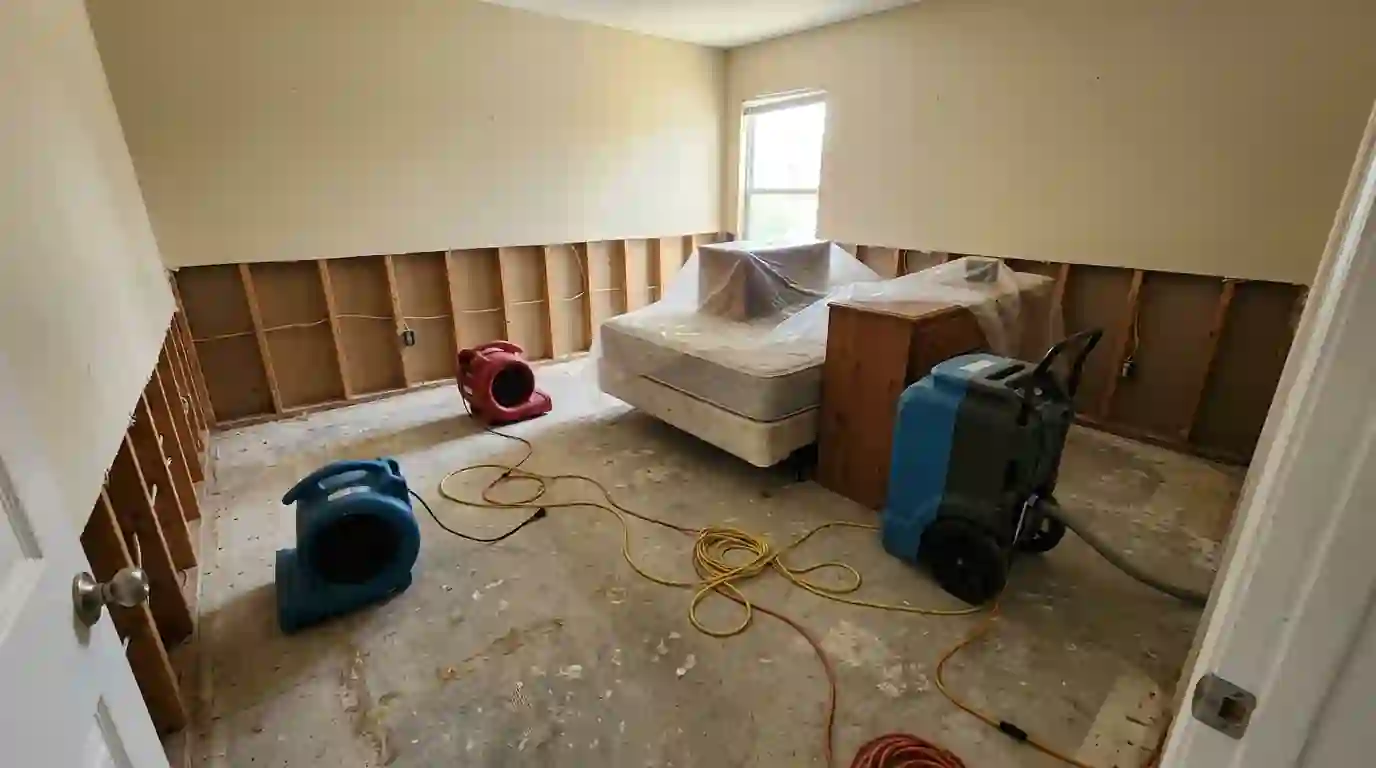
Baseboards come off on almost every wall water job, even when the drywall stays. Removing them exposes the bottom of the drywall and lets us drill small holes behind where the baseboard sat to push air into the cavity. MDF baseboard that has swollen won't go back on cleanly and is replaced; solid wood trim can usually be dried and reinstalled. We label trim as it comes off so it goes back where it was.
On the visit
What a drywall water job includes
- Moisture readings on every affected wall
- Baseboard removal with labels
- Cavity drying or a level flood cut
- Wet insulation removal
- Cleaning of framing when water was dirty
- Drying the studs and bottom plate
- Photos and measurements for your claim
- Drywall, texture, paint and baseboard repair once dry
Local conditions
Flood water and the bottom two feet
When outside water comes into a house, the bottom of every wall it touches has to be judged. In the May 2015 flooding, some roads in Oklahoma City and Del City sat under as much as nine inches of water, and water that crosses streets and yards carries soil and contaminants into the drywall it wicks up. On calls like that we cut above the wet line rather than drying in place, because contaminated drywall can't be cleaned from the inside.
Step by step
How drywall water damage is handled
- 01
Read the wall
Meters map how high water wicked on each wall, and we photograph the readings.
- 02
Pull baseboards
Baseboards come off and are labeled; swollen MDF is set aside for replacement.
- 03
Dry or cut
Clean, recent water gets cavity drying; contaminated or saturated drywall gets a flood cut.
- 04
Dry the framing
Insulation is removed where wet, and studs and plates are dried to dry readings.
- 05
Rebuild
New insulation, drywall, texture, paint and baseboard close the wall back up.
Straight answers
Questions about this job
Drywall can look fine on the surface while the back of it and the insulation inside are wet. Readings tell us what's wet, and we show them to you before cutting.
Usually two or four feet, a little above the highest wet reading, because those heights make the repair cleaner.
Solid wood trim usually can once it's dry. MDF baseboard that swelled is replaced.
Not when the texture and paint are matched. We finish the repaired section to blend with the rest of the wall.
When the framing reads dry, often within several days. Closing a wet wall traps moisture and invites mold.
When the water loss is covered, removing and replacing damaged drywall is commonly part of the claim. Photos and readings support it.