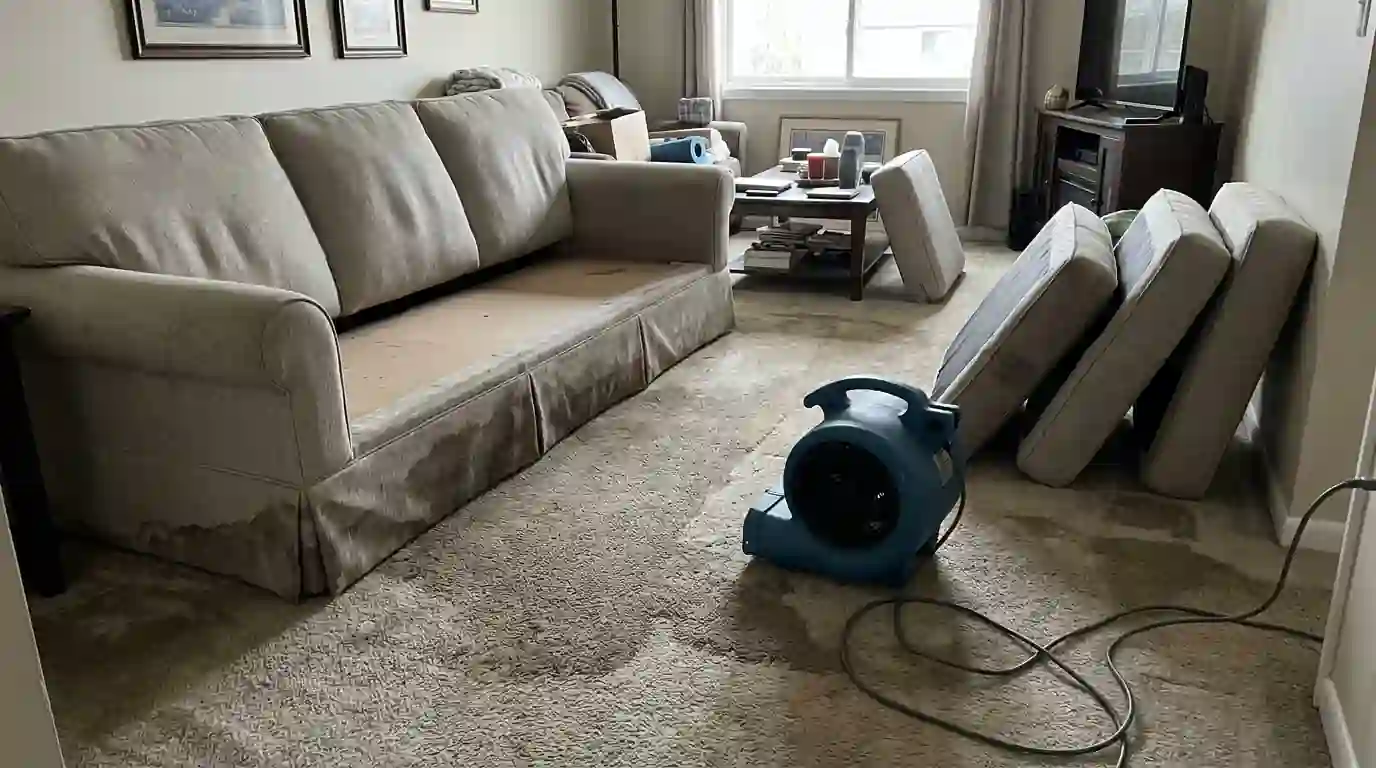
What to do with wet furniture
Short answer
Wet upholstered furniture in Oklahoma City should come off the wet floor right away and stand where air reaches all sides. Put foil or plastic under wooden legs to stop stains on carpet. Furniture soaked by clean water can often be dried and cleaned; anything soaked by sewage or flood water is usually discarded.
What the job involves
Why furniture is a race against time
Upholstered furniture is foam, fabric and a wood frame, and all three hold water. Cushions soak it up, wood swells and stains, and metal hardware rusts. Left on a wet floor, a sofa keeps wicking water up from below.
Moving furniture is also how the floor gets dried. Carpet can't be floated or extracted properly with a couch on it.
Some pieces are worth saving and some aren't. The type of water and how long it sat matter more than the price tag.
What drives the price
What furniture water damage handling costs depends on
Furniture work is usually priced by the piece and the cleaning needed. Local price ranges for furniture drying aren't published in a form we'd rely on, so it's priced piece by piece.
Number of pieces
A sofa and two chairs take less time than a full living room set.
Fabric type
Delicate or dry-clean-only fabrics need gentler, slower cleaning.
Water type
Gray water adds sanitizing; sewage-soaked pieces are usually discarded.
Moving and storage
Moving furniture out of wet rooms adds labor.
Do it yourself or call
What to do yourself and what to leave
| Task | Do it yourself | Leave it for us |
|---|---|---|
| Moving small pieces | Lift chairs, tables and rugs off the wet floor | Moving heavy sofas, beds and dressers |
| Protecting carpet | Foil or plastic under legs you can't move | Treating rust and stain rings |
| Cushions | Stand removable cushions on edge to air | Drying foam and cleaning fabric |
| Contaminated water | Don't handle pieces sewage touched | Sorting, documenting and disposal |
Sofa and chair cushions
Removable cushions come out of their covers where possible so the foam can dry faster. Foam soaked by clean water can often be dried with airflow and dehumidification, then the fabric cleaned to match its care code. Fixed cushions and tight-back sofas dry slowly from the inside and are more prone to odor. We test the fabric before cleaning so dyes and finishes aren't damaged, and tell you if a professional upholsterer should replace foam rather than us drying it.
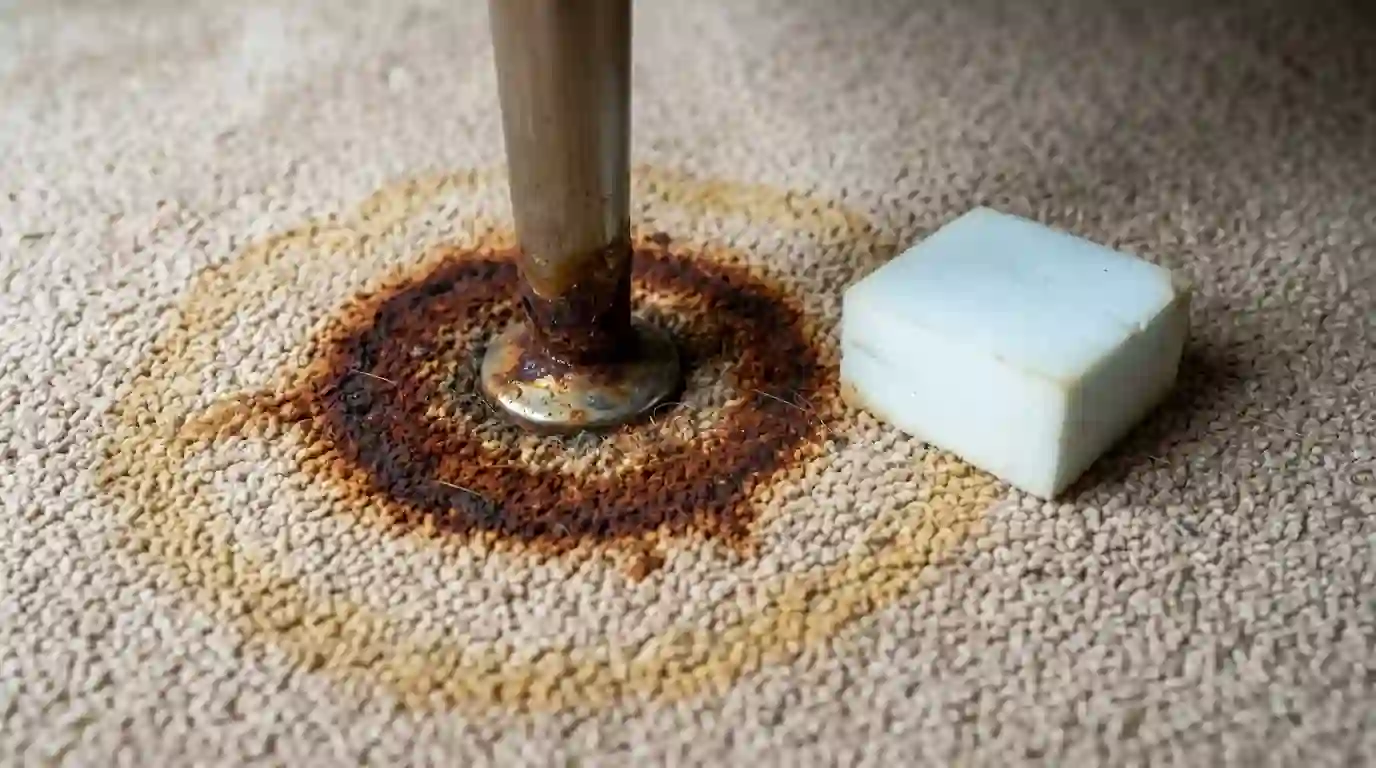
Furniture legs and rust marks
Wood legs sitting on wet carpet transfer stain into it, and metal glides and casters leave rust rings, sometimes within hours. That's why blocking furniture is one of the first things we do on any water job: foam blocks or plastic tabs under every leg. Stains that already happened are treated during carpet cleaning, and swollen or water-stained wood legs are noted so a furniture refinisher can look at them.
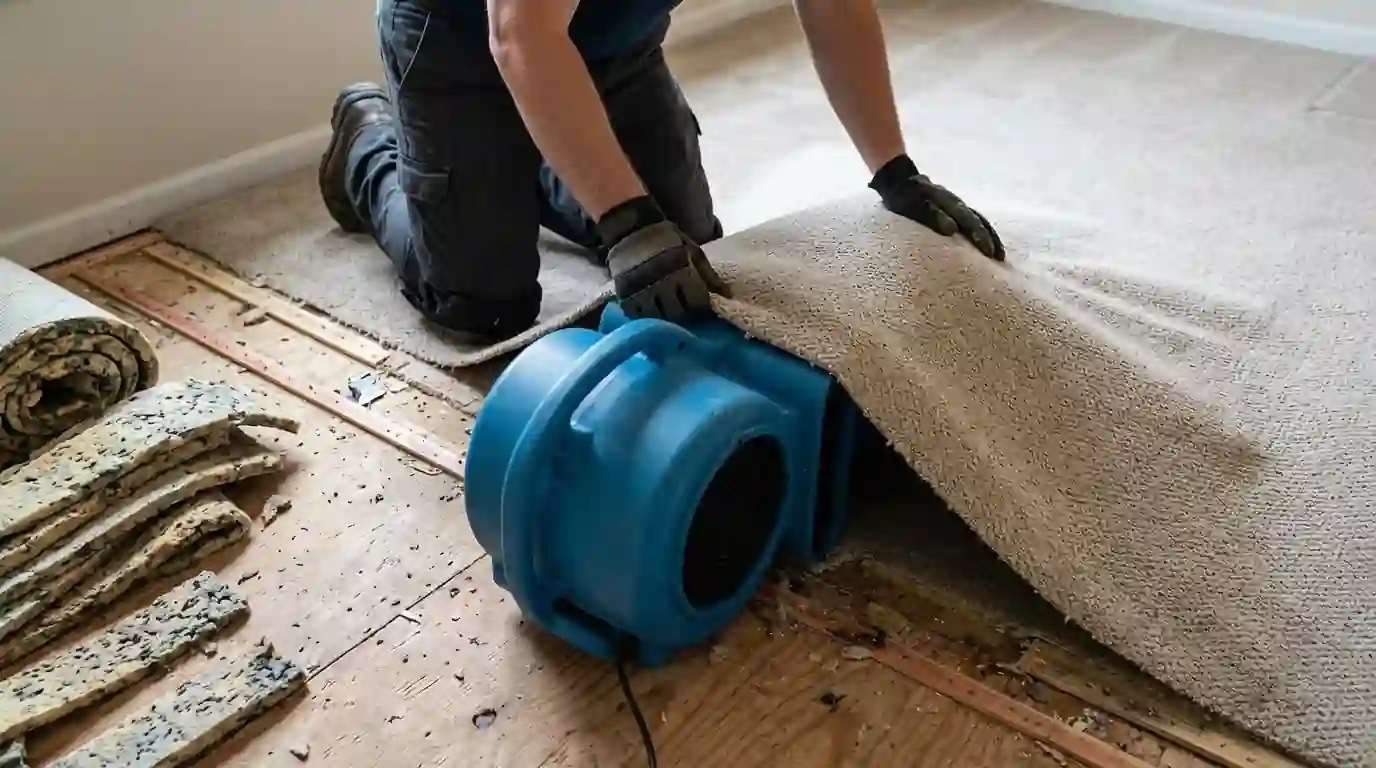
Mattresses and box springs
Mattresses are hard to dry because they're thick and densely layered, and the inside stays damp long after the surface feels dry. A mattress that got a small clean-water wetting along an edge can sometimes be dried. A mattress soaked through, or touched by sewage or flood water, is generally discarded for health reasons. We photograph it for your contents claim before it goes. Box springs and bed frames that stayed dry are checked separately and usually kept.
Local conditions
Freeze nights and furniture against outside walls
Burst pipes in exterior walls tend to soak whatever sits against those walls, which is usually a sofa, a bed or a dresser. During the February 2021 freeze, Oklahoma City crews worked 31 water main breaks and answered more than 400 calls about frozen private pipes, and many of those leaks ran behind furniture before anyone noticed. On freeze calls we pull furniture away from outside walls first, then extract and dry.
Step by step
How furniture water damage is handled
- 01
Get it off the floor
Furniture is moved off wet carpet or blocked so legs stop wicking and staining.
- 02
Sort by water type
Clean, gray or contaminated water decides what can be saved.
- 03
Dry
Cushions and pieces are dried with airflow and dehumidifiers, removable covers off.
- 04
Clean
Fabric is tested and cleaned to its care code; frames and legs are checked.
- 05
Document
Anything that can't be saved is photographed and listed for your contents claim.
What you will notice
Signs furniture took on more water than it looks
Cushions heavy or cold
Foam that feels heavy or cool inside is still holding water.
Rings on the carpet
Rust or brown rings around legs and casters.
Musty smell from a sofa
Odor from deep in the frame or tight-back cushions.
Swollen wood
Legs or bases that have swelled, cracked finish or lifted veneer.
Water lines on fabric
Tide lines on fabric showing how high water wicked.
Straight answers
Questions about this job
Often, after clean water, if it's dried quickly. Pieces soaked by sewage or flood water are usually discarded.
A soaked mattress usually can't be dried reliably. One that only got a light clean-water wetting may be saved. Photograph it before it goes.
Put foil, plastic tabs or wood blocks under metal legs right away. Existing rings can usually be treated.
We test first. Some fabrics are dry-clean only or bleed dyes, and those are handled more carefully or referred to an upholsterer.
Furniture is usually part of the contents portion of a claim. Photos and a list of damaged pieces help.
Usually to a dry room in the house. For larger jobs, contents can be packed out and stored off site.