What to do while the water is still moving
Short answer
In Oklahoma City, an emergency water call starts with stopping the source: close the main or the fixture valve, and switch off breakers for wet rooms if the panel is dry. We answer 24/7, extract standing water on the first visit, and set air movers and dehumidifiers before we leave.
The first visit
What an emergency visit actually covers
An emergency visit has one job: stop the damage from spreading. That means finding where the water came from, confirming it's shut off, pulling the standing water out of the carpet and off hard floors, and getting air moving across everything that's wet.
We also decide what can't wait until morning. Ceiling drywall holding water gets a small relief hole so it doesn't come down in one piece. Wet rugs and furniture come off the carpet. Baseboards in the worst rooms may come off so the wall cavity can breathe.
What we don't do on that first visit is guess. The full moisture map, the drying plan and the conversation about what needs replacing come once the water is out and the readings are in.
After-hours and holiday calls
Pipes don't wait for business hours, and in Oklahoma City the worst nights tend to be the coldest ones or the stormiest. The water line is answered at 2 a.m. and on holidays the same way it is at noon. When you call, we ask three things first: is the water still running, can you reach the shutoff, and is the electrical panel in a dry spot. If the answer to any of those is no, we stay on the phone until it's handled or tell you who else to call, such as the gas or electric utility.
Same-visit water extraction
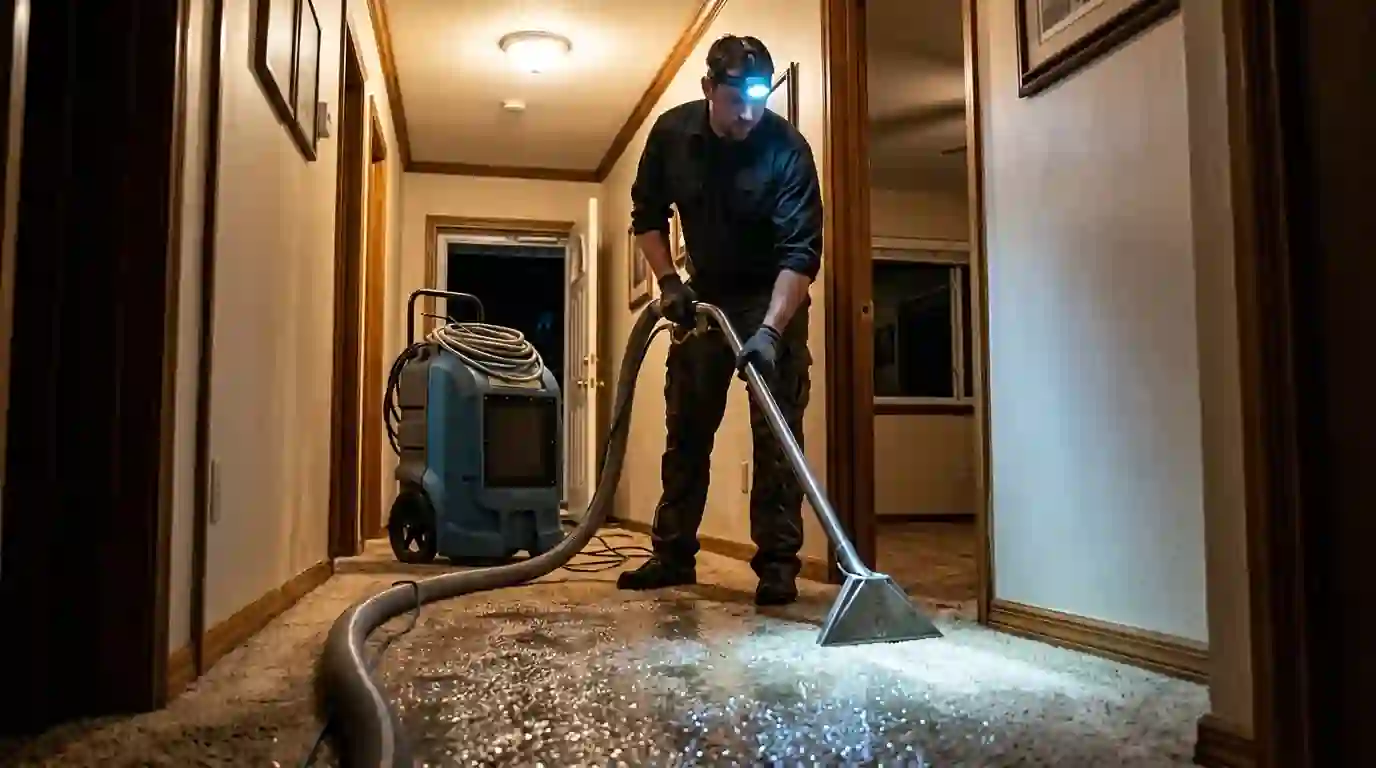
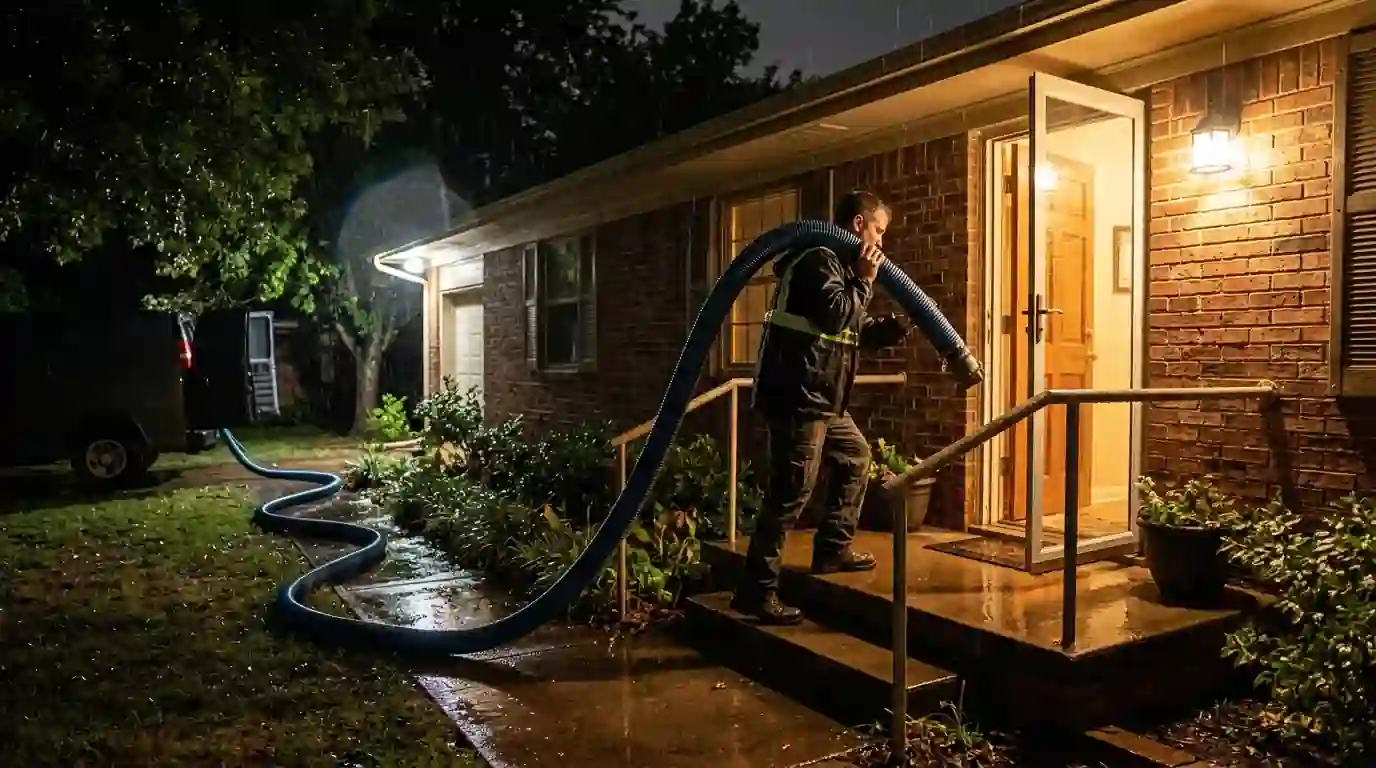
Every gallon pulled out with an extraction wand is a gallon the dehumidifiers don't have to evaporate later, so extraction starts on the first visit. On carpet we use weighted or wand extraction to press water out of the pad. On tile, wood and vinyl we squeegee and extract to the edges so water isn't left sitting under baseboards. Where water is deep enough to pool, a submersible pump goes in first.
Shutoff and make-safe
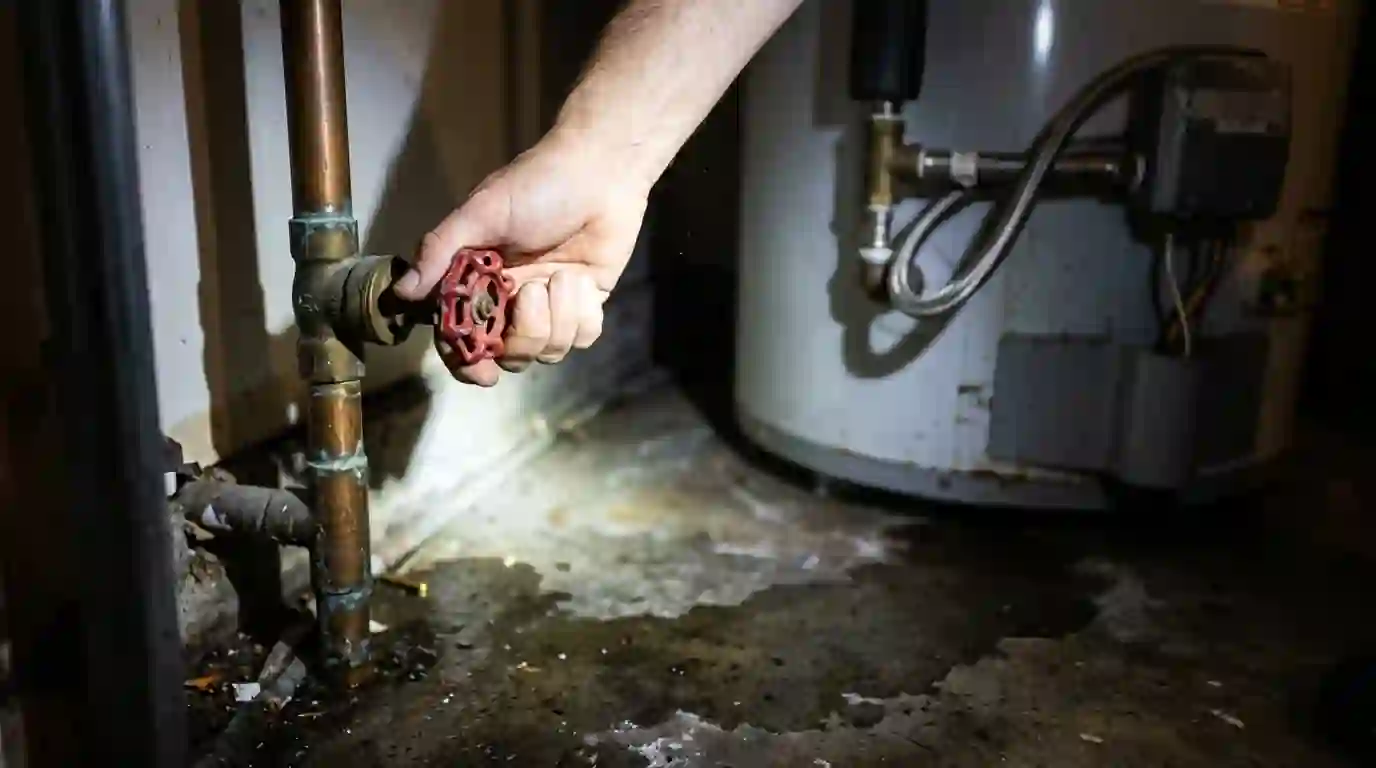
Make-safe is everything that keeps a bad night from getting worse. That includes confirming the water is off at the right valve, cutting power to wet circuits at the breaker, propping wet drapes off the floor, putting blocks or foil under furniture legs, and opening a small weep hole in a sagging ceiling so it drains into a bucket instead of falling. It takes minutes and it prevents most of the secondary damage we see.
Step by step
What happens from the call to the first night of drying
- 01
Call and shutoff
We confirm the water is off, the power to wet rooms is off, and nobody is standing in water near outlets.
- 02
Walkthrough
The crew lead walks every wet room with a moisture meter and photographs what they find before anything moves.
- 03
Extraction
Standing water comes out first, then the carpet and pad are extracted hard so the drying starts from as dry as possible.
- 04
Make-safe and setup
Furniture is blocked, ceilings are relieved, and air movers and dehumidifiers are placed where the readings say.
- 05
Next-day readings
We come back to read the same spots, adjust the equipment and tell you what has to come out, if anything.
Timing
How long the emergency part lasts
The emergency itself is usually over in the first few hours: water off, standing water out, equipment running. Drying is the longer part. Many rooms with carpet and drywall reach dry readings in three to five days of equipment time, while hardwood, plaster and concrete slabs can take longer. We read the same spots each visit, so you'll know whether it's on track instead of waiting on a promised date.
Local conditions
Why emergency calls in Oklahoma City come in waves
Emergency calls in Oklahoma City bunch up around two kinds of weather. The severe season runs from March through June, when storms push rain under doors and through hail-cracked roofs. Hard freezes do the rest: during the February 2021 freeze the city answered more than 400 calls about frozen private pipes on top of 31 main breaks. On nights like that we sort calls by whether water is still running, so the active leaks get crews first.
On the visit
What the first emergency visit includes
- Phone triage and shutoff guidance before the crew arrives
- Moisture readings in every wet room
- Photos of the damage before anything is moved
- Extraction of standing water and soaked carpet
- Furniture blocked or moved off wet floors
- Ceiling relief if drywall is holding water
- Air movers and dehumidifiers placed by the readings
- A plain explanation of what happens next
What drives the price
What an emergency water bill depends on
There's no flat price for an emergency, because the size of the wet area and the type of water decide most of it. These are the four things that move the number most.
How far the water spread
One wet room is a different job from water that ran under walls into three. Moisture mapping sets the real square footage.
Type of water
Clean water from a supply line costs less to handle than gray water from an appliance drain or sewage.
How long it sat
Water caught within hours usually means drying in place. A day or two later, more material comes out.
What's wet
Carpet and drywall dry predictably. Hardwood, plaster and slabs take longer and need more equipment time.
Published Oklahoma City estimates put a typical water damage restoration job of about 215 square feet at roughly $2,268 to $2,331, or about $11 to $12 a square foot. Source: HomeYou, 2026
Nationally, Angi reports most water damage jobs landing between $450 and $16,000, with an average near $3,868. Source: Angi, 2026
Straight answers
Questions about this job
Yes. The water line is answered 24 hours a day, 7 days a week, including holidays. The person who picks up can talk you through the shutoff and schedule the crew on that call.
If water is still running and you can't shut it off, call whoever can stop it fastest. Once it's off, a plumber fixes the pipe and we handle the water that already came out. Both can happen the same day.
With clean water, usually yes. The equipment is noisy and warm, but it's safe. If the water came from a sewer backup or reached the electrical panel, we'll tell you plainly if anyone should stay elsewhere.
Leave it running unless water reached the air handler or the ducts. A conditioned house dries faster. If the system itself is wet, switch it off at the thermostat and the breaker.
Sudden water like a burst supply line is commonly covered; slow leaks and outside flood water often aren't. We photograph and log readings from the first visit so your adjuster can see what happened.
Clear a path to the wet rooms, keep pets put away, and have your policy number handy if you plan to file a claim. Keep any failed part, like a burst hose or fitting.