What to do about sewage on the floor
Short answer
In Oklahoma City, sewage backup water is treated as Category 3, the most contaminated class. Keep children and pets out, stop using water in the house, and don't try to vacuum it. We contain the area, remove porous materials it touched, clean and disinfect hard surfaces, and dry everything before repairs.
What the job involves
Why sewage is never just dried
Sewage carries bacteria and other contaminants that soak into anything porous. That's why the rule for sewage is the opposite of a clean water leak: carpet, pad, upholstered furniture and drywall it touched are removed, not dried and reused.
What stays, like tile, concrete, vinyl and framing, gets cleaned and disinfected before any drying starts. Drying contaminated material first just makes it airborne dust.
The plumbing problem that caused it, a blocked line or a failed main, needs a plumber. We can work the same day the line is cleared, so the house isn't left waiting with sewage on the floor.
Toilet and floor drain backups
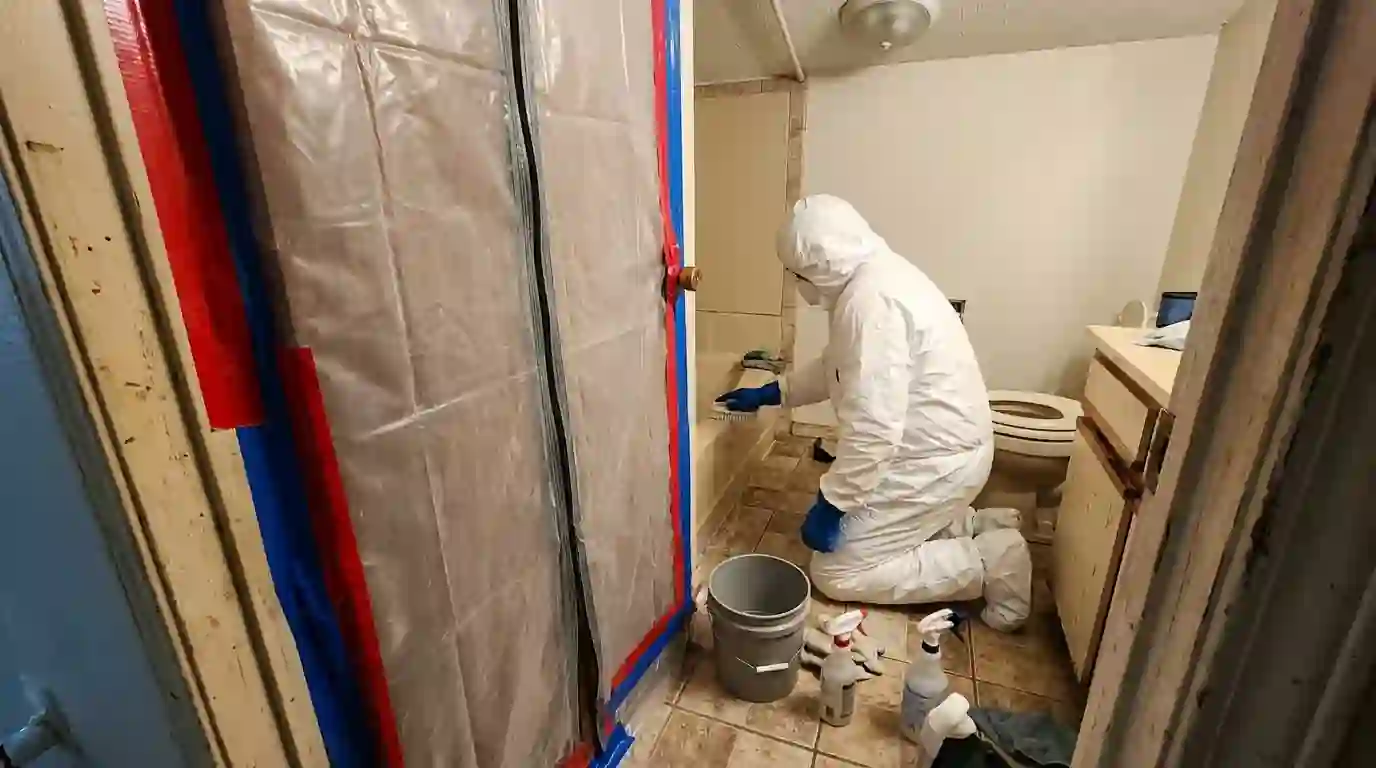
A single toilet overflow with waste, or a shower or floor drain pushing up dirty water, is the most common sewage call. The area is usually one bathroom and the carpet or hallway next to it. We set up containment if it spread past the bathroom, remove soaked carpet and pad, clean and disinfect the tile and subfloor, and remove the bottom of any drywall the water reached. If the toilet overflowed with clean bowl water and no waste, it's handled as gray water instead.
Main line backups
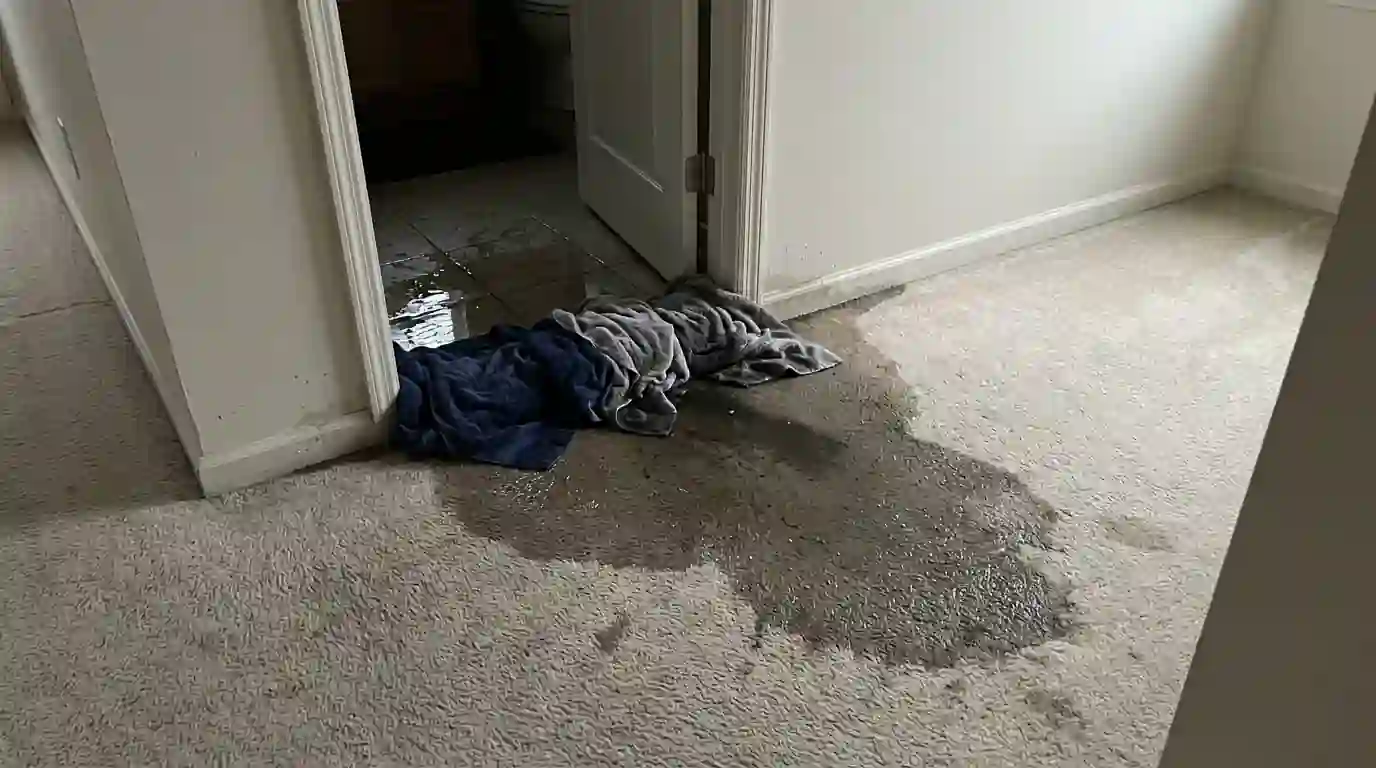
When the main sewer line is blocked, every drain in the house can back up at once, and the lowest fixtures overflow first. That can mean several rooms. Stop running water anywhere in the house until a plumber clears the line, because every flush adds to the floor. We work room by room behind containment, removing affected materials and cleaning the slab, and we document the extent for the insurance claim, since sewer backup coverage is often a separate endorsement.
What has to be thrown out
Carpet and pad that sewage reached are discarded. So are upholstered furniture, mattresses, cardboard, paper, and soft toys it soaked. Drywall and insulation are cut well above the contamination line. Solid wood furniture, metal, glass and hard plastics can usually be cleaned and disinfected. We photograph and list everything that's removed before it leaves the house, so your adjuster has a record. Anything you want to keep that can't be cleaned is set aside for you to decide on, not thrown out without asking.
Step by step
How a sewage cleanup runs
- 01
Stop and protect
Water use in the house stops, people and pets are kept out, and we check that the plumber has cleared the line.
- 02
Contain
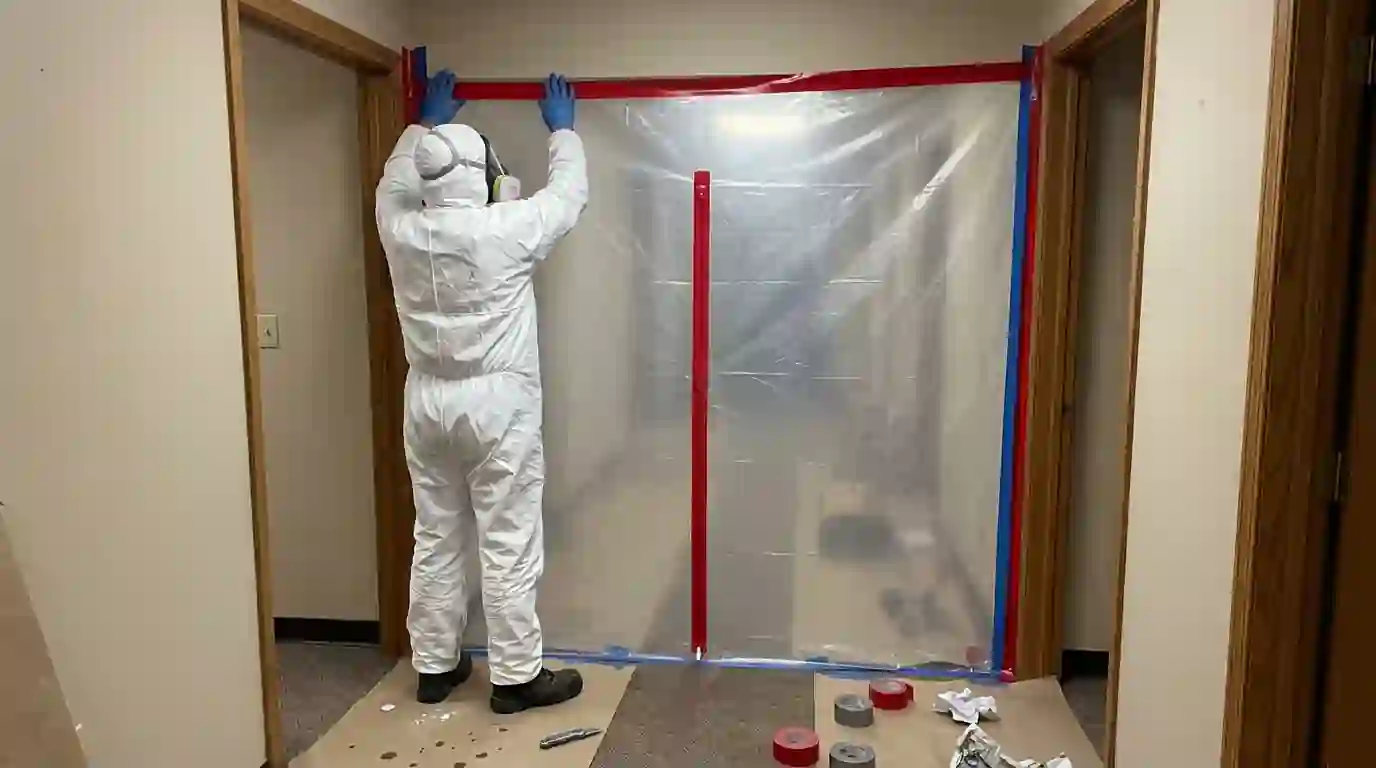
Plastic containment and negative air keep contaminated air from spreading to clean rooms.
- 03
Remove
Soaked carpet, pad, drywall, insulation and porous items are bagged and removed, with a photo inventory.
- 04
Clean and disinfect
Hard surfaces and the slab are cleaned, then disinfected, and the area is checked before drying.
- 05
Dry and clear
Drying equipment runs until readings are dry, then containment comes down and repairs can start.
Local conditions
Why clay soil and sewer lines don't get along
More than 75 percent of Oklahoma sits on bedrock that can produce expansive clay, and that clay swells when wet and shrinks when dry. The Oklahoma Geological Survey notes that saturation from rain, lawn watering or sewer leakage can damage foundations and utility lines. In Oklahoma City that seasonal movement is hard on older sewer laterals, which can crack or shift, catch roots and debris, and eventually back up into the lowest drain in the house.
Do it yourself or call
What you can do safely, and what you shouldn't
| Task | Safe for you | Leave it for us |
|---|---|---|
| Stopping more water | Stop flushing and running water everywhere in the house | Nothing, once the plumber has cleared the line |
| Protecting people | Keep kids, pets and anyone with a weak immune system away | Containment so the rest of the house stays clean |
| The water itself | Nothing; don't mop, vacuum or wade in it without protection | Extraction, removal and disinfection |
| Belongings | Move clean items out of the way if you can do it without touching the water | Sorting, cleaning or discarding what it reached |
On the visit
What a sewage cleanup includes
- Containment with plastic barriers where needed
- Protective gear for the crew
- Extraction of contaminated water
- Removal of soaked carpet, pad and drywall
- Photo inventory of everything discarded
- Cleaning and disinfection of hard surfaces
- Drying with daily readings
- Clearance check before containment comes down
What drives the price
What sewage cleanup costs depend on
Sewage costs more per square foot than clean water because of containment, protective gear, removal and disinfection.
Area affected
One bathroom is a much smaller job than a main line backup across several rooms.
Materials removed
Carpet, pad and drywall that have to go add removal and disposal.
Containment
Plastic barriers and negative air are needed when contamination spreads beyond one room.
Repairs afterward
Flooring and drywall replacement is a separate stage after the area is clean and dry.
Angi puts black water mitigation at about $7.50 a square foot, compared with about $3.50 for clean water. Source: Angi, 2026
Straight answers
Questions about this job
Usually, if the backup was limited and the area is closed off. People with weakened immune systems, infants and pets should stay away from the affected area, and we'll tell you if anyone should stay elsewhere.
No. Carpet and pad that sewage reached are removed and discarded. The slab underneath is cleaned and disinfected before new flooring goes down.
A plumber. We handle the cleanup of what came out. Both can happen the same day, and we'll coordinate timing so cleanup starts once the line is clear.
Often only with a sewer or water backup endorsement on the policy. Check your declarations page, and keep the plumber's invoice and our photos for the claim.
No. Clean water from the tank or bowl with no waste is handled as gray water. Overflow with waste, or water coming up from a drain, is treated as sewage.
Hard surfaces are cleaned and disinfected before drying, and we check the area visually and with readings before containment comes down.