What to do with a leaking water heater
Short answer
With a leaking water heater in Oklahoma City, close the cold supply valve on top of the tank, turn the gas valve to pilot or switch off the breaker for an electric unit, and keep clear of hot water. We extract the water and dry the closet, the slab or subfloor, and the walls and carpet next to it.
What you will notice
Signs a water heater is starting to leak
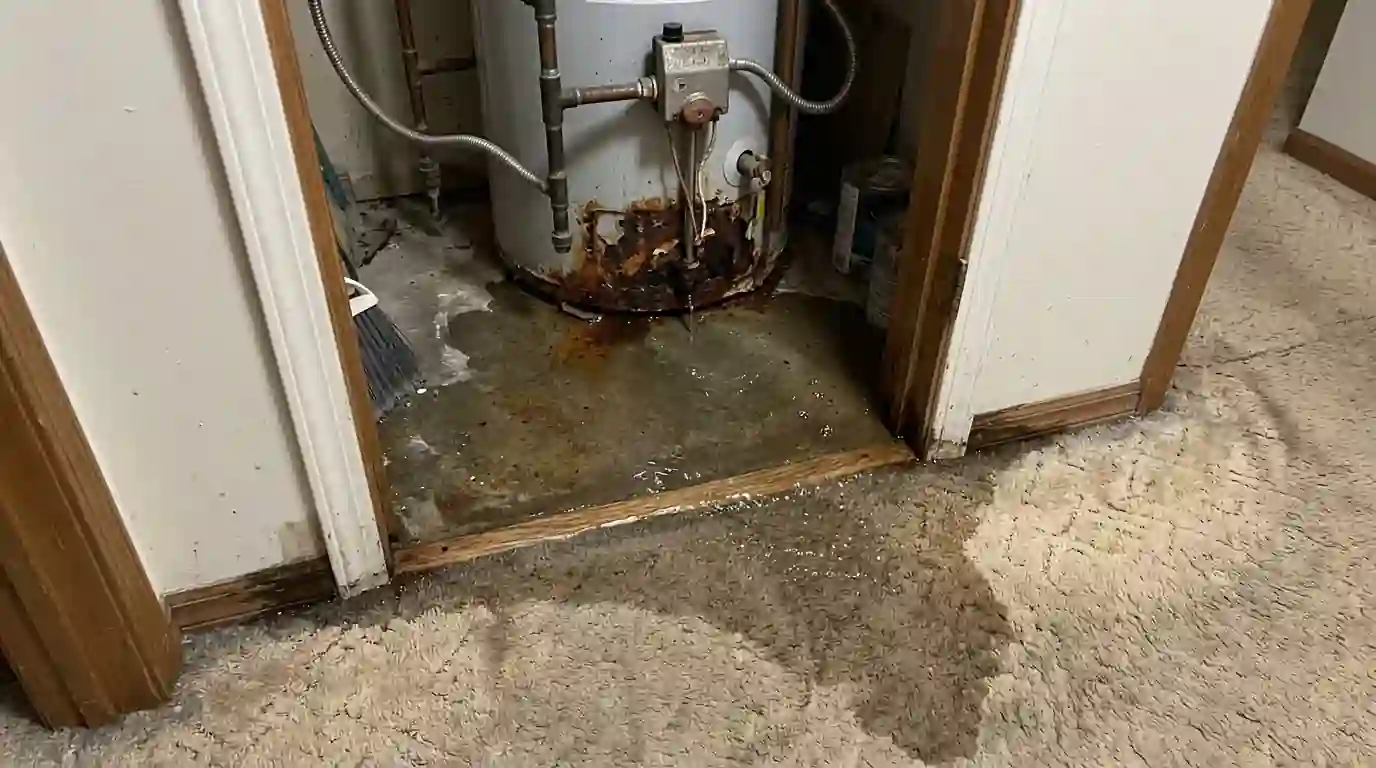
Rust at the base
Rust streaks or flakes around the bottom of the tank.
Damp closet carpet
Carpet that's damp at the closet doorway or along the wall next to it.
Water in the drain pan
Any standing water in an attic or closet pan means something is leaking.
Dripping relief valve line
The discharge pipe from the relief valve dripping or running.
Rumbling and less hot water
Sediment noise and shorter hot showers often come before a tank fails.
What the job involves
Why water heater leaks spread further than expected
A water heater sits in a closet, a garage corner or an attic, usually next to walls, carpet or a ceiling. A tank that fails at the bottom can release its whole contents and keep refilling from the supply until someone closes the valve.
The closet floor is the obvious part. The less obvious parts are the bottom plate of the closet walls, the carpet in the hallway or bedroom next door, and the slab under it all, which holds water and gives it back slowly.
The heater itself is a plumbing job. We coordinate with whoever replaces it so the closet is dry before the new unit goes in.
Garage and closet tank leaks
Most metro water heaters sit in a garage or an interior closet. In a garage, water usually runs to the door or a drain, but it can wick into drywall and the wall shared with the house. In an interior closet, the water has nowhere to go but under the walls and into the carpet around it. We extract the closet and the adjoining rooms, pull baseboards on shared walls, and dry the cavity and the slab under the closet until readings match the rest of the house.
Attic water heater leaks
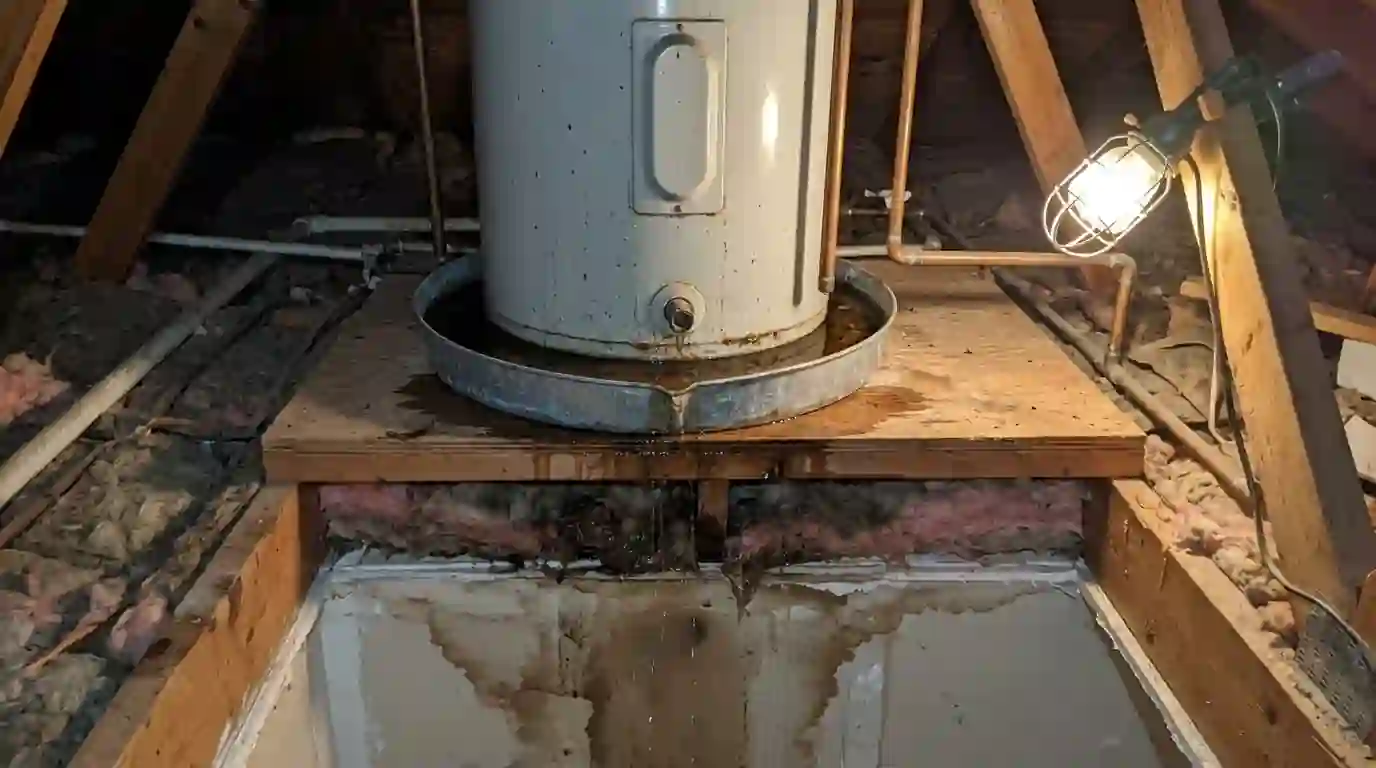
An attic heater that leaks lets water into the drain pan first, and if the pan or its drain line fails, into the ceiling below. That turns a water heater leak into a ceiling job: relieving trapped water, removing wet insulation around the platform and drying the drywall from both sides. We check the pan and its drain line while we're there, because a clogged pan drain is often why the water reached the ceiling at all.
Tankless unit leaks
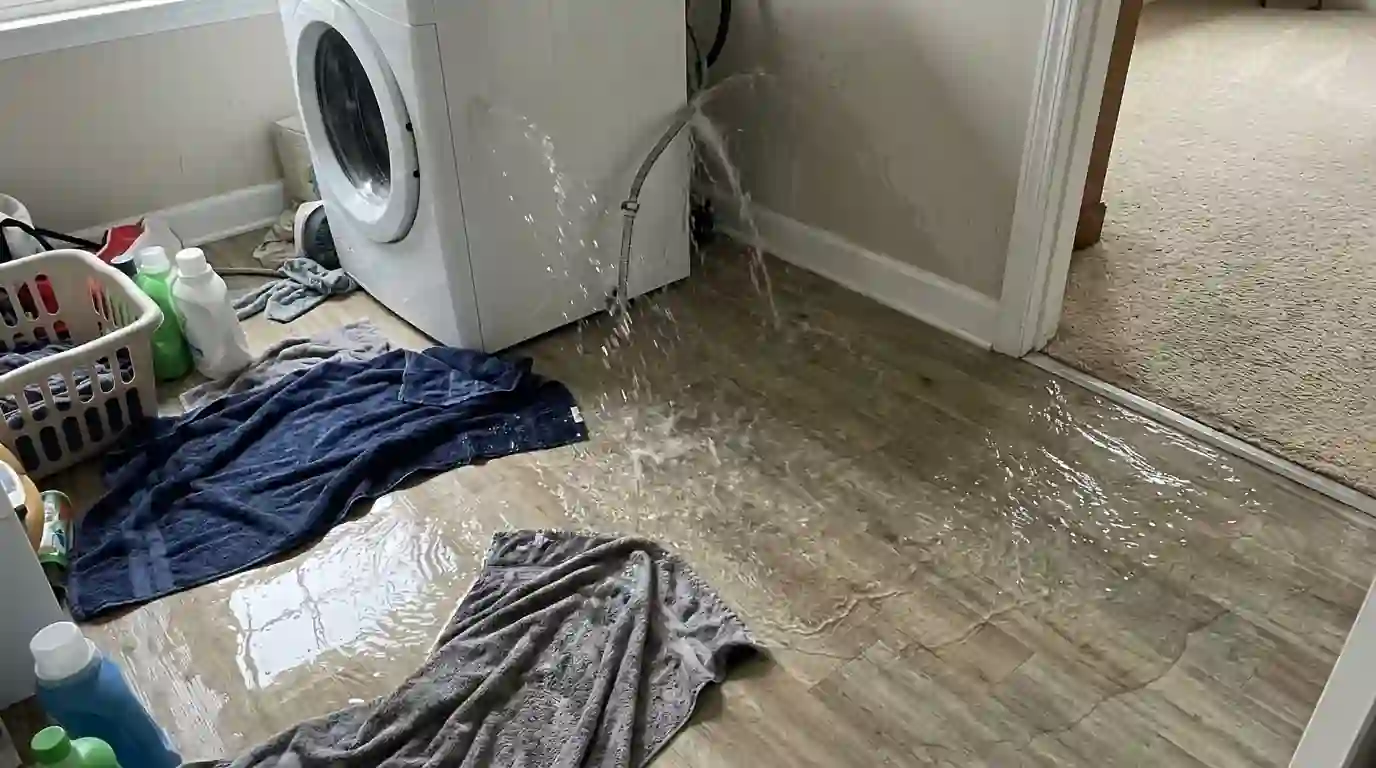
Tankless heaters leak less volume, but they usually hang on a wall, so the water runs down inside or behind that wall. Leaks come from fittings, the pressure relief valve or a cracked heat exchanger, and are often slow. We read the wall below the unit and the floor at its base, open behind the baseboard if the cavity is wet, and dry it. The plumber handles the unit; we make sure the wall it hangs on is dry.
Step by step
How a water heater leak cleanup runs
- 01
Make it safe
Cold supply closed, gas to pilot or breaker off, and we check for hot water and scalding risk.
- 02
Extract
Standing water in the closet, garage or pan is removed, then carpet next to it is extracted.
- 03
Trace the spread
Meters map how far water went under the walls, into nearby rooms or into the ceiling below.
- 04
Open and dry
Baseboards come off, cavities get air, and the slab or subfloor is dried with dehumidifiers.
- 05
Clear for the install
When readings are dry, the space is ready for the new heater and any wall or floor repairs.
Timing
How long it takes to dry after a water heater leak
A closet with drywall and carpet next to it often dries in three to five days of equipment time. The slab under a tank closet tends to take longer because concrete gives up water slowly, and attic leaks that reached the ceiling add time for the drywall and insulation. The new heater can usually go in once the closet floor reads dry.
Local conditions
Slab closets hold water longer
Most Oklahoma City houses are wood-framed on a slab or over a crawl space, and water heater closets on a slab are where we spend the most drying time. The tank sits right on the concrete, so a failed bottom soaks the slab under the closet and pushes water under the bottom plate into the next room. Over a crawl space, the same leak drips through the subfloor instead, so we check the joists and vapor barrier below the closet.
What drives the price
What water heater leak cleanup costs depend on
The new heater is a separate plumbing cost. The cleanup cost depends mostly on where the heater sits and how long it leaked.
Location
A garage leak that ran to the door is simpler than an interior closet or an attic over a ceiling.
Volume
A full tank that emptied and kept refilling spreads further than a slow drip at a fitting.
Neighboring rooms
Carpet and walls next to the closet often need drying too.
Ceiling damage
Attic leaks add ceiling relief, insulation removal and drywall repair.
Angi reports most water damage jobs nationally landing between $450 and $16,000, with an average near $3,868; a contained closet leak sits at the lower end. Source: Angi, 2026
Straight answers
Questions about this job
Keep clear of hot water and steam, and don't touch electrical parts if anything is wet. Close the cold supply and turn off the gas or the breaker, then wait for help if you're unsure.
A plumber. We handle the water damage and can schedule around the install so the closet is dry first.
Not from the leaking unit. Once the cold supply is off, the tank won't refill. The rest of the house's cold water usually still works if the leak is isolated.
Sudden tank failures are commonly covered; the heater itself usually isn't, because it failed from wear. Photos of the damage help your claim.
Water runs under the bottom plate of the closet wall into the next room. That's why we read the rooms around the closet, not just the closet.
Units in attics and above finished spaces should sit in a pan with a working drain line, so a small leak is caught before it reaches the ceiling.