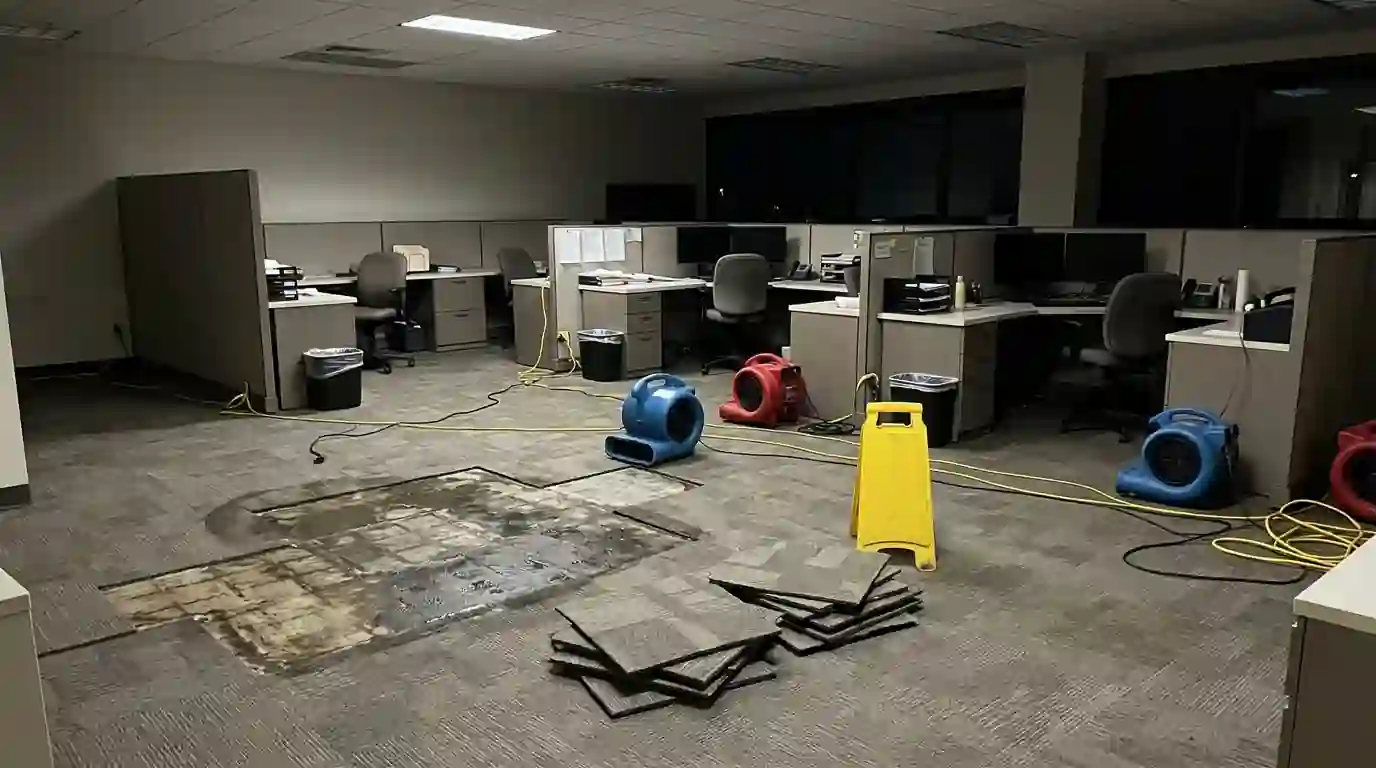
What commercial water damage work looks like
Short answer
Commercial water damage restoration in Oklahoma City follows the same steps as a home, extraction, drying and repair, but it's planned around keeping the business running: phased work areas, drying set up after hours where possible, safe walkways for staff and customers, and records for the building owner, insurer and tenants.
What the job involves
Why business losses are planned differently
For a business, downtime costs as much as the damage. The goal is to get the affected area dry and safe with as little interruption as possible to the rest of the building.
That usually means doing the loud, disruptive work after hours, sectioning off wet areas with signs and barriers, and running equipment where it won't block exits or customer traffic.
Commercial buildings also bring more people into the decision: owners, property managers, tenants and sometimes more than one insurer. We keep the documentation clear enough for all of them.
Offices and retail
Office water damage usually means commercial carpet tile or glue-down carpet, drywall partitions and lots of electronics. Carpet tile can often be lifted and dried or replaced in sections. Retail floors need to stay walkable and safe, so we work in sections, mark wet zones clearly, and set drying equipment to keep aisles open. We coordinate with your schedule and your landlord so the store or office can keep operating around the work where that's possible.
Restaurants and kitchens
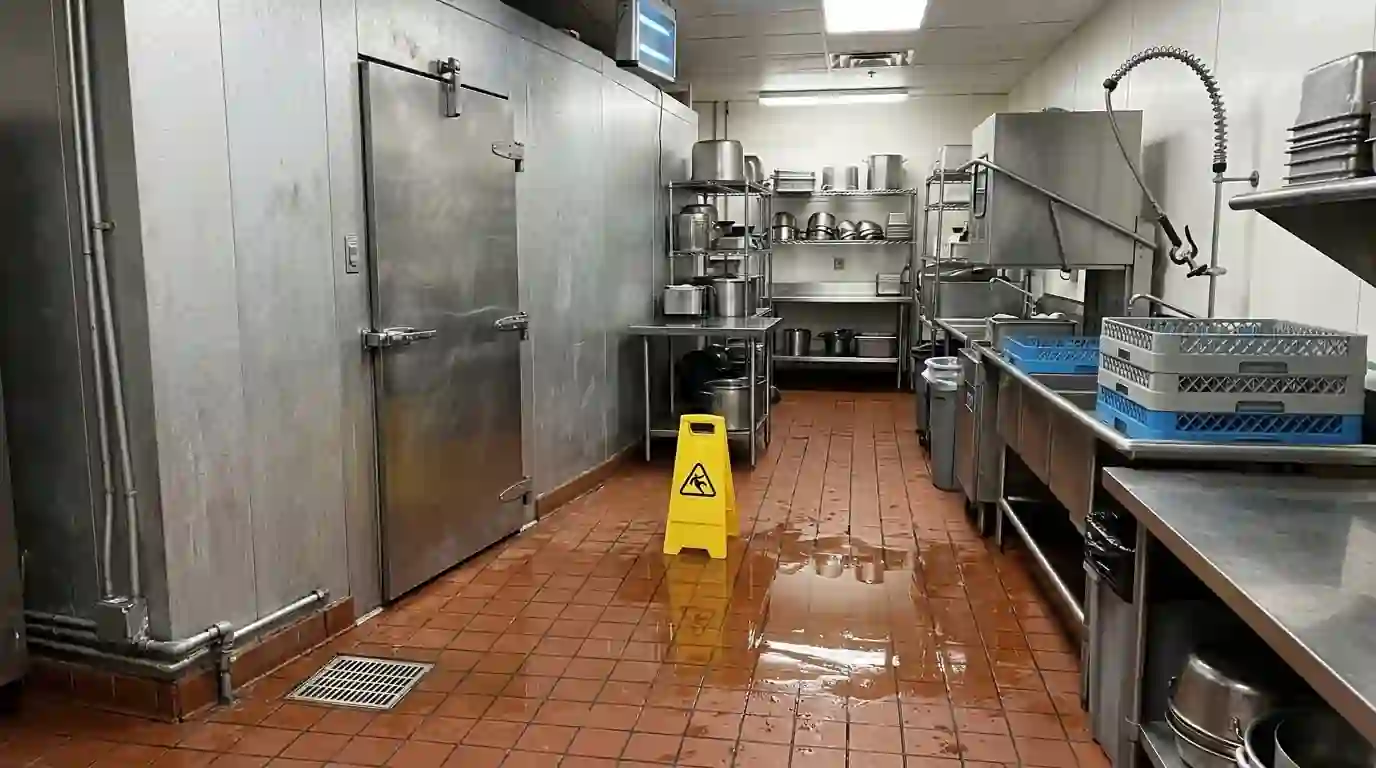
Restaurants deal with water from walk-in cooler lines, ice machines, dish areas and grease trap backups. Kitchen water may be contaminated, which changes what can be saved and how surfaces are cleaned. We work around food safety: contaminated areas are cleaned and treated, and equipment is kept away from food prep surfaces. Many restaurants also need the work timed between services, so we plan around your hours. Health department reopening requirements are your call with the inspector; we provide the cleaning record.
Fire sprinkler discharges
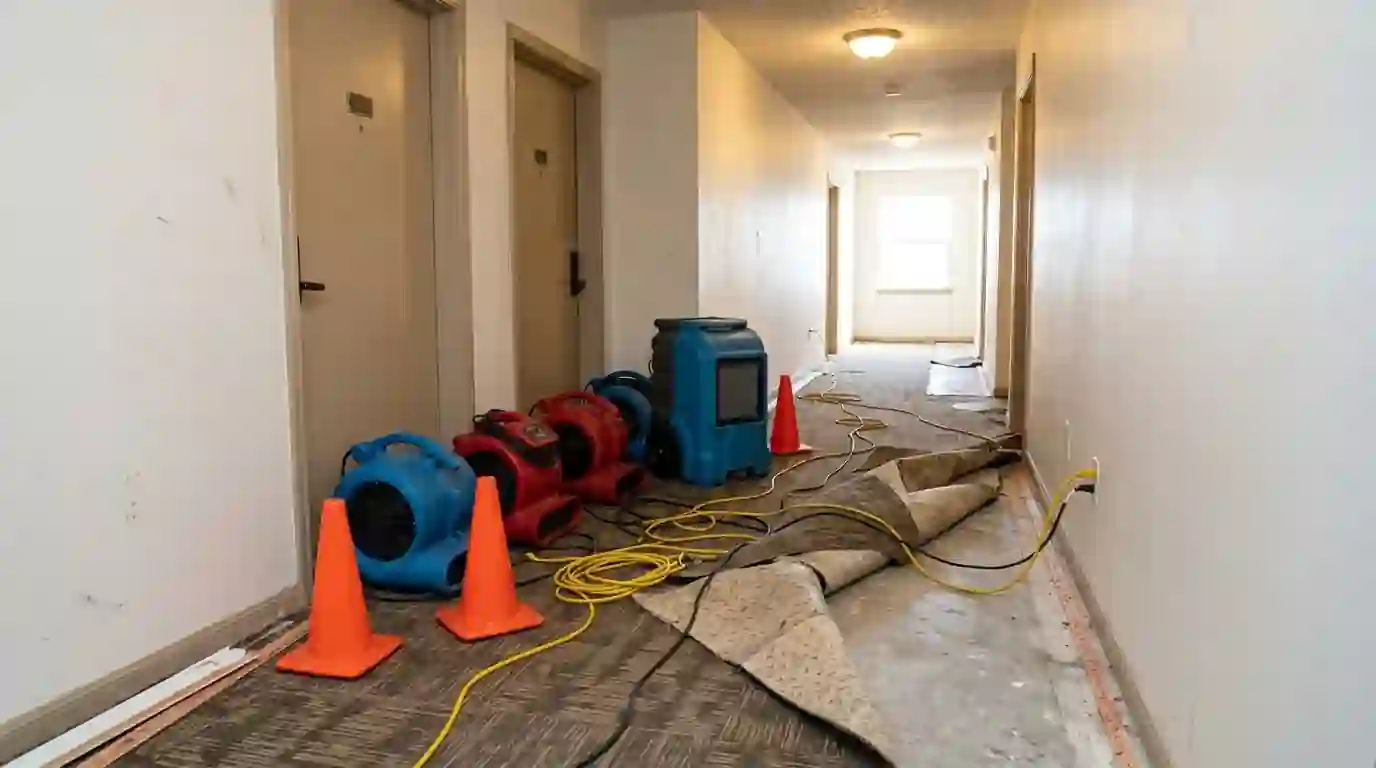
A sprinkler head knocked loose or a frozen sprinkler line can release a lot of water fast, and sprinkler water can be dirty from sitting in the pipes. After the fire protection contractor shuts the system down and repairs it, we extract, open wet ceilings and walls, and dry the space, often across more than one floor if water ran down. Sprinkler system repair and restoration of service are handled by your fire protection company.
Step by step
How a commercial water job runs
- 01
Make it safe
Water is stopped, power to wet areas is checked, and wet zones are marked and blocked off.
- 02
Plan around the business
We agree on work areas, hours and access with you and the building manager.
- 03
Extract and open
Water is extracted, and wet ceilings, partitions and flooring are opened where needed.
- 04
Dry in phases
Equipment runs by area, with loud setups after hours where possible.
- 05
Document for everyone
Photos, readings and removal records go to you, the owner and the insurer.
Timing
How long commercial drying takes
Drying time follows the same rule as homes: the readings decide. Many commercial spaces with drywall and carpet tile dry in several days. Masonry, concrete and multi-floor water take longer. Working in phases can stretch the overall timeline but keeps more of the business open.
Local conditions
Older commercial buildings north of the city
Water moves differently through old commercial buildings. The Guthrie Historic District holds more than 2,000 buildings across about 1,400 acres, with a red brick and sandstone commercial core from the territorial capital years, and buildings like that have plaster, masonry and old wood floors that hold water and dry slowly. Leaks there often travel through masonry walls between storefronts, so we read the neighboring spaces too, not just the unit that called.
Your options
Keeping the business open during drying
| Approach | When it fits | Trade-off |
|---|---|---|
| Phased work areas | Damage limited to part of the space | Some areas closed for a few days |
| After-hours setup | Retail and offices with fixed hours | Equipment runs overnight; daytime is quieter |
| Full closure for a short time | Contaminated water or damage across the whole space | Faster drying, but the business closes |
| Temporary relocation | Long repairs on a single-tenant space | Moving costs, but operations continue |
What drives the price
What commercial water damage costs depend on
Commercial jobs vary widely by building and use. We don't have a reliable local figure to quote for business losses.
Square footage and floors
Water that ran through ceilings to lower floors multiplies the area.
Building materials
Commercial carpet tile, drywall partitions and masonry each dry differently.
After-hours work
Working nights or weekends to keep the business open affects scheduling.
Contamination
Kitchen or sewer water adds cleaning and disposal.
Straight answers
Questions about this job
Often, at least partly. We section off wet areas and set equipment to keep exits and aisles clear. Contaminated water or widespread damage may require a short closure.
We answer 24/7, and for businesses we plan the disruptive work around your hours where possible.
Both, as needed. We share documentation with the building owner, property manager and any insurers involved.
No. Your fire protection contractor shuts down and repairs the system. We handle the water damage.
Electronics should be powered down and assessed by IT or a specialist. Wet paper records can be air-dried or frozen; tell us early which ones are critical.
That depends on your commercial policy. Our documentation of the timeline helps with that part of the claim.