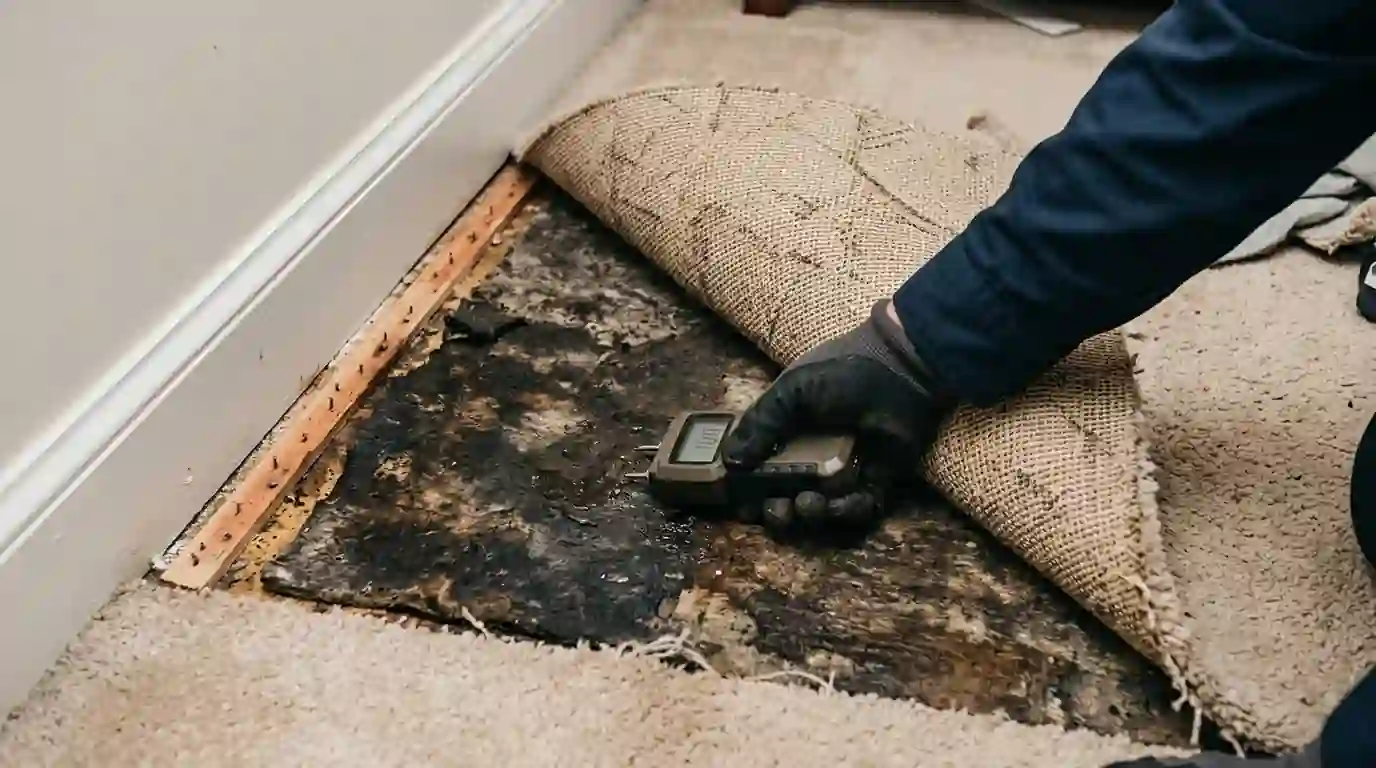
Why the smell stays after the water is gone
Short answer
A musty smell after water damage in Oklahoma City usually means something is still damp, often carpet pad, a wall cavity or a subfloor, or that bacteria and mildew started growing before it dried. We find the source with meters, dry or remove it, then treat surfaces and air so the odor doesn't return.
What the job involves
Odor is a symptom, not the problem
Musty odor comes from microbial growth on damp materials, and from residue the water left in carpet, pad and wood. Air fresheners and fogging alone just cover it for a few days.
So odor removal starts like any water job: with a meter. Most lingering smells trace to wet pad under carpet, a damp bottom plate in a wall, insulation that never dried, or a subfloor under cabinets.
Once the source is dry or gone, treatment clears what's left in the air and on surfaces.
What drives the price
What odor removal costs depends on
The cost depends mostly on what the source turns out to be. Without a trustworthy local benchmark, the price is set once the source is found.
Source
Replacing a section of pad is very different from opening a wall cavity.
Area
A closet smell is a smaller job than a whole floor.
Treatment type
Hydroxyl runs longer; ozone is faster but needs the house empty.
Cleaning
Carpet cleaning and antimicrobial treatment add to the job.
Your options
Odor treatments compared
| Treatment | Good for | Limits |
|---|---|---|
| Source removal or drying | Every lingering odor; the step that actually fixes it | May mean lifting carpet or opening a wall |
| Antimicrobial cleaning | Surfaces and carpet after gray water | Treats surfaces, not the air |
| Hydroxyl generator | Ongoing odor with people still in the house | Slower than ozone |
| Ozone | Strong odors in an empty house | House must be empty; can affect rubber and some fabrics |
Do it yourself or call
Air freshener or a real fix?
| Situation | Try yourself | Call us |
|---|---|---|
| Faint smell right after cleanup | Run fans and the AC, keep the room conditioned | Smell still there after a few days |
| Smell from carpet | Nothing; it's usually the pad | Checking and replacing pad |
| Smell from a wall or closet | Nothing | Reading and drying the wall cavity |
| Covering it up | Sprays and candles mask it briefly | Finding and removing the source |
Musty smell after a leak
A musty smell that shows up days or weeks after a leak usually means drying stopped too soon or missed an area. We read the floor, the bottom of the walls and any cabinets around the original leak, and often find a pocket that's still damp. Drying that area, or removing a wet pad section or bottom strip of drywall, is what actually ends the smell. Treatment afterward clears the residual odor.
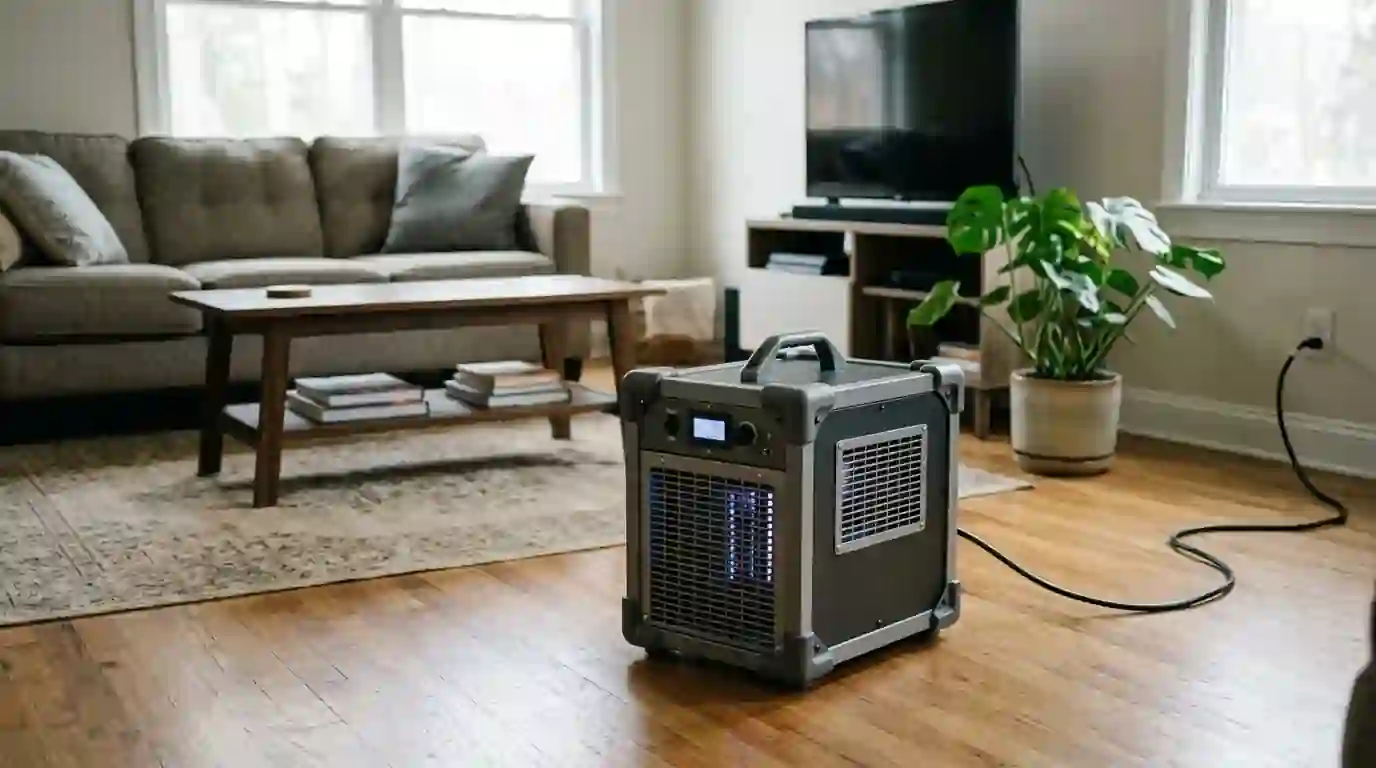
Odor from wet pad and tack strip
Carpet pad and tack strip are the most common sources of a lingering smell after water. Pad holds water long after the carpet feels dry, and tack strip soaked by gray water holds bacteria. We lift the carpet in the smelly area, check and replace pad and strip where needed, treat the floor beneath with an antimicrobial, and clean the carpet before it's re-stretched. The smell usually goes with the pad.
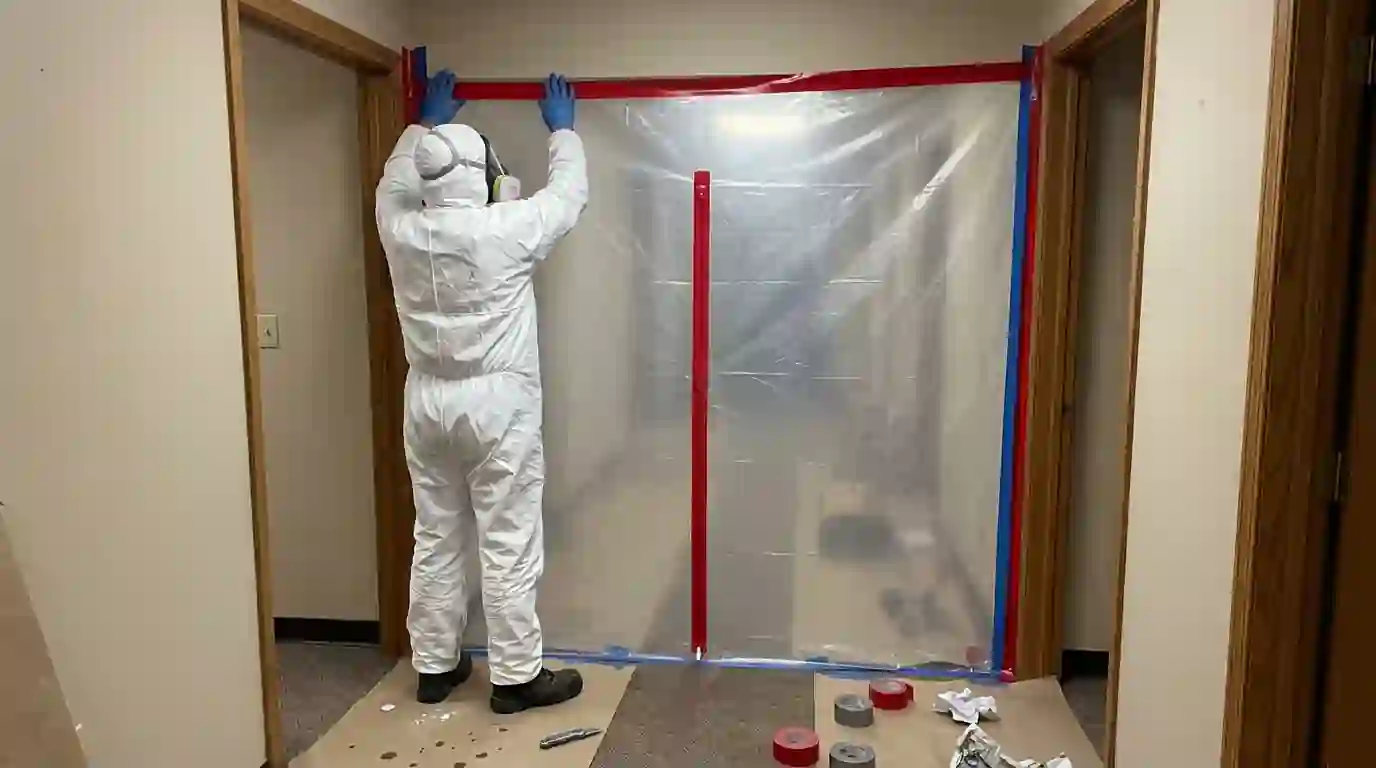
Hydroxyl and ozone treatment
After the source is dealt with, air treatment clears odor left in the house. Hydroxyl generators break down odor molecules and can run while people are home. Ozone works faster on strong odors but requires the house to be empty of people, pets and plants during treatment and aired out after, and it can affect some rubber and fabrics. We choose based on the odor and whether you're living in the house, and explain the precautions before starting.
Local conditions
Closed-up houses in winter
Odors linger longest in houses closed up against the cold. Oklahoma City hit -14°F on February 16, 2021, its second-coldest reading on record, and in weather like that nobody opens windows to air out a room that took on water from a burst line. Cold, still air also slows drying. Many of our odor calls come a few weeks after a winter leak, when a room that seemed dry starts to smell once the heat kicks on.
Step by step
How odor removal runs
- 01
Find the source
Meters and a sniff test around the original leak show what's still damp or contaminated.
- 02
Dry or remove it
Wet pad, strip, insulation or drywall is dried or removed.
- 03
Clean and treat surfaces
The floor, framing and carpet are cleaned and treated with an antimicrobial.
- 04
Treat the air
Hydroxyl or, with the house empty, ozone clears remaining odor.
- 05
Confirm
We check readings and smell again before calling it done.
What you will notice
Signs a smell means something is still wet
Smell stronger near the floor
Odor at carpet level points to pad or subfloor.
Smell when the AC or heat starts
Moisture or growth near the air handler or ducts.
Smell in one closet
Closets on outside walls hide damp bottom plates.
Smell after rain
A smell that returns with humidity means something is still absorbing water.
Carpet that feels cool
Cool or damp-feeling carpet long after the leak.
Straight answers
Questions about this job
It can clear odor in the air, but if something is still wet the smell comes back. The source has to be dried or removed first.
Not with people, pets or plants in the house. It's used only in an empty house, then the house is aired out before anyone returns.
Usually the pad underneath is still damp or was contaminated. Replacing the pad often ends the smell.
Often it means microbial growth on damp materials. That's why we look for moisture first; if there's growth, it's removed.
Finding and removing the source is usually quick. Air treatment can run from several hours to a few days.
When it's part of a covered water loss, it's commonly included. A smell weeks later may raise questions, so mention the original loss.