Why the pad gets replaced when the carpet stays
Short answer
After water damage in Oklahoma City, carpet pad is often replaced even when the carpet is saved, because pad holds far more water, dries slowly and is inexpensive. We cut out the wet pad, dry the slab or subfloor underneath, replace rusted tack strip, lay new pad and re-stretch the carpet.
We re-pad and re-stretch carpet from Shaw, Mohawk, Stainmaster and other broadloom lines after water damage.
- Shaw
- Mohawk
- Karastan
- Stainmaster
- Dixie Home
- Masland
- Kane
- Godfrey Hirst
- LifeProof
- COREtec
- Pergo
- Mannington
What the job involves
Pad is the inexpensive part, and the wet part
Most carpet pad is foam, and foam holds water. A soaked pad can take days to dry even with good equipment, and it's the most common source of a musty smell after a water job.
New pad typically costs a fraction of what new carpet does. That makes replacing it the faster and cleaner choice in most water jobs, and it lets the slab or subfloor underneath dry with air directly on it.
The carpet on top is handled separately. Synthetic carpet from a clean water leak can usually be cleaned and re-laid; carpet soaked by sewage or flood water can't.
What drives the price
What carpet pad replacement costs depend on
Pad is usually priced by the square foot, plus the labor to lift and re-stretch the carpet.
Area replaced
Replacing pad in one bedroom costs less than pad through a hall and several rooms.
Pad type
Standard rebond is inexpensive; denser or moisture-barrier pad costs more.
Tack strip
Rusted or contaminated strip adds a small amount of material and labor.
Stairs and seams
Stairs and seams across doorways take more time to re-stretch.
New carpet padding typically runs about $0.75 to $2 a square foot. Source: NerdWallet, 2026
Removing existing carpet, when it can't be saved, typically adds about $1 to $5 a square foot. Source: NerdWallet, 2026
Your options
Which pad to put back
Most broadloom in metro homes, including Shaw and Mohawk lines, is installed over rebond pad, and Stainmaster carpet often specifies a particular pad weight. We match what was there unless you ask for an upgrade. Wool carpet and wool area rugs, Karastan included, need firmer, thinner pad.
| Pad type | Good for | Trade-off |
|---|---|---|
| Rebond foam | Most rooms; matches what's usually there | Absorbs water readily if there's another leak |
| Moisture-barrier pad | Homes with pets or kids where spills are common | Can trap water coming from below |
| Dense frothed or memory foam | Comfort upgrade in bedrooms | Costs more; must suit the carpet's specs |
| Thin firm pad | Wool carpet, Berber and area rugs | Less cushion underfoot |
Rebond pad
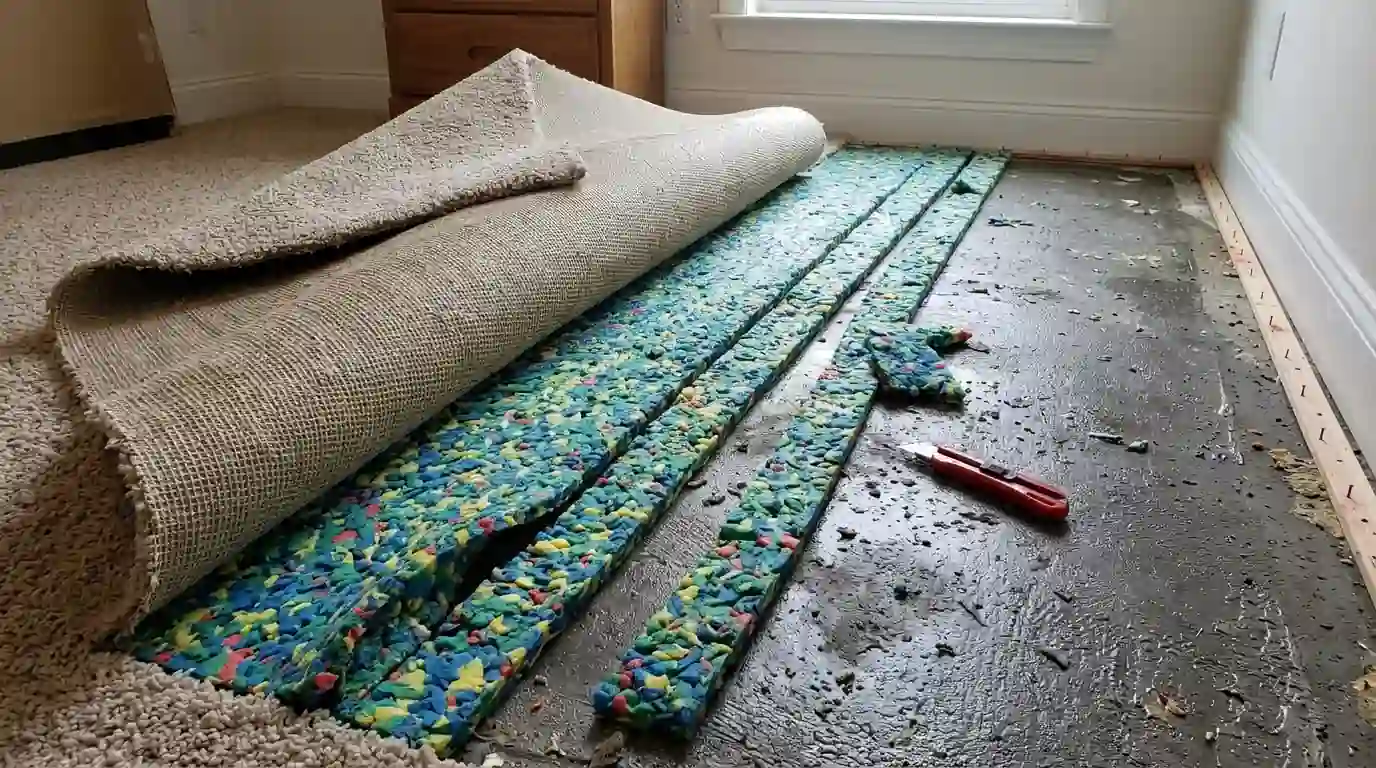
Rebond is the multicolored foam pad made from bonded scraps, and it's what most wall-to-wall carpet in metro homes sits on. It's inexpensive, comfortable and absorbs water readily. After a leak we cut the wet rebond out in sections, leaving dry pad in place where it read dry, and match the new pad's thickness and density so there's no step or soft spot where old meets new. Matching density matters on stairs and in hallways, where uneven pad wears the carpet faster.
Moisture-barrier pad
Some pads have a plastic film on top that keeps spills from soaking through to the pad. In a leak from above that helps, but water coming from below, such as a slab leak or water running under the carpet edge, gets trapped under the film. We check both sides. Where a barrier pad trapped water against the slab, we usually replace it and dry the slab before the new pad goes down.
Tack strip replacement
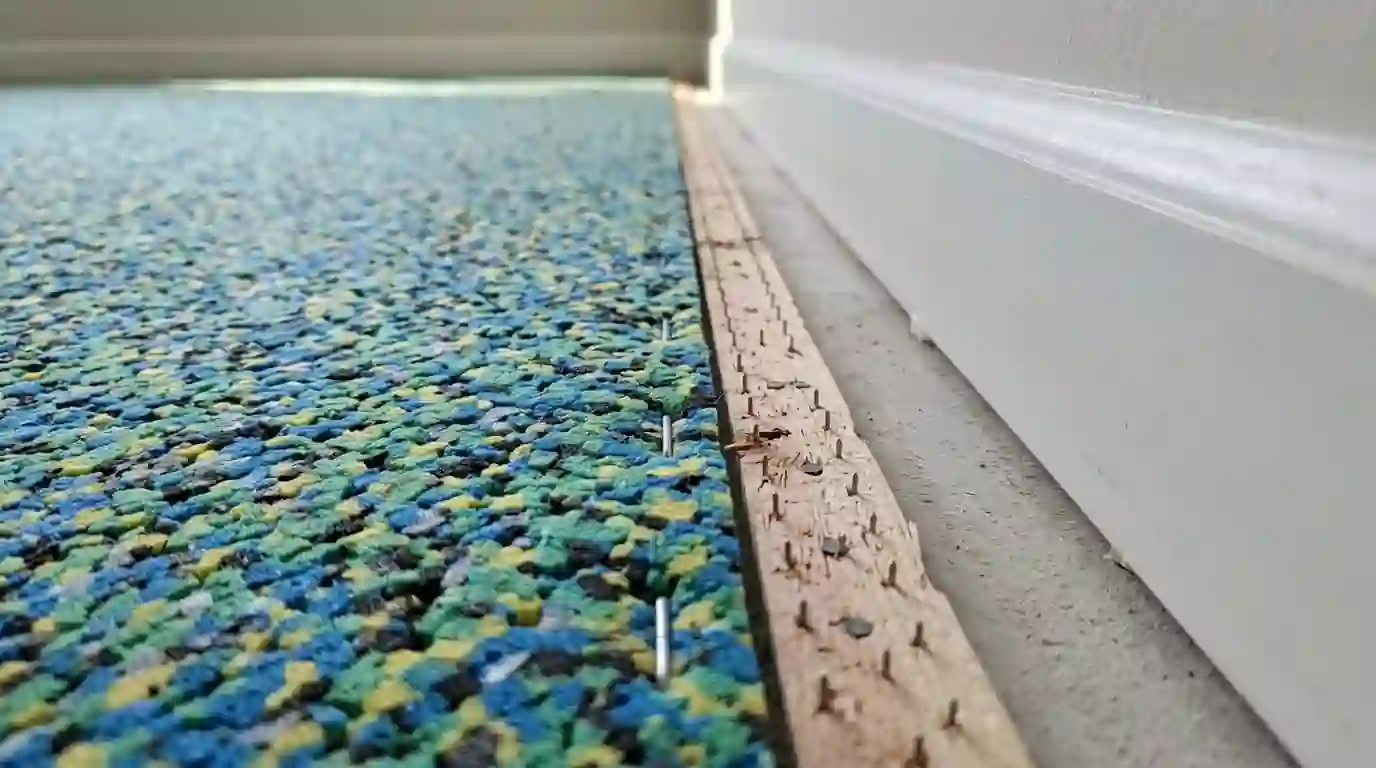
Tack strip is the thin wood strip with angled pins that holds carpet tight along the walls. Wet strip rusts and the wood softens, so it stops holding. We pull and replace tack strip that's rusted, rotted or stained, especially where sewage or gray water was involved, and nail new strip so the carpet can be stretched back tight. Skipping this is a common reason re-laid carpet comes loose later.
On the visit
What carpet pad replacement includes
- Releasing and folding back the carpet
- Cutting out wet pad only where it's wet
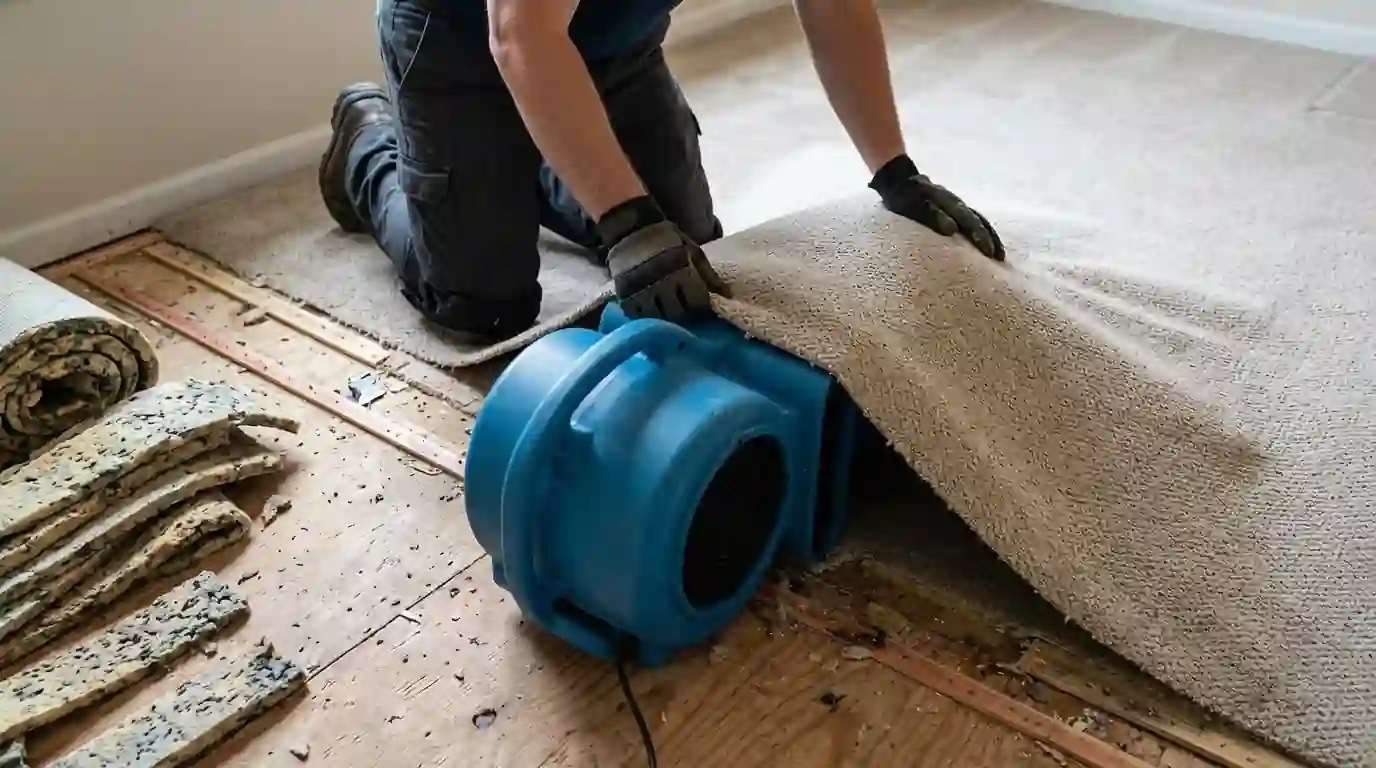
- Drying and reading the floor underneath
- Replacing rusted or contaminated tack strip
- New pad matched for thickness and density
- Power-stretching the carpet back tight
- Re-seaming where seams opened
- Haul-away of the old pad
Local conditions
Freeze weeks and a lot of wet pad at once
After a hard freeze, wet pad turns up all over Oklahoma City at the same time. During the February 2021 freeze the city answered more than 400 calls about frozen private pipes on top of 31 water main breaks, and many of those homes had carpet over a slab soaking up water from a split line. On jobs like that we pull wet pad first so the slab can start drying, then come back to re-pad and re-stretch once readings are dry.
Step by step
How carpet pad replacement runs
- 01
Lift the carpet
The carpet is released from the tack strip and folded back off the wet area.
- 02
Cut out wet pad
Wet pad is cut out in sections; pad that reads dry is left in place.
- 03
Dry the floor
The exposed slab or subfloor is dried and read until it matches dry areas.
- 04
Replace strip and pad
Rusted tack strip is replaced and new pad of matching thickness goes down.
- 05
Re-stretch
The carpet is power-stretched back onto the strip, trimmed and seamed.
Straight answers
Questions about this job
No. We replace pad where it's wet and leave dry pad in place, matching thickness so you can't feel the joint.
Usually, if the water was clean or gray and the carpet's backing is intact. Carpet soaked by sewage or flood water is replaced along with the pad.
Pad dries slowly and is inexpensive, and leaving damp pad is the usual cause of a lingering smell. Replacing it lets the floor beneath dry faster.
Not if it's matched. We match thickness and density to the existing pad so there's no step or soft spot.
Once the slab or subfloor reads dry, often within a few days. Re-padding over a wet floor traps moisture.
Pad replacement after a covered water loss is commonly part of the claim. Photos and readings of the wet pad help.