The short answer on mold
Short answer
Mold remediation in Oklahoma City starts with the moisture, not the mold. If the wall or floor is still wet, mold comes back. We find and stop the water source, set up containment so spores don't spread, remove porous materials mold has grown into, clean the framing and surfaces that stay, and dry the area.
What the job involves
Remediation is removal, not spraying
Mold grows on drywall paper, wood and dust when they stay damp. Spraying a cleaner on the visible spots doesn't reach the growth inside the material, and it doesn't fix the moisture that let it grow.
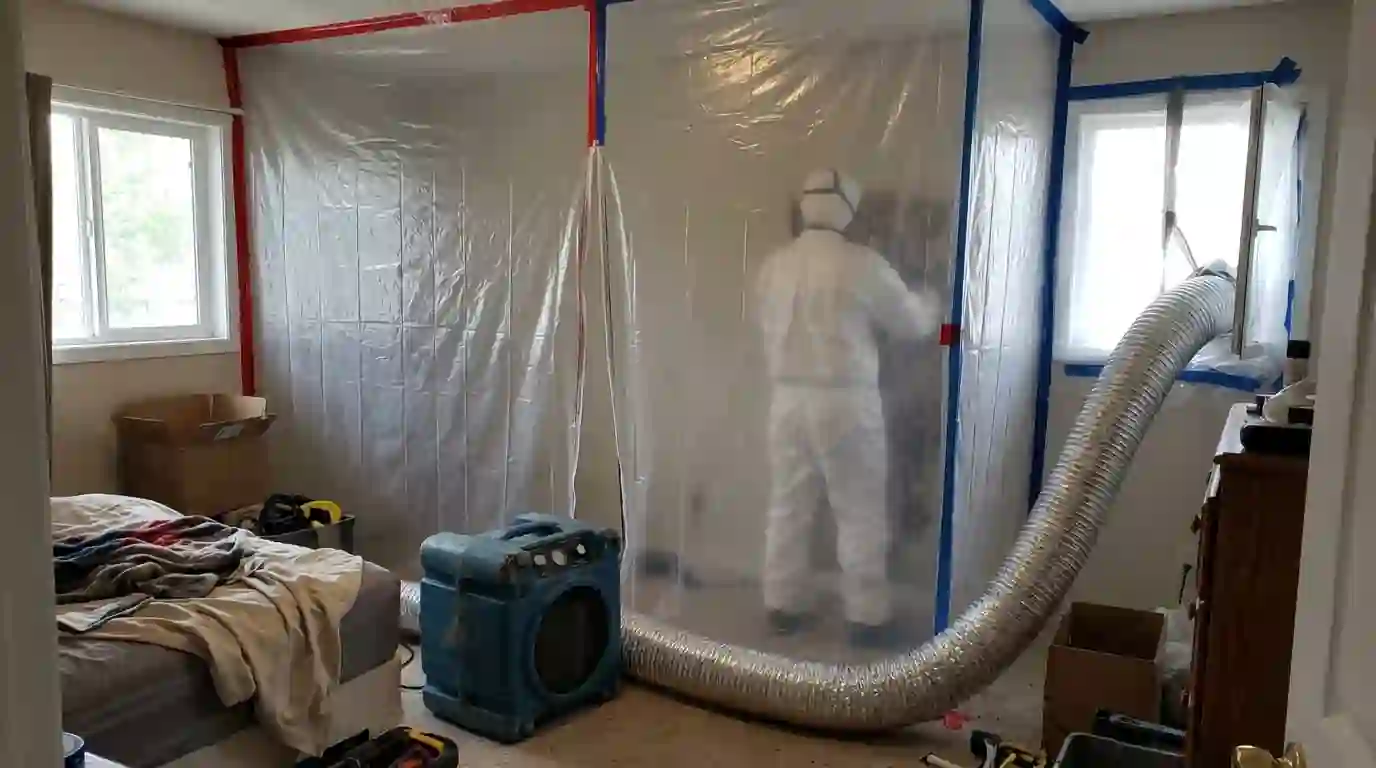
Real remediation removes what's affected. Drywall with growth through it is cut out past the visible edge. Framing gets cleaned. The area is kept behind plastic with negative air so disturbed spores go out a filtered exhaust, not into the bedrooms.
Then comes the part that decides whether it returns: drying. The materials around the removal area have to read dry before new drywall goes up, or the new wall becomes the next place it grows.
What drives the price
What mold remediation costs depend on
Mold jobs are priced by the size of the affected area and how much containment it needs.
Area affected
A patch under a sink is a small job; a wall, a closet or a crawl space is larger.
Containment level
Full plastic containment with negative air costs more than a small enclosure.
Materials removed
Drywall, insulation and carpet that have to go add removal and disposal.
Fixing the moisture
The leak or vapor barrier problem behind the mold has to be fixed too.
Angi lists mold removal at about $1,200 to $3,800 for typical jobs. Source: Angi, 2026
Do it yourself or call
Small spot or a remediation job?
| Situation | Reasonable to handle yourself | Better to call |
|---|---|---|
| Size | A small patch on a hard surface, like a shower grout line | Growth larger than a doormat, or inside a wall |
| Material | Tile, glass, metal or sealed surfaces | Drywall, carpet, insulation or wood with growth into it |
| Cause | Bathroom humidity you can fix with a fan | A leak, flood or wet crawl space behind it |
| Health | No one in the house has breathing issues | Anyone with asthma, allergies or a weak immune system |
Containment and negative air
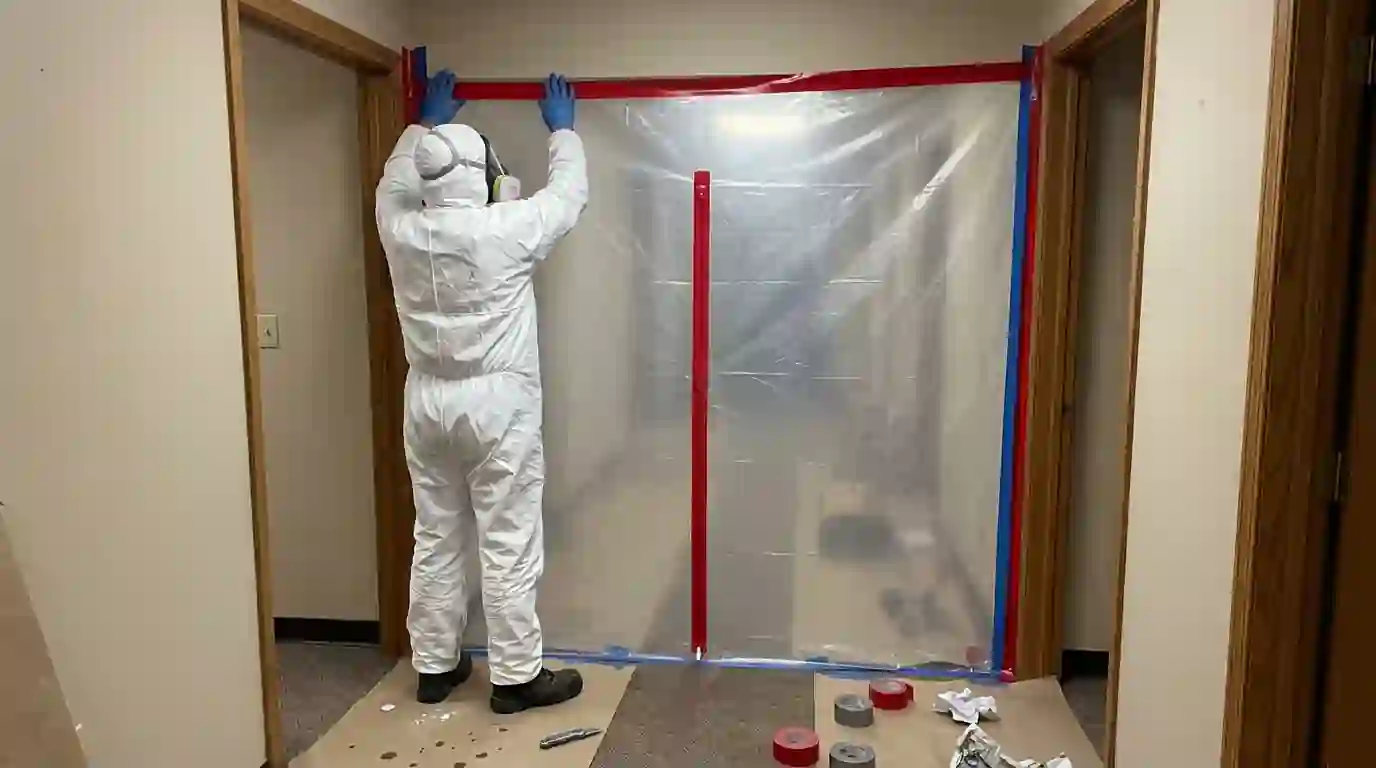
Cutting moldy drywall releases spores and dust. Containment means sealing the work area with plastic sheeting and a zip door, then running an air scrubber with a HEPA filter that exhausts outside or pulls air through the filter, so the work area stays under slight negative pressure. Air flows into the work area rather than out of it. For a small patch under a sink, containment can be a simple enclosure. For a whole wall or a crawl space, it's a full setup with the rest of the house protected.
Drywall and framing mold
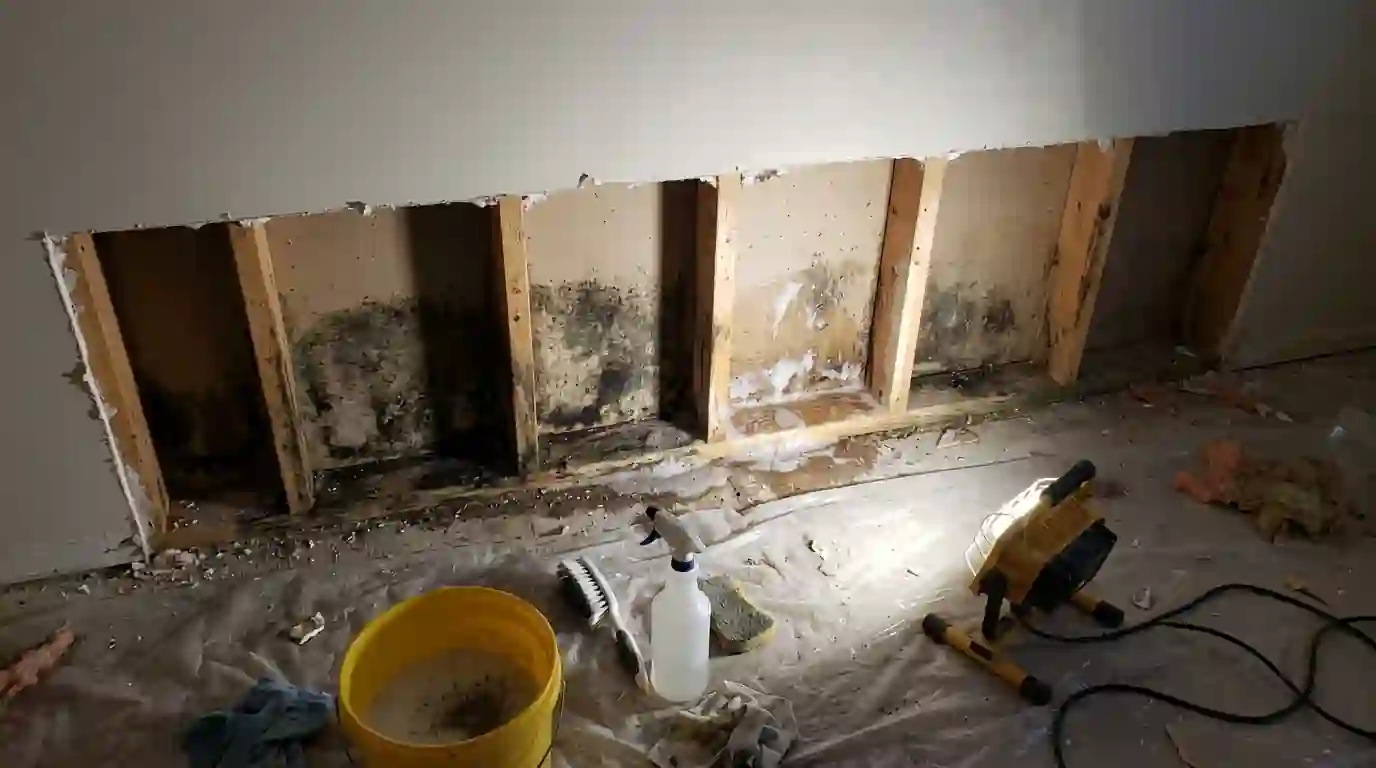
Mold on drywall usually starts where water sat: at the bottom of a wall after a leak, behind a toilet, under a window. We cut the drywall out past the edge of visible growth, bag it inside the containment, and inspect the framing behind it. Studs and plates with surface growth are cleaned and, where needed, sanded. Wet framing is dried and checked with a meter before anything is closed up, so the new drywall goes onto dry wood.
Crawl space and attic mold
Crawl spaces and attics hide mold because nobody looks there until there's a smell. In a crawl space, standing water, a torn vapor barrier or a plumbing leak keeps the joists damp. In an attic, a roof leak or a bathroom fan venting into the attic does it. We remove what's affected, clean the framing, deal with the moisture source, and replace the vapor barrier or insulation where they were part of the problem.
On the visit
What a mold remediation includes
- Moisture mapping to find the water source
- Containment with plastic and a zip door
- HEPA air scrubber running during the work
- Removal of affected drywall, insulation and carpet
- Cleaning of framing and hard surfaces
- Drying with readings before closing walls
- Photos of the affected area before and after
- Rebuild of drywall and finishes once dry
Local conditions
Slab, crawl space and where mold hides
Most Oklahoma City homes are wood-framed on a slab or over a crawl space, and mold follows the water differently in each. On a slab, it shows up at the bottom plate and the lower few inches of drywall after a leak that wasn't dried, often behind furniture against an outside wall. Over a crawl space it grows on the underside of the subfloor and the joists, where a torn vapor barrier or a plumbing drip keeps the wood damp for months.
Step by step
How a mold remediation job runs
- 01
Find the moisture
Meters and a thermal camera locate the wet materials and the water source feeding the growth.
- 02
Contain
Plastic sheeting, a zip door and a HEPA air scrubber keep spores inside the work area.
- 03
Remove
Drywall, insulation and other porous materials with growth are cut out past the visible edge and bagged.
- 04
Clean the structure
Framing and hard surfaces are cleaned, and wet wood is dried until it reads dry.
- 05
Check and rebuild
The area is checked before containment comes down, then new drywall and finishes go in.
What you will notice
Signs mold is growing where you can't see
Musty smell
An earthy, stale smell in one room or closet that doesn't clear with airing out.
Spots at the bottom of a wall
Gray, green or black speckling near the baseboard after a leak.
Peeling or bubbling paint
Paint lifting from drywall that's been wet behind the surface.
Warped baseboards
Baseboards swollen or pulled away where water sat.
Smell when the AC kicks on
A musty blast from vents can mean growth near the air handler or ducts.
Straight answers
Questions about this job
No. Paint doesn't stop growth inside the drywall and the stain bleeds back through. The affected material needs removing and the moisture fixed.
Not always. If mold is visible and the cause is known, removing it is the priority. Testing helps when there's a smell and no visible growth, or when you want clearance after remediation.
Color doesn't tell you the species or the risk. Any significant growth indoors should be removed and the moisture fixed, whatever color it is.
Only if the moisture does. That's why we dry the surrounding materials and fix or flag the water source before new drywall goes up.
Usually yes, with the work area sealed off. People with breathing issues may want to stay away while removal is happening.
Small areas can take a day or two. Larger areas take longer because the framing has to dry before rebuilding.