Can water-damaged hardwood be saved?
Short answer
Water-damaged hardwood in Oklahoma City can often be saved if drying starts within a day or two. Solid boards that cup usually flatten as they dry, using floor drying mats and dehumidifiers. Engineered hardwood with a thin veneer, boards that crowned or split, and floors wet for days are more likely to need replacement.
Hardwood and plank floors we dry include engineered lines from Shaw, Mohawk and Mannington, plus Pergo and LifeProof plank.
- Shaw
- Mohawk
- Karastan
- Stainmaster
- Dixie Home
- Masland
- Kane
- Godfrey Hirst
- LifeProof
- COREtec
- Pergo
- Mannington
What you will notice
Signs water has reached your hardwood
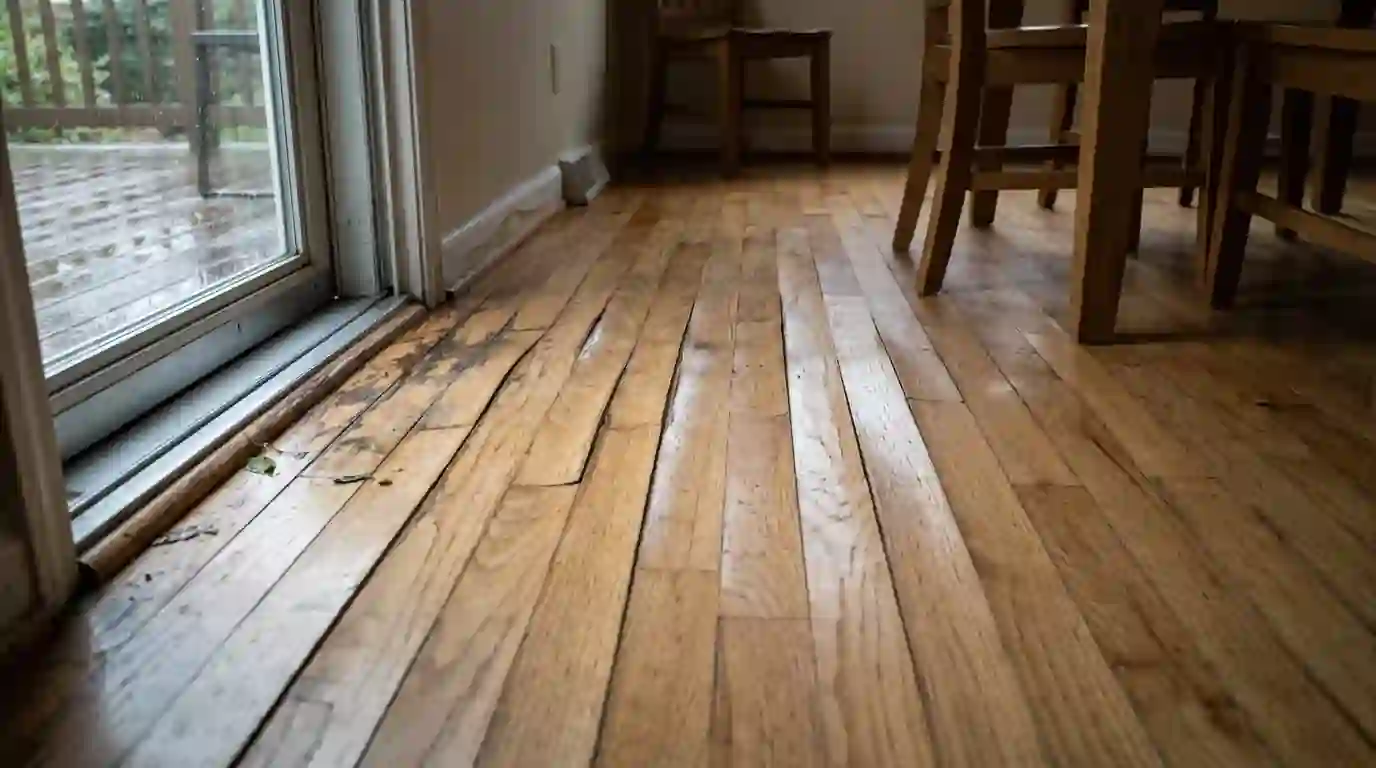
Cupping
Board edges rising higher than the center, often near a door or appliance.
Cloudy or white finish
Moisture trapped under the finish turns it milky.
Gaps closing up
Boards pressing tight or buckling where they used to have small gaps.
Dark stains at seams
Black or gray lines along board edges where water sat.
Soft or squeaky spots
A new give or squeak can mean a wet subfloor below.
What the job involves
Why wood floors react to water the way they do
Wood swells as it absorbs water. When the bottom of a board takes on more water than the top, the edges rise and the board cups. If the floor is sanded flat while it's still cupped, it crowns later as it dries.
That's why patience pays. Hardwood dried slowly and evenly often settles back close to flat, and the decision about sanding, refinishing or replacing should wait until readings are stable.
Solid hardwood is the most forgiving. Engineered boards have a thin wood layer over plywood or fiber core, and water can delaminate them, which no amount of drying fixes.
Cupped and crowned boards
Cupping means the edges of each board are higher than the center, caused by more moisture below than above. Crowning is the reverse and usually happens when a cupped floor is sanded before it dried. We record board readings across the floor at the first visit and on every return, and leave the sanding decision until the wood reaches a stable reading. Many cupped floors settle enough that only refinishing is needed.
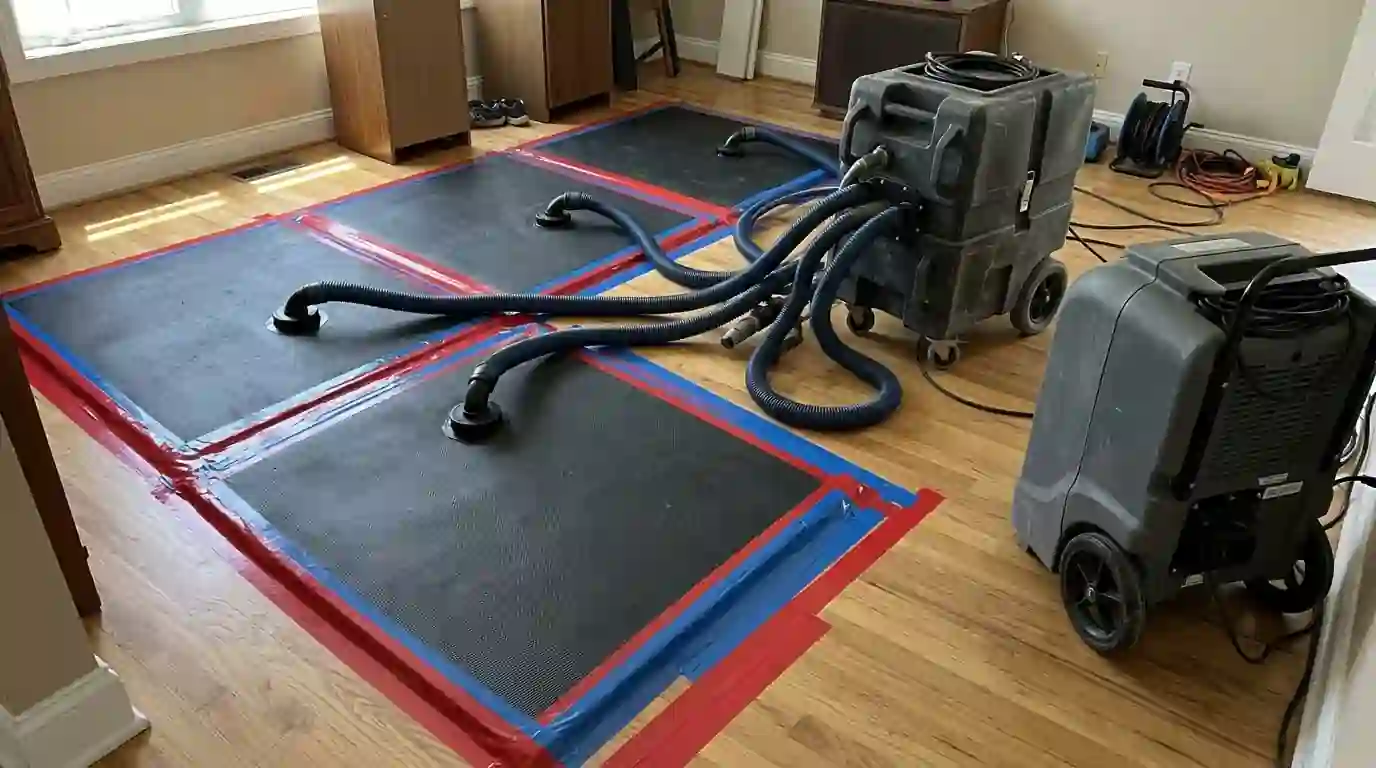
Floor drying mats
Floor drying mats are flat panels laid over the hardwood and sealed at the edges, connected to a vacuum that pulls moisture up through the boards. They work much faster than air movers alone on wood floors, especially over a slab or a wet subfloor. We combine them with dehumidifiers so the moisture pulled from the wood leaves the room. The finish may dull under the mats, which is usually addressed in a refinish anyway.
Solid versus engineered hardwood
Solid hardwood is one piece of wood through its thickness and can be sanded several times. Engineered hardwood, including lines from makers like Shaw, Mohawk and Mannington, has a wood veneer over a core, and that veneer can only be sanded lightly or not at all. When engineered boards get soaked, the layers can separate. We check for delamination and tell you plainly which boards will dry and which will need replacing.
Step by step
How hardwood floor drying runs
- 01
Read the floor
Moisture readings across the boards and the subfloor or slab show how far the water went.
- 02
Remove standing water
Surface water is extracted right away, and rugs and furniture come off the floor.
- 03
Set mats and dehumidifiers
Drying mats go over the wettest areas, with dehumidifiers to pull moisture out of the room.
- 04
Track every visit
Readings are logged until the wood stabilizes near normal levels for the house.
- 05
Decide on repairs
With stable readings, we tell you whether the floor needs refinishing or board replacement.
Timing
How long hardwood takes to dry
Hardwood is slower than carpet or drywall. With drying mats and dehumidifiers, many floors reach stable readings in one to two weeks, longer over a wet slab or when the water sat for days. Refinishing waits until the readings are stable, or the floor can move again after it's sanded.
Local conditions
Storm season and wood floors
Oklahoma City's severe weather season runs from March through June, with April and May the busiest, and storm water coming under an exterior door often lands on the hardwood in a front room or dining room first. Wood floors near entry doors and patio sliders are the ones we see cupping most after spring storms. The drying works best when it starts before the boards have spent days soaking water up from below.
Your options
Dry, refinish or replace
| Outcome | When it fits | What's involved |
|---|---|---|
| Dry and leave | Mild cupping that settles flat as it dries | Drying mats, dehumidifiers, readings |
| Dry and refinish | Settled boards with finish damage or slight cupping left | Drying first, then sanding and refinishing |
| Replace boards | Crowned, split, delaminated or stained boards | Selective board replacement, then blending the finish |
| Replace the floor | Engineered floor delaminated across the room, or long-term water | Removal, drying the subfloor or slab, new flooring |
What drives the price
What hardwood water damage costs depend on
Drying hardwood costs less than replacing it, which is why early drying is worth it.
How wet and how long
Floors caught early dry with less equipment time and fewer replaced boards.
Solid or engineered
Engineered boards are more likely to need replacing if they delaminate.
Refinishing
Sanding and refinishing after drying is usually a separate step.
Subfloor or slab
Wet subfloor or slab under the wood has to dry too.
HomeAdvisor puts hardwood water damage repair at about $10 to $15 a square foot. Source: HomeAdvisor, 2025
Straight answers
Questions about this job
Often, if it dries slowly and evenly. Many cupped floors settle close to flat; some need light sanding and refinishing afterward.
Not while it's wet. Sanding a cupped floor before it dries usually leads to crowning later. Wait for stable readings.
Sometimes. If the veneer hasn't separated from the core, it can dry. Delaminated boards have to be replaced.
Drying mats pull moisture up through the wood much faster than air alone. They stay on until the readings drop.
When the water loss is covered, drying and needed board replacement or refinishing are commonly part of the claim.
Yes, carefully, around the mats and equipment. Keep heavy furniture off the drying area.