Can wet carpet be saved?
Short answer
Wet carpet in Oklahoma City can usually be dried in place when the water was clean and it's handled within a day or two. We extract the carpet and pad, lift or float the carpet so air reaches the pad side and the slab, and re-stretch it once readings are dry. Carpet soaked by sewage or flood water has to go.
Carpet we dry and re-stretch includes Shaw, Mohawk and Stainmaster broadloom, plus Karastan and other wool rugs.
- Shaw
- Mohawk
- Karastan
- Stainmaster
- Dixie Home
- Masland
- Kane
- Godfrey Hirst
- LifeProof
- COREtec
- Pergo
- Mannington
What the job involves
What saving a wet carpet really involves
Drying carpet isn't about the fibers you walk on. It's about the pad underneath and the slab or subfloor under that, because that's where the water sits and where the musty smell starts if it's left.
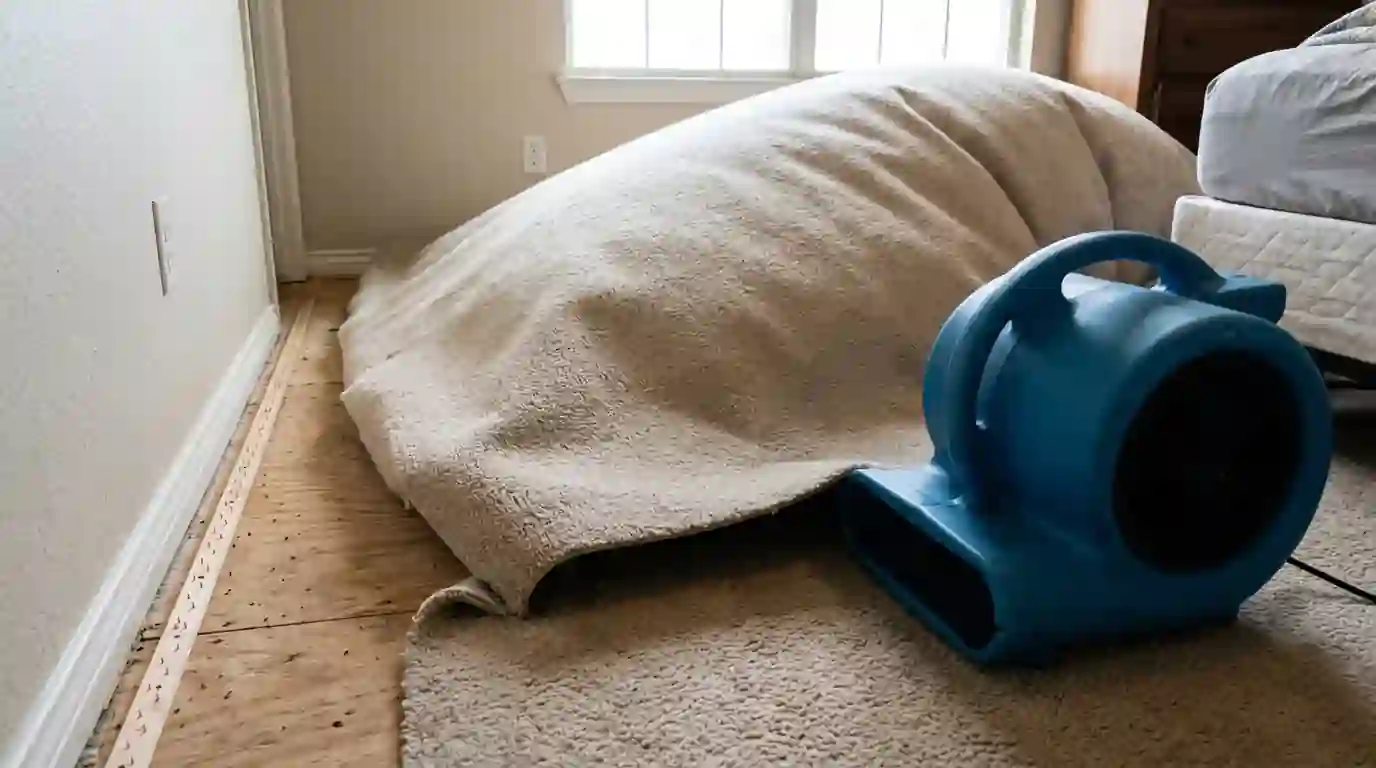
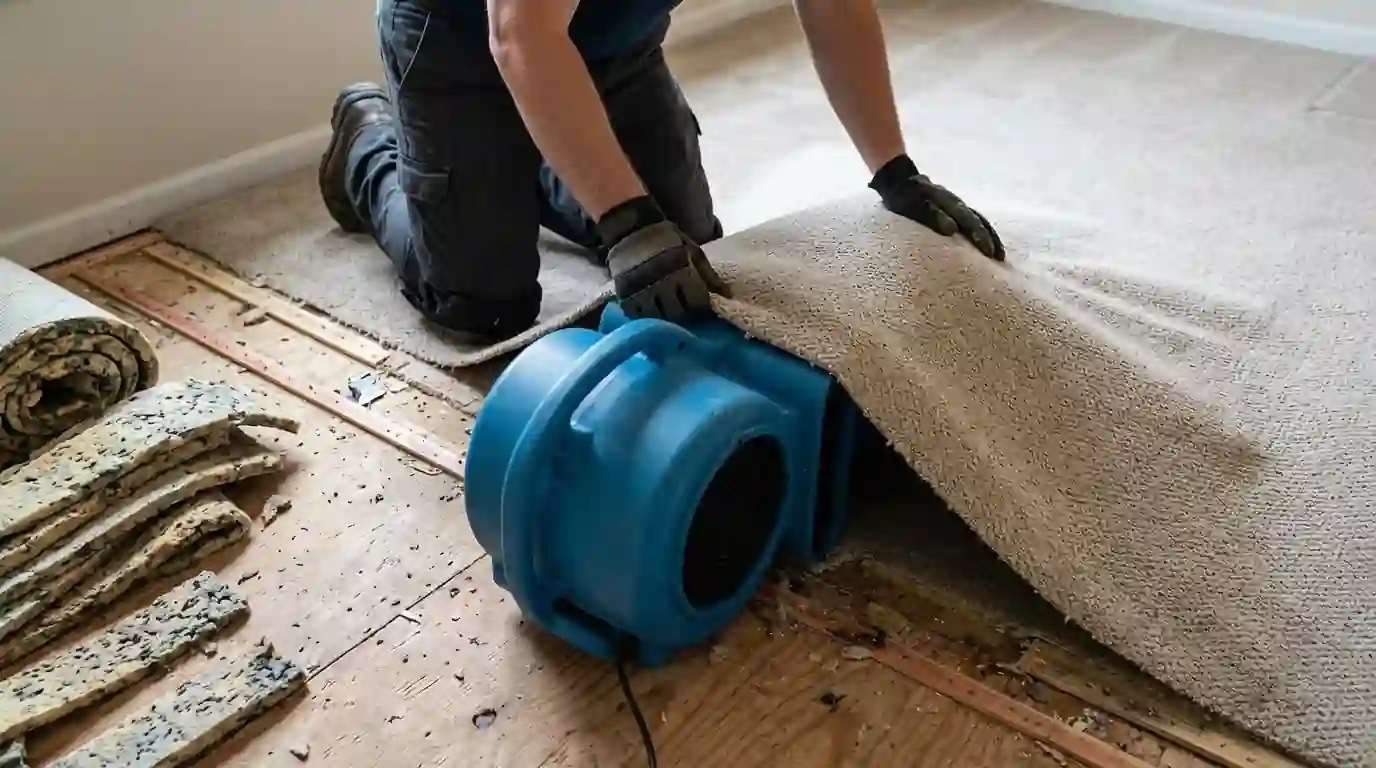
So the work happens from below. After extraction, the carpet is pulled off the tack strip along one edge and floated, with air movers blowing underneath, so the backing, pad and floor all get air. Pad that's beyond saving is cut out in strips while the carpet stays.
When everything reads dry, new pad goes down where needed, the carpet is re-stretched onto the tack strip, and the seams are checked. Done right, you can't tell it was ever wet.
Floating carpet to dry the pad side
Floating means detaching the carpet from the tack strip along a wall and raising it on a cushion of moving air. An air mover aimed under the edge inflates the carpet slightly, so air flows across the backing and the pad or slab beneath. It dries far faster than blowing air over the top, because the water was never in the top. We float only as much as the wet area needs and keep foot traffic off the raised sections.
Re-stretching after drying
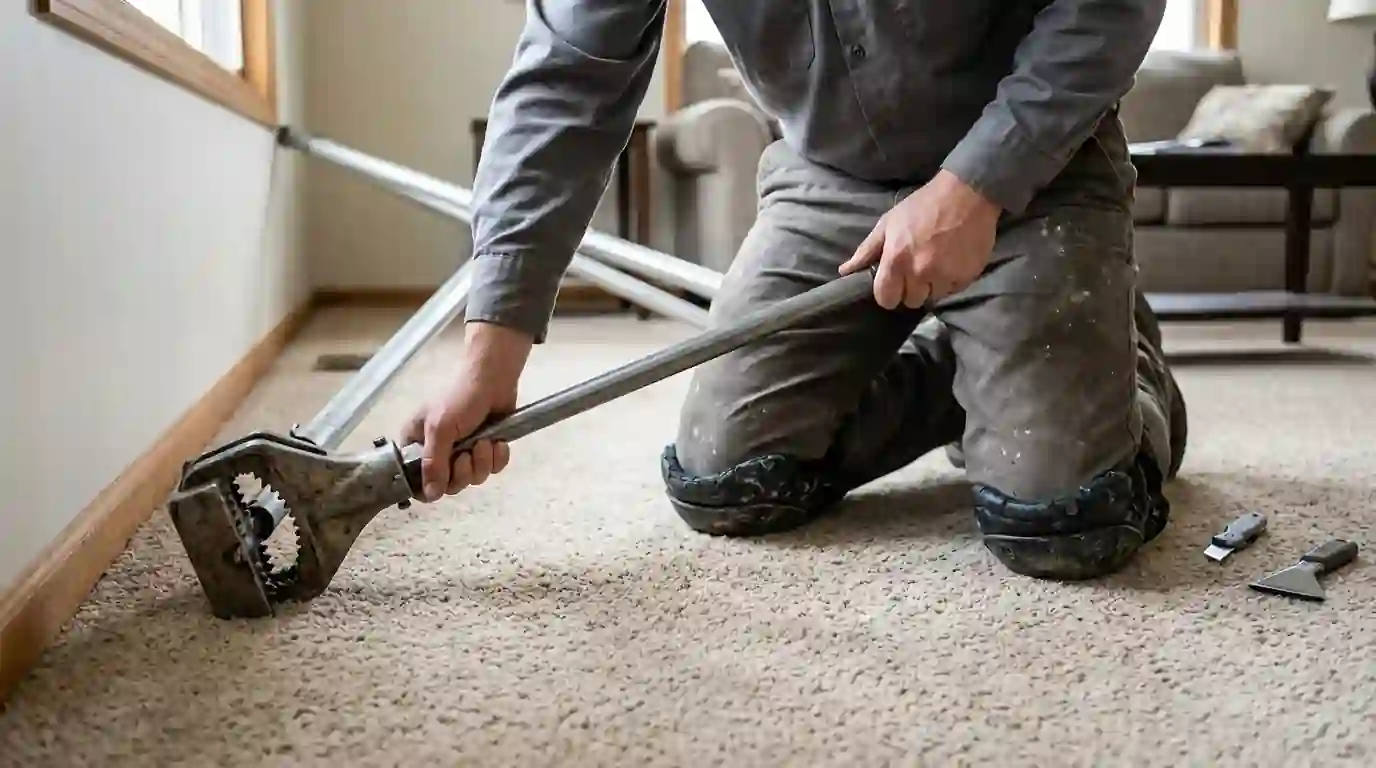
Wet carpet relaxes and can ripple once it dries, especially after it's been detached from the tack strip. Re-stretching uses a power stretcher to pull it tight across the room and hook it back onto the strip, then trims and tucks the edges. Skipping this step is why some dried carpet looks wavy months later. Damaged tack strip is replaced first, since rusted or rotted strip won't hold. Seams get a final look too, because a seam that opened while wet has to be re-glued before the room goes back into use.
When carpet cannot be saved
Some carpet should come out no matter how well it's dried. Sewage and outside flood water contaminate both carpet and pad. Carpet whose backing has delaminated from the face fibers won't lie flat again. And carpet left wet for several days in a warm house may already be growing something. When that's the case we say so on the first visit, photograph it for your claim, and cut it out cleanly so the floor underneath can dry.
Step by step
How a wet carpet gets back to dry
- 01
Check the water type
Clean, gray or sewage water decides whether the carpet and pad can stay, so that's the first question.
- 02
Extract hard
Wand and weighted extraction pull as much water as possible out of the carpet and the pad below.
- 03
Float or pull pad
The carpet is lifted off the tack strip and floated; pad that can't be saved is cut out in strips.
- 04
Dry the floor beneath
Air movers run under the carpet and dehumidifiers pull the moisture out of the room and the slab.
- 05
Re-pad and re-stretch
Once readings are dry, new pad goes in where needed and the carpet is stretched back onto the strip.
Local conditions
Slab or crawl space changes how carpet dries
Most Oklahoma City houses sit on a concrete slab or over a crawl space, and that changes how wet carpet dries. On a slab, water gets trapped between the pad and the concrete, and the slab gives it back slowly, so we meter the concrete itself before any carpet goes back down. Over a crawl space, water that slips through subfloor seams lands on the vapor barrier below, so drying the carpet is only half the job.
Do it yourself or call
Fans and a shop vac, or a crew?
| Situation | Reasonable to try yourself | Better to call |
|---|---|---|
| Small damp spot | A spill smaller than a doormat, blotted and fanned | Damp carpet that's still damp the next day |
| Soaked area | Not really; the pad holds the water | Carpet that squishes or covers a room |
| Smell | None yet after a quick cleanup | Any musty smell, which means the pad or floor is still wet |
| Pulling it up | Avoid; wet backing tears off the tack strip | Floating and re-stretching |
Your options
Dry it in place, replace the pad, or replace it all
Most broadloom in metro homes, Shaw and Mohawk lines included, is synthetic and handles clean water well. Stainmaster-treated carpet still needs the pad dried or replaced. Wool and wool-blend carpet, like many Karastan pieces, needs gentler drying and can bleed dye.
| Option | When it fits | What it involves |
|---|---|---|
| Dry in place | Clean water, caught within a day or two, backing intact | Extraction, floating, drying, re-stretch |
| Keep carpet, replace pad | Clean water that sat longer, or gray water on synthetic carpet | Pad cut out, carpet cleaned and treated, floor dried, new pad |
| Replace carpet and pad | Sewage, flood water, delaminated backing or growth | Removal, disposal, floor cleaned and dried before new carpet |
What drives the price
What saving carpet costs compared with replacing it
Drying carpet in place is usually cheaper than replacing it, but the pad is often replaced either way because it's the inexpensive part.
Pad replacement
New pad is far cheaper than days of drying a soaked one, so we often replace it even when the carpet stays.
Square footage
One bedroom is a different job from carpet that runs through the hall into three rooms.
Water type
Gray water adds cleaning and an antimicrobial; sewage means removal and disposal.
Re-stretching and seams
Large rooms, stairs and seams across doorways add stretching and repair time.
Replacing only the pad typically costs about $0.75 to $2 a square foot, far less than new carpet. Source: NerdWallet, 2026
For comparison, full carpet replacement typically runs about $3 to $11 a square foot. Source: NerdWallet, 2026
Straight answers
Questions about this job
With extraction and floating, carpet and pad from a clean water loss often dry in two to four days. The slab or subfloor under it can take longer, and we don't re-stretch until that reads dry too.
It can relax and ripple after drying, which is why we re-stretch it onto the tack strip. Delaminated carpet won't lie flat again and has to be replaced.
Often, yes. Pad is inexpensive and holds water much longer than carpet, so replacing it is usually faster and cleaner than drying it.
Keep traffic off the raised sections so the backing doesn't tear and nobody trips over the air movers. We'll leave a clear path through each room.
Yes, but wool needs gentler handling. Wool can bleed dye and shrink, so rugs come up first and dry flat with air on both sides.
A smell usually means the pad or the floor underneath stayed wet. We re-check with a meter, and treat or replace the pad if needed.