What to do about water in a crawl space
Short answer
Water in an Oklahoma City crawl space should come out within a day or two, before it wets the joists and subfloor or feeds mold. We pump standing water, remove soaked insulation and damaged vapor barrier, dry the framing with dehumidifiers and air movers, and point out where the water got in so it can be fixed.
What the job involves
Why water under the house matters upstairs
A crawl space is out of sight, so water down there can sit for weeks. Standing water and wet soil push humidity up into the joists and subfloor, which leads to musty floors, cupping hardwood and mold on the underside of the subfloor.
Water gets in from outside, through foundation vents and gaps after heavy rain or poor drainage, or from inside, through a leaking supply line, drain or water heater above. The source decides whether it's clean water or something dirtier.
Drying a crawl space is slower than drying a room. Air is tight, access is limited, and the soil keeps giving up moisture until the space is sealed back up.
Standing water under pier-and-beam homes
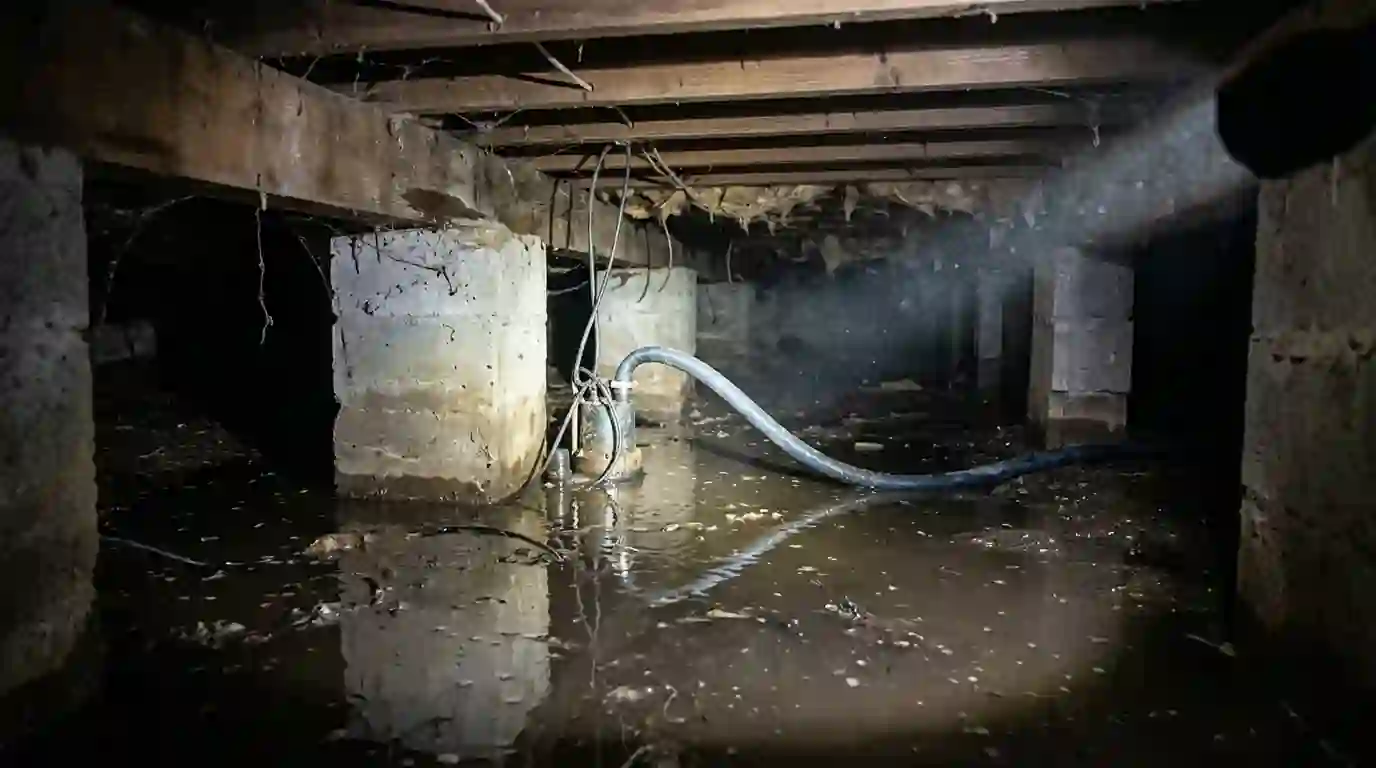
When rain or a plumbing leak puts water under a pier-and-beam house, it pools in low spots in the soil. We pump it with a submersible pump from the lowest point, then extract what's left on top of the vapor barrier or in depressions. Once the bulk is out, we check the footings and piers for standing water around them and look for the entry point: a gap at a vent, a downspout dumping against the foundation, or a pipe dripping from above.
Wet insulation and vapor barrier
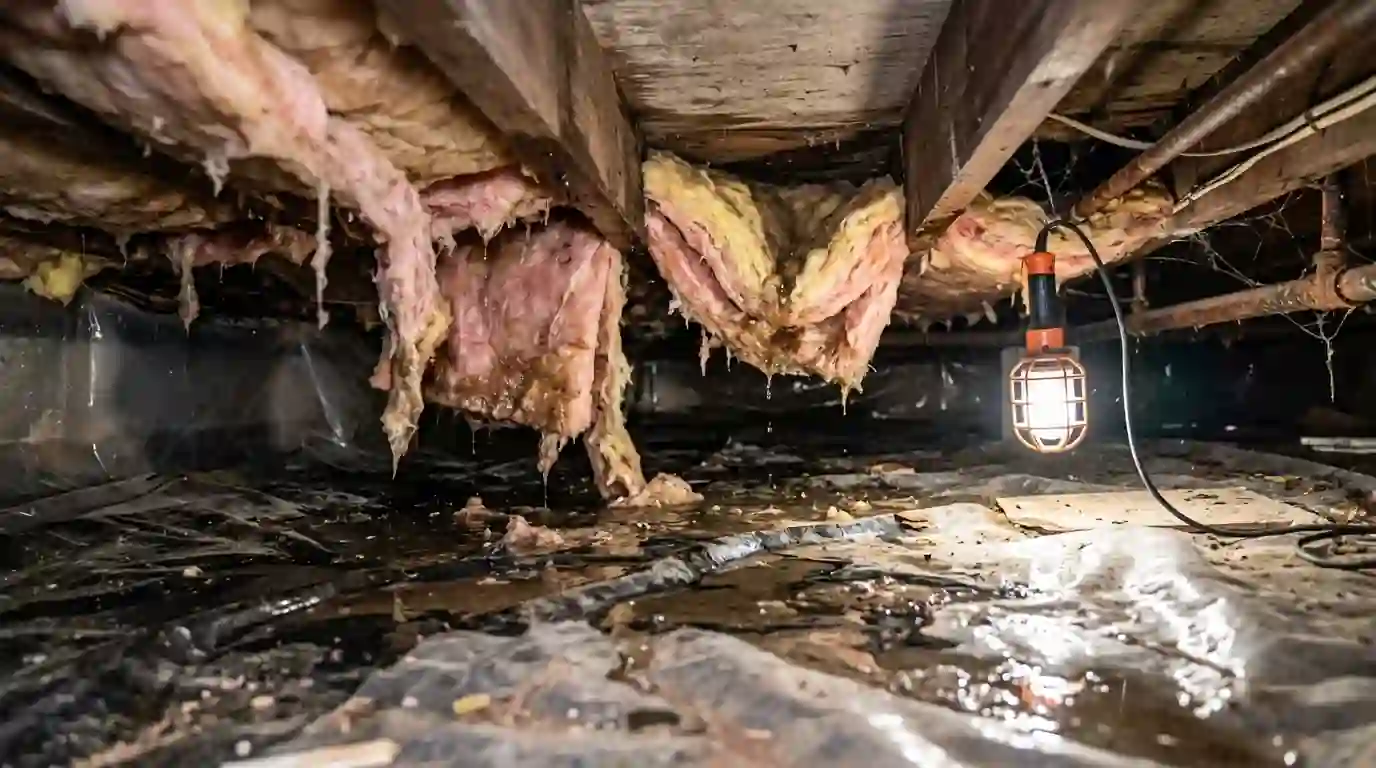
Fiberglass insulation between floor joists holds water like a sponge and sags out of place. Soaked batts are pulled and bagged. A vapor barrier that's torn, floating or full of water on top is removed where it's damaged so the soil and framing can dry. Once the space is dry, new insulation and barrier can go in, and that's the step that keeps ground moisture from coming back up into the house.
Joist and sill drying
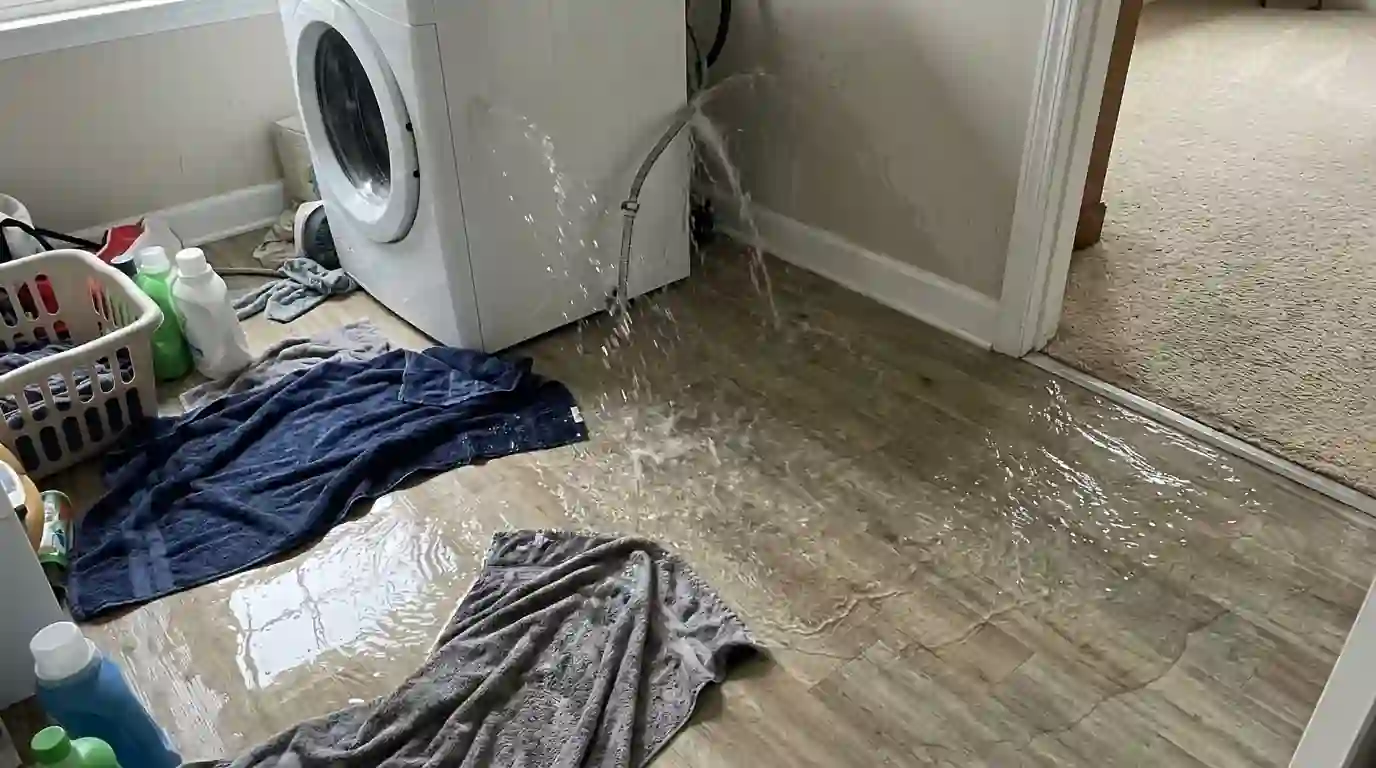
Once water and wet materials are out, the joists, sill plates and subfloor underside need to dry. We set dehumidifiers and directed air movers in the crawl space and seal vents temporarily so the equipment isn't fighting outdoor air. Wood moisture is read on several joists and the subfloor until it matches dry framing elsewhere. If mold has started on the wood, those areas are cleaned before the space is closed up.
Step by step
How a crawl space water job runs
- 01
Check before entering
We check for electrical hazards, sewage and access before anyone goes under the house.
- 02
Pump the water
Standing water is pumped from the low point and the rest is extracted.
- 03
Pull wet materials
Soaked insulation and torn or flooded vapor barrier are removed and bagged.
- 04
Dry the framing
Dehumidifiers and air movers run with vents sealed until joists and subfloor read dry.
- 05
Close it up right
New barrier and insulation go in, and we show you where the water got in.
Timing
How long a crawl space takes to dry
Expect longer than a room inside the house. After the water and wet insulation are out, joists and subfloor usually take several days of dehumidification, and wet soil keeps adding moisture until the vapor barrier is back in place. We read the wood each visit and close the space up only when it reads dry.
Local conditions
Heavy rain and older crawl spaces
Oklahoma City gets a stormy spring and a second rain peak in September and October, and hard storms can put more water around a foundation than the soil can take. In May 2015 the city logged 19.48 inches of rain, its wettest month on record, and crawl spaces under older pier-and-beam homes filled from below. Most crawl space calls come in those wet stretches, often days after the rain, once the smell reaches the floors above.
On the visit
What a crawl space water job includes
- Safety check for electrical and sewage hazards
- Pumping and extraction of standing water
- Removal of soaked insulation
- Removal of torn or flooded vapor barrier
- Drying of joists, sills and subfloor
- Moisture readings on the framing
- Mold check on wood surfaces
- New barrier and insulation once dry
What drives the price
What crawl space water removal costs depend on
Crawl space jobs are priced by access, volume and what has to be replaced. We don't have a reliable local figure to quote, so here are the factors.
Access
A low or tight crawl space takes more labor than one you can kneel in.
Water source
Clean rainwater or a supply line is simpler than a sewer or drain leak.
Insulation and barrier
Removing and replacing insulation and vapor barrier adds material and labor.
Drying time
Crawl spaces take longer to dry than rooms, which adds equipment days.
Straight answers
Questions about this job
It's urgent rather than a 2 a.m. emergency, unless a pipe is still leaking. Within a day or two is the goal, before the framing soaks up water and mold starts.
Water may soak into the soil, but the humidity stays and moves up into the joists and floors. Pumping and drying is faster and protects the framing.
If water comes in every heavy rain, a sump or drainage fix may help. We can tell you where the water entered; a drainage or foundation contractor handles that work.
Damp crawl space air rises into the house through gaps in the subfloor. Drying the space and replacing the barrier usually clears it.
Water from a sudden plumbing leak is often covered; groundwater and rain seepage often aren't. Your adjuster decides based on the cause.
Yes, where it was torn or flooded, once the space is dry. A good barrier keeps ground moisture from coming back up.