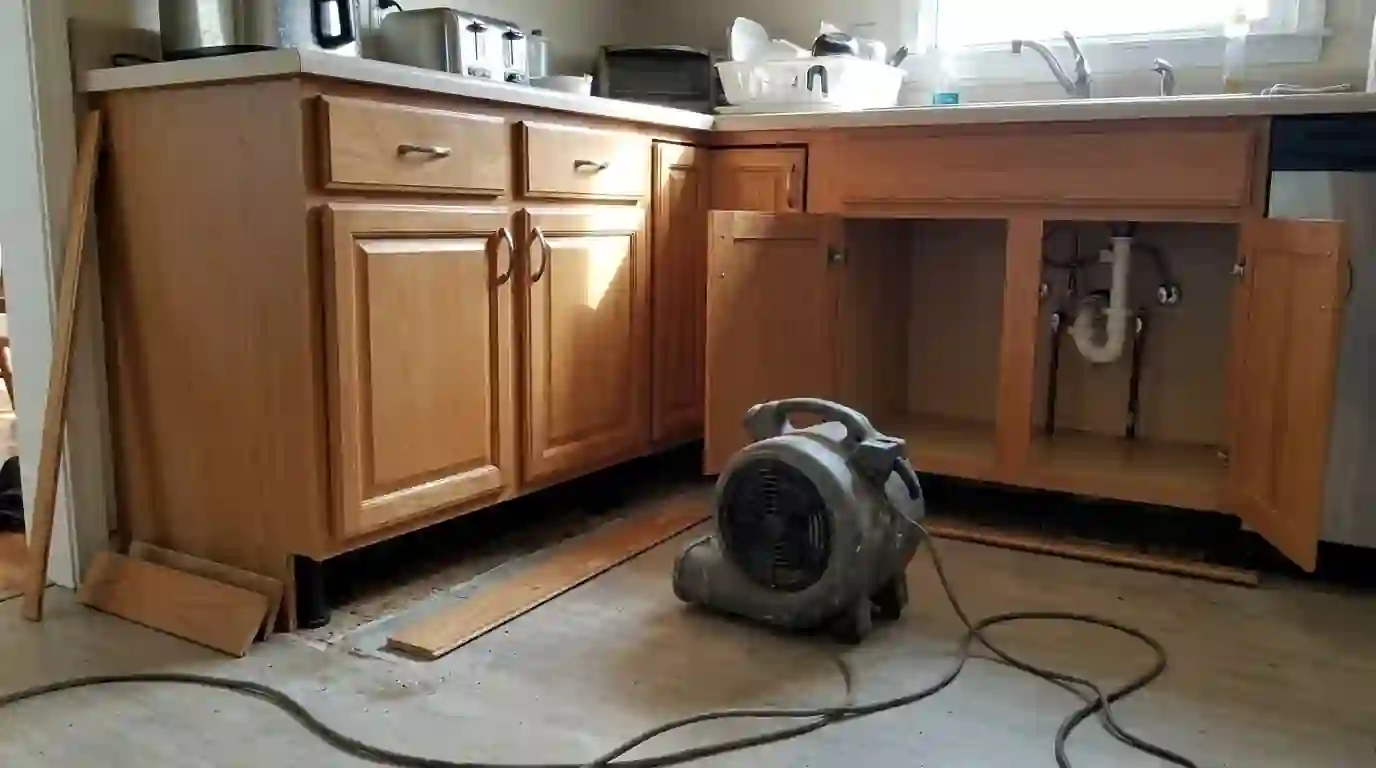
What happens to cabinets after a leak
Short answer
Kitchen cabinet water damage in Oklahoma City usually comes from a sink supply line, a drain, the dishwasher or a fridge line. Water pools under the cabinets where you can't see it. We pull toe kicks, dry the floor and wall behind the cabinets with directed air, and replace only the cabinet boxes or bottoms that have swollen.
What you will notice
Signs water is under your cabinets
Soft sink base floor
The floor of the sink cabinet feels spongy or has bubbled.
Peeling edge banding
Laminate edges lifting along the cabinet bottom or doors.
Warped toe kick
The kick panel bowing or stained at the bottom.
Musty smell when opening doors
A damp smell from inside the cabinet.
Floor stain at the cabinet line
Dark or cupped flooring right where it meets the cabinets.
What the job involves
Why water hides under cabinets
Base cabinets sit on the floor with a hollow space under them behind the toe kick. Water from a leak runs into that space and stays there, out of sight and out of reach of air, while the cabinet box above wicks it up.
Most cabinet boxes and shelves are particleboard or MDF with a laminate face. Once the core gets wet it swells, the edges lift and the bottom sags, and it doesn't shrink back. Plywood boxes and solid wood doors and face frames are more forgiving.
So the job is drying the hidden space under and behind the cabinets, and being honest about which parts can stay.
Sink base and dishwasher leaks
The sink base takes most of the water: supply lines, the faucet, the drain trap, the disposal and the dishwasher hookups all live in or next to it. A slow drip can swell the cabinet floor for weeks before anyone notices the soft spot. A failed dishwasher supply or drain hose sends water under the dishwasher and into the cabinets on either side. We read the cabinets on both sides of the leak, not just the one with the wet bottom, and check the wall behind for water that ran down inside it.
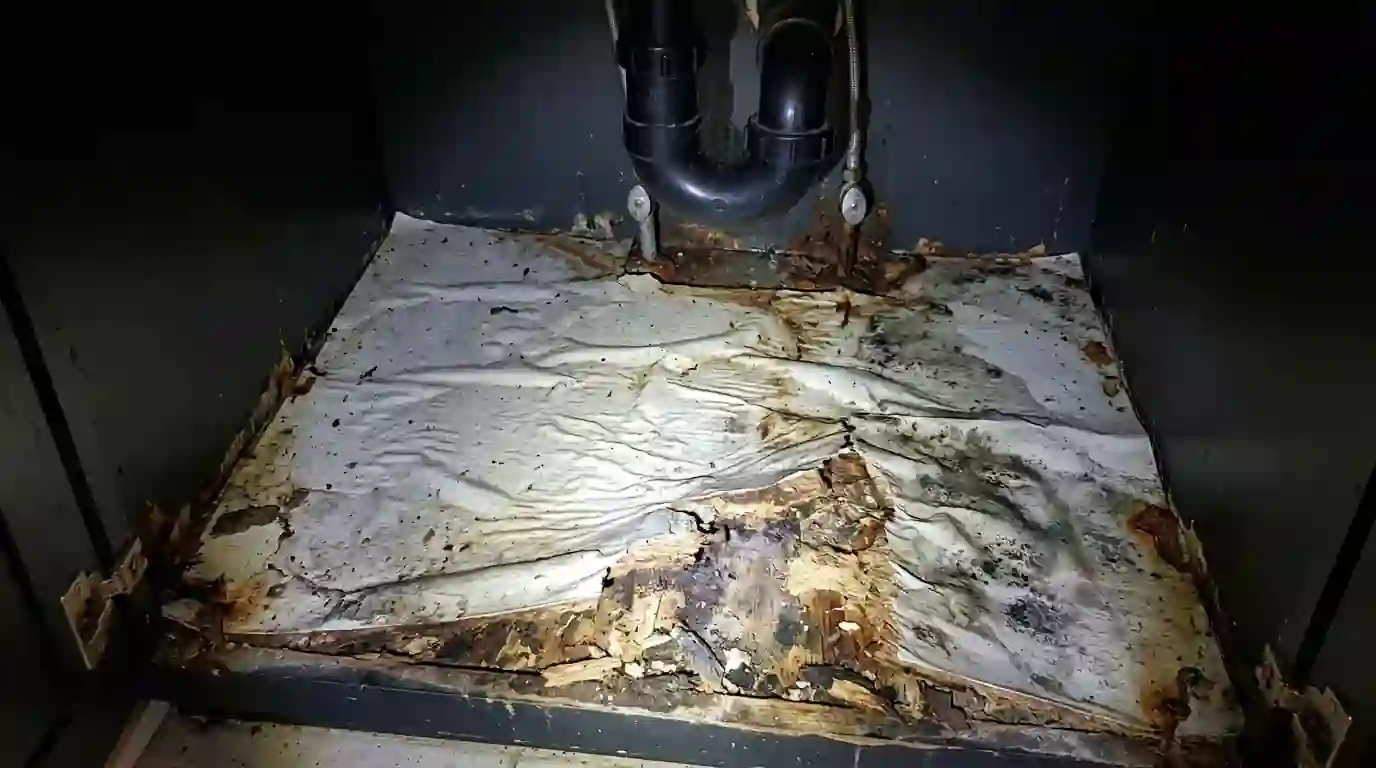
Swollen particleboard cabinet boxes
Particleboard that soaked up water swells at the edges, bubbles under the laminate and loses strength. A swollen sink base floor can often be replaced with a new panel without changing the whole cabinet. A box whose sides and back have swollen usually has to be replaced, and matching an older kitchen can mean looking for the same door style. We tell you early which boxes we expect to save, which only need a new bottom, and which will need a cabinet shop.
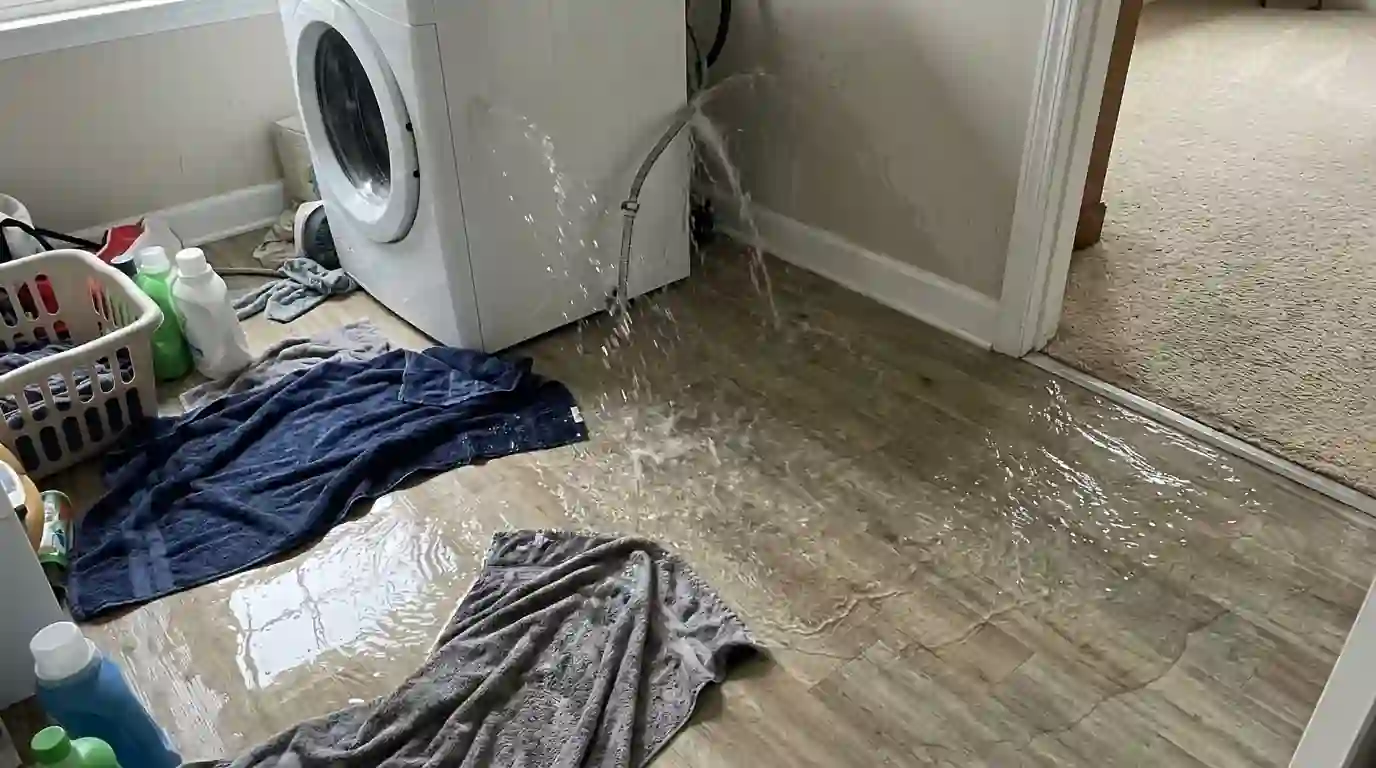
Drying under cabinets and toe kicks
To dry the hidden space, we remove the toe kick panels and sometimes drill small holes through the cabinet bottom, then push dry air into the cavity under the cabinets with air movers and dehumidifiers. That dries the subfloor or slab under the cabinets and the bottom of the wall behind them without removing countertops. If the countertop is stone or the cabinets are custom, avoiding a tear-out matters even more, so drying in place is our first choice whenever readings allow.
Step by step
How a kitchen cabinet water job runs
- 01
Stop and empty
The leak is shut off and the sink base and nearby cabinets are emptied.
- 02
Read the cabinets
Meters check cabinet floors, sides, the wall behind and the floor underneath.
- 03
Open the hidden space
Toe kicks come off, and small holes are drilled where needed to reach the cavity.
- 04
Dry in place
Air movers and dehumidifiers push dry air under and behind the cabinets.
- 05
Repair or replace
Swollen bottoms or boxes are replaced; everything else is cleaned and put back.
Local conditions
Older kitchens on the east side
Cabinet age changes the decision. Del City was incorporated in 1948 with 582 homes, about 75 percent of them built by one developer, and many east-side kitchens have been redone once or twice since then over the original floor. A leak in a kitchen like that often reaches older flooring hidden under the cabinets and newer flooring around them, and the readings decide whether drying alone will do or a box needs to come out.
Your options
Dry in place, new bottom, or new box
| Condition | Usual outcome | Why |
|---|---|---|
| Wet but not swollen | Dry in place | Particleboard that dries quickly usually keeps its shape |
| Sink base floor swollen | Replace the floor panel | The box and face frame are still sound |
| Sides or back swollen | Replace the cabinet box | Swollen particleboard loses strength and won't shrink back |
| Plywood or solid wood | Dry and refinish if needed | Real wood tolerates water far better |
What drives the price
What kitchen cabinet water damage costs depend on
Drying in place costs far less than replacing cabinets, which is why we try it first.
How long it leaked
A fresh leak often dries in place; one that ran for weeks swells boxes.
Cabinet material
Plywood and solid wood handle water better than particleboard.
Countertop
Stone or tile tops make removing a cabinet much more involved.
Matching
Older or custom cabinets can be hard to match if a box has to be replaced.
Angi puts appliance leak repair at about $175 to $500, which covers small dishwasher or fridge-line leaks caught early. Source: Angi, 2026
Straight answers
Questions about this job
Usually not. We dry under cabinets through the toe kick and small holes in the cabinet bottom, so countertops stay put in most jobs.
Often, by replacing just the cabinet floor panel. If the sides have swollen too, the box usually needs replacing.
That space gets no air. It needs drying equipment pushed into it, or it stays wet for weeks.
The holes are small, in the cabinet bottom where they aren't seen, and they let us dry without removing the cabinets.
A plumber fixes supply and drain problems; an appliance tech handles the dishwasher. We handle the water damage.
Sudden leaks are often covered; slow drips under the sink often aren't. Photos of the source and the swelling help.