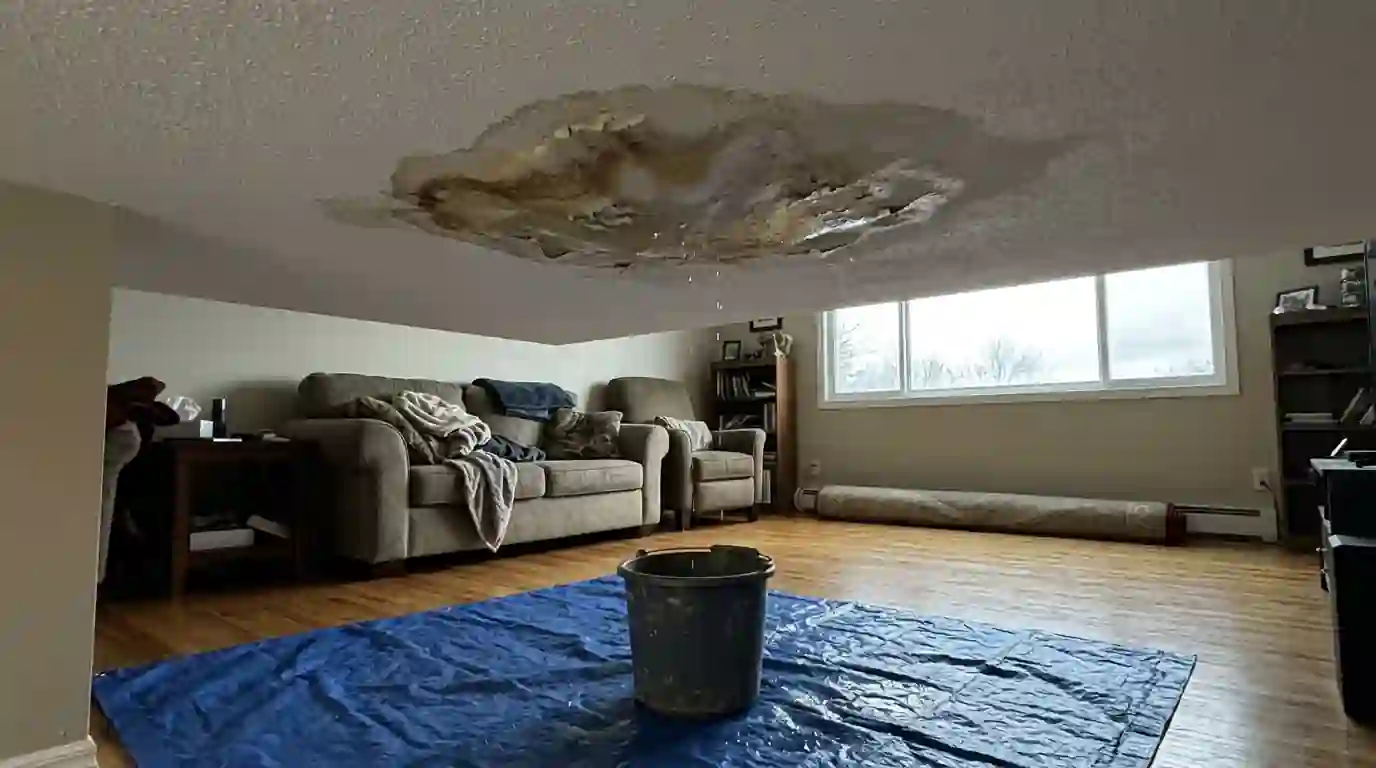
First, what to do with a wet ceiling
Short answer
With a roof leak in Oklahoma City, keep people out from under a sagging ceiling, put a bucket and tarp below the drip, and don't push on the bulge. We relieve trapped water with a small controlled opening, remove wet insulation in the attic, dry both spaces, and repair the drywall once readings are dry.
What you will notice
Signs a roof leak is reaching the ceiling
A stain that grows
Brown rings that get bigger or darker after each rain are active leaks.
Soft or bulging drywall
Ceiling that feels spongy or hangs lower in one spot is holding water.
Peeling paint around a light fixture
Water often travels to fixtures and vents first.
Drip during heavy rain only
Points to flashing or wind-driven entry rather than a pipe.
Musty smell upstairs or in a closet
Wet insulation can smell before a stain ever appears.
What the job involves
Why a roof leak is two jobs
A roof leak has a roof side and a house side. A roofer fixes or tarps the roof; we deal with the water that already came through: the wet attic insulation, the soaked ceiling drywall, and whatever it dripped onto below.
The dangerous part is the ceiling. Drywall holding water gets heavy, and a bulge can drop all at once. Opening a small relief hole lets it drain into a bucket in a controlled way, and often saves more of the ceiling than waiting does.
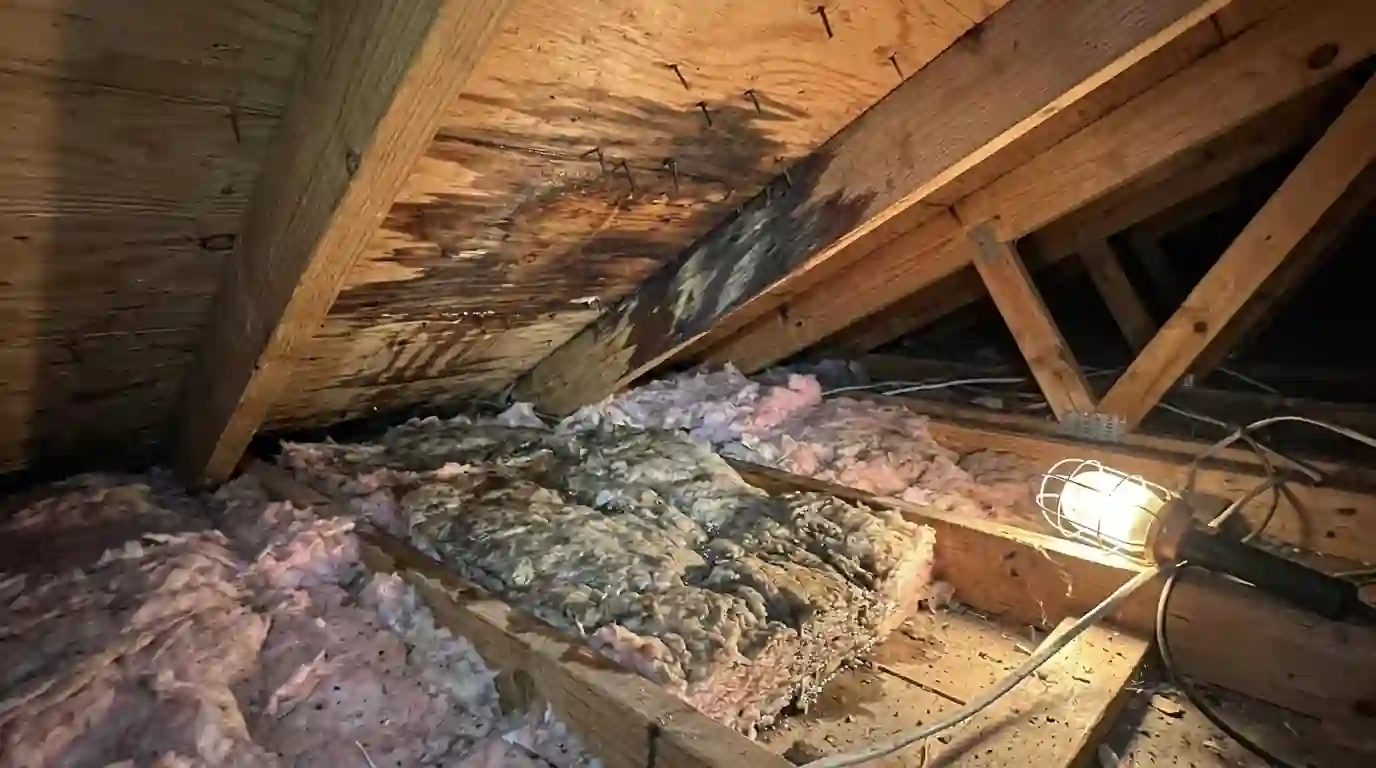
Insulation matters too. Wet fiberglass mats down and stops insulating, and blown cellulose holds water against the drywall for days. Matted or soaked sections come out so the ceiling can dry from above.
Sagging or stained ceilings
A stain that stays the same size after it dries may be old. A stain that grows, darkens or turns soft is active. Sagging drywall means water is pooled on the back of it. We open a small relief hole at the low point to drain it, then check how far the water spread across the ceiling with a meter, since the wet area is usually larger than the stain. Drywall that sagged usually has to be replaced; drywall that only stained can often be dried and sealed.
Wet attic insulation
From the room below you can't see how much insulation got wet. In the attic we check where the water entered and how far it spread along the rafters and ceiling joists. Wet fiberglass batts that have matted are removed, and soaked blown-in insulation is vacuumed out in the affected area. Once the attic and ceiling read dry, new insulation goes back in so you're not left with a cold spot.
Leaks after hail
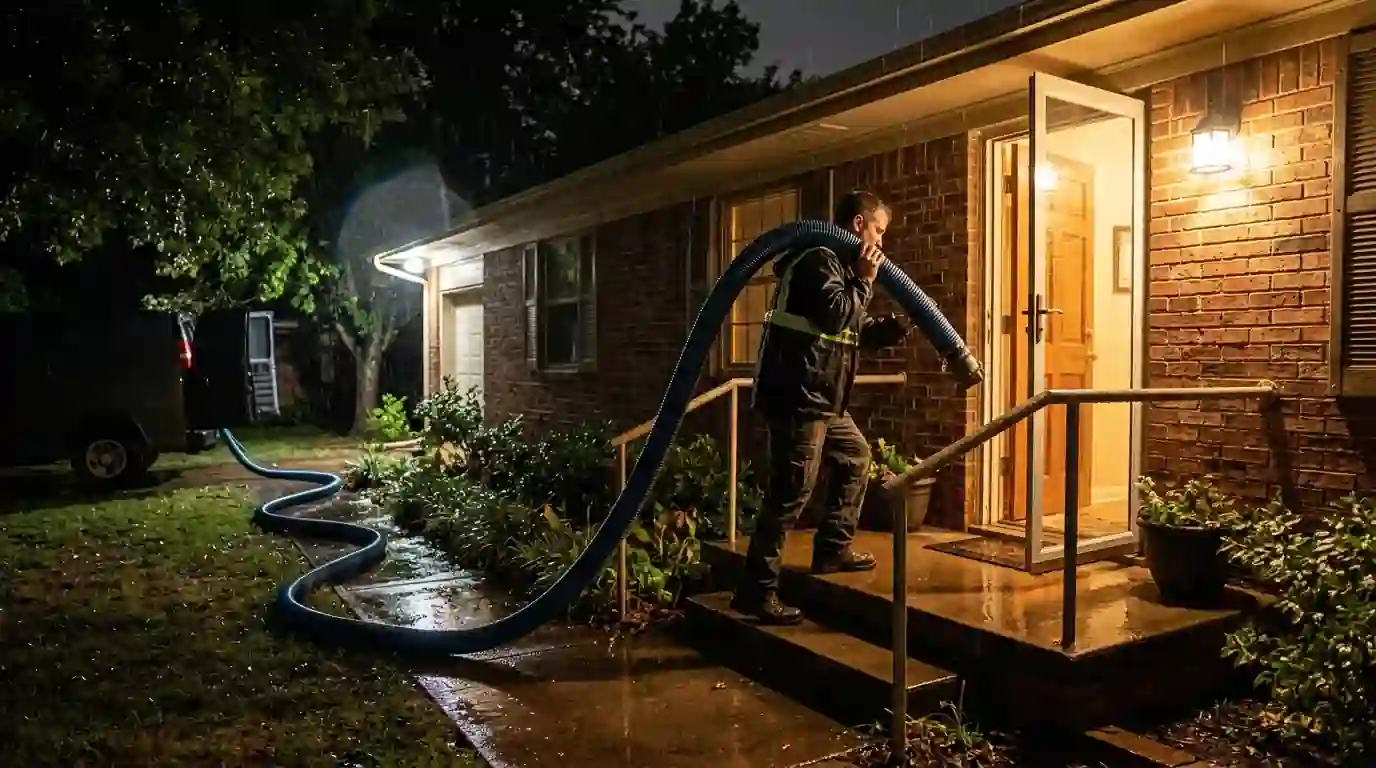
Hail can crack shingles, knock granules off and damage flashing in ways that only leak once the next hard rain arrives, sometimes weeks after the storm. Those leaks often come in at a valley, a vent boot or a chimney flashing and travel along the roof deck before dripping. We dry the house side and document the entry point with photos, which helps both your roofer and your adjuster. If the roof is still open, we can put an emergency tarp over the damaged area before drying starts.
Step by step
How a roof leak water job runs
- 01
Protect the room
Furniture moves out from under the leak, floors get covered, and a bucket and tarp catch the drip.
- 02
Relieve the ceiling
A small relief hole drains water trapped on the drywall so it doesn't fall.
- 03
Check the attic
We find the entry point, measure how far water spread, and pull wet insulation.
- 04
Dry above and below
Air movers and dehumidifiers dry the attic side, the ceiling and the room under it.
- 05
Repair the ceiling
Once readings are dry, damaged drywall is replaced, textured and painted, and insulation is restored.
Timing
How long ceilings and attics take to dry
A ceiling that only stained can dry in a few days once the leak stops. Ceilings that sagged, and attics with soaked insulation, take longer because the wet material comes out first and the framing has to dry before new drywall goes up. The roof must be repaired or tarped before drying, or the next rain starts it over.
Local conditions
Storm years in Moore and Norman
South of the city, roof leaks tend to trace back to storm damage. The May 20, 2013 tornado destroyed about 1,150 homes across Moore and was the fourth violent tornado near Moore since 1999, and in February 2023 a strong EF2 hit southeast Norman. Homes rebuilt after those storms are newer, but nearby roofs that only lost shingles or flashing can leak for months, usually at valleys and vent boots in the first hard spring rain.
What drives the price
What a roof leak water job costs depends on
The roof repair is priced by your roofer. Our part covers the water inside, and these factors move it most.
Ceiling area affected
One stain the size of a plate is far less work than a ceiling that sagged across a room.
Insulation removal
Pulling and replacing wet insulation adds labor and material.
Texture and paint matching
Popcorn, knockdown or orange-peel texture has to be matched on the repaired section.
What got wet below
Carpet, furniture and walls under the leak may need their own drying.
Angi puts ceiling water damage repair at about $450 to $1,600, separate from the roof repair itself. Source: Angi, 2026
Straight answers
Questions about this job
Only if water is clearly pooling and you can do it from a safe spot with a bucket ready. Otherwise keep everyone out from under it and call; we'll relieve it in a controlled way.
We handle the water inside. The roof itself is repaired or tarped by a roofer, and we can cover a damaged area with an emergency tarp to stop more water coming in.
Often, if it never sagged and dries fully. We dry it, check it with a meter, then seal the stain so it doesn't bleed through new paint.
Sudden storm damage that lets water in is commonly covered; leaks from wear and age often aren't. Photos of the entry point and the interior damage help your claim.
You usually can't tell from below. If water came through the ceiling, assume the insulation above it is wet until someone checks the attic.
Wind direction matters. Flashing and vent boots can let water in only when rain blows from one side, which is why some leaks come and go.