What makes storm water different
Short answer
Storm and flood water in Oklahoma City is treated as contaminated once it has crossed soil, lawns or streets, so carpet and pad it soaked usually come out. We pump and extract it, remove porous materials it reached, clean and disinfect hard surfaces, then dry the structure until readings match unaffected rooms.
What you will notice
Signs storm water got further than it looks
Carpet wet along an outside wall
Dampness that starts at the wall and fades toward the room points to water coming through or under it.
Stain below a window
A dark line or bubbling paint under a window frame after a storm.
Swollen baseboards
MDF baseboards that puffed up or pulled away from the wall soaked water from the floor.
Musty garage
A damp smell in the garage days after a storm, even with the floor looking dry.
Mud line on walls
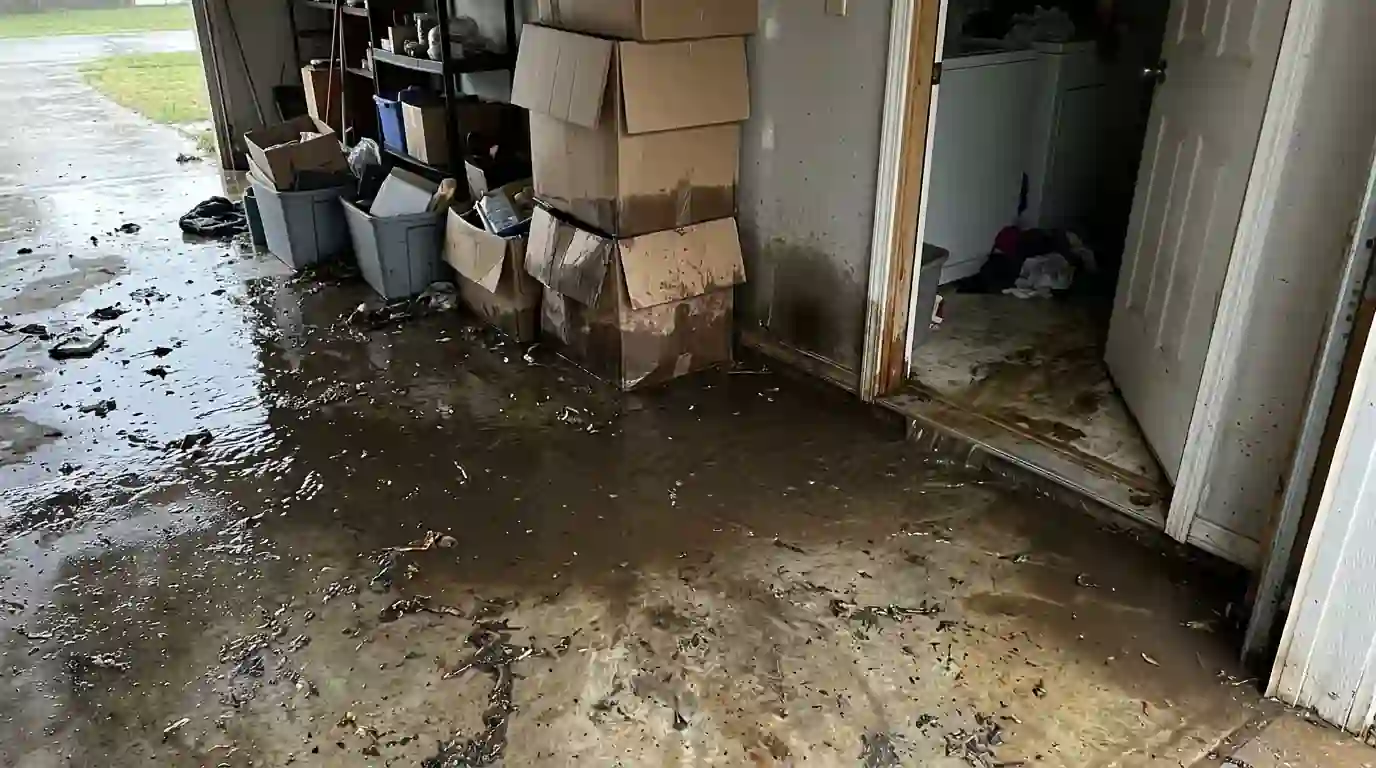
A faint line of silt on drywall or boxes shows how high outside water reached.
What the job involves
Why outside water is handled more carefully
Water from a burst supply line is clean when it starts. Water that ran across a yard, a driveway or a street picked up soil, fertilizer, oil and whatever else was on the ground, and it carries that into carpet, pad and the bottom of the drywall.
That changes the decisions. Carpet and pad soaked by outside water are almost always removed rather than dried in place. Drywall is usually cut above the water line. Hard floors, framing and the slab get cleaned and treated before drying starts.
Not every storm call is a flood. Wind-driven rain through a window or a leaking door frame can be fairly clean if it came straight from the sky. We check where the water traveled before deciding what stays.
Flash flood water through doors and garages
When a street or yard floods faster than it drains, water finds the lowest opening, usually a garage door, a patio slider or a front threshold. It spreads across the slab under carpet and into the bottom plate of the walls. We pump standing water first, then remove carpet and pad it reached, cut drywall above the water line, and clean the slab and framing before drying. Garage contents on the floor get moved and sorted with you, since cardboard boxes wick water and fall apart.
Wind-driven rain at windows and sliders
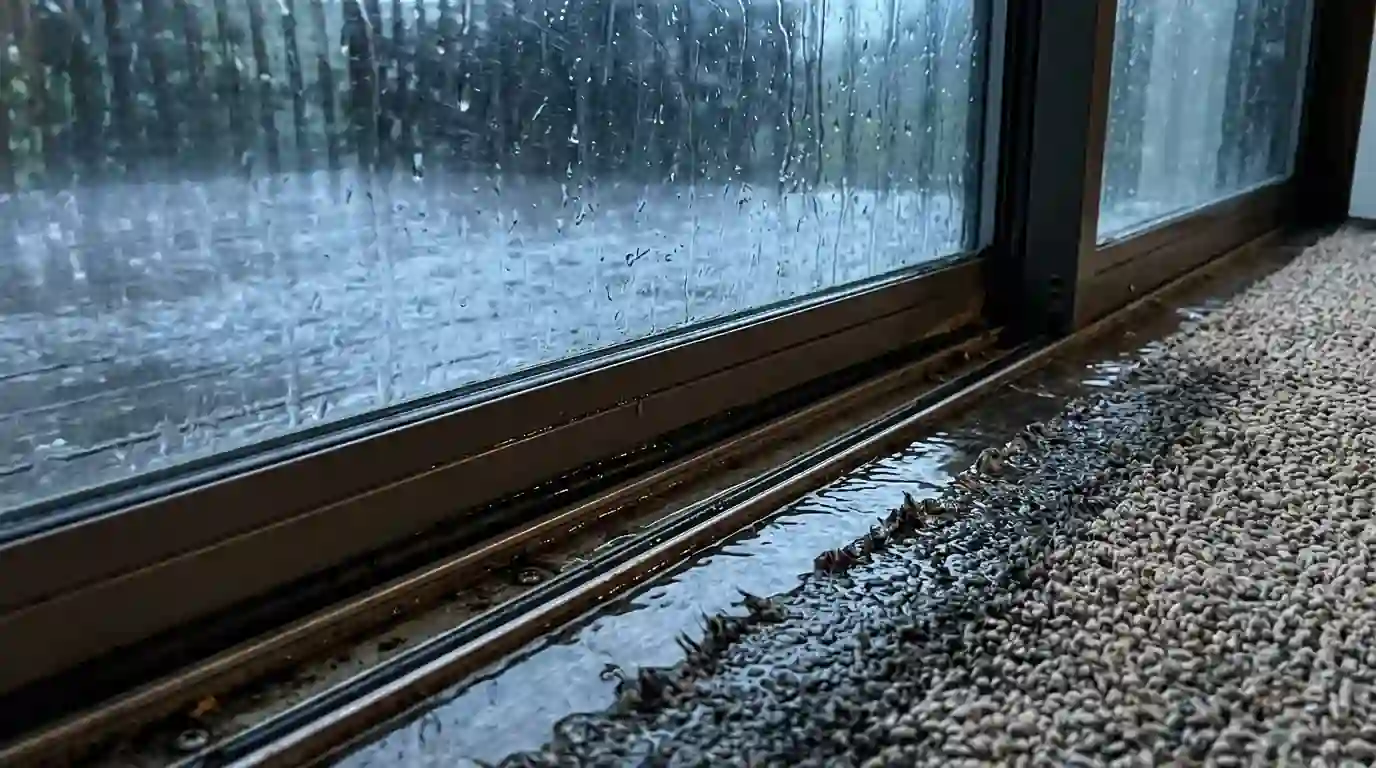
In a strong storm, rain blows sideways and gets forced past window seals, sliding door tracks and siding joints. The water often runs down inside the wall and shows up at the baseboard or under the carpet edge below the window. Because it came straight from the sky, it's often clean enough to dry in place if it's caught quickly. We trace it with a meter from the window down to see how far it went inside the wall.
Yard runoff against the slab
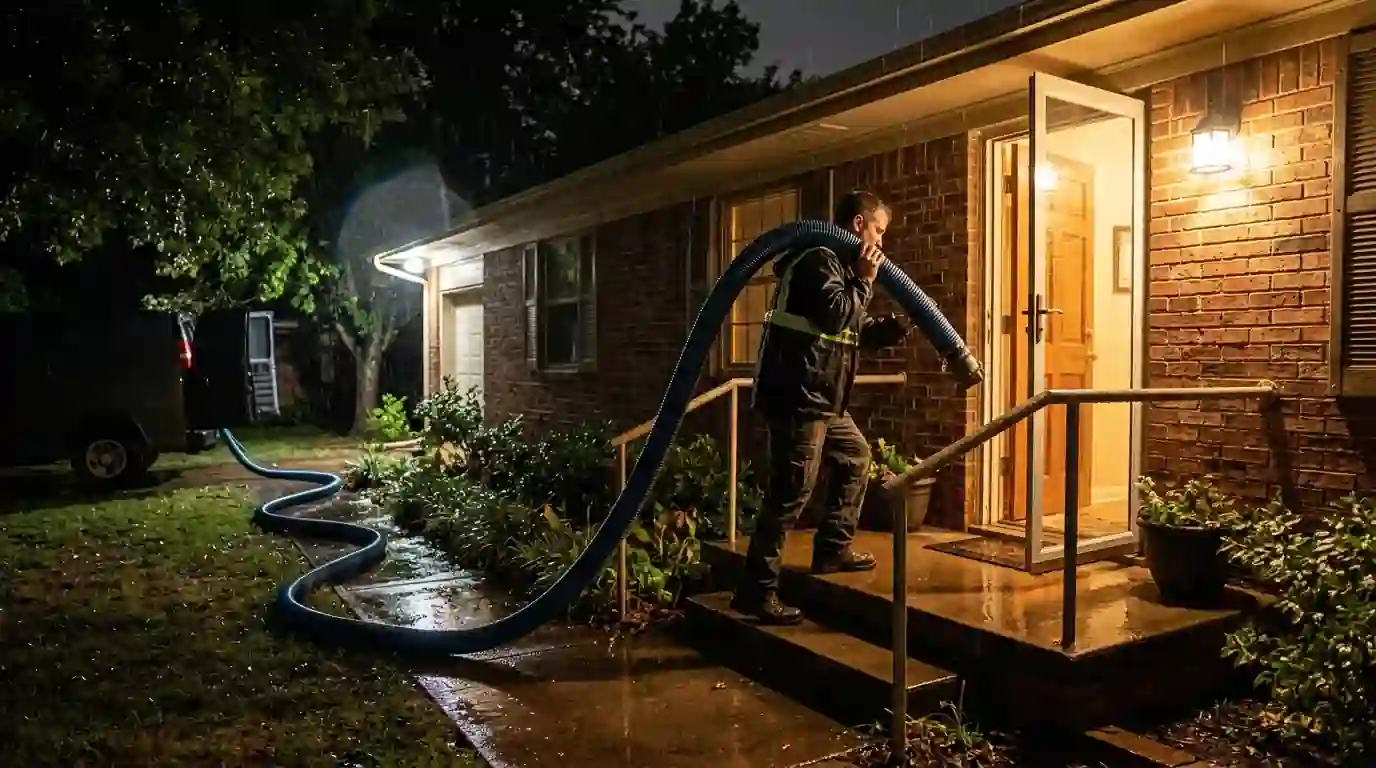
Some water comes up from outside rather than through an opening. When a yard slopes toward the house or a downspout dumps next to the foundation, runoff can push water through cracks at the slab edge and wet the carpet along an outside wall. We dry the inside, but we also point out the grading or the downspout, because the same thing will happen in the next heavy rain if the water still runs toward the house.
Step by step
How a storm water cleanup runs
- 01
Make it safe
Power to wet areas is cut, and we check for gas smells, sagging ceilings and water near the panel before anyone wades in.
- 02
Pump and extract
Standing water is pumped out, then carpet and hard floors are extracted to the walls.
- 03
Remove what the water ruined
Carpet, pad, drywall below the water line and wet insulation come out, photographed and measured for your claim.
- 04
Clean and treat
The slab, framing and hard surfaces outside water touched are cleaned and treated with an antimicrobial.
- 05
Dry and verify
Air movers and dehumidifiers run until the framing and slab read dry, then repairs can start.
Local conditions
Spring storms, fall rain and creek country
Oklahoma City gets its rain in two pushes, a stormy spring and a second peak in September and October after the dry summer, and hard-packed ground in early fall sheds water fast. North of the metro, Guthrie sits along Cottonwood Creek near where it meets the Cimarron River, so homes near the creek see water rise from the outside rather than drip from above. Both kinds of call start the same way: pump first, then decide what the water touched.
On the visit
What a storm water cleanup includes
- Pumping of standing water
- Extraction of carpet and hard floors
- Removal of soaked carpet and pad
- Drywall cut above the water line where needed
- Cleaning and antimicrobial treatment of the slab and framing
- Photos and measurements for your claim
- Drying equipment and daily readings
- A walkthrough of repairs once the structure is dry
What drives the price
What storm water cleanup costs depend on
Storm and flood jobs cost more per square foot than a clean water leak because more material comes out and everything left gets cleaned.
Where the water came from
Rain through a window can often be dried in place; water that crossed a yard or street means removal and cleaning.
Depth and spread
An inch across one room is a different job from water that reached several rooms and the garage.
Removal and disposal
Carpet, pad and drywall below the water line add labor and hauling.
Repairs after drying
New drywall, baseboards and flooring are a separate stage once the structure is dry.
Published Oklahoma City estimates put flood damage cleanup for about 215 square feet at roughly $3,368 to $3,630, or about $16 to $19 a square foot. Source: HomeYou, 2026
Straight answers
Questions about this job
Outside flood water usually isn't covered by a standard homeowners policy; it needs separate flood insurance. Wind-driven rain through a damaged opening is often treated differently. Your adjuster decides, and we document what happened.
Usually not. Carpet and pad soaked by water that crossed soil or pavement are treated as contaminated and replaced. Rain straight through a window, caught quickly, is a different story.
Drywall wicks water up from the bottom, and outside water leaves contaminants behind even after it dries. Cutting above the water line lets us clean and dry the framing inside.
Call now. We can talk you through what to move and shut off, and the crew comes as soon as it's safe to travel.
Cardboard and paper that sat in flood water usually can't be saved. Plastic bins, tools and metal shelving can be cleaned. We'll sort it with you and photograph what's thrown out.
Check that downspouts discharge well away from the house, that the yard slopes away from the slab, and that door thresholds and window seals are intact.