Why the subfloor needs its own drying
Short answer
A subfloor or slab in Oklahoma City has to read dry before new flooring goes down, because wet plywood, OSB or concrete traps moisture under the new floor and causes odor, cupping and failed adhesive. We dry it with air movers, dehumidifiers and drying mats, and log readings until it matches dry areas of the house.
What the job involves
What's under your floor and why it matters
Ground floors in the metro are usually a concrete slab or a wood subfloor over a crawl space. Upper floors are plywood or OSB on joists. Each one holds water differently and dries at a different speed.
Plywood dries reasonably well once air can reach it. OSB swells at the edges when soaked and may not go back. Concrete holds a lot of water deep in the slab and gives it up slowly.
Flooring installers check moisture before they lay a floor. We dry to the point where those checks pass, and give you the readings.
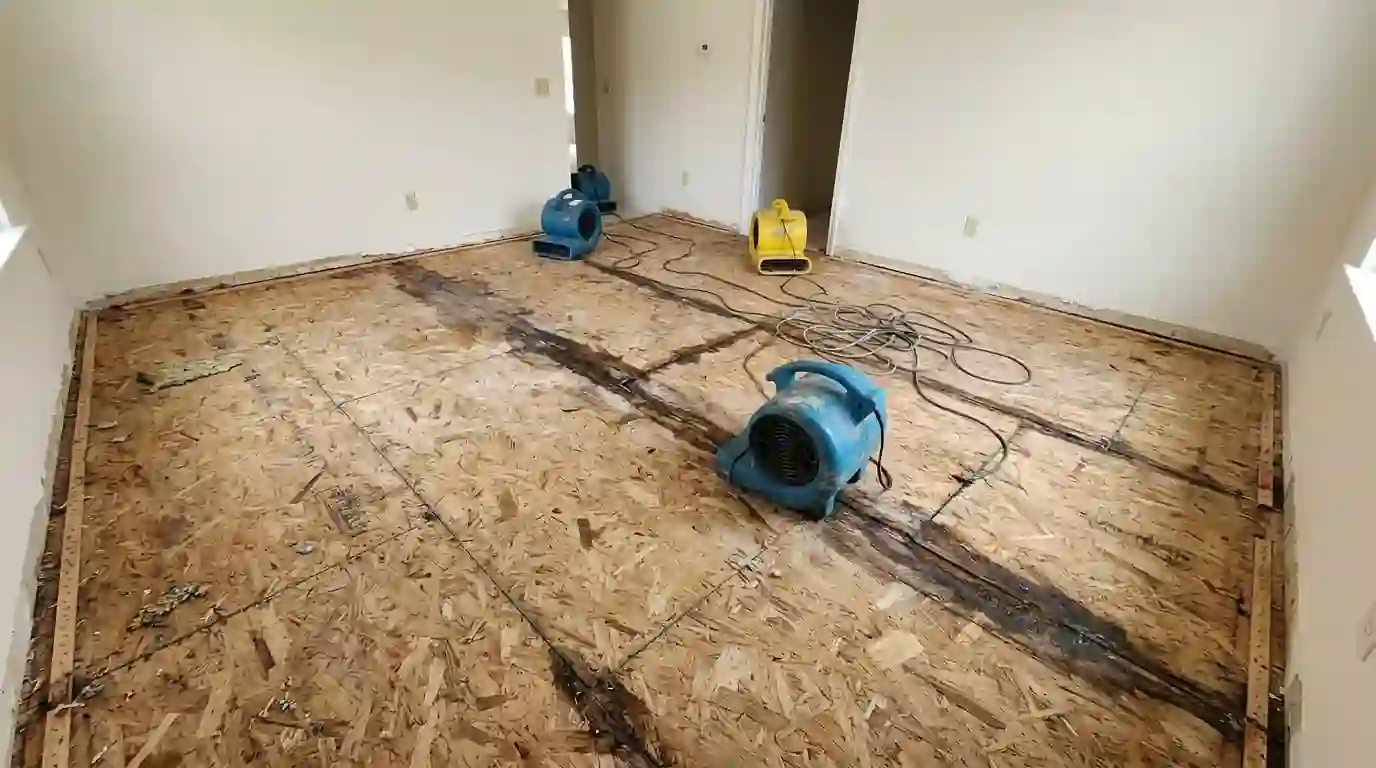
Plywood and OSB subfloors
Plywood and OSB both dry once the flooring is off and air can reach them, but OSB swells at the edges and seams when soaked, and those swollen edges may not shrink back. That shows up later as ridges under vinyl or a hump under carpet. We read the panels, dry them with air movers and dehumidifiers, and mark any OSB with swollen edges that should be cut out and replaced before new flooring. Upper-floor leaks also need the ceiling below checked.
Concrete slab moisture
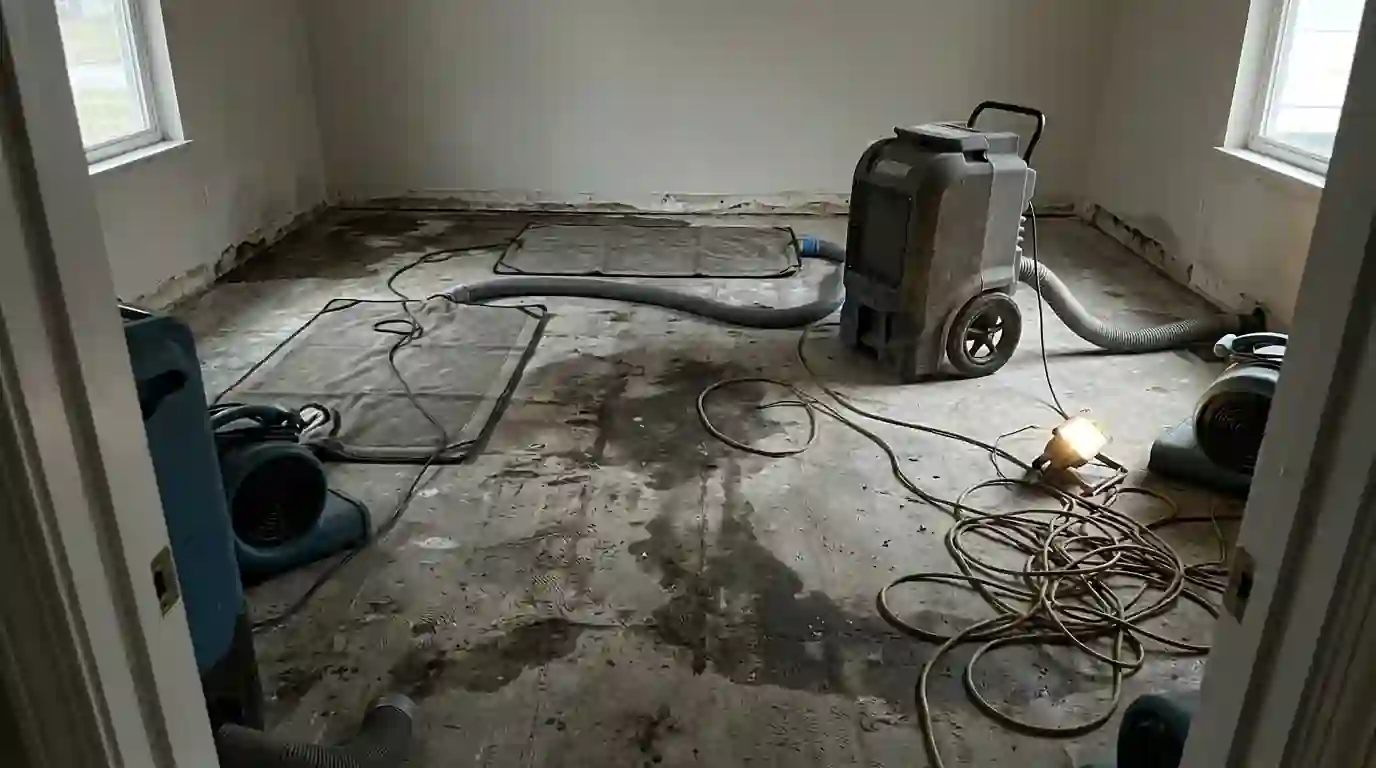
A slab soaks up water from a leak on top or a slab leak below, and gives it back slowly. Vinyl plank, glued wood and some adhesives fail over a slab that's still wet. We dry slabs with dehumidifiers and air movers, add drying mats where water is concentrated, and read the concrete until it matches dry areas. Flooring installers may run their own test as well; ours tells them the slab has been dried, not just that the surface feels dry.
Subfloor under cabinets
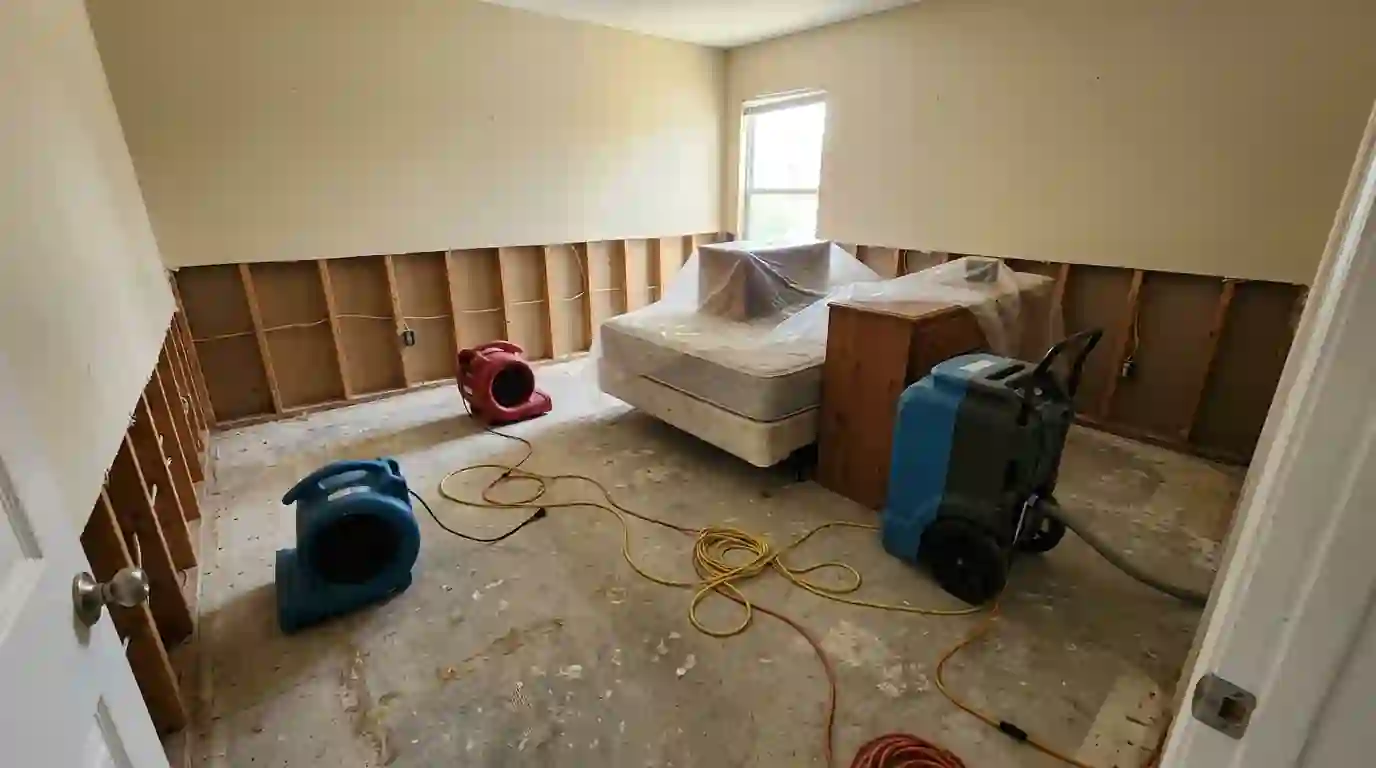
Water that runs under kitchen or bathroom cabinets sits on the subfloor where no air reaches it. Cabinets are rarely removed, so we take off the toe kicks, sometimes drill small holes in the cabinet bottom, and direct air into the cavity under the cabinets. Readings through the toe kick area tell us when it's dry. If the subfloor under the cabinets swelled or the cabinet bases delaminated, we'll show you before anything is replaced.
Step by step
How subfloor and slab drying runs
- 01
Remove the flooring
Wet carpet, pad, plank or vinyl over the wet area comes up so air can reach the subfloor.
- 02
Read the substrate
Plywood, OSB or concrete is read across the area and compared with dry parts of the house.
- 03
Dry it
Air movers, dehumidifiers and drying mats run until readings come down.
- 04
Mark what can't stay
Swollen OSB or damaged panels are marked for replacement.
- 05
Hand off to flooring
Once readings match dry areas, the floor is ready for the installer, with readings provided.
Timing
How long a subfloor or slab takes to dry
Plywood often dries in a few days once the flooring is off. OSB can dry in a similar time but may need replacement where it swelled. Concrete slabs usually take longer, often a week or more after a heavy soak. We read each visit and release the floor to the installer only when readings match dry areas of the house.
Local conditions
New construction and mixed floor systems
Canadian County grew more than 17 percent after 2020, and the Yukon, Mustang and Piedmont school districts all passed bonds for new schools to keep up. Much of that growth is newer construction, where a ground floor slab often sits under the main living area and OSB on joists carries any second floor. A leak upstairs in a newer two-story house can wet OSB, the ceiling below and the slab under that in one event, and each layer dries at its own pace.
Your options
How each subfloor type is handled
| Substrate | How it reacts to water | How we dry it |
|---|---|---|
| Plywood | Absorbs water; usually stays flat once dry | Flooring off, air movers and dehumidifiers |
| OSB | Swells at edges and seams; may not flatten | Dry, then replace swollen sections |
| Concrete slab | Holds water deep and releases it slowly | Dehumidifiers, air movers and drying mats over days |
| Under cabinets | No airflow; stays wet longest | Toe kicks off, directed air into the cavity |
What drives the price
What subfloor drying costs depend on
Drying the subfloor is usually part of the larger water job, and the cost depends on the material and how wet it got.
Material
Concrete takes longer to dry than plywood, which adds equipment days.
Area
More square footage means more air movers, mats and dehumidifiers.
Panel replacement
Swollen OSB or plywood that won't flatten has to be replaced.
Access
Drying under cabinets and built-ins takes extra setup.
Published estimates put subfloor water damage repair at about $250 to $750 for a typical area. Source: Royal Restoration, 2026
Straight answers
Questions about this job
It shouldn't. A wet subfloor or slab causes odor, mold, cupping and adhesive failure under the new floor.
We compare readings with the same material in a dry part of the house and log them each visit.
Often not at the edges. Swollen OSB sections are usually cut out and replaced before new flooring goes down.
Rarely. We dry under them through the toe kick area. Cabinets only come out if the subfloor or cabinet bases are damaged beyond drying.
Concrete holds water deep inside and releases it slowly. It's normal for a slab to take longer than the rest of the room.
Yes. We provide the final readings so the installer can see the subfloor or slab was dried.