How unit-to-unit water damage is handled
Short answer
With apartment water damage in Oklahoma City, the source unit gets the water shut off first, then every unit the water reached is checked: ceilings below, shared walls and floors next door. We dry each unit, keep both tenants and the property owner informed, and document each space separately for the insurers involved.
What you will notice
Signs water has reached a neighboring unit
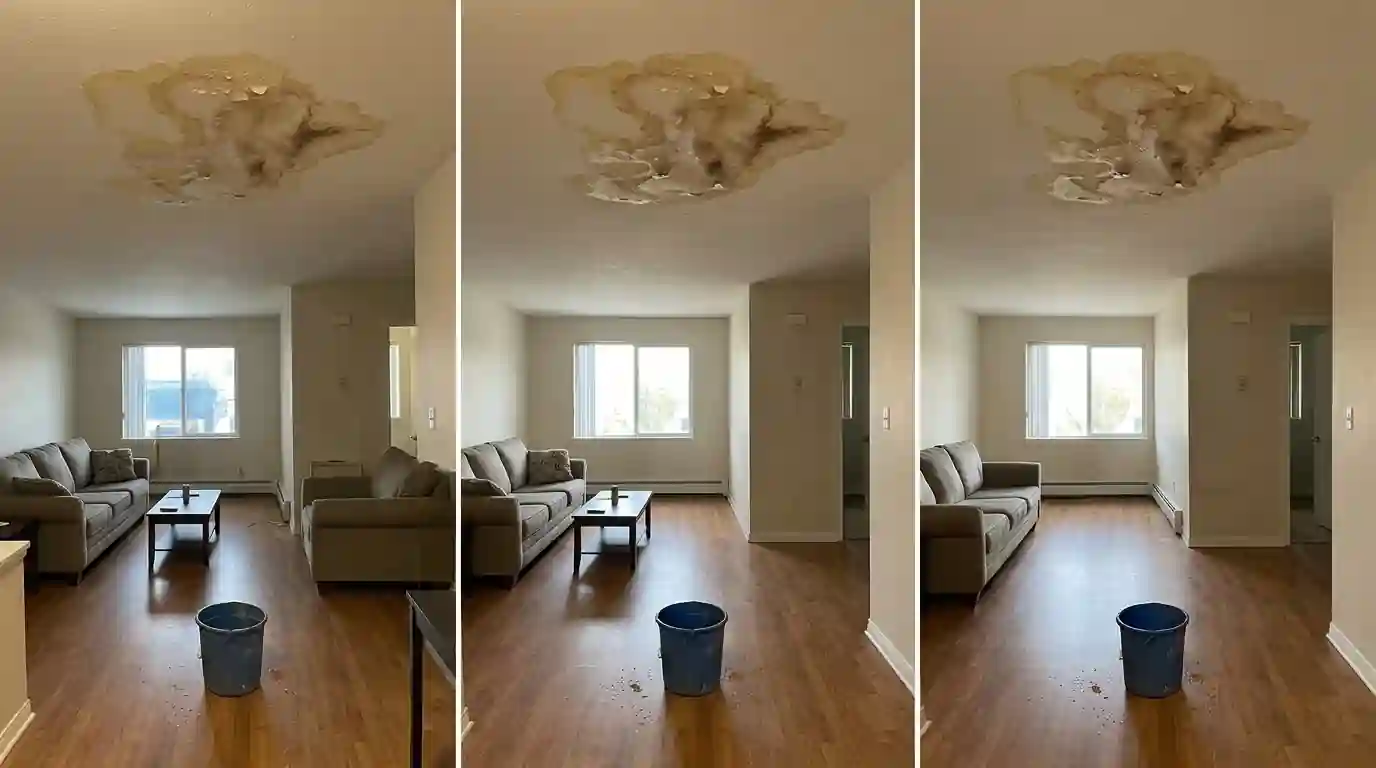
New ceiling stain
A stain or drip appearing under a bathroom or laundry upstairs.
Damp carpet along a shared wall
Carpet wet at the wall shared with the unit next door.
Musty hallway
A smell in a shared hall near the affected units.
Bubbling paint
Paint lifting on a ceiling or a shared wall.
Sound of dripping
Dripping inside a ceiling with nothing visible yet.
What the job involves
Why rentals are more than one job
Water ignores unit lines. A washer hose upstairs soaks the ceiling below, a slab leak shows up next door, and a toilet overflow in one unit runs under the wall into the hall.
That means more people: the tenant where it started, the tenants it reached, the owner or property manager, and often separate insurers for the building and each tenant's belongings.
We handle it unit by unit, with access and timing worked out with management, and a separate record for each space so nobody's claim is mixed up with someone else's.
Unit-to-unit leaks
The first job is finding every unit the water touched. We start at the source, then check the ceiling and walls of the unit below and the floors and shared walls of units next door, with meters rather than guesses. Each affected unit gets its own drying setup and its own readings. Units that only had a ceiling stain may need far less work than the one where the leak started, and the records show that clearly.
Landlord and tenant coordination
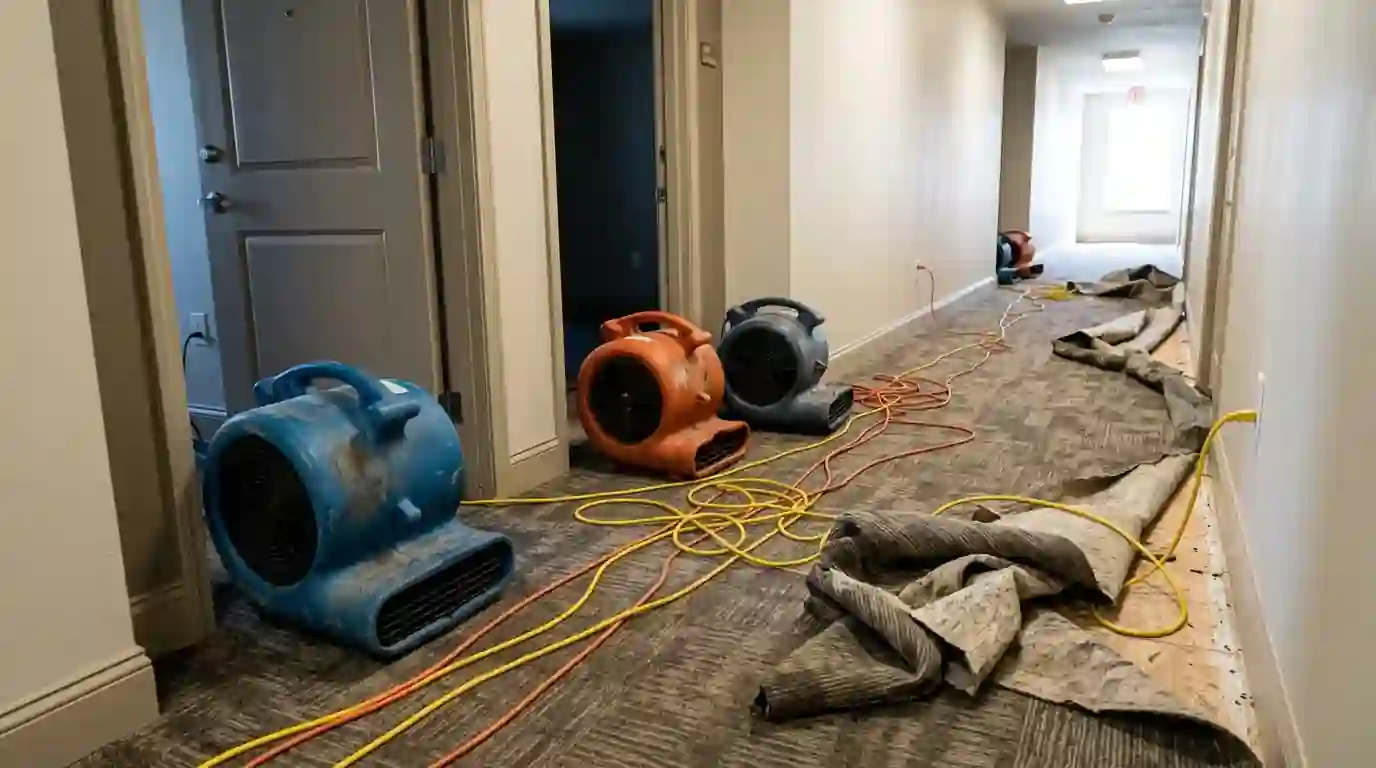
Owners and property managers usually authorize the work on the building, while tenants are responsible for their own belongings and renters insurance. We work out access with management, give tenants notice before entering, and explain what the equipment is doing and how long it needs to stay. Belongings are handled with the tenant present when possible, and anything damaged is photographed for the tenant's own claim. Updates go to management and tenants in plain language, so nobody is surprised by equipment in their living room.
Turnover-friendly drying
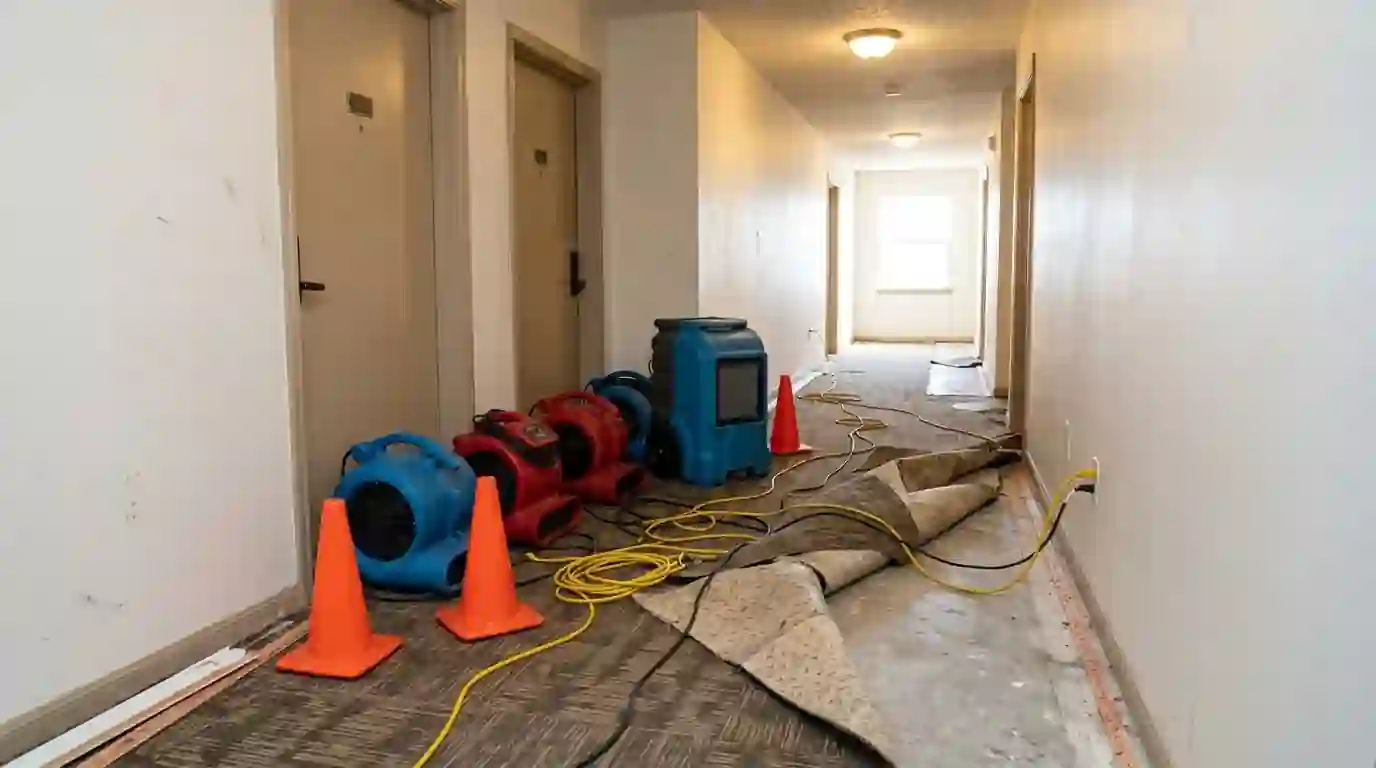
For a vacant unit or one between tenants, we can dry and repair on a tight schedule so it's ready to rent again quickly. For occupied units, we plan around tenants: equipment placed to leave walkways, noise kept in mind, and clear notes on what can be moved. Property managers get readings for each unit so they can see which ones are on track and which need more time. Final readings for each unit go into the turnover file.
Step by step
How a rental water job runs
- 01
Stop the source
Water is shut off in the source unit, with management or the tenant providing access.
- 02
Check every neighbor
Units below and beside the source are read for water in ceilings, walls and floors.
- 03
Dry unit by unit
Each affected unit gets its own setup, readings and schedule.
- 04
Keep everyone informed
Management and tenants get updates on access and timing.
- 05
Separate records
Each unit's photos, readings and removals are documented on their own.
Local conditions
Newer multi-unit housing north of the city
Edmond's largest block of housing went up in the 1980s, and more than 14,000 housing units have been added there since 2000. In stacked units, a leak upstairs reaches the ceiling below within minutes, and the hidden part is usually the floor cavity between them. We read that cavity from the unit below, not just the visible ceiling stain, because drying only the stain leaves the framing above it wet.
On the visit
What a rental water job includes
- Source shutoff with management access
- Readings in units above, below and beside
- Separate drying setup for each unit
- Tenant notice before entry
- Updates for the property manager
- Photos and readings per unit
- Contents photos for each tenant's own claim
- Turnover-friendly scheduling for vacant units
What drives the price
What rental water damage costs depend on
Multi-unit jobs cost more because more space is affected, but each unit is usually smaller.
Number of units
Each affected unit adds its own drying and documentation.
Ceiling and floor cavities
Water between floors adds opening and drying work.
Occupied or vacant
Occupied units need more coordination and sometimes slower phasing.
Water type
Gray or sewage water adds cleaning in each unit it reached.
Angi puts water mitigation at about $3.50 a square foot for clean water, $5.25 for gray water and $7.50 for black water, applied to each affected area. Source: Angi, 2026
Straight answers
Questions about this job
It depends on the cause and the leases and policies involved. Usually the building's insurer covers the structure and each tenant's renters insurance covers their belongings.
Yes. We work with management to arrange access and give notice, except in an emergency where water is actively spreading.
Usually, with clean water. Units with sewage or extensive damage may need tenants to stay elsewhere for a short time.
Always. Water from upstairs almost always reaches the ceiling below, and the cavity between floors needs drying too.
Yes. We provide readings and records per unit so managers can track every affected space.
We photograph them with the tenant and list them so the tenant can file with their own renters insurance.