Can wet insulation be dried?
Short answer
Wet insulation in an Oklahoma City attic, wall or crawl space usually has to come out rather than be dried. Fiberglass batts sag and hold water against framing and drywall, blown insulation mats down and loses its fluff, and both trap moisture where mold can start. We remove it, dry the structure, then replace it once readings are dry.
What the job involves
Why insulation is usually removed
Insulation works by trapping air. Once it's soaked, fiberglass batts slump, blown cellulose and fiberglass mat into a dense layer, and neither does its job until it's replaced.
Worse, wet insulation holds water against the wood and drywall it touches, which keeps them wet long after the leak is fixed. In a warm attic or a closed wall, that's how mold gets started.
So the usual order is: remove the wet insulation, dry what it was touching, then install new insulation once readings confirm the framing and drywall are dry.
What drives the price
What wet insulation removal costs depend on
Cost depends mostly on how much insulation is wet and how hard it is to reach. We haven't seen a local price range we'd stand behind, so the wet area gets measured first.
Area
A patch around one roof leak is small; a whole attic section is larger.
Type
Blown insulation is vacuumed out; batts are bagged by hand.
Access
Low attics and tight crawl spaces take longer to work in.
Replacement depth
Matching existing depth or R-value sets how much new material goes back.
Your options
Dry it or replace it
| Insulation | What water does | Usual outcome |
|---|---|---|
| Fiberglass batts | Slump and hold water against framing | Remove the wet section and replace |
| Blown fiberglass | Mats down and loses depth | Vacuum out the wet patch and re-blow |
| Blown cellulose | Absorbs water, packs down and stays wet | Remove and replace |
| Rigid foam board | Sheds water but traps it behind | Often kept; check and dry behind it |
Do it yourself or call
What you can check yourself
| Task | Do it yourself | Leave it for us |
|---|---|---|
| Attic check | Look from the hatch for dark, matted spots | Walking the attic and reading the decking |
| Ceiling stain | Mark its edges with a pencil to see if it grows | Finding how far the wet area spreads |
| Removal | Nothing; wet insulation is heavy and can hide damaged drywall | Bagging or vacuuming it out safely |
| Crawl space | Look for sagging batts from the access opening | Removing wet batts and barrier |
Attic insulation after roof and AC leaks
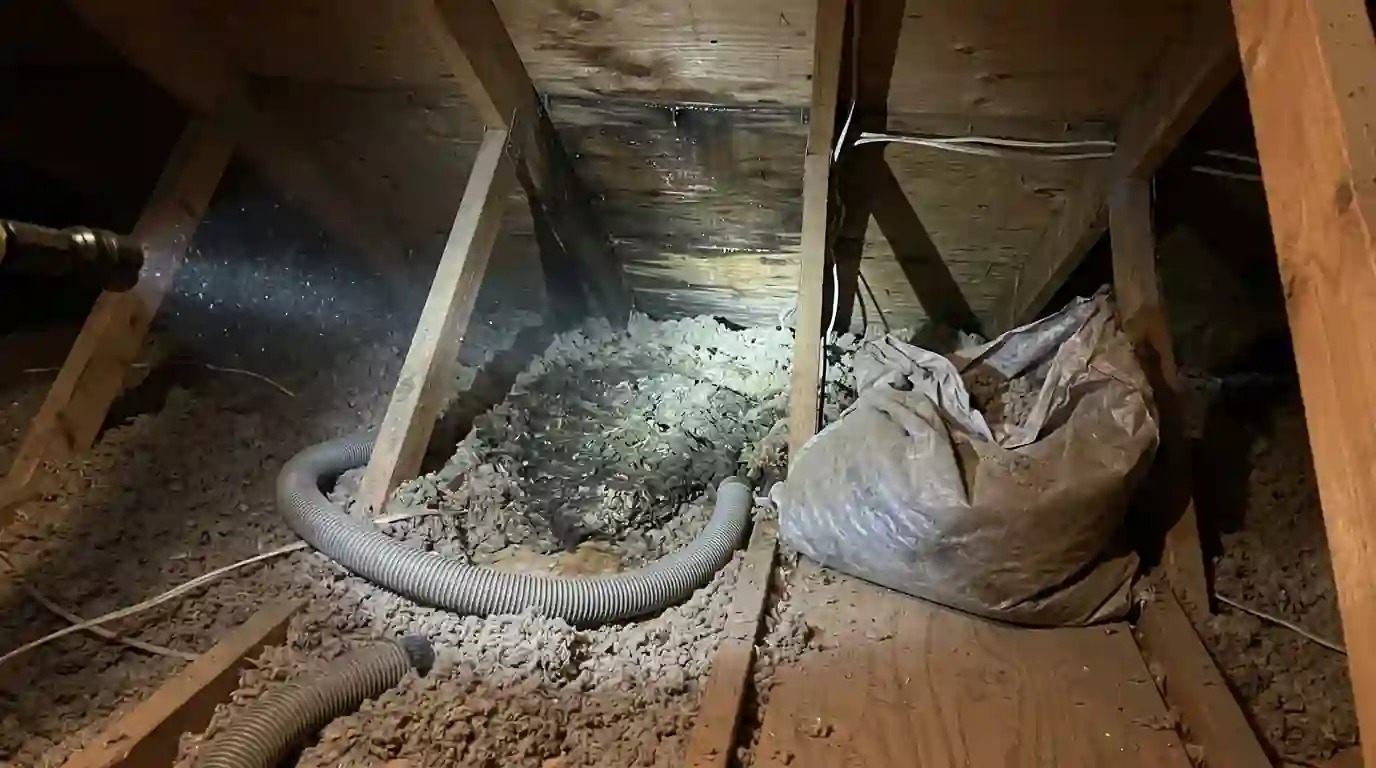
Roof leaks and attic AC drain pan overflows soak the insulation directly above the ceiling. Blown insulation mats into a wet patch that weighs on the drywall below, and the stain you see is usually smaller than the wet area above. We vacuum or bag out the wet section, check the ceiling drywall and joists with meters, dry the attic space and the ceiling, then blow or lay new insulation to match the depth around it so the attic performs as it did before.
Wall insulation behind flood cuts
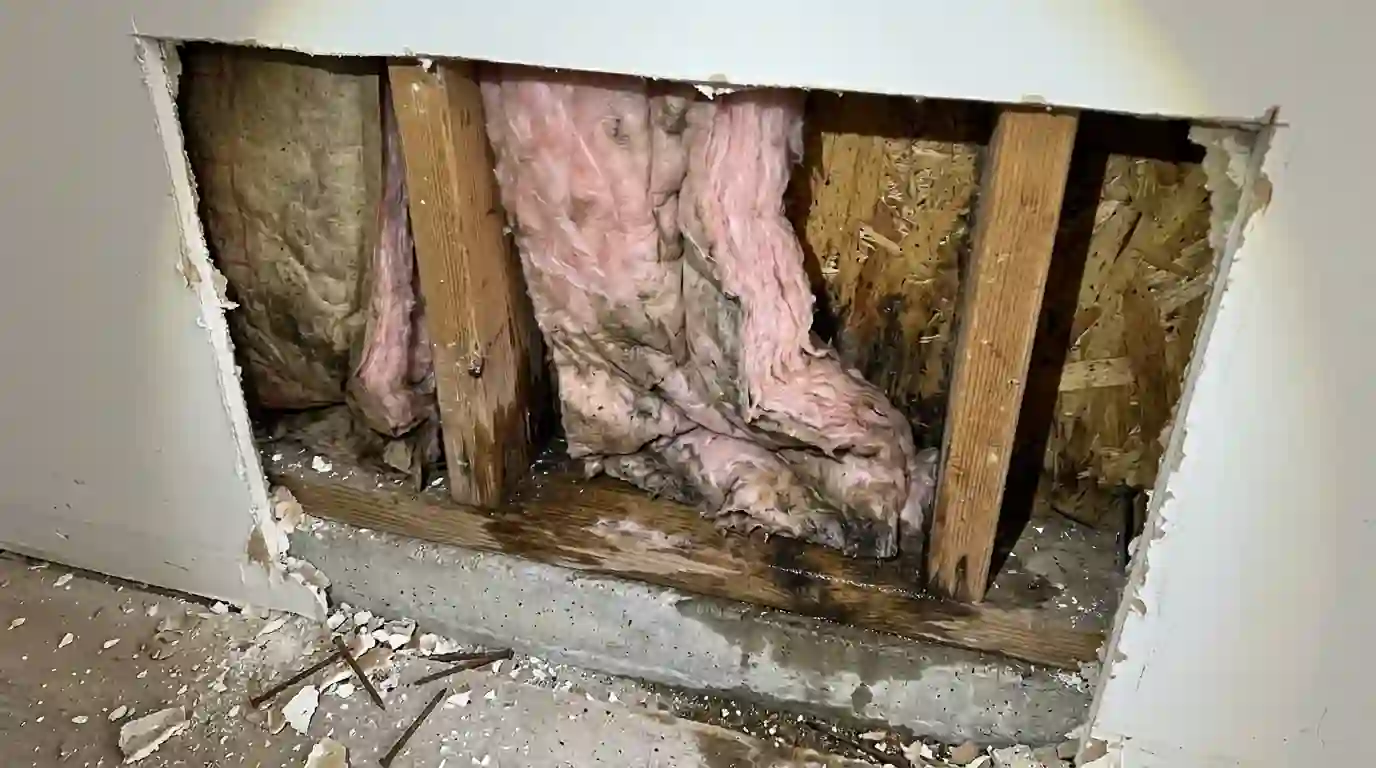
When water reaches the bottom of an exterior wall, the batts in the cavity soak up water from the bottom like a wick. They don't dry well in place, so the wet lower section usually comes out with the drywall in front of it during a flood cut. With the cavity open, the studs and bottom plate dry much faster. New batts go back in, cut to fit, before the new drywall is hung.
Crawl space insulation and vapor barrier
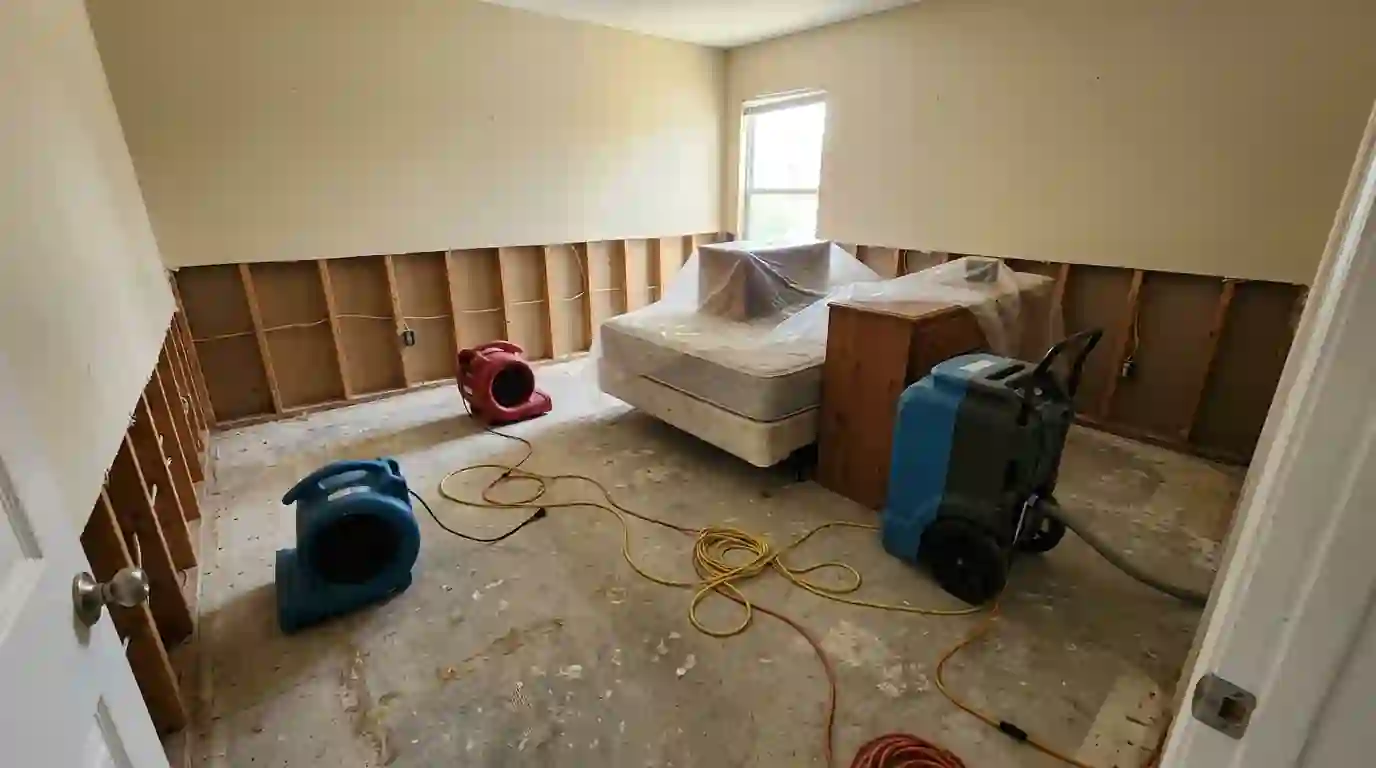
Under pier-and-beam houses, batts are often held between the floor joists, and plastic vapor barrier covers the soil. After a plumbing leak or heavy rain, the batts can soak and sag, and torn or flooded barrier keeps the crawl space damp. We pump standing water, remove wet batts and damaged barrier, dry the joists and subfloor from below, then replace both so the crawl space stays drier. New barrier is overlapped at the seams and run up the foundation walls.
Local conditions
Storm leaks and the attic above
Roof damage puts water straight into attic insulation. The February 2023 EF2 that hit southeast Norman was an extreme case, but ordinary hail and wind across the metro open up flashing and shingles every spring, and the first sign inside is usually a ceiling stain. By then the insulation above it has often been wet through a few rains, and the wet area is wider than the stain.
Step by step
How wet insulation removal runs
- 01
Find the wet area
Meters, a thermal camera and a look from above show how far the insulation is wet.
- 02
Remove it
Wet batts are bagged and wet blown insulation is vacuumed out, with plastic protecting the rooms below.
- 03
Dry what it touched
Joists, studs, decking and drywall are dried until they read dry.
- 04
Check the source
We confirm the roof, AC pan or plumbing leak has been repaired.
- 05
Replace
New insulation goes in to match the depth or R-value around it.
Straight answers
Questions about this job
Rarely well. Batts slump and blown insulation mats down, and both hold water against the wood and drywall in the meantime.
Yes. It keeps framing and drywall damp in warm, closed spaces where mold grows. Removing it and drying the structure prevents that.
Yes. New insulation goes in once the framing and drywall read dry, matched to what's around it.
We protect the rooms below with plastic and work from the attic where possible. Blown insulation is vacuumed straight into bags.
A roofer or HVAC company. We remove and replace the insulation and dry the structure.
When the leak itself is covered, removing and replacing damaged insulation is commonly part of the claim.