What to know about slab leak water damage
Short answer
A slab leak in Oklahoma City is a supply or drain line leaking under or inside the concrete slab. A plumber locates and repairs the line; we handle the water it pushed up: lifting carpet or plank flooring over the leak, drying the slab with dehumidifiers and mats, and checking walls along the wet area.
What you will notice
Signs of a slab leak
Warm spot on the floor
A warm patch on tile or carpet can mean a hot water line leaking below.
Damp carpet with no spill
Carpet wet in the middle of a room, away from any fixture.
Water bill rising
Usage climbing with no change in habits.
Meter running with taps off
The leak indicator on the water meter moving with every fixture off.
Sound of running water
A faint hiss or rush under the floor when nothing is on.
What the job involves
How slab leaks show up inside the house
Water from a leaking line under a slab finds the easiest way up: through cracks, along the edge of the slab or around plumbing penetrations. Inside, that looks like damp carpet in the middle of a room, a warm spot on tile from a hot water line, or a musty smell with no visible source.
Slab leaks can run for a long time before anyone notices, so the water is often spread wider than the wet spot suggests. Concrete holds a lot of water and gives it up slowly.
Our part starts once the leak is fixed: removing flooring that trapped water, drying the slab properly, and making sure the walls and carpet around it are dry too.
Wet carpet over a slab leak
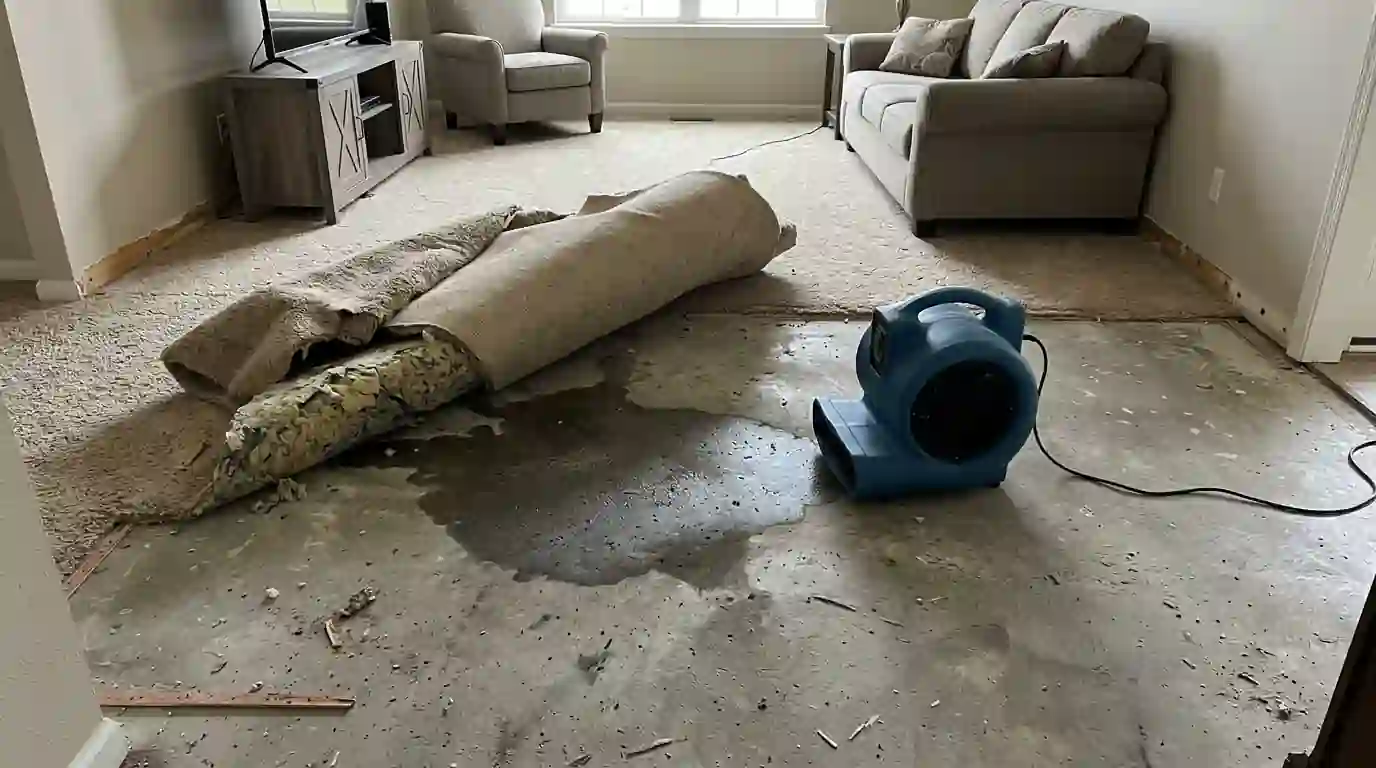
Carpet over a slab leak is often wet from below while the top looks fine. The pad soaks up water rising from the concrete and holds it. We read a grid across the room to find the wet area, pull the carpet back and remove the pad over it, then dry the slab directly with air movers and a dehumidifier. Carpet that only got damp from below can usually be cleaned and re-laid on new pad once the slab reads dry.
Leaks under tile and wood floors
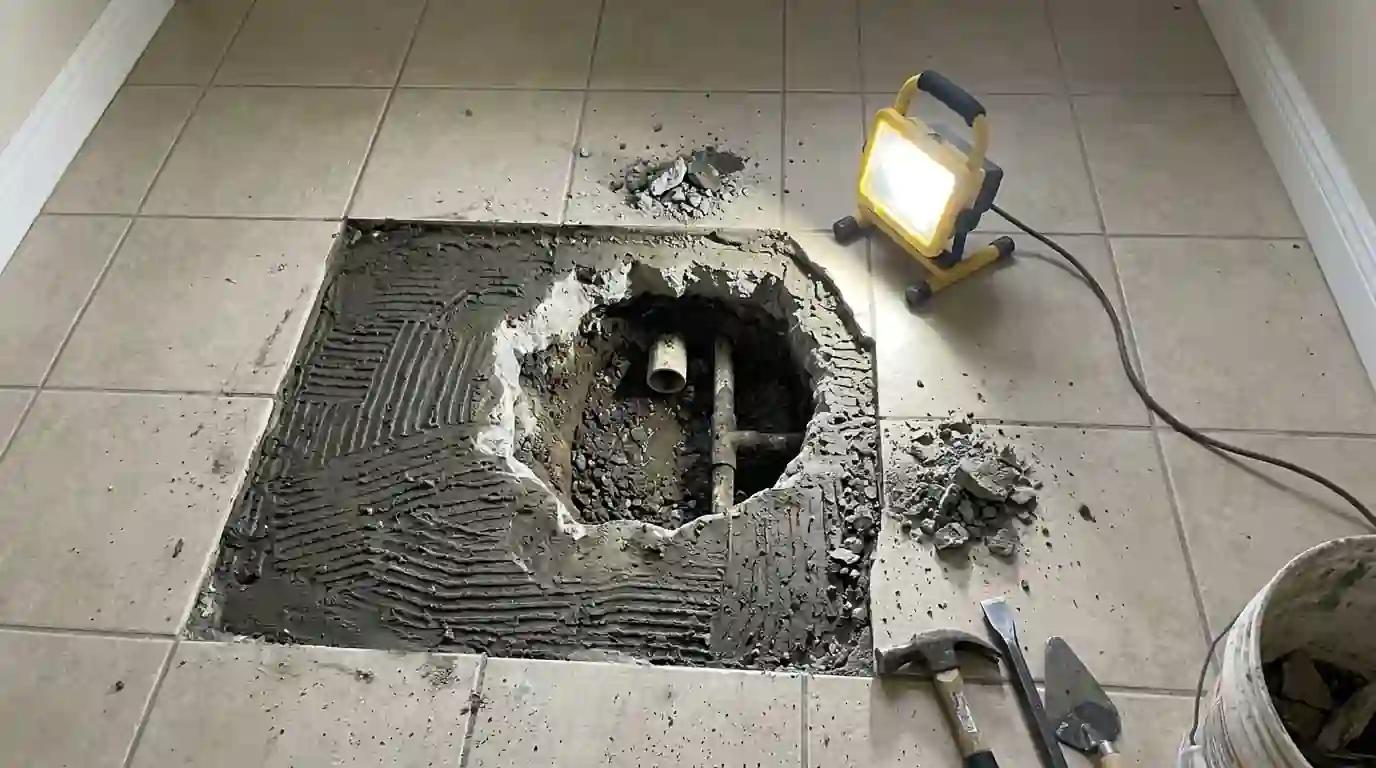
Tile and engineered wood glued to a slab are harder to dry, because water is trapped between the flooring and the concrete. Tile may stay intact while the thinset beneath it is wet. Wood flooring over a slab leak often cups. We read through the flooring, decide with you whether a section needs to come up, and use drying mats or remove pieces where water is trapped. The plumber's access hole is usually the starting point.
Drying after the plumbing repair
Plumbers often reroute the line overhead or through walls instead of breaking the slab, which leaves the old wet area behind. Either way, the slab has to dry before new flooring goes down, or the next floor fails too. We take readings at the repair point and around it, run equipment until they match dry areas of the house, and give you the readings so your flooring installer knows the slab is ready.
Step by step
How slab leak drying runs
- 01
Leak repaired first
A plumber locates and repairs or reroutes the line before drying can start.
- 02
Map the wet area
Readings across the floor and along walls show how far water spread from the leak.
- 03
Lift what traps water
Carpet is lifted and pad removed; tile or wood that's holding water may come up.
- 04
Dry the slab
Air movers, dehumidifiers and, where needed, drying mats pull moisture from the concrete.
- 05
Confirm for flooring
Readings at and around the leak match dry areas before new flooring goes down.
Timing
How long a slab takes to dry
Carpet and pad over a slab leak can dry in a few days once lifted, but the concrete itself usually takes longer, often around a week and sometimes more depending on how long the leak ran. Drying mats and dehumidifiers speed it up. New flooring should wait until the slab readings match dry areas of the house.
Local conditions
Clay soil and the lines under the slab
Over 75 percent of Oklahoma sits on bedrock that can produce expansive soils, and the Oklahoma Geological Survey notes that soil saturated by rain, lawn watering or sewer leakage can damage foundations and utility lines. In Oklahoma City that shrink and swell works on slabs every season. A small leak under a slab also wets the clay around it, which can make the soil move more, so getting the leak fixed and the slab dried quickly matters twice.
What drives the price
What slab leak water damage costs depend on
Locating and fixing the leak is the plumber's bill. The drying and flooring side depends on what's over the slab.
Flooring type
Carpet lifts and re-lays; tile and glued wood may need sections removed and replaced.
Spread
A leak that ran for weeks can wet a much larger area than the warm spot suggests.
Walls along the wet area
Bottom plates and drywall along the wet path may need drying too.
Slab drying time
Concrete takes longer to dry than wood or drywall, which adds equipment days.
Angi puts flooring water damage repair at about $200 to $3,000, depending on the type and area of flooring involved. Source: Angi, 2026
Straight answers
Questions about this job
No. A plumber locates and repairs the line. We dry the floor, slab and walls once the repair is done, and we can work right after the plumber.
Carpet usually just lifts. Tile or glued wood may need some sections removed where water is trapped beneath it; we'll show you the readings before anything comes up.
Not until the slab reads dry. Laying carpet and pad over a wet slab traps moisture and leads to odor and mold.
Many policies cover the damage from a sudden leak and sometimes the cost of accessing the line, but not the pipe repair itself. Check with your adjuster.
Water held in the pad and slab feeds odor and can start mold. Drying the slab removes the source.
Water saturating the soil under a slab can affect how the clay moves. That's a question for a foundation professional, but fixing the leak and drying quickly helps.