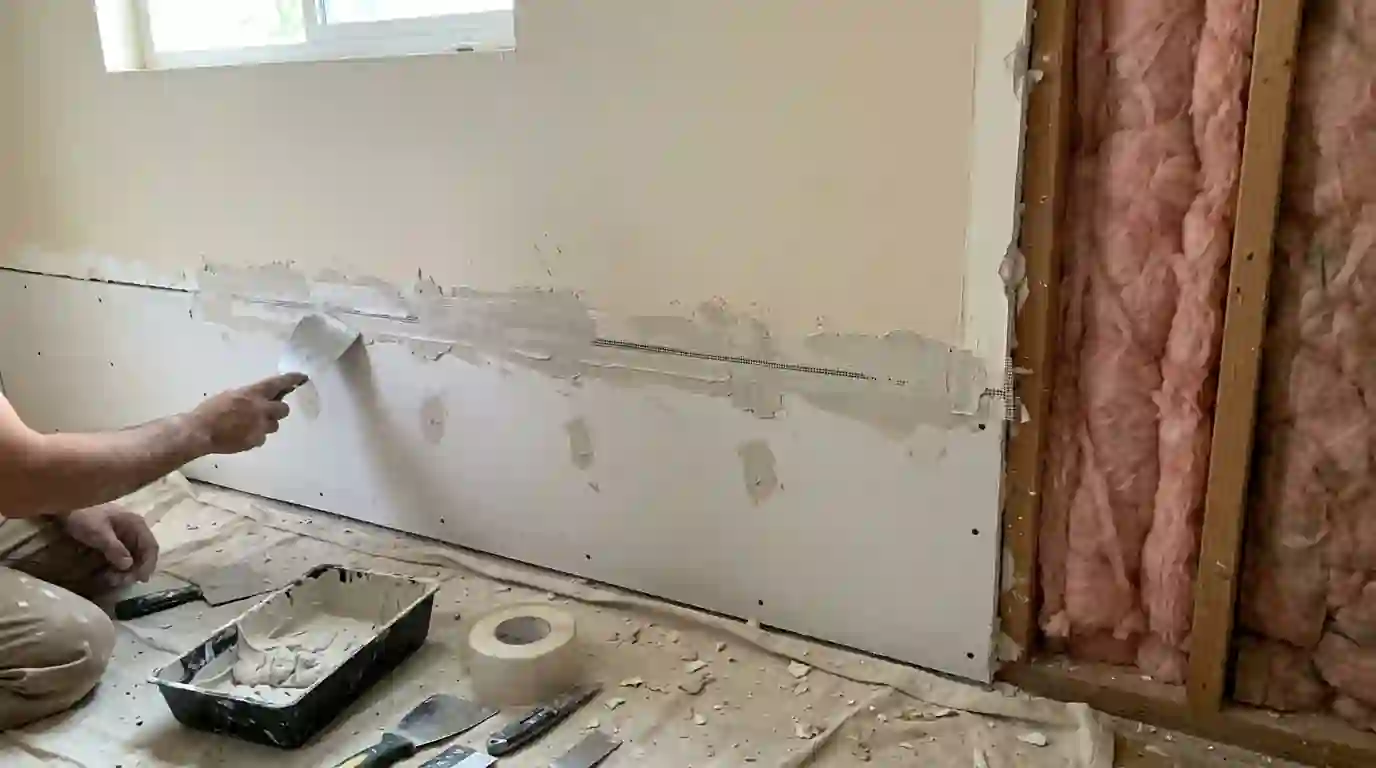
When repairs can start
Short answer
Water damage repairs in Oklahoma City start only after drying is confirmed with moisture readings, because closing a wall or laying flooring over wet framing traps moisture and causes mold. We then replace drywall and insulation, match texture and paint, reinstall or replace baseboards, and put flooring back.
What the job involves
From dry readings to a finished room
Mitigation is about stopping damage: water out, materials dried. Repair is about getting the room back to how it was. They're separate stages, and the second one waits for the first to be confirmed.
Most repairs after a water job are predictable: a strip of drywall at the bottom of the wall, insulation behind it, texture to match, paint, baseboards and the floor covering. Ceilings and cabinets come up less often but follow the same order.
The goal is a repair you can't see. That means matching texture, paint sheen and trim profile, not just patching the hole.
What drives the price
What water damage repairs cost depend on
Repair cost depends on how much came out during drying and how hard the finishes are to match.
Drywall area
A two-foot flood cut along one wall is less than ceilings and several rooms.
Texture and finish
Smooth walls and common textures are quicker to match than older or unusual ones.
Flooring
Re-laying saved carpet costs far less than replacing hardwood or discontinued plank.
Trim
Reusing solid trim saves cost; replacing swollen MDF adds material.
HomeAdvisor puts drywall replacement at about $1.50 to $3 a square foot. Source: HomeAdvisor, 2025
Angi puts a typical drywall water damage repair at about $300 to $850. Source: Angi, 2026
Drywall replacement and texture
Flood cuts and opened ceilings get new drywall cut to fit, taped and finished. The texture is the part people notice: orange peel, knockdown and smooth walls each need a different technique, and popcorn ceilings are matched or the section is redone to blend. We match the existing texture on a scrap first when it's unusual. New insulation goes in behind exterior walls before the drywall is hung, so the wall performs the way it did before.
Baseboards, trim and paint
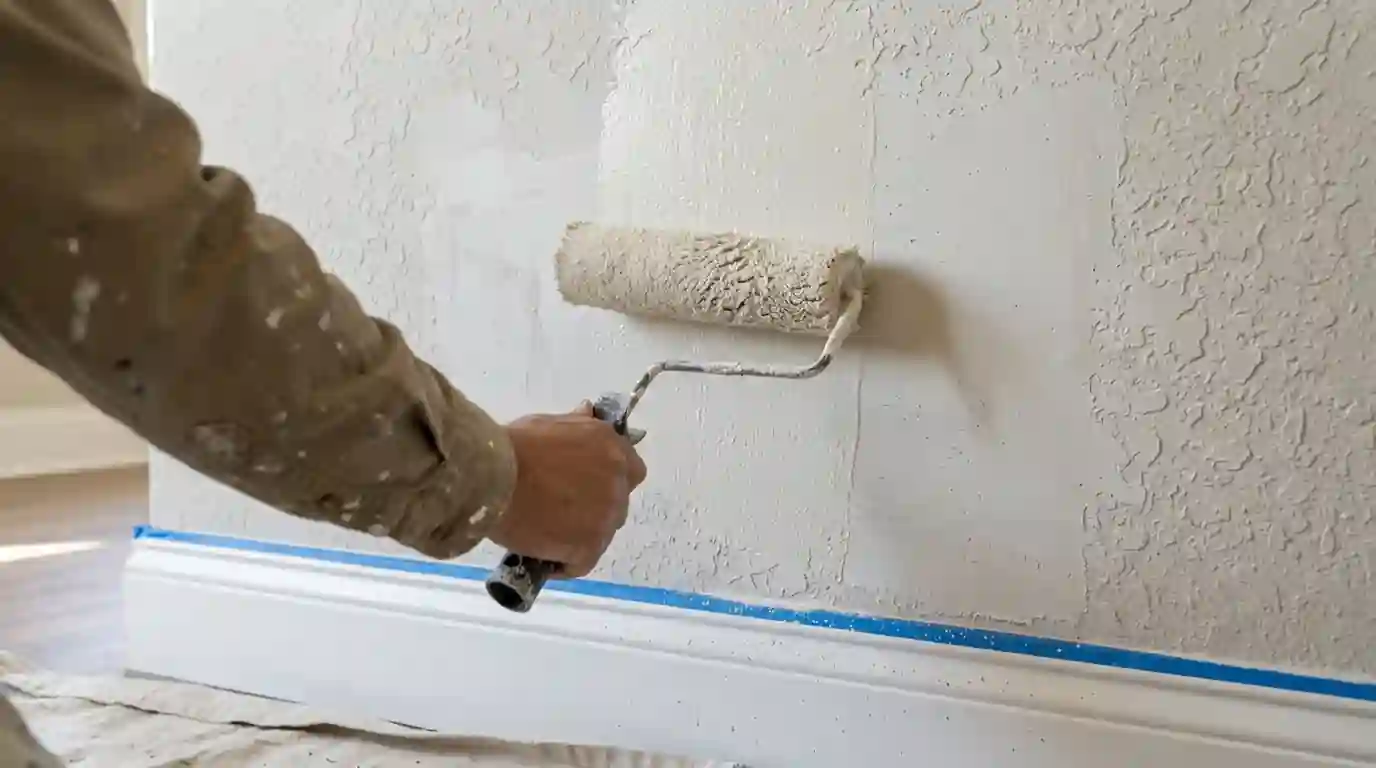
Solid wood baseboards that were removed and labeled during drying go back in their original spots. Swollen MDF baseboard is replaced with the closest profile available. We prime new drywall, then paint the repaired wall, usually corner to corner rather than just the patch, so the color and sheen match. If you have leftover paint from the original job, keep it; it makes matching easier. Caulk lines at the top of the baseboard are redone so the trim looks original.
Flooring reinstall
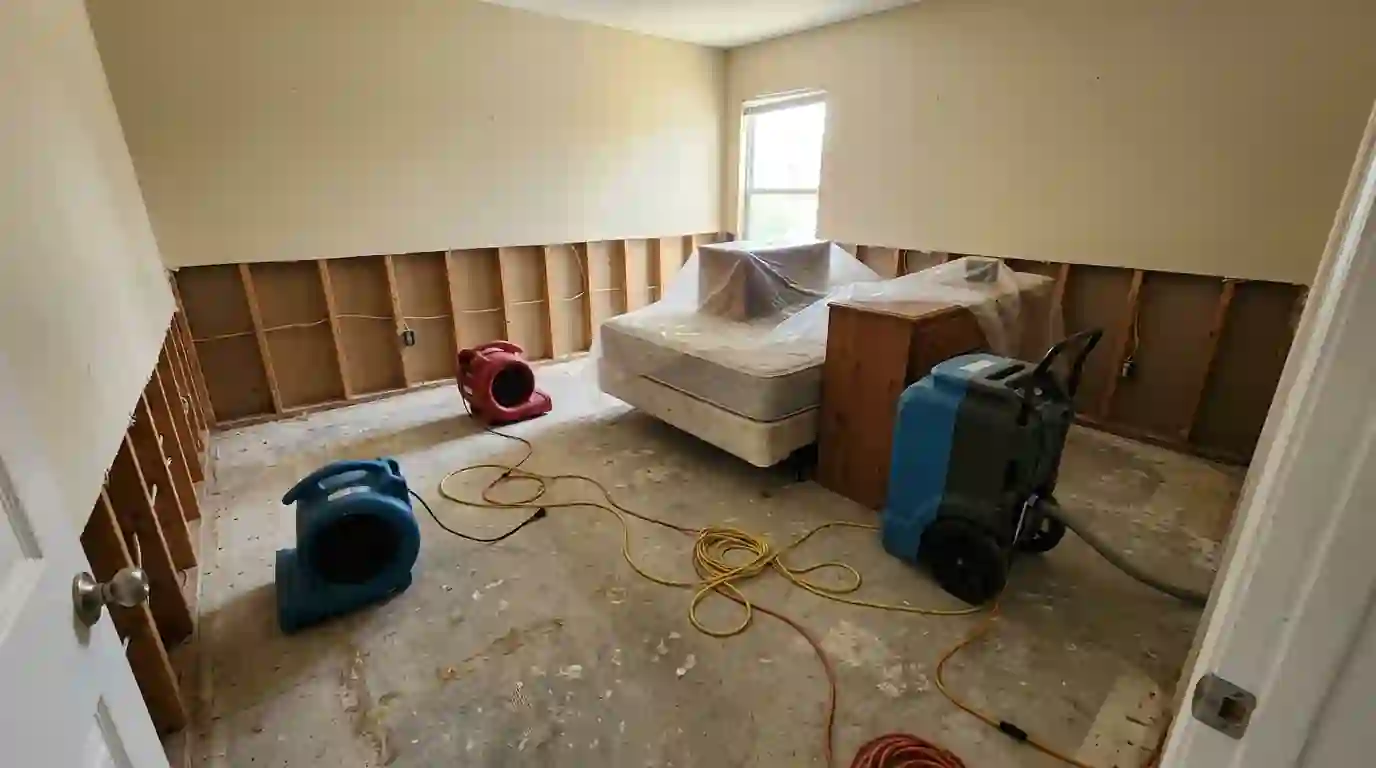
Carpet that was saved is re-laid on new pad and re-stretched. Vinyl plank that was lifted and labeled goes back down in order. Laminate, hardwood or tile that couldn't be saved is replaced with the closest match, and where an exact match isn't available, we'll talk through options such as replacing a full room so the floor doesn't show a patch. Flooring goes down only after the slab or subfloor reads dry.
On the visit
What water damage repairs can include
- Final dry readings before closing anything
- New insulation in exterior walls
- Drywall hung, taped and finished
- Texture matched to the existing wall
- Primer and paint, corner to corner
- Baseboards reinstalled or replaced
- Carpet re-laid or new flooring installed
- Final walkthrough with you
Local conditions
Matching older homes
Much of early Midwest City was built in the 1940s for Tinker workers, with two-bedroom homes of about 800 square feet, and plenty of those houses have been updated piece by piece since. That's where repair matching takes the most care: an original trim profile next to a newer one, plaster and drywall side by side, textures applied by different crews decades apart. We match what's actually in the room, not what a newer house would have.
Step by step
How a water damage repair runs
- 01
Confirm dry
Final readings show the framing, subfloor and slab are dry before anything is closed.
- 02
Insulate and hang
Insulation goes back in exterior walls and new drywall is hung and finished.
- 03
Match texture and paint
Texture is matched and the repaired walls are primed and painted.
- 04
Trim and flooring
Baseboards go back or are replaced, and flooring is reinstalled or replaced.
- 05
Walkthrough
We walk the room with you and fix anything that doesn't match.
Timing
How long repairs take
A few flood cuts with paint and baseboards often take a few days, mostly waiting for drywall mud and paint to dry between coats. Ceilings, multiple rooms and new flooring take longer, and special-order flooring can add lead time. We give you a schedule once drying is confirmed and materials are chosen.
Straight answers
Questions about this job
Yes. We'll provide the dry readings and the record of what was removed so any contractor can pick up from there.
That's the goal. We match texture and paint the full wall so the patch doesn't show.
Closing walls or laying floors over wet materials traps moisture and leads to mold. Repairs start when readings say dry.
We'll find the closest match or talk through replacing a full room so it looks consistent.
When the water loss is covered, putting the damaged materials back is commonly part of the claim. We document what was removed for that reason.
Not for every visit, but someone should be there for the final walkthrough.