First steps after an appliance leak
Short answer
After an appliance leak in Oklahoma City, turn off the water valve behind the appliance or at the main, unplug it if the outlet is dry, and keep the failed hose or line. We extract the water, check inside cabinets and under flooring with a meter, and dry the subfloor, cabinet bases and wall bottoms.
What you will notice
Signs an appliance has been leaking
Soft or lifting floor
Vinyl or laminate that feels soft or has lifted seams in front of the appliance.
Stain on the ceiling below
An upstairs laundry or kitchen leak shows on the ceiling under it.
Musty smell from a cabinet
A smell under the sink or next to the dishwasher that doesn't clear.
Warped toe kick
Swollen or peeling cabinet base trim along the floor.
Water bill creeping up
A small steady line leak can raise usage without any visible puddle.
What the job involves
Why appliance leaks hide
Appliances leak where you can't see: behind the washer, under the dishwasher's front panel, behind the fridge. By the time water shows at the edge of the floor, it has often been running under vinyl, into the cabinet base or along the bottom of the wall for a while.
That's why the visible puddle isn't the job. The job is finding where the water went: cabinet toe kicks, the subfloor under vinyl or laminate, the back of the drywall in the laundry room and the carpet in the next room.
Washer and dishwasher drain water is usually treated as gray water, which means more cleaning and less carpet saved than a clean supply-line leak.
Washing machine hose failures
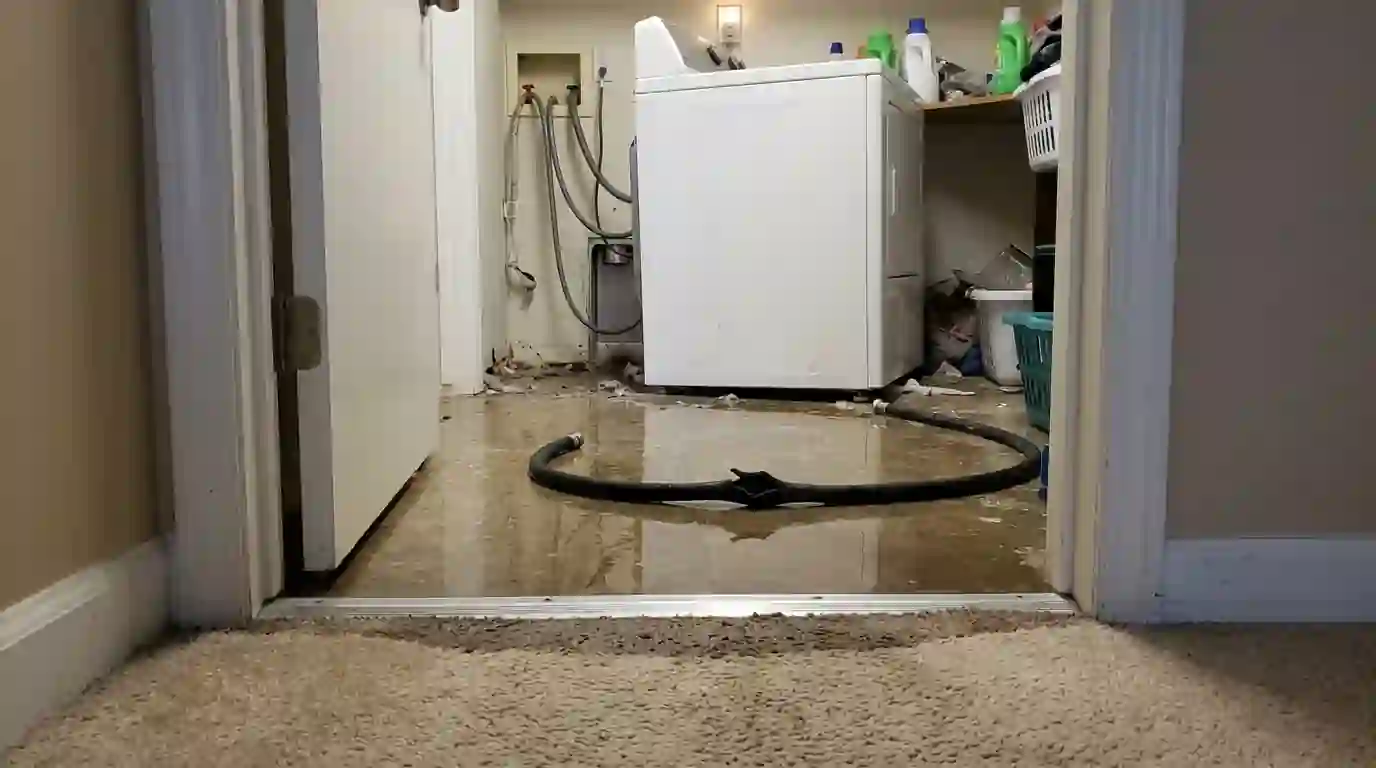
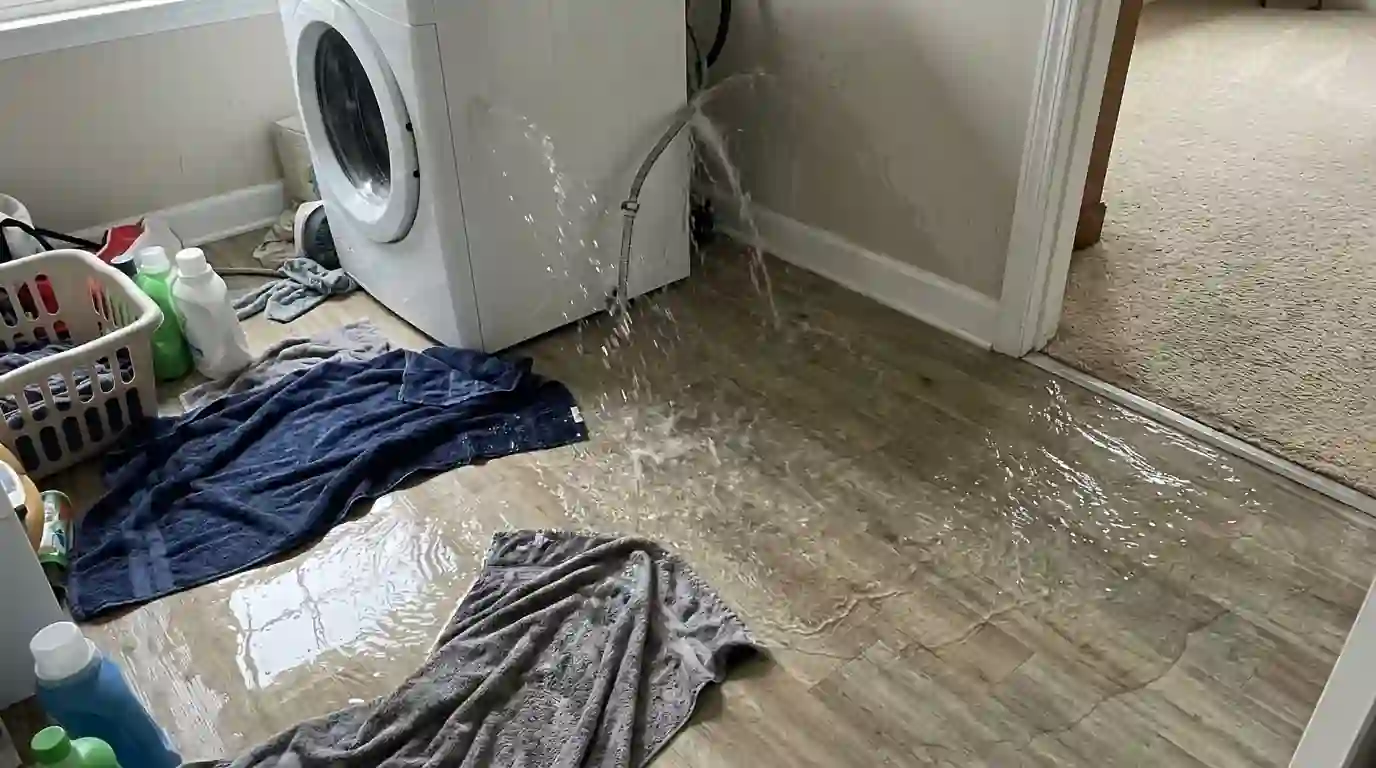
Rubber washer hoses swell and split with age, and a burst fill hose runs at full house pressure until someone shuts the valve. In a laundry room next to a hallway or bedroom, that water heads straight for the carpet. We extract the laundry floor and the carpet beyond it, pull baseboards where water reached the wall, and dry the cavity. Braided steel hoses and a leak pan or auto shutoff are worth adding when the washer goes back in, and we'll point that out.
Dishwasher leaks under cabinets
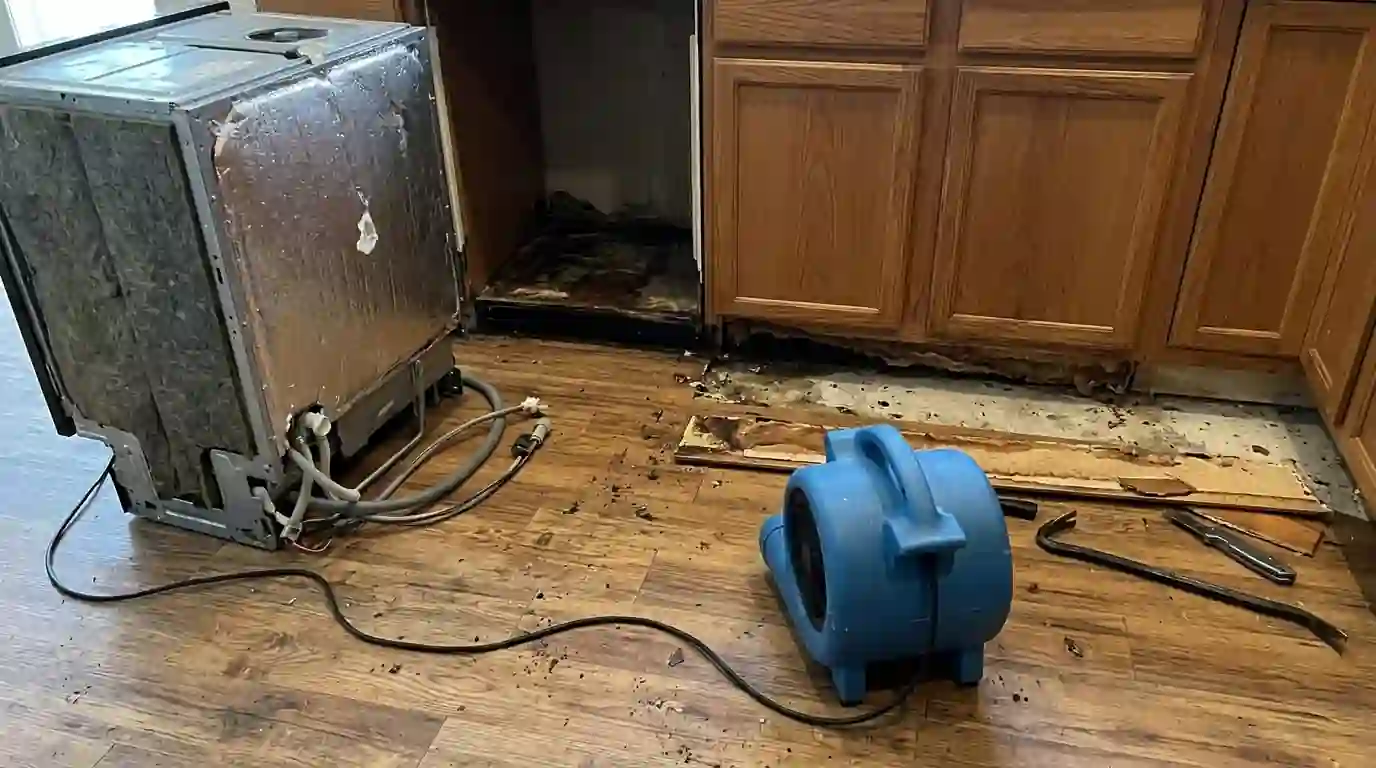
Dishwashers leak from the door gasket, the supply line or the drain hose, and the water runs under the unit and into the neighboring cabinet base. Particleboard cabinet bottoms swell fast and hold water against the subfloor. We open the toe kicks, dry the cavity under the cabinets with directed air, and check the floor in front of the dishwasher, where laminate and vinyl plank often trap water at the seams. Swollen cabinet bottoms usually need replacing once the area is dry.
Refrigerator and ice maker lines
A pinhole in a plastic ice maker line can drip slowly for weeks before anyone notices a soft spot in the floor or a stain on the ceiling below. Slow leaks are the ones that grow mold, because the area never had a chance to dry. We pull the fridge, read the floor and wall behind it, open what's wet and dry it. If mold has started, that area is handled behind containment.
Step by step
How an appliance leak cleanup runs
- 01
Shut off and unplug
Water to the appliance is closed and power is cut where the outlet is safe to reach.
- 02
Move the appliance
We pull the washer, dishwasher or fridge out to see and read the floor and wall behind it.
- 03
Extract and open
Standing water is extracted, toe kicks and baseboards come off, and wet carpet is lifted.
- 04
Dry the hidden spaces
Air is directed under cabinets, into wall cavities and under flooring until readings drop.
- 05
Confirm and reset
When readings match dry areas, the appliance goes back and damaged pieces are listed for repair.
Local conditions
Older laundry rooms and newer floors
Edmond's largest block of housing was built in the 1980s, and more than 14,000 units have gone up there since 2000. That mix shows in appliance calls. In the older houses we often find washer boxes and valves that haven't been turned in decades, so the shutoff won't close when it matters. In newer ones the laundry room sits off a carpeted hall or upstairs, so a split hose puts water on carpet within minutes.
Do it yourself or call
What you can handle and what needs drying equipment
| Situation | Do it yourself | Call us |
|---|---|---|
| Small puddle on hard floor | Shut the valve, towel it up, run a fan | Water that went under the appliance or cabinets |
| Laundry room overflow | Shut the valve and lift rugs and clothes off the floor | Water that reached the hallway carpet or the wall |
| Ice maker drip | Close the line valve and pull the fridge to look | Soft floor, stains or a smell behind it |
| Swollen cabinet base | Nothing until it's dry | Drying the cavity and checking the subfloor |
What drives the price
What an appliance leak cleanup costs depend on
Small appliance leaks caught early are some of the less expensive water jobs. These factors push the cost up.
How long it leaked
A burst hose caught in an hour is very different from a fridge line that dripped for weeks.
Cabinets involved
Drying under cabinets is extra work, and swollen cabinet bases may need replacing.
Flooring type
Carpet often dries; laminate and some vinyl plank over wet subfloor may have to come up.
Gray water
Drain water from a washer or dishwasher adds cleaning and usually means new pad.
Angi puts water damage repair from an appliance leak at about $175 to $500 for small jobs, with larger spreads costing more. Source: Angi, 2026
Straight answers
Questions about this job
Water from a burst fill hose is clean. Water from the drain hose or tub during a cycle is gray water and is handled with more cleaning, and pad it soaked is usually replaced.
Not always. Cabinets that dried before the bottoms swelled can stay. Particleboard bases that puffed up or delaminated usually need replacing once everything is dry.
Sometimes, if it was caught fast. Laminate that has swollen at the seams doesn't go back down flat and usually needs replacing in the affected area.
Yes. It helps show your insurer the leak was sudden, and the adjuster may want to see it.
A sudden failure is commonly covered; a slow drip over weeks often isn't. The age and appearance of the damage matter, so photos and moisture readings help.
Use braided steel hoses, replace them every few years, close the valves when you travel, and consider a leak pan or an automatic shutoff valve.