When flooded carpet can be cleaned
Short answer
Carpet in Oklahoma City soaked by clean or gray water can often be cleaned and kept once it's dried: hot water extraction removes residue, an antimicrobial treats the backing, and deodorizing clears the musty smell. Carpet soaked by sewage or outside flood water is removed rather than cleaned.
Carpet we clean and treat after water includes Shaw, Mohawk and Stainmaster broadloom and Karastan wool.
- Shaw
- Mohawk
- Karastan
- Stainmaster
- Dixie Home
- Masland
- Kane
- Godfrey Hirst
- LifeProof
- COREtec
- Pergo
- Mannington
What the job involves
Drying versus cleaning
Drying takes the water out of a carpet. Cleaning takes out what the water brought with it: soil, detergent, rust from tack strip and furniture legs, and the bacteria that start a musty smell.
For clean water losses that are dried quickly, a regular cleaning is often enough. For gray water from a washer, dishwasher or AC pan, carpet that's kept gets a deeper hot water extraction and an antimicrobial, and the pad underneath is replaced.
Some carpet shouldn't be kept. When that's the case we'll say so, rather than cleaning carpet that will smell again in a month.
What drives the price
What flooded carpet cleaning costs depend on
Cleaning saved carpet is far less than replacing it. These factors move the price.
Square footage
Cleaning is priced by area, so whole-room or multi-room jobs cost more.
Water type
Gray water adds antimicrobial treatment and usually new pad.
Spot treatment
Rust, wicking stains and dye transfer take extra treatment.
Stairs and furniture moving
Stairs and moving heavy furniture add labor.
HomeAdvisor puts cleaning and repairing carpet after water at about $1 to $11 a square foot, depending on the water and the damage. Source: HomeAdvisor, 2025
Full carpet replacement typically runs about $3 to $11 a square foot, which is why saving carpet is worth trying when it's safe. Source: NerdWallet, 2026
Your options
Clean, treat or replace
Synthetic broadloom from Shaw, Mohawk and most builder lines handles cleaning well after clean or gray water. Stainmaster treatments help with stains but don't make carpet waterproof. Wool, including Karastan, needs lower heat and gentler chemistry.
| Water type | Carpet | Pad |
|---|---|---|
| Clean, caught early | Dry, then a regular cleaning | Often dried in place |
| Clean, sat for days | Dry, deep clean and treat | Usually replaced |
| Gray water | Dry, hot water extraction, antimicrobial | Replaced |
| Sewage or outside flood water | Removed and discarded | Removed and discarded |
Do it yourself or call
Rental machine or professional cleaning?
| Situation | Rental machine is fine | Better to call |
|---|---|---|
| Small clean-water spot | Once it's fully dry, a spot clean | Spot keeps coming back brown |
| Whole room after a leak | Not ideal; rentals leave more water behind | Hot water extraction with strong suction |
| Gray water | No | Cleaning, antimicrobial and pad replacement |
| Musty smell | No; it usually means the pad or floor is wet | Checking moisture, then treating the cause |
Hot water extraction after drying
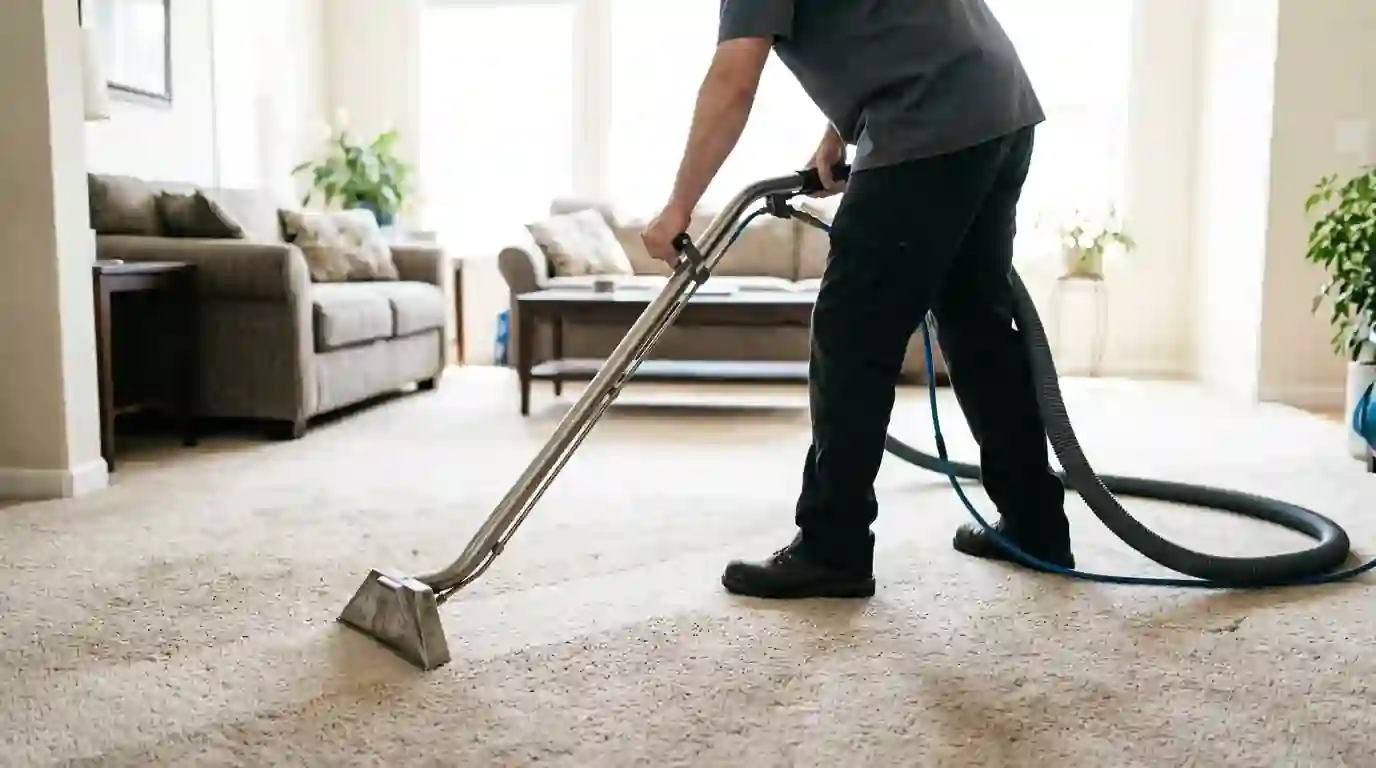
Once the carpet and floor read dry, we clean the carpet with hot water extraction, the same method used for deep cleaning: a cleaning solution is applied, agitated into the fibers and then rinsed out under strong suction. That lifts the residue and soil the water left behind, including the brown edges you sometimes see where water wicked up and dried. Rust spots from furniture legs and tack strip are treated separately before extraction.
Antimicrobial treatment
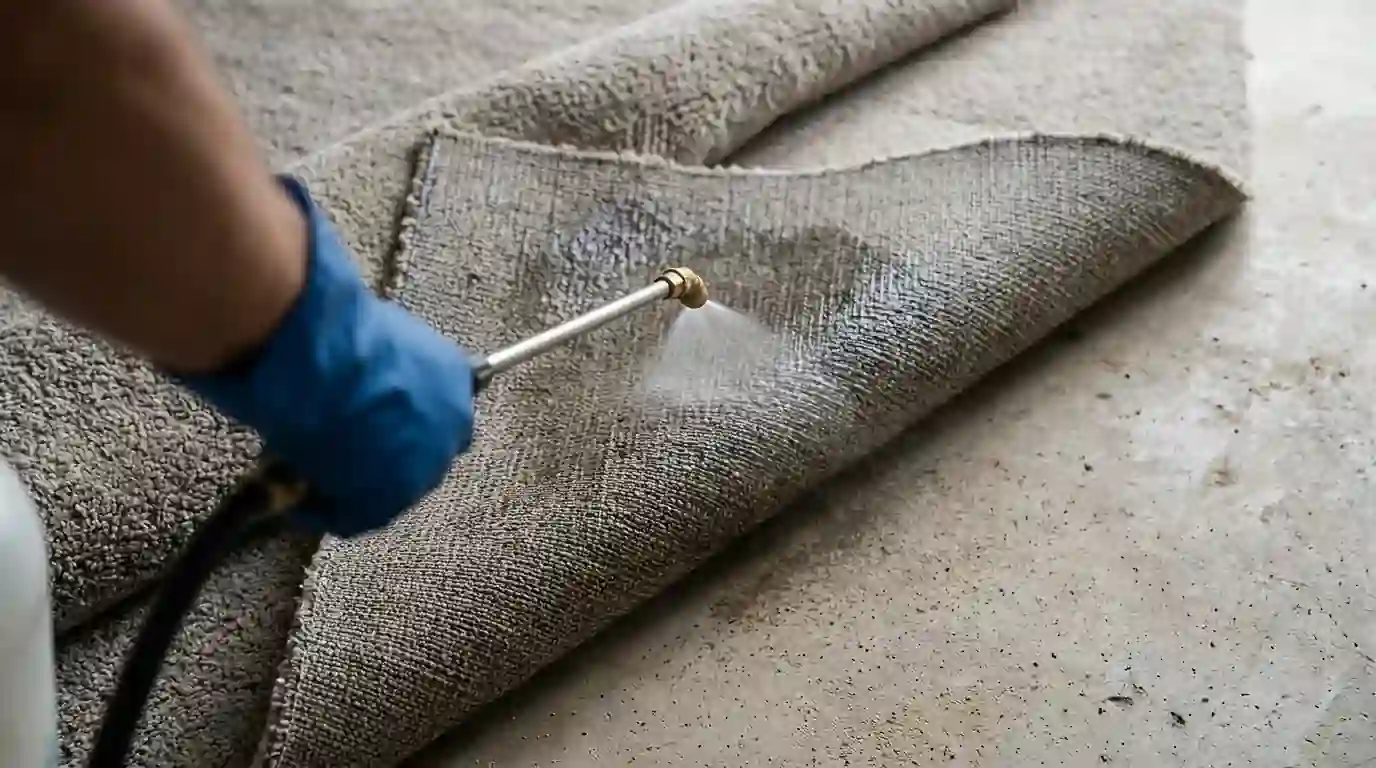
After gray water, carpet that's being kept gets an antimicrobial applied to the face and backing, and the floor underneath is treated before new pad goes down. That limits bacterial growth and the smell that comes with it. We use products labeled for this use and follow their directions, and we'll tell you if anyone in the house has sensitivities we should plan around, such as keeping a room closed until it's ventilated.
Gray water carpet decisions
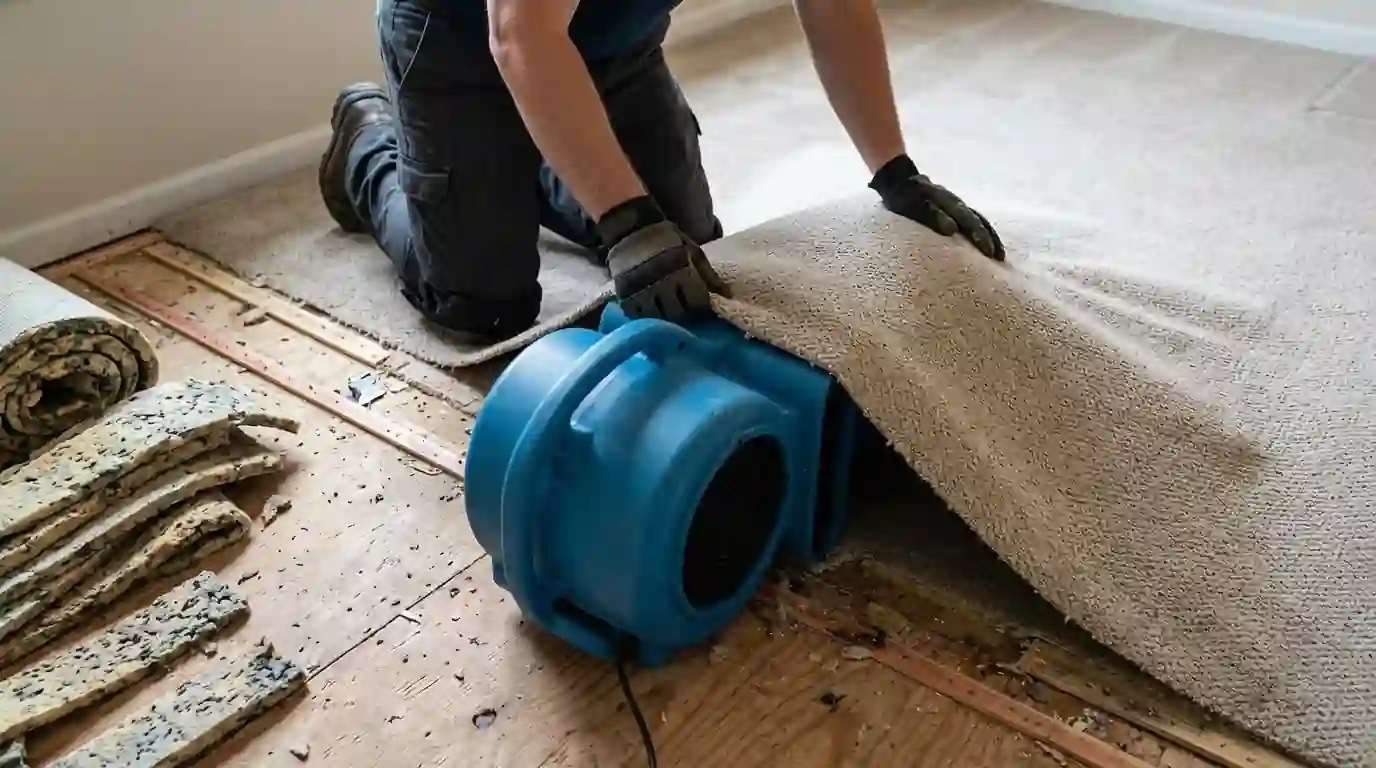
Gray water from a washing machine or dishwasher drain is not sewage, but it isn't clean either. Synthetic carpet with an intact backing can usually be kept after gray water if it's dried quickly, cleaned and treated, with the pad replaced. Carpet that sat wet for days, carpet whose backing has separated, and wool carpet that's bled dye are more likely to be replaced. We walk you through the call with the carpet in front of us.
Local conditions
Outside water and the cleaning line
Where water came from decides whether carpet gets cleaned or replaced. During the May 2015 flooding, some roads in Oklahoma City and Del City sat under as much as nine inches of water, and carpet soaked by water that crossed streets and yards is treated as contaminated and removed. Carpet from a burst supply line or an appliance drain inside the house is a different case, and that's most of the carpet we clean and keep.
Step by step
How flooded carpet cleaning runs
- 01
Confirm the water type
Clean, gray or contaminated water decides whether the carpet can be kept at all.
- 02
Dry first
Carpet and floor are dried and read before any cleaning, so cleaning water doesn't rewet them.
- 03
Pre-treat spots
Rust from tack strip and furniture legs and brown wicking edges are treated.
- 04
Hot water extraction
The carpet is cleaned and rinsed under strong suction.
- 05
Treat and deodorize
An antimicrobial is applied where needed, and the room is deodorized and dried.
Straight answers
Questions about this job
After clean or gray water from inside the house, often yes. After sewage or outside flood water, carpet and pad are removed and discarded.
Drying removes water, not what the water left behind. Residue and bacteria cause odor and brown spots if they're left.
Usually. Wicking stains respond to pre-treatment and extraction once the carpet is fully dry.
We use products labeled for this use and follow the label. Ventilate the room and keep pets off until it's dry.
Usually a few hours after cleaning, once it's mostly dry. Socks are better than shoes for the first day.
Cleaning carpet that's kept after a covered loss is commonly part of the claim, since it costs less than replacement.