What to do when the AC is leaking water
Short answer
When an air conditioner leaks water in Oklahoma City, switch the system off at the thermostat so it stops making condensate, put a bucket under the drip, and check whether the attic drain pan is full. We extract water, dry ceiling drywall, insulation and closet floors, and point the HVAC tech to the clogged line or pan.
What you will notice
Signs your AC is leaking water
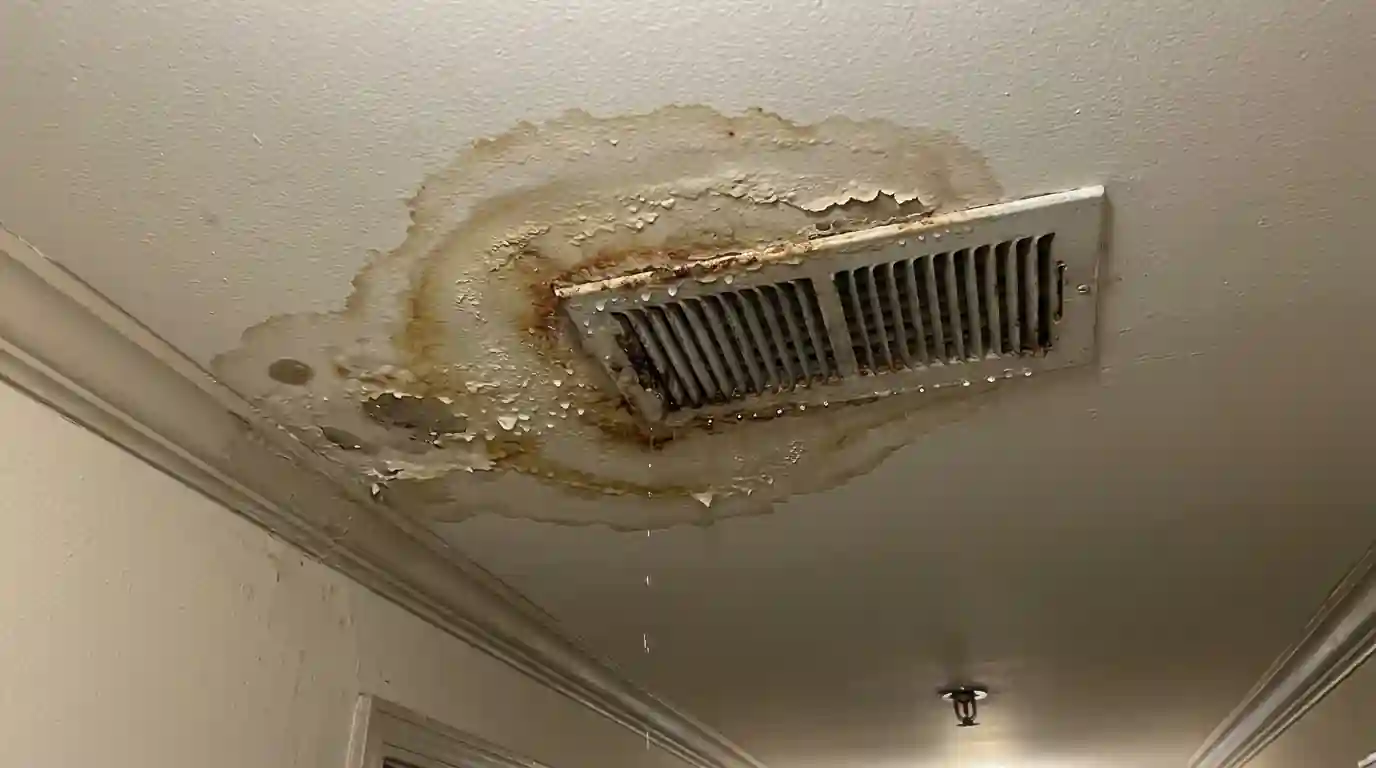
Drip from a ceiling vent
Water at a supply register usually means the pan above has overflowed.
Stain near the attic hatch
Staining around the attic access or a hall closet ceiling.
Wet closet floor
Water around a closet air handler's base.
AC shuts off on its own
A float switch tripping because the pan is full.
Musty air
A damp, musty smell when the system starts up.
What the job involves
Why air conditioners leak water
An air conditioner pulls a lot of water out of the air as it cools, and that condensate drains through a line to the outside or a drain. When the line clogs with algae or debris, the water backs up into the pan under the coil and eventually spills over.
In a closet system that means a wet floor and wet bottom plates. In an attic system, it means water on top of the ceiling drywall, which shows as a stain, a drip at a vent or a sagging spot.
Fixing the drain is an HVAC job. Drying what the water reached is ours, and it's usually more than the visible stain.
Clogged condensate lines
The condensate line is a small PVC pipe that carries water away from the coil. Algae and debris build up inside it over a cooling season, and when it clogs, water backs up. Many systems have a float switch that shuts the AC off when the pan fills; when that switch is missing or fails, the water keeps coming. We dry the area it reached and show your HVAC tech exactly where the overflow went, which helps them confirm whether a safety switch belongs on the system.
Overflowing attic drain pans
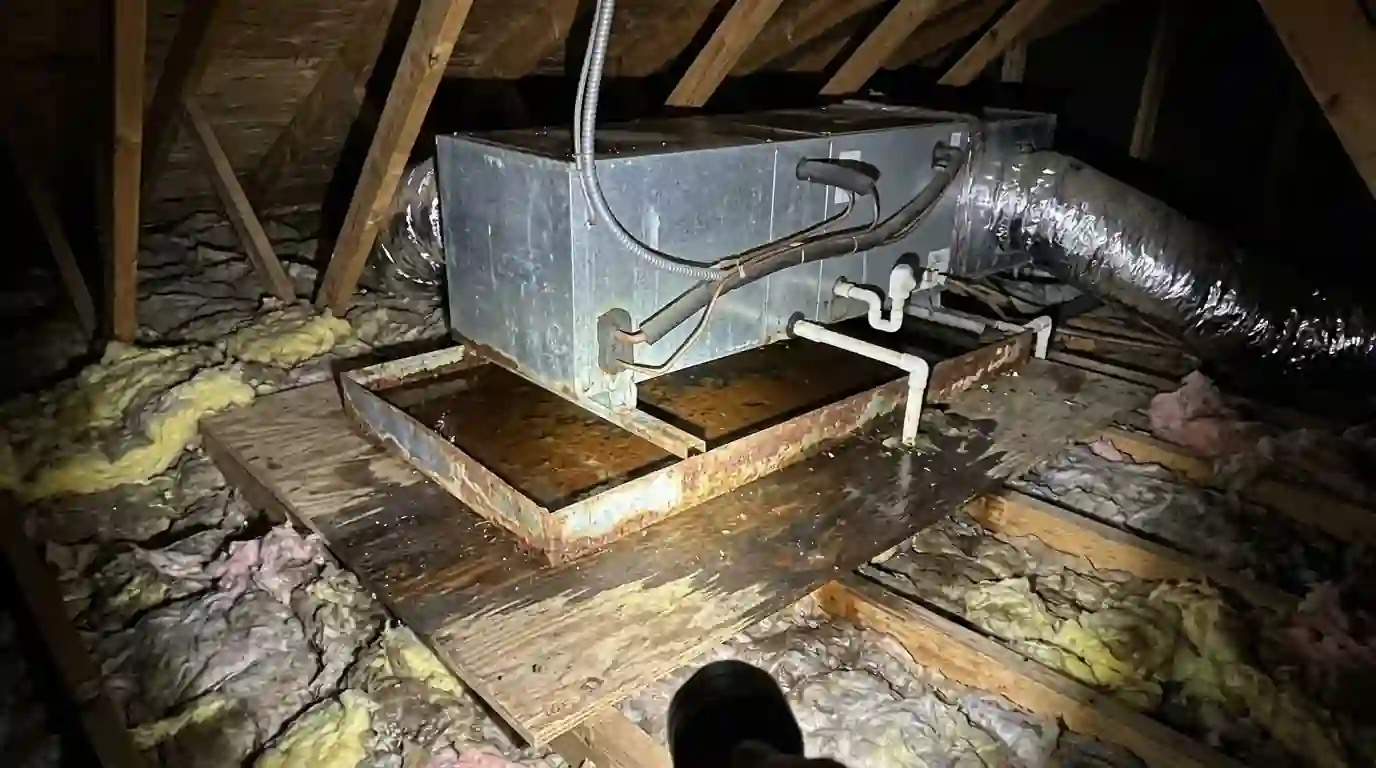
Attic air handlers sit in a secondary drain pan meant to catch overflow. If that pan is rusted, cracked or its own drain is blocked, water lands on the ceiling drywall below. We relieve any trapped water, remove wet insulation around the unit, dry the drywall from above and below, and check for staining in nearby rooms, since water can travel along joists before it shows. Damaged drywall is replaced once it's dry.
Coil meltwater after a freeze-up
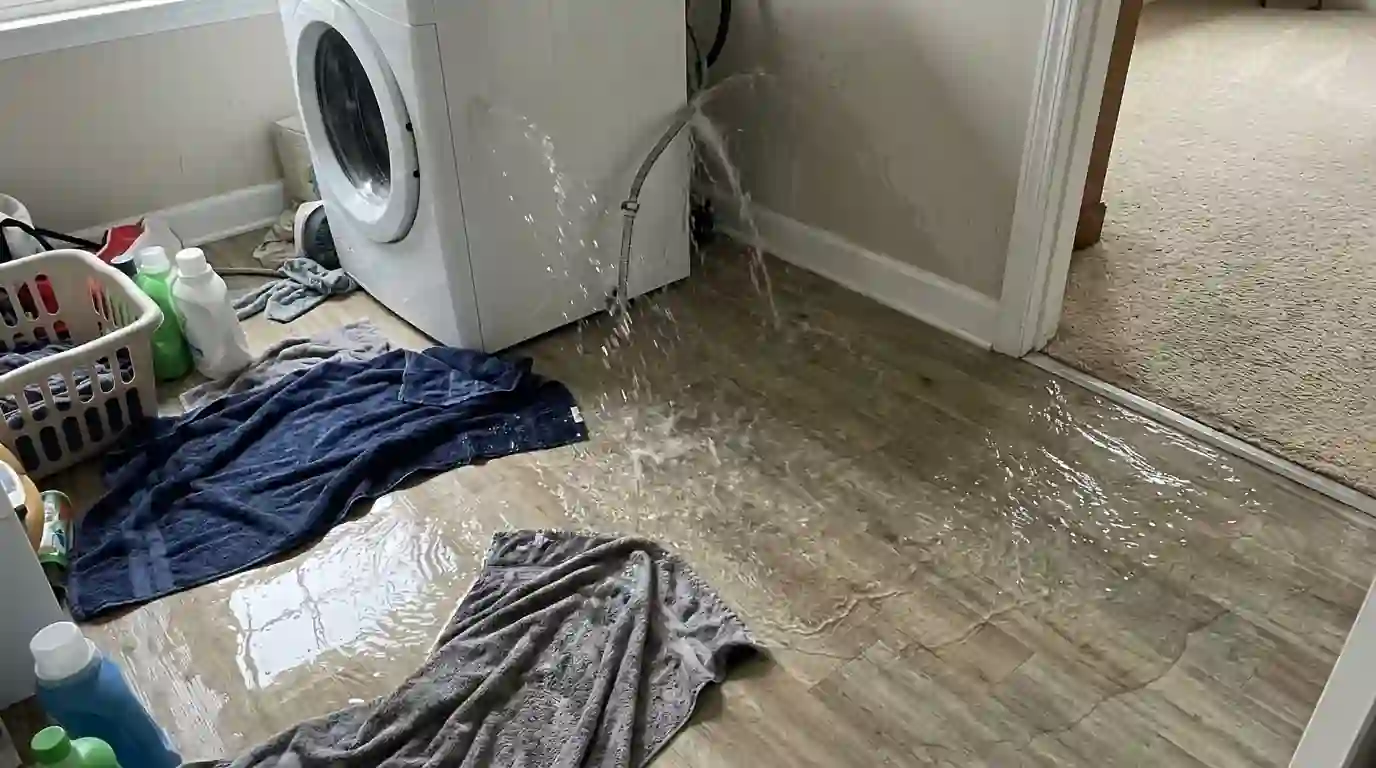
When airflow is restricted by a dirty filter or a low refrigerant charge, the indoor coil can freeze into a block of ice. When the system shuts off, all that ice melts at once and can overwhelm the pan. These leaks often come all at once on a hot afternoon. We dry the closet or ceiling, and the HVAC tech deals with the cause, whether that's the filter, the airflow or the refrigerant.
Step by step
How an AC leak water job runs
- 01
Stop the condensate
The system is switched off so it stops making water, and drips are caught.
- 02
Find where it went
Meters and a thermal camera trace the water from the unit across the ceiling or closet floor.
- 03
Relieve and remove
Trapped water is drained from the ceiling and wet insulation is pulled from around the unit.
- 04
Dry
Air movers and a dehumidifier dry the drywall, insulation area and floor until readings drop.
- 05
Hand off and repair
We show the HVAC tech the overflow path, then repair the ceiling once it's dry.
Local conditions
Hard-working AC through Oklahoma summers
Oklahoma City's July and August run hot and dry, and air conditioners work hard all season pulling moisture out of the air. A condensate line that started the summer clean can be packed with algae by late July, and attic units sit in heat that makes plastic pans brittle over the years. Most AC leak calls we see come in mid to late summer, not when the system first kicks on in spring.
Do it yourself or call
What you can check yourself
| Task | Do it yourself | Call us or your HVAC tech |
|---|---|---|
| Stopping the water | Turn the system off at the thermostat | Nothing more needed for that step |
| Drain line | Look for a clogged or kinked line outside | Clearing the line and adding a safety switch (HVAC tech) |
| Ceiling stain | Put a bucket under the drip and keep people clear | Relieving, drying and repairing the drywall |
| Attic | Look at the pan with a flashlight if access is safe | Removing wet insulation and drying the ceiling |
What drives the price
What an AC leak water job costs depend on
The drain or pan repair is billed by your HVAC company. The water side depends on where the system sits.
Attic or closet
Attic leaks onto ceilings mean ceiling work; closet leaks usually mean floor and wall drying.
Insulation
Wet insulation around an attic unit has to be removed and replaced.
Ceiling damage
Stained drywall can often be sealed; sagging drywall gets replaced.
How long it dripped
A slow summer-long leak spreads further and may have started mold.
Angi lists ceiling water damage repair at about $450 to $1,600, which is where most attic AC leaks end up. Source: Angi, 2026
Straight answers
Questions about this job
It's better to switch it off until the drain is cleared, because every hour it runs adds water. If the heat is dangerous, ask your HVAC tech about a temporary fix.
Your HVAC company. We dry the water damage and can tell them where the overflow went.
If it only stained, it can often be dried and sealed. If it sagged or got soft, that section is replaced.
Wet fiberglass that has matted down usually comes out. Blown-in insulation that got soaked is vacuumed out of the affected area and replaced.
Yes, especially slow leaks during a long cooling season. Drying quickly and fixing the drain stops it from getting started.
Have the condensate line flushed at each tune-up, make sure the attic pan has a working drain and float switch, and change filters on schedule.