What water does to plank floors
Short answer
In Oklahoma City, vinyl plank tolerates water on top but traps it underneath, while laminate swells at the seams once its core gets wet. We find how far water spread with a meter, remove planks and underlayment where water is trapped, dry the slab or subfloor, and tell you whether planks can be reinstalled.
Plank floors we lift, dry and reinstall include LifeProof, COREtec, Pergo and Mannington.
- Shaw
- Mohawk
- Karastan
- Stainmaster
- Dixie Home
- Masland
- Kane
- Godfrey Hirst
- LifeProof
- COREtec
- Pergo
- Mannington
What the job involves
Two floors that look alike and act differently
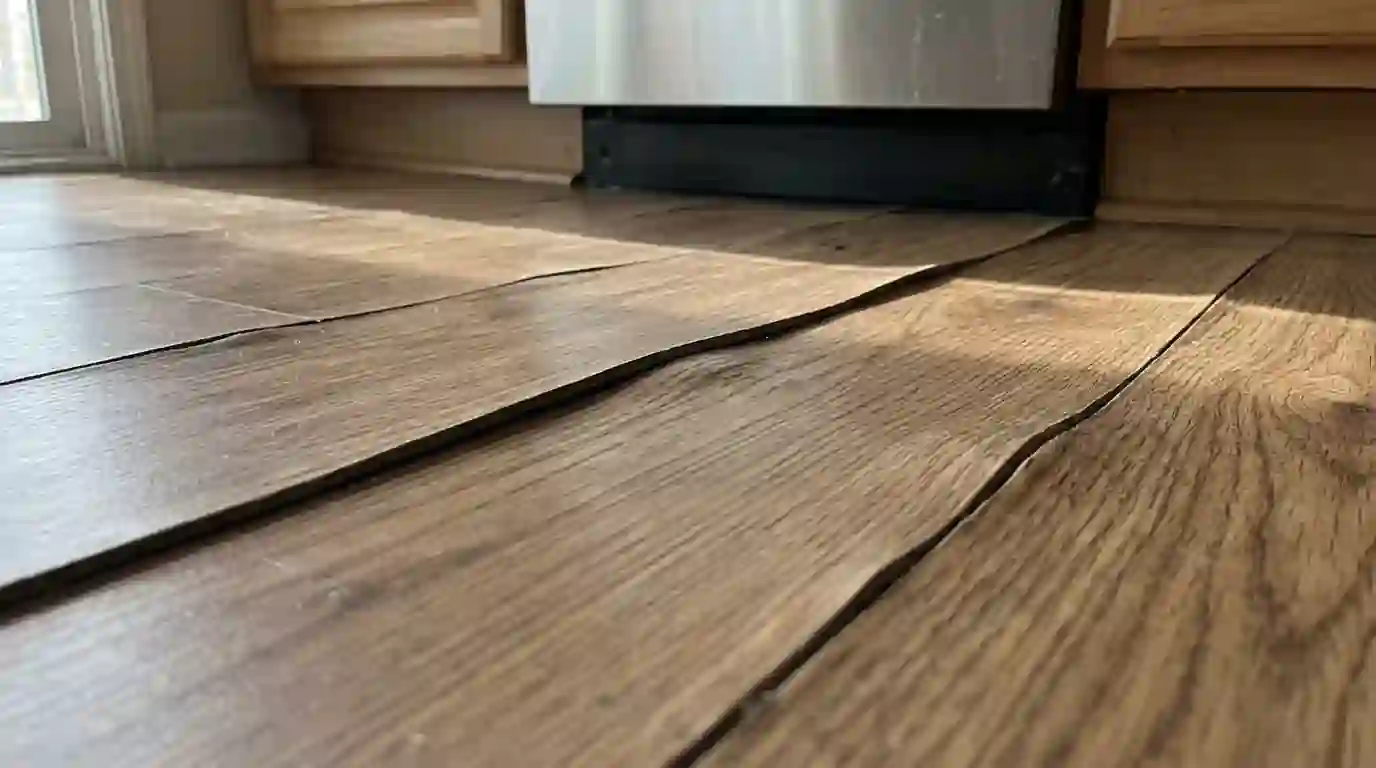
Laminate is a photo layer over a fiberboard core. Once water reaches the core, usually through the seams, it swells and the edges peak. Swollen laminate doesn't shrink back, so those planks are replaced.
Luxury vinyl plank is waterproof on its own, but the floor isn't. Water runs through the click joints and around the edges and sits on the underlayment and slab, where it can't dry and starts to smell.
Both are floating floors, which helps: planks can be lifted and the floor underneath dried properly, rather than trying to dry through the planks.
What drives the price
What plank floor water damage costs depend on
Vinyl plank can often be reused, which keeps cost down; swollen laminate has to be replaced.
Flooring type
Reusable vinyl plank costs less to reinstate than replacing swollen laminate.
Area affected
Water under a whole kitchen and living area means lifting more floor.
Matching
Older laminate or vinyl may be discontinued, which can mean replacing a larger area.
Slab drying
Concrete under the planks takes time to dry before reinstalling.
Angi puts flooring water damage repair at about $200 to $3,000, depending on the type and area of flooring. Source: Angi, 2026
Your options
Laminate or vinyl: what usually happens
Rigid-core vinyl plank like LifeProof and COREtec usually survives water and can go back down after the slab dries. Laminate, including Pergo lines, survives only if its core stayed dry. Mannington makes both, so we check which you have before deciding.
| Floor | What water does | Usual outcome |
|---|---|---|
| Rigid-core vinyl plank | Stays intact but traps water underneath | Lift, dry the slab, reinstall the same planks |
| Flexible vinyl plank | Stays intact; may lose its grip if glued | Lift or re-glue after the floor dries |
| Laminate, surface water only | Wipes dry if the seams stay tight | Dry and monitor |
| Laminate, wet core | Seams swell and peak permanently | Replace affected planks |
Swollen laminate seams
Laminate seams that have swollen or peaked mean water reached the fiberboard core. We read the area to see how far it spread, then remove the swollen planks along with enough of the surrounding floor to dry the underlayment and the slab beneath. Laminate that only got surface water and wiped dry quickly often survives; laminate that sat wet for hours usually doesn't. If you have spare planks from the original install, keep them, since matching an older laminate can be hard.
Water trapped under vinyl plank
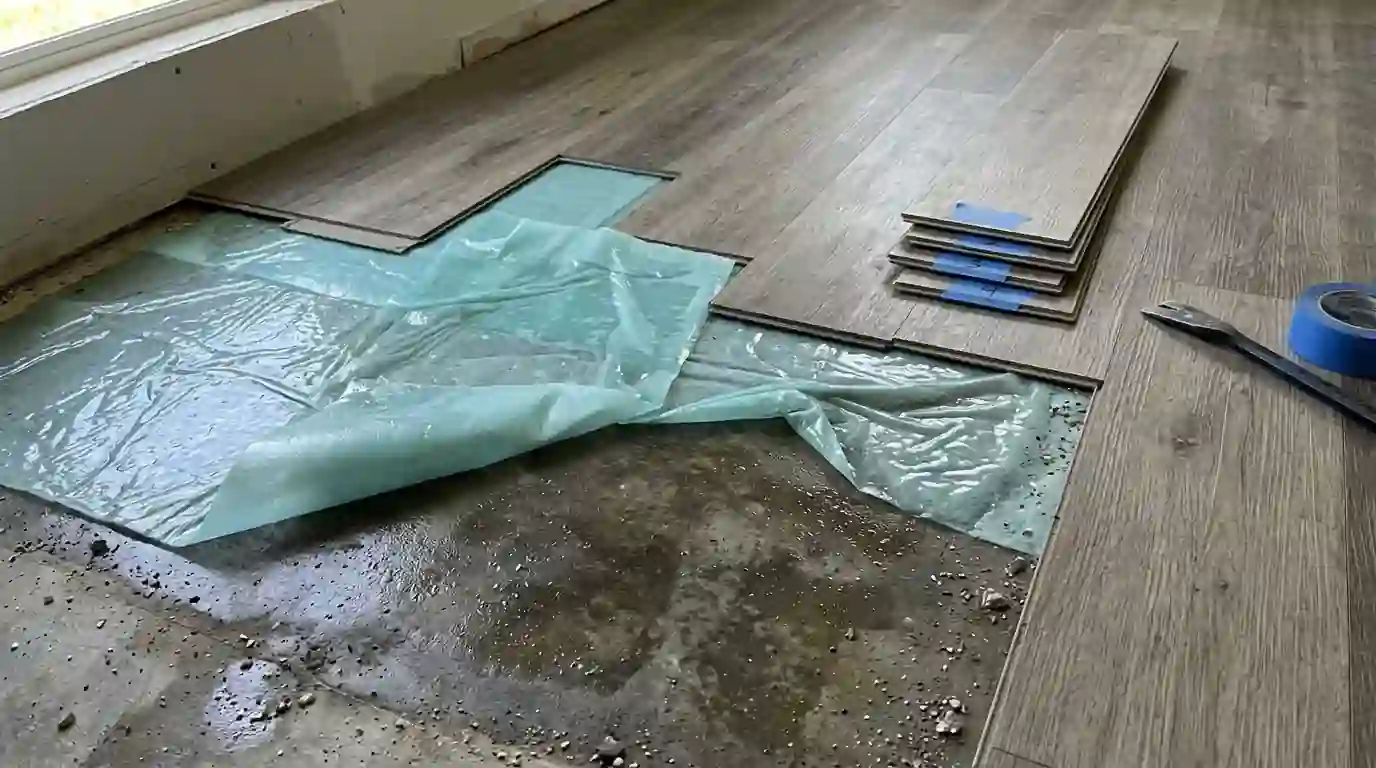
With vinyl plank, the planks themselves usually survive but the water under them doesn't leave. You may see water pushing up through the seams when you step, or smell a musty odor days later. We pull planks from the wall edge across the wet area, remove soaked underlayment, and dry the slab or subfloor directly. Undamaged planks are stacked and labeled so they can go back down in order once the floor reads dry.
Underlayment removal
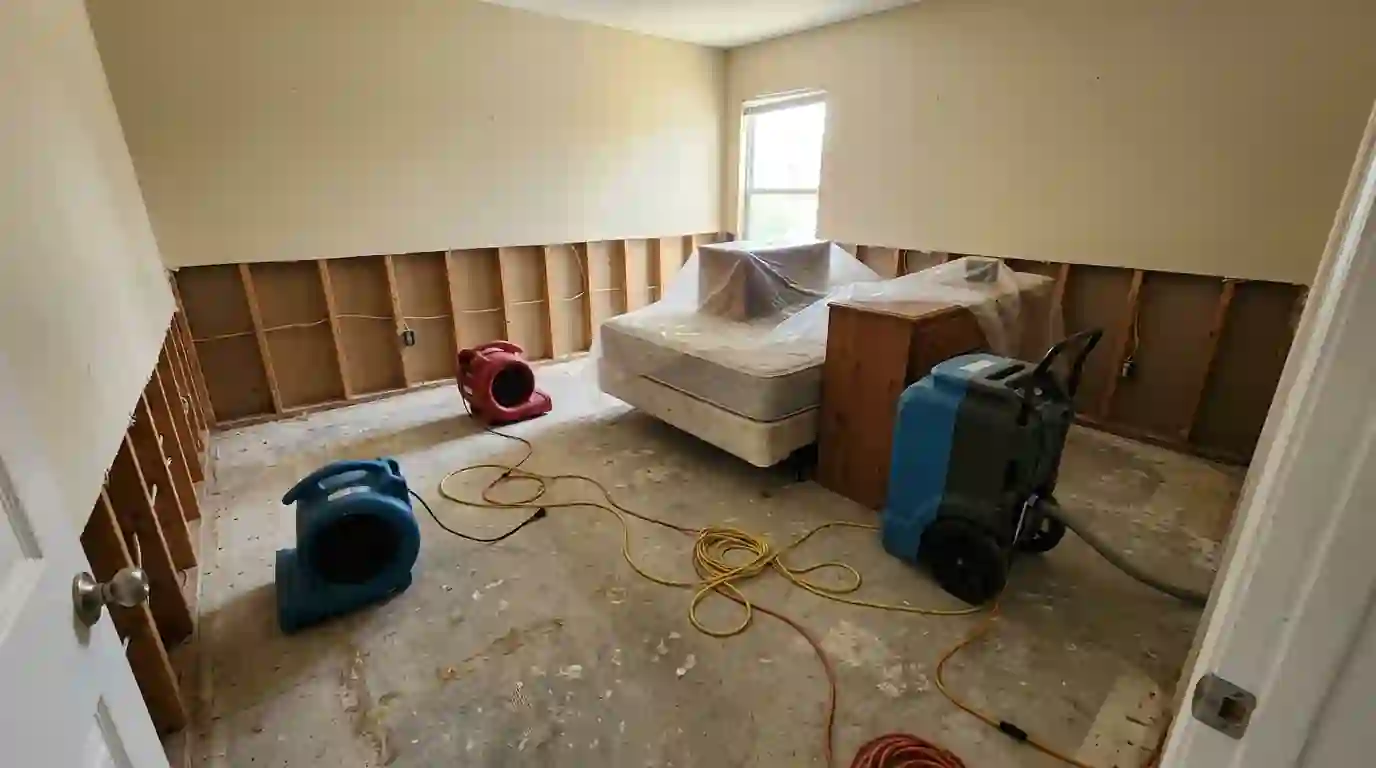
The thin foam or felt underlayment under plank floors holds water against the slab and keeps it from drying. Foam with an attached film can trap water completely. We remove wet underlayment across the affected area and dry the floor with air movers and dehumidifiers, sometimes drying mats on a slab. New underlayment goes down with the planks, matched to what the flooring manufacturer specifies so the floor's warranty conditions are respected.
Local conditions
Newer homes and plank floors
Canadian County's population grew from about 113,900 to 156,600 between 2014 and 2024, with much of the growth in Yukon and Mustang. A lot of that is newer construction, and newer kitchens, halls and living areas often have vinyl plank or laminate over a slab instead of carpet. When a supply line or appliance leaks in those houses, water runs across the floor and under the planks, so the job is lifting planks and drying the slab rather than drying carpet.
Step by step
How plank floor water damage is handled
- 01
Find the edges
Meters show how far water spread under the planks, usually further than the visible wet spot.
- 02
Lift the planks
Planks are removed from the nearest wall across the wet area, labeled if they'll be reused.
- 03
Pull underlayment
Wet underlayment comes out so air reaches the slab or subfloor.
- 04
Dry the floor
Air movers, dehumidifiers and drying mats run until the floor reads dry.
- 05
Reinstall or replace
Reusable vinyl goes back down; swollen laminate is replaced.
Timing
How long before planks can go back down
Once the planks and underlayment are up, a slab or subfloor often dries in a few days, sometimes longer for concrete that was soaked. We read the floor each visit and release it for reinstall only when it matches dry areas of the house. Laying planks back over a damp slab is the most common reason a plank floor smells later.
Straight answers
Questions about this job
The planks are, but the floor isn't. Water runs through the joints and edges and sits underneath, where it can't dry.
Only if the core never got wet. Laminate with swollen or peaked seams has to be replaced.
Usually, yes. We label and stack them as they come up and reinstall them once the floor is dry.
If replacements don't match, a larger area may need new flooring. Keep any spare boxes from the original install.
Water trapped under the planks or in the underlayment smells as it sits. Lifting the planks and drying the floor fixes the cause.
When the water loss is covered, lifting, drying and reinstalling or replacing the floor is commonly part of the claim.