Why extraction comes before drying
Short answer
Extraction in Oklahoma City means physically pulling liquid water out of carpet, pad and floors with pumps and high-suction wands before drying starts. It's far faster than evaporation: water extracted in the first hours doesn't have to be dried by dehumidifiers over the following days.
What the job involves
What extraction does, and what it doesn't
Extraction is the part of a water job you can see working. Pumps lift pooled water, wands and weighted tools squeeze water out of carpet and pad, and squeegees push it off tile and vinyl toward a pickup point.
It doesn't dry anything completely. Water that has wicked into drywall, soaked into a slab or swelled the edges of laminate stays put until air movers and dehumidifiers pull it out. Extraction just makes that phase shorter and cheaper.
We choose the tool by depth and surface. A few gallons from a toilet supply line and four inches of flood water in a garage are different problems, and using the wrong unit wastes the first hour.
Truck-mount extraction
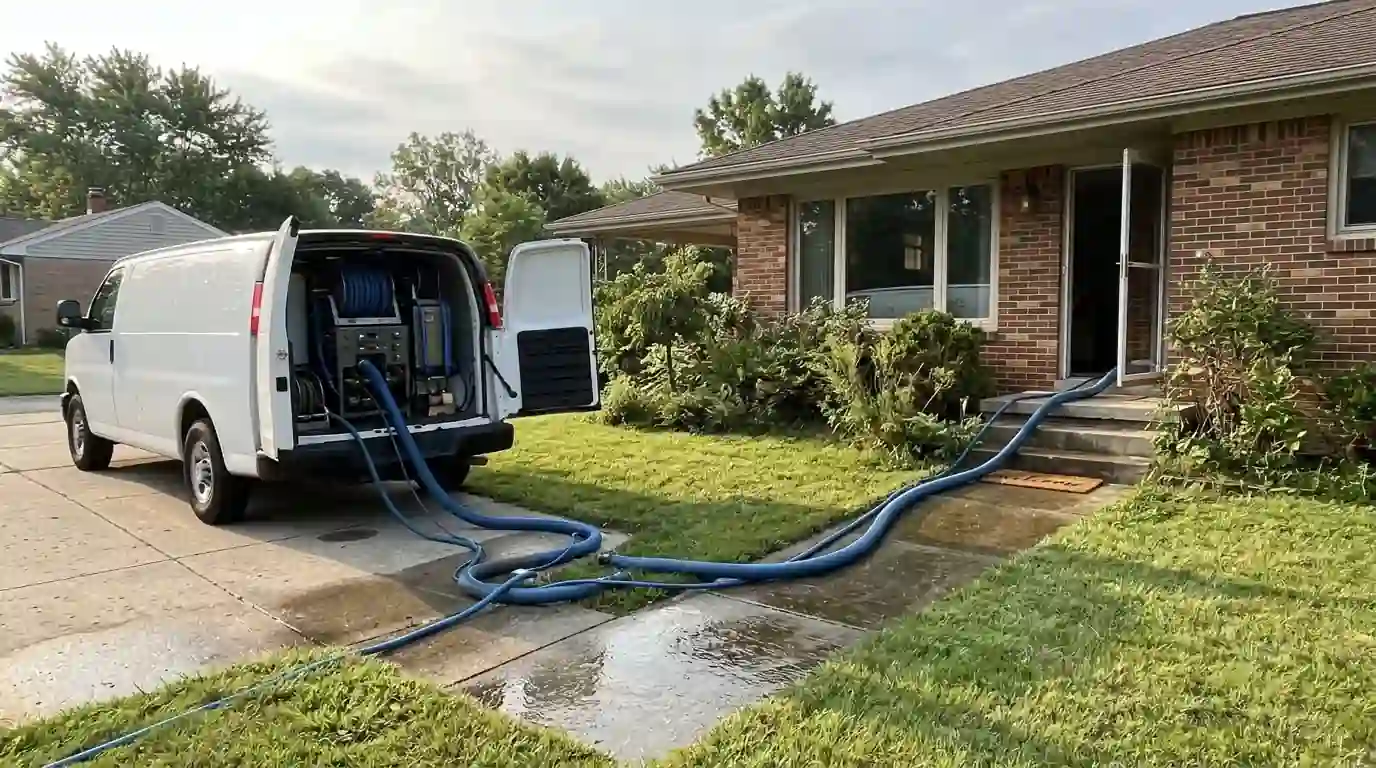
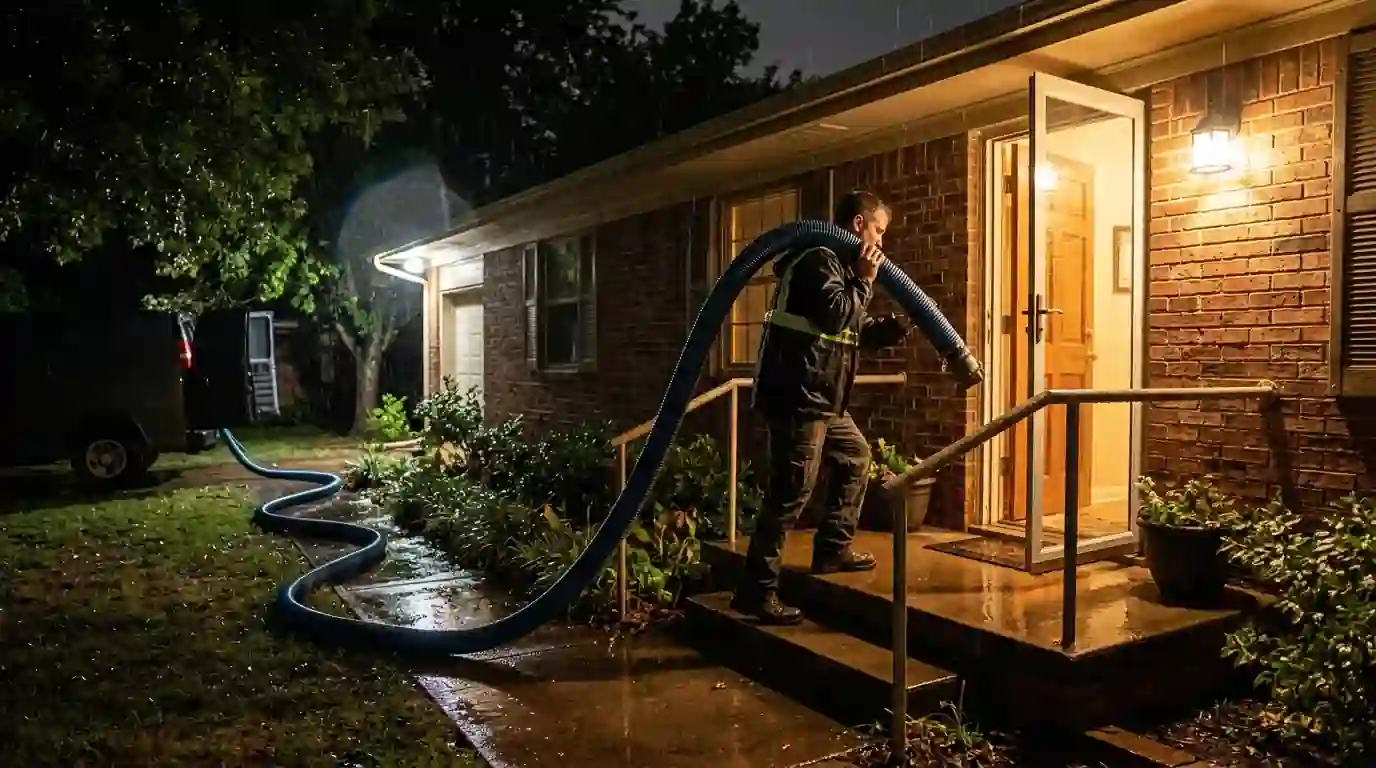
A truck-mounted unit stays outside with hoses run through a door, so the noise, exhaust and recovered water never sit in your living room. It has much more suction than a portable machine, which matters on thick carpet and pad where the goal is to leave as little water behind as possible. Hoses can reach well into most single-story homes. In apartments upstairs or houses set far back from the drive, a portable unit usually makes more sense.
Submersible pump-out for deep water
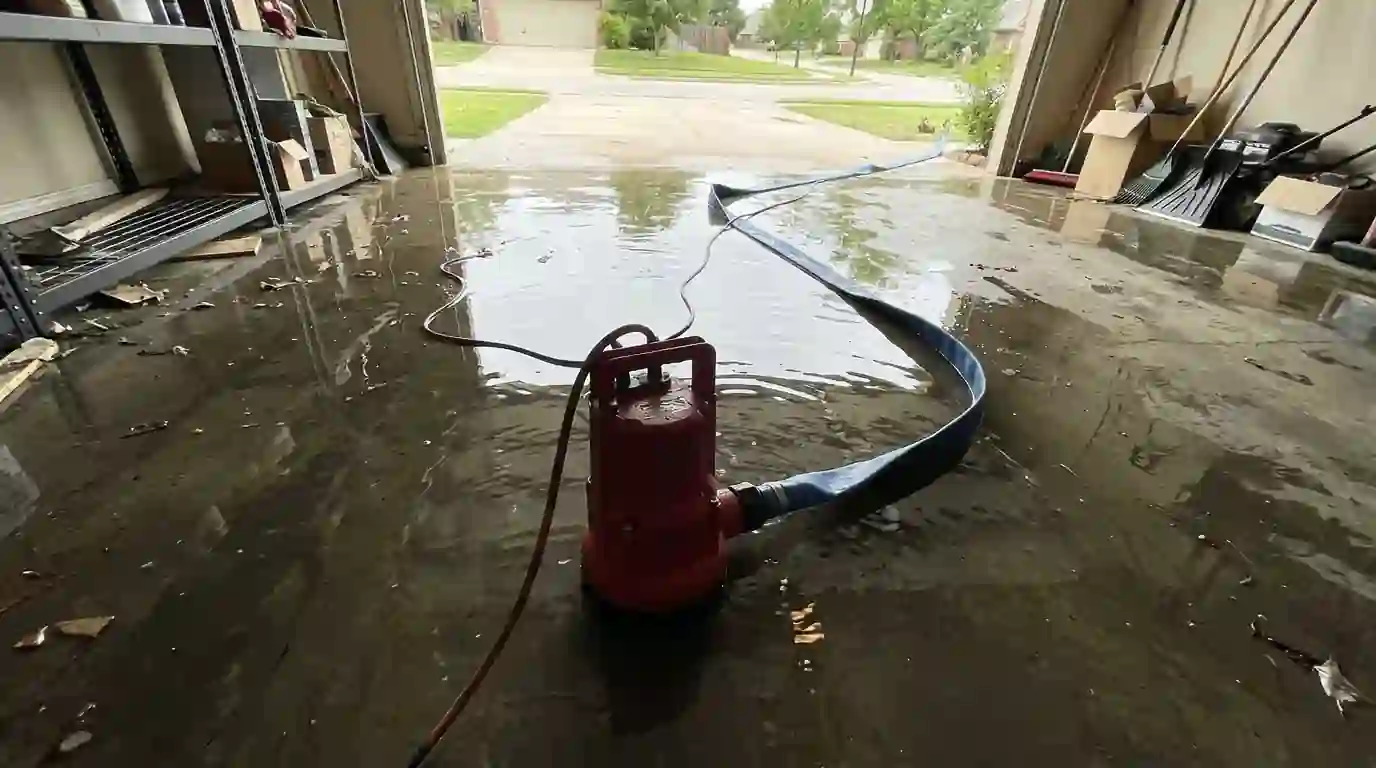
When water is deep enough to stand in, a submersible pump goes down first and moves the bulk of it out through a discharge hose. That's common in garages, storm shelters, crawl spaces and slab homes after a supply line runs for hours. Once the depth drops below what the pump can lift, the crew switches to wands and squeegees for the last of it. The discharge hose is run away from the foundation and the neighbors' side yard, and water from a sewer or drain backup is never pumped onto a lawn.
Weighted extraction on carpet
Wet pad holds a surprising amount of water that a wand alone can't reach. Weighted extraction tools put a technician's weight on a plate over the carpet while the vacuum pulls water up from the pad underneath. It's slow, deliberate work, and it's one of the main reasons carpet can often be dried in place after a clean water loss instead of being torn out. We work the room in overlapping passes and check the pad with a meter between passes, so we know when another pass stops paying off.
Step by step
How an extraction visit runs
- 01
Confirm it's safe
Power to wet rooms is off, the source is stopped, and we check for anything that makes the water contaminated.
- 02
Pump deep water
Where water is standing, a submersible pump removes the bulk before any carpet work starts.
- 03
Extract carpet and pad
Wand and weighted extraction pull water out of the carpet and the pad beneath it, room by room.
- 04
Clear hard floors
Tile, vinyl and wood are squeegeed and extracted to the walls so water isn't left under the baseboards.
- 05
Hand off to drying
Readings show what's still wet, and air movers and dehumidifiers go in before we leave.
Local conditions
Extraction when the power is out
Extraction matters most when water arrives faster than a house can shed it. In May 2015 Oklahoma City logged 19.48 inches of rain, its wettest month on record, and in the worst of that flooding some roads in Oklahoma City and Del City sat under as much as nine inches of water while thousands of homes lost power. Fans and dehumidifiers need electricity; getting the bulk water out first buys time either way.
Do it yourself or call
Shop vac or extraction crew?
| Situation | Shop vac is fine | Call for extraction |
|---|---|---|
| Spill on hard floor | A few gallons on tile, wiped up in minutes | Water that ran under baseboards or cabinets |
| Wet carpet | A small damp spot near a sink | Carpet that squishes underfoot or covers more than one room |
| Standing water | A puddle you can mop | Anything deep enough to need a pump |
| Dirty water | Never | Any toilet, drain or outside flood water |
Your options
Which extraction method fits the water in your house
| Method | Best for | Limits |
|---|---|---|
| Truck-mount | Large carpeted areas in single-story homes; strongest suction | Needs a hose route from the driveway; not practical for upper floors |
| Portable extractor | Apartments, upstairs rooms, smaller losses | Less suction, so more passes on thick pad |
| Submersible pump | Standing water in garages, shelters and crawl spaces | Stops working once water is too shallow to lift |
| Weighted extraction | Saving carpet and pad after clean water | Slow; only worth it where the carpet can be dried in place |
What drives the price
What changes the price of extraction
Extraction is usually billed as part of the whole mitigation job rather than on its own. These are the factors that move it.
Volume and depth
A few wet rooms of carpet is quicker than inches of standing water that needs pumping first.
Water category
Clean water is handled more simply than gray water or sewage, which bring cleaning and disposal steps.
Access
Upstairs units, long hose runs and tight crawl spaces add time and may call for portable equipment.
What's underneath
Carpet over pad, laminate over foam and wood over a subfloor each extract and dry differently.
Angi puts water mitigation at about $3.50 a square foot for clean water, $5.25 for gray water and $7.50 for black water, with extraction part of that work. Source: Angi, 2026
Straight answers
Questions about this job
Most of it. Weighted extraction can bring wet carpet and pad close to damp, which is why clean-water carpet can often stay. What's left comes out with air movers and dehumidifiers.
Only the hoses come inside. The machine stays in the driveway or street, so the noise and the recovered water stay outdoors.
Sometimes, with clean water caught early. Pad soaked by gray water, or wet for more than a day or two, is usually replaced because new pad is inexpensive.
Clean water goes to a drain or the sanitary sewer. Contaminated water is handled as waste, never pumped into a yard where people or pets walk.
Yes. Garage floor shelters and backyard cellars are pumped first, then wiped down and dried, including the hatch and seals.
No. It removes liquid water, but the water already absorbed by walls, wood and concrete needs drying equipment and follow-up readings.