What structural drying actually does
Short answer
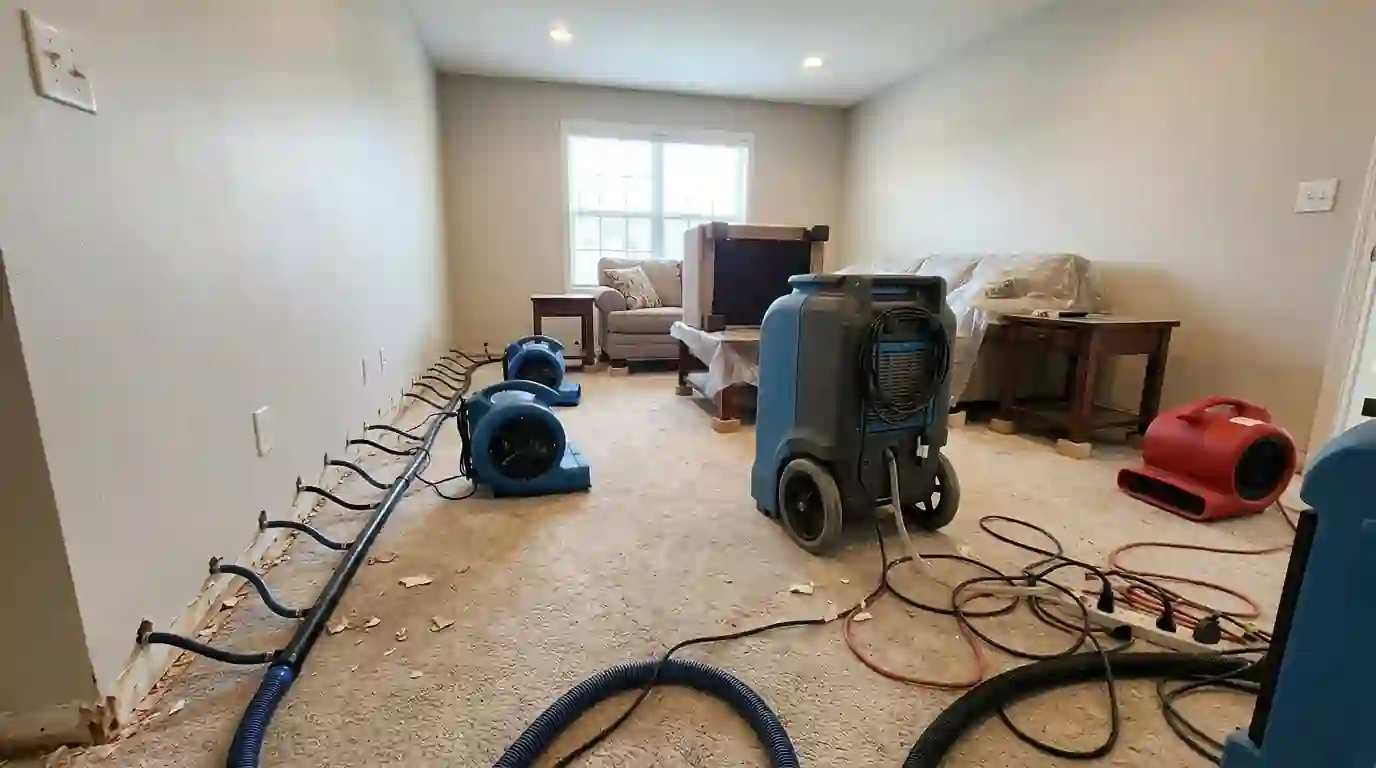
Structural drying in Oklahoma City removes the water absorbed into drywall, wood framing, subfloors and slabs after the liquid water is extracted. Air movers pull moisture out of surfaces, dehumidifiers take it out of the air, and we take readings each visit until materials match dry reference points in unaffected parts of the house.
What the job involves
Why drying is a measured process
Wet building materials give up water slowly, and only if the air around them is drier than they are. Air movers speed evaporation from surfaces, and dehumidifiers pull that moisture out of the air so it doesn't settle back in.
The trick is balance. Too many air movers and not enough dehumidification just makes the house humid. Too little airflow and the materials barely change. We set the equipment by measuring, not by a rule of thumb, and adjust it each visit.
Dry has a definition: readings in the affected materials matching the same materials in a part of the house the water never reached. That's the target we work to, and the number we show you.
Wall cavity drying
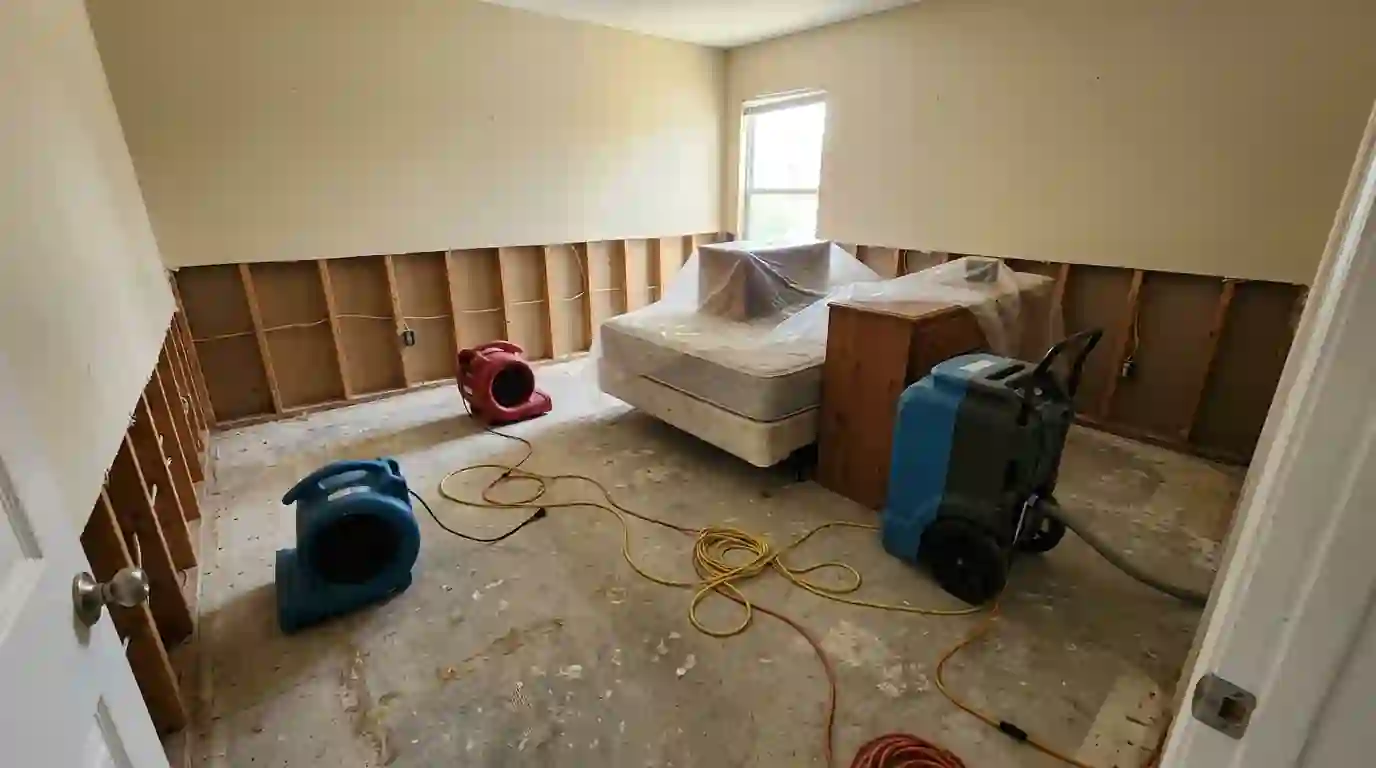
Water that wicks up drywall from a wet floor also soaks the bottom plate and insulation inside the wall. Instead of cutting every wet wall open, we often remove the baseboard and drill small holes behind it, then push dry air into the cavity with an injection system. The holes are hidden once the baseboard goes back on. If the drywall is saturated, the insulation is soaked, or the water was dirty, a flood cut is the better choice, and we'll say which one fits your walls.
Refrigerant and desiccant dehumidifiers
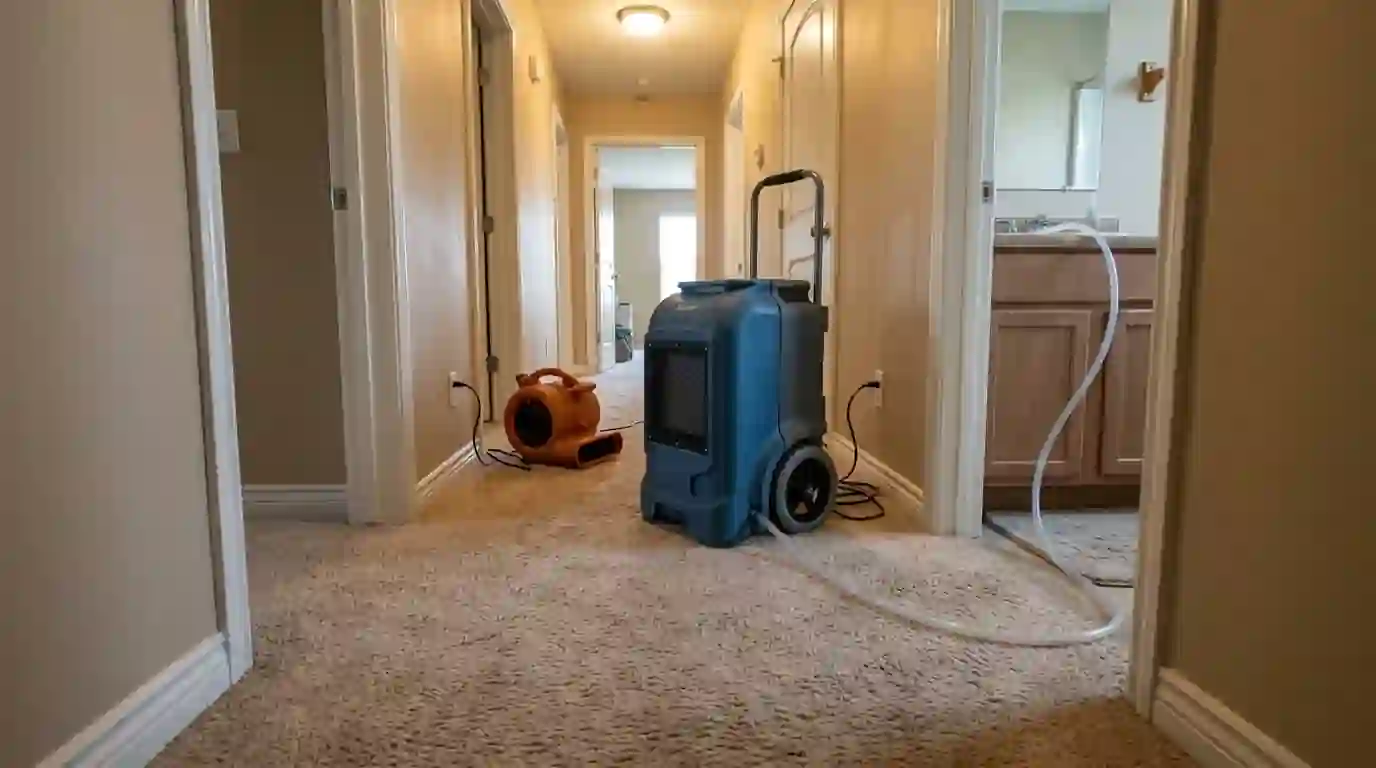
Low-grain refrigerant dehumidifiers work like a very strong version of the air conditioner's coil, condensing water out of warm, humid air. They're the workhorse for most homes. Desiccant dehumidifiers use a drying wheel instead and keep working in cooler conditions, which makes them useful for slabs, crawl spaces and cold weather. Which one we bring depends on the temperature in the house and what's wet. Both are sized to the room, and we empty or drain them to a sink or tub so you aren't carrying buckets.
Daily moisture readings
Every visit, we read the same marked spots with pin and pinless meters and log the numbers alongside dry reference readings. That log shows whether drying is on track, where equipment needs moving, and when each area is done. It's also the record your insurer looks at to see why equipment stayed as long as it did, so we keep it simple and share it with you. If a reading stalls, that tells us a wall needs opening or the equipment needs to move.
Step by step
How a structural drying job runs
- 01
Map the moisture
Meters and a thermal camera mark every wet area and set dry reference readings from unaffected rooms.
- 02
Open what needs it
Baseboards come off, cavities get vent holes, and saturated or contaminated drywall is cut.
- 03
Place the equipment
Air movers, dehumidifiers and cavity drying go where the readings say, not where they fit.
- 04
Read and adjust
Each visit we read the same spots, log the numbers and move equipment as areas dry.
- 05
Confirm dry
When readings match the dry references, equipment comes out and repairs can begin.
Timing
How long structural drying takes
Many homes with wet drywall and carpet reach dry readings in three to five days of equipment time. Hardwood floors, plaster walls, concrete slabs and crawl spaces often take longer. Cold weather slows drying unless the house is kept warm. We don't set a fixed end date; the readings decide, and you see them each visit.
Local conditions
Small houses, big houses and the same physics
Housing across Oklahoma City runs from compact postwar homes to newer, larger builds, and the equipment count follows the floor plan. Much of early Midwest City was built in the 1940s for Tinker workers, with two-bedroom homes of about 800 square feet, where a few air movers and one dehumidifier can cover a wet room. Open plans in newer Oklahoma City subdivisions spread the same water across more drywall and floor, so drying is planned room by room.
Your options
Which drying setup fits the job
| Equipment | What it does | Best for |
|---|---|---|
| Air movers | Blow air across wet surfaces to speed evaporation | Carpet, drywall faces, under floated carpet |
| Refrigerant dehumidifier | Condenses water out of warm, humid air | Most homes in normal indoor temperatures |
| Desiccant dehumidifier | Pulls moisture with a drying wheel, works in cooler air | Slabs, crawl spaces, cold weather |
| Wall cavity injection | Pushes dry air into wall cavities through small holes | Wet walls where drywall can be saved |
| Floor drying mats | Pull moisture up through hardwood under suction | Cupped or wet hardwood floors |
What drives the price
What structural drying costs depend on
Drying is usually billed by the equipment used and the days it runs, plus the labor to monitor it.
How much is wet
More wet square footage means more air movers and dehumidifiers.
What's wet
Hardwood, plaster and slabs dry slower than drywall and carpet.
Days of equipment
Each extra day of drying adds equipment time; good readings end it sooner.
Cavity drying
Injection drying adds setup but can save the cost of cutting and replacing drywall.
Angi puts water mitigation, which includes drying, at about $3.50 a square foot for clean water and $5.25 for gray water. Source: Angi, 2026
Straight answers
Questions about this job
Please don't. Drying works continuously, and switching off lets humidity climb back up. If the noise is a problem in a bedroom, tell us and we'll adjust placement.
Usually not. Outdoor air in Oklahoma is often humid, and open windows fight the dehumidifiers. Keep the house closed and the HVAC running unless we say otherwise.
Equipment gives off heat, and warm air holds more moisture, which helps drying. Keep the thermostat at a normal setting.
Not always. Wall cavities can often be dried through small holes behind the baseboard. Cutting is used when drywall is saturated or the water was dirty.
When readings in the wet materials match the same materials in an unaffected room, which we measure and log at each visit.
It adds to your bill for the days it runs. Your insurer may cover the extra cost; keep your utility bills for that period.