What moisture mapping tells you
Short answer
Moisture mapping in Oklahoma City is a room-by-room record of where building materials are wet after a leak, made with pin meters, pinless meters and a thermal camera and compared against dry areas of the same house. It shows how far water spread, where to dry or open walls, and later, when everything is dry.
What the job involves
Why the visible stain isn't the whole story
Water spreads further than it shows. It travels under carpet, along the bottom plate inside walls and across ceiling drywall before it stains. A stain the size of a plate can sit over a wet area the size of a room.
Mapping means measuring rather than guessing. We take readings in a pattern around the leak, mark the edge where readings return to normal, and photograph the meter at key points so the map is a record, not an opinion.
The same map is used again at the end. Drying is done when the readings at the marked points match the dry references.
On the visit
What a moisture mapping visit includes
- Thermal scan of walls and ceilings around the leak
- Pinless readings to find the wet edges
- Pin readings logged at key points
- Dry reference readings from unaffected rooms
- Photos of meter readings
- A floor sketch of wet areas
- Recommendations on what to dry or open
- Follow-up readings during drying
Pin and pinless meter readings
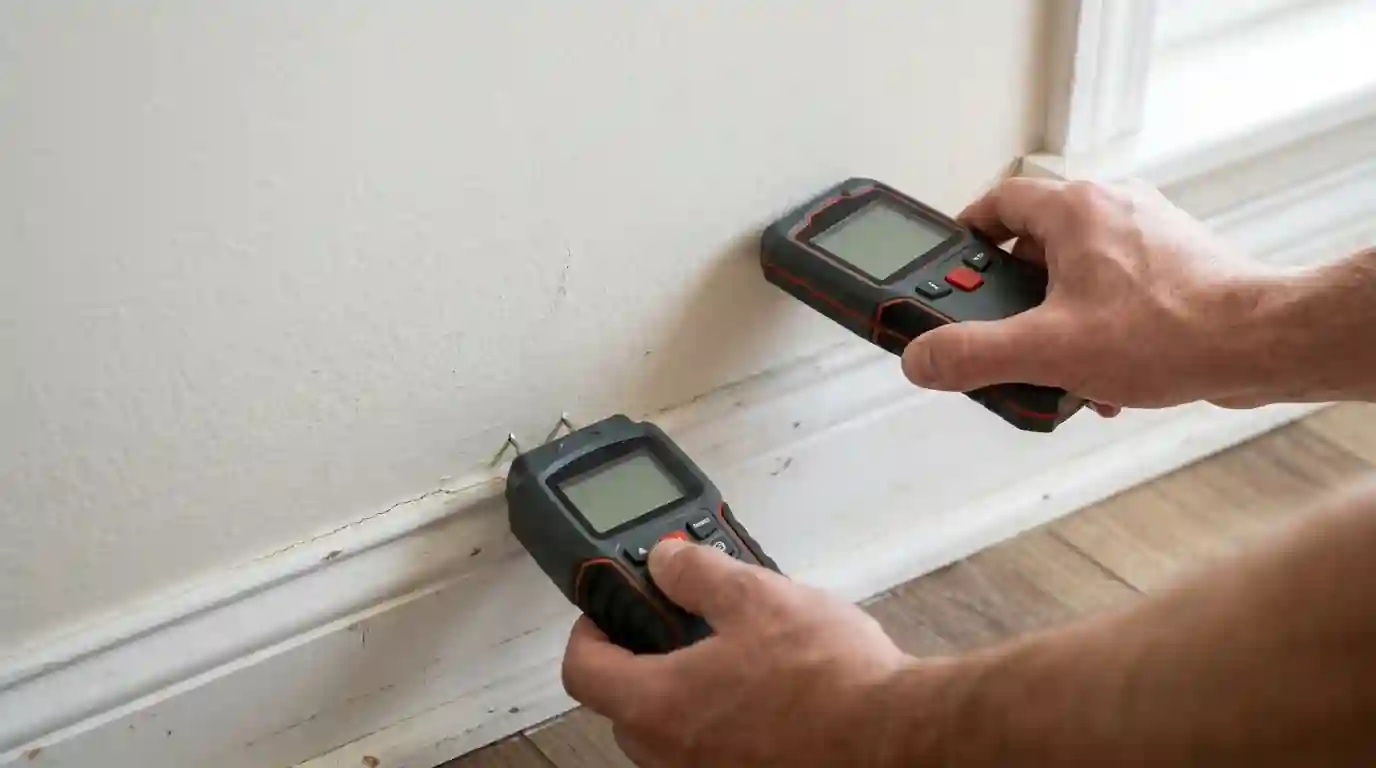
Pin meters push two small pins into wood or drywall and read moisture between them. They give a precise number at one point and are standard for framing and wood floors. Pinless meters read through the surface without marking it, which lets us scan large areas of drywall, tile and flooring quickly to find the edge of the wet area. We use both: pinless to find the edges, pins to confirm and log specific points.
Infrared scans of walls and ceilings
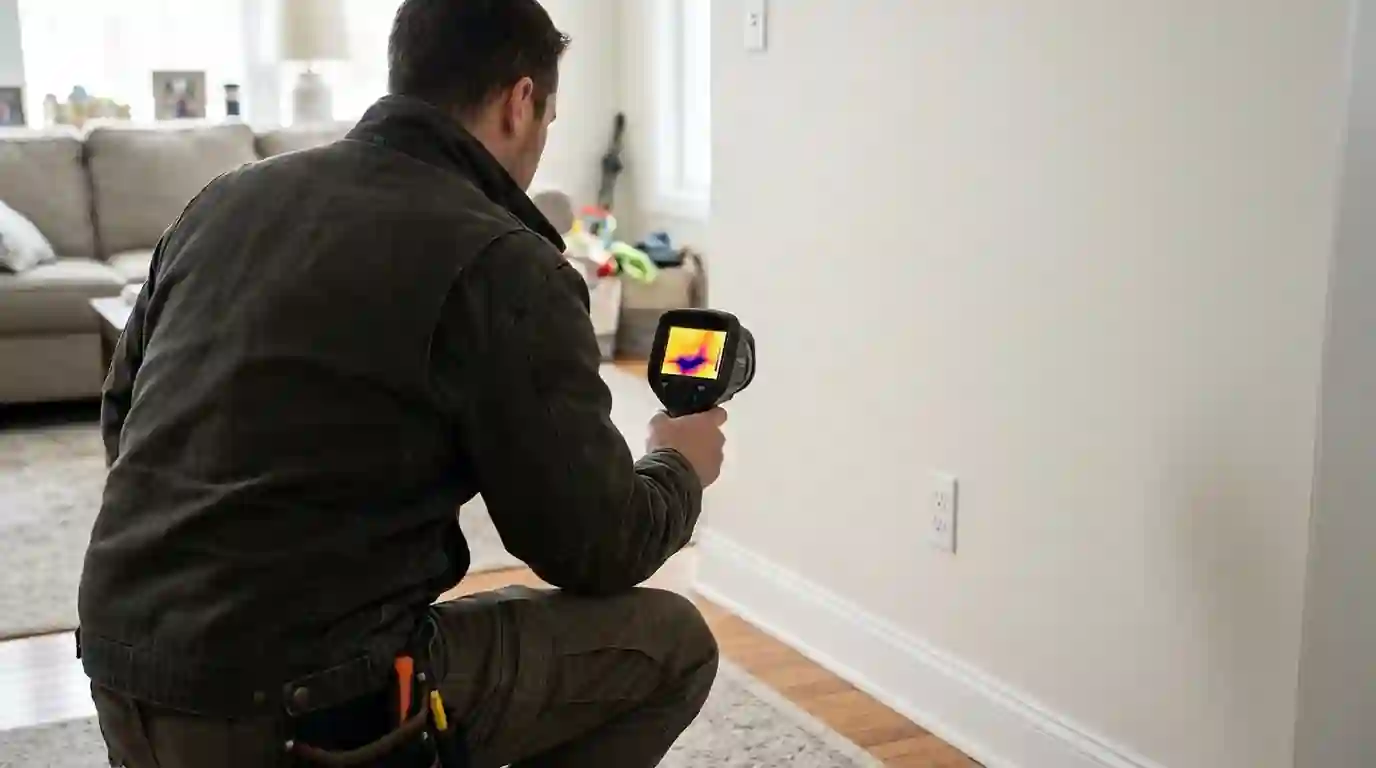
A thermal camera shows temperature differences on a surface. Wet materials usually read cooler because water evaporating from them cools them down, so a wet patch behind drywall often shows as a darker shape. Thermal images are a guide, not proof: a cold spot can also be a vent, missing insulation or an outside wall. We confirm every suspect area with a meter before it goes on the map, and scans work best with the house at a steady temperature.
Moisture maps for the claim file
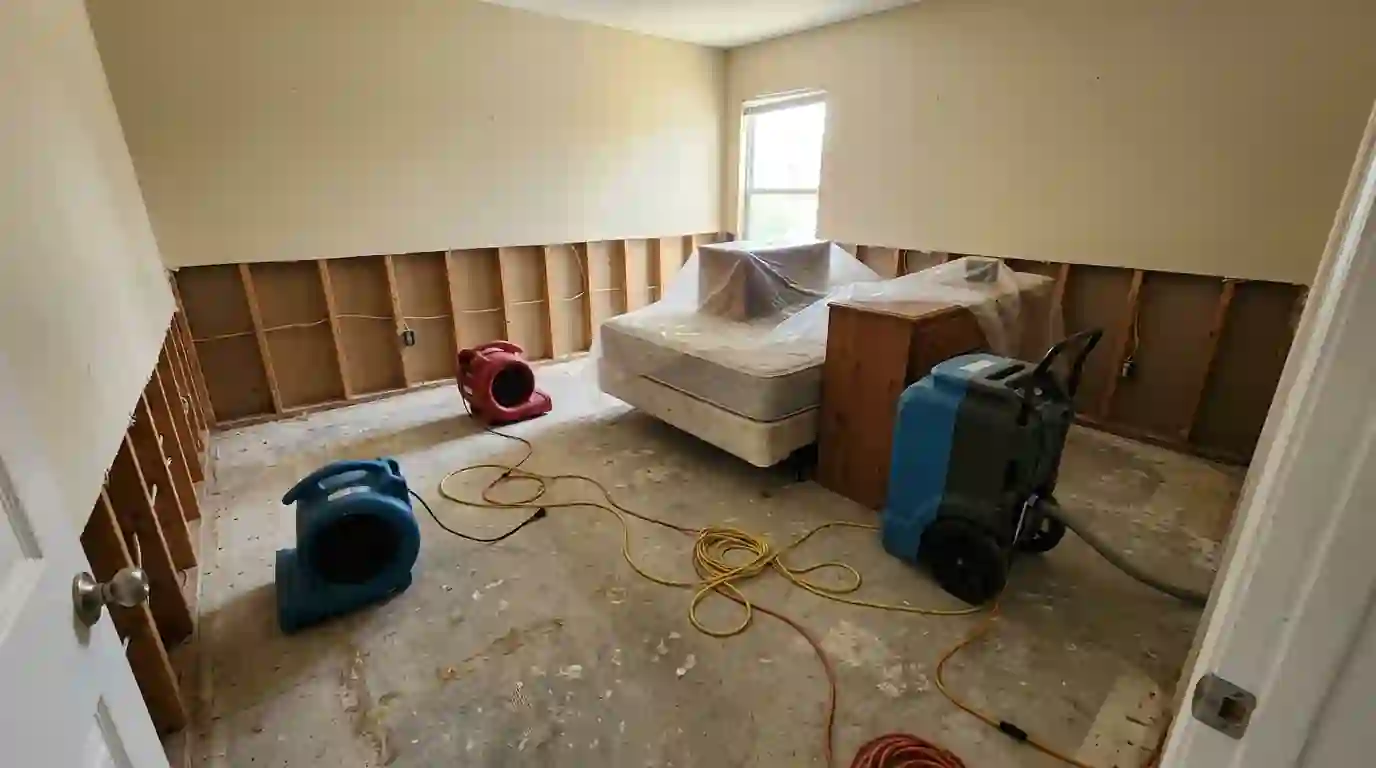
The map we hand over is a simple floor sketch with the wet areas marked, the readings at each point, the dry reference readings and dated photos. Adjusters look for exactly this kind of record, because it shows how far the damage really went and why equipment stayed as long as it did. We update it each visit until the last reading is dry, and the final version shows every point back at its dry reference.
Local conditions
Brick, sandstone and old plaster read differently
Meters behave differently on old masonry than on drywall. The Guthrie Historic District holds more than 2,000 buildings across about 1,400 acres, with a red brick and sandstone core from the territorial capital years, and plaster and masonry like that don't read on the same scale as wood. In older Logan County buildings we compare readings against dry spots in the same wall rather than a standard number, so the map reflects that building, not a textbook.
Step by step
How a moisture mapping visit runs
- 01
Start at the source
We begin where the water came from and read outward in every direction.
- 02
Scan with thermal
A thermal camera highlights cooler areas on walls and ceilings worth checking.
- 03
Confirm with meters
Pinless meters find the edges; pin meters confirm and log specific points.
- 04
Set dry references
Readings from the same materials in unaffected rooms set the dry target.
- 05
Draw the map
Wet areas, readings and photos go on a floor sketch you and your adjuster can use.
Your options
Which tool finds what
| Tool | What it does well | Limits |
|---|---|---|
| Thermal camera | Scans whole walls and ceilings fast for suspect cool areas | Shows temperature, not water; needs confirmation |
| Pinless meter | Reads through surfaces without marks; finds wet edges | Reads a shallow depth; affected by metal and dense materials |
| Pin meter | Precise readings in wood and drywall at a point | Leaves two small holes; reads one spot at a time |
| Hygrometer | Measures air humidity to plan dehumidifiers | Says nothing about specific materials |
What drives the price
What moisture mapping costs depend on
Mapping is usually part of a water damage visit rather than a separate bill, and it can also be done on its own. We don't have a reliable local figure for a standalone inspection.
Size of the area
One bathroom leak maps quickly; a leak that ran through several rooms takes longer.
Ceilings and walls
Ceilings and wall cavities take more scanning than open floors.
Building materials
Plaster, masonry and hardwood need more careful readings.
Repeat visits
Readings during drying are taken on each follow-up visit.
Straight answers
Questions about this job
Not directly. It shows surface temperature, and wet areas often read cooler. We confirm every suspect spot with a moisture meter.
Pinless readings leave no mark. Pin readings leave two tiny holes, usually placed low or where repairs will happen anyway.
Usually yes, because water spreads past what's visible. Mapping tells you how much really needs drying.
Yes. Mapping can show whether a past leak left materials wet, which helps when buying or when a smell has no obvious source.
Adjusters commonly ask for exactly this: readings, dry references and photos. We provide it with dates on each visit.
On each follow-up visit, at the same marked points, until they match the dry references.