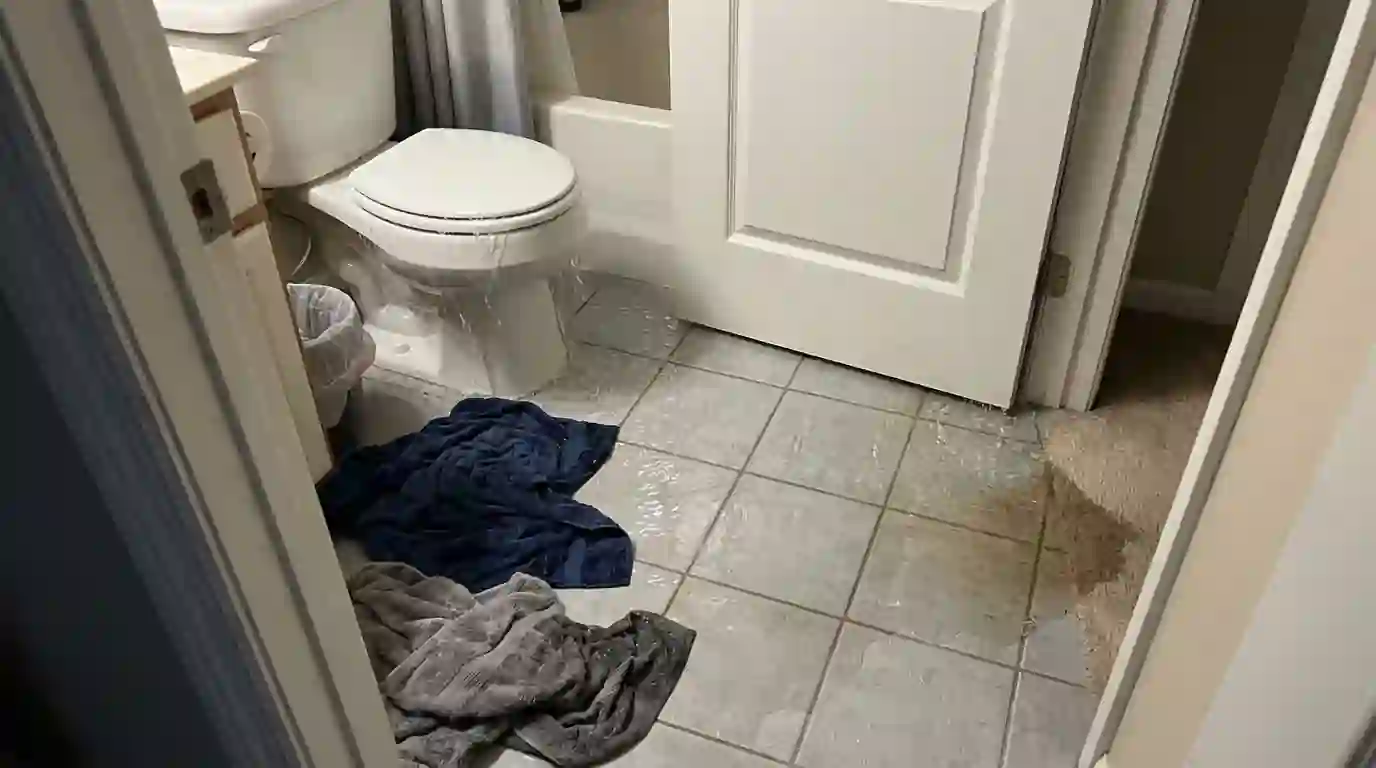
What to do after a toilet overflow
Short answer
After a toilet overflow in Oklahoma City, close the supply valve behind the toilet, keep people and pets away if waste was involved, and stop using that drain. We extract the water, clean and disinfect the floor, check the subfloor and the wall behind it, and dry the bathroom and any carpet it reached.
What you will notice
Signs of a hidden bathroom leak
Toilet that rocks
A loose toilet often means a wet, softened subfloor or failed wax ring.
Stain on the ceiling below
A bathroom leak almost always shows downstairs first.
Loose or cracked tile
Tiles that move or grout that keeps cracking near the tub or shower.
Damp carpet outside the door
Hall carpet that's damp next to the bathroom threshold.
Peeling paint behind the toilet
Bubbling paint or swollen baseboard where the wall meets the floor.
What the job involves
Why bathroom leaks are trickier than they look
Bathrooms are built to handle water on the surface. The trouble is water that gets past the surface: under a toilet, through a cracked grout line, behind a tub surround or through a shower pan liner. That water sits on the subfloor or slab and in the wall behind the tile.
Overflow water also rarely stays in the bathroom. It runs under the door into hallway carpet and bedroom closets, and in two-story houses through the ceiling below.
Clean bowl water and water carrying waste are handled differently. Overflow with waste is sewage, and it brings cleaning and disposal rules with it.
Toilet overflows
An overflow with clean bowl water is handled like any clean or gray water leak: extract, dry, check what's next door. An overflow with waste is treated as sewage, so carpet and pad it reached are removed, hard surfaces are cleaned and disinfected, and drywall it soaked is cut out. Either way, we check under the toilet, since a wet subfloor around the flange is common after repeated overflows, and look at the ceiling below if there's a room under the bathroom.
Shower pan and tub leaks
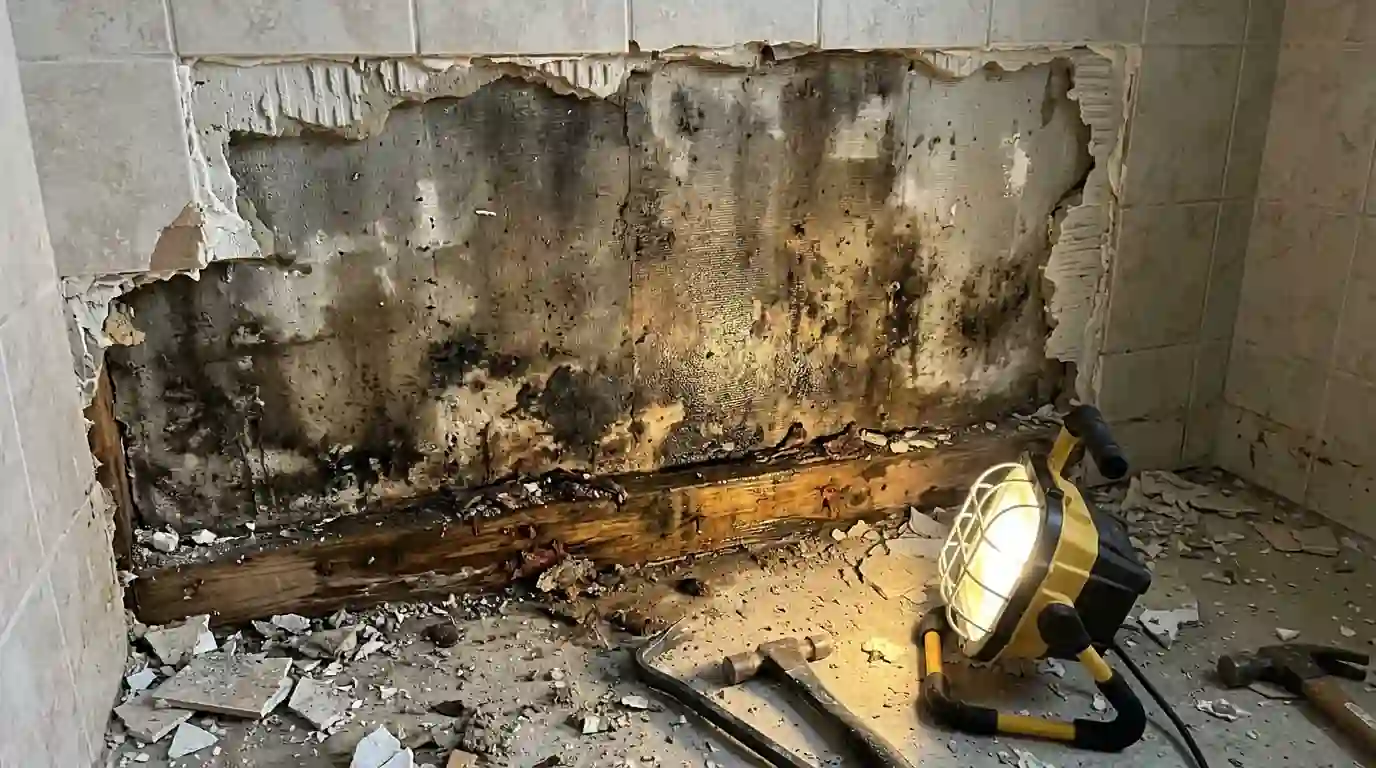
Shower pan leaks are slow and quiet. Water gets through a failed liner or cracked grout and soaks the subfloor or the bottom of the wall, and the first sign is often a stain on a ceiling below or a soft spot in the next room's carpet. We read the wall and floor around the shower, find how far the water went, and open what's wet so it can dry. The shower itself needs a repair from a tile or plumbing contractor before it's used again.
Wax ring and supply line leaks
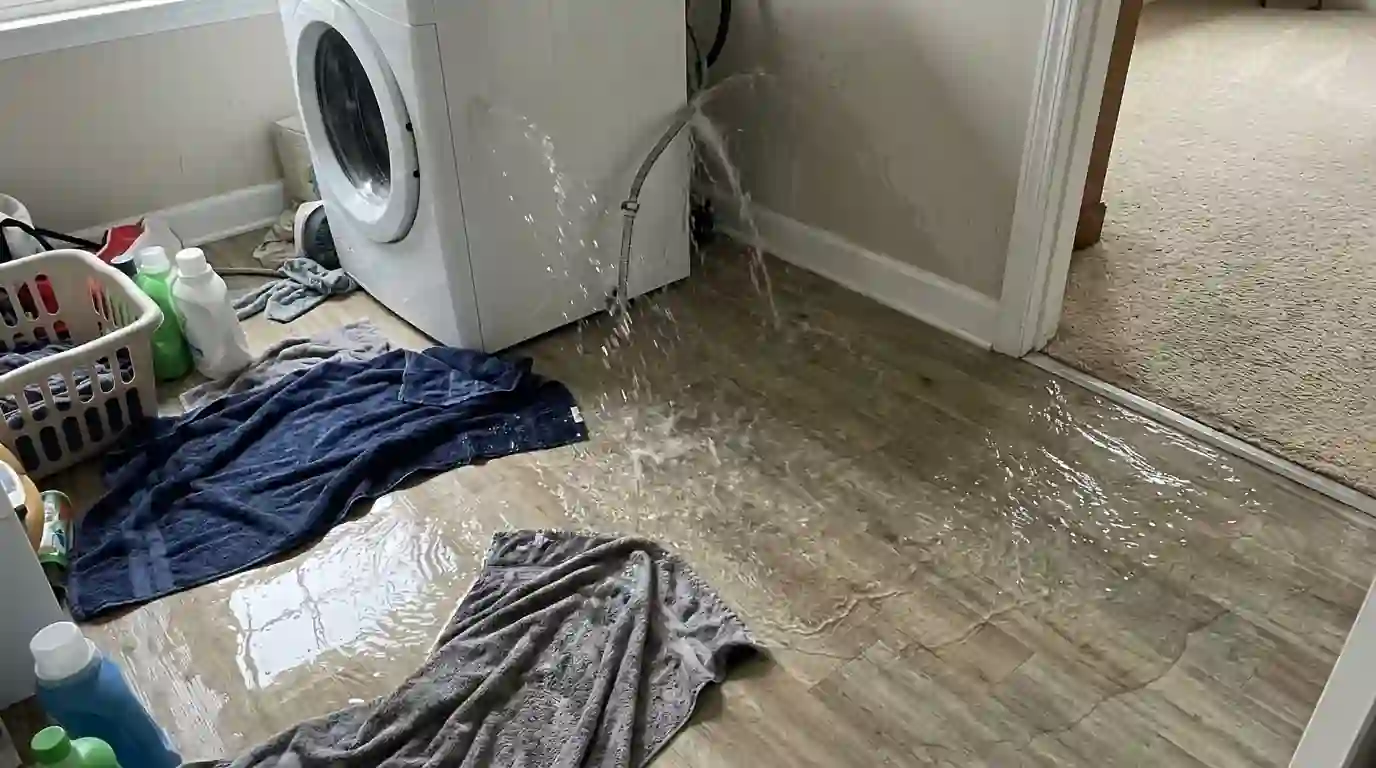
A failed wax ring leaks a little water every time the toilet is flushed, right onto the subfloor under it. A cracked supply line or fill valve leaks constantly. Both show up as a toilet that rocks, a soft floor around the base, or a stain on the ceiling below. We pull the toilet if needed, dry the subfloor under it, and check whether the flooring around the base has to be replaced.
Step by step
How a bathroom water job runs
- 01
Stop and assess
The supply is closed, and we check whether the water carried waste, which changes the cleanup.
- 02
Extract and clean
Water is extracted from the bathroom and anything next to it; contaminated areas are cleaned and disinfected.
- 03
Check under and behind
We read the subfloor around the toilet and tub, the wall behind the shower and any ceiling below.
- 04
Open and dry
Baseboards, toe kicks or wet drywall come off where needed, and the subfloor and walls are dried.
- 05
Ready for repair
When readings are dry, the bathroom is ready for the plumber or tile contractor to finish.
Local conditions
Small homes, short distances
Much of early Midwest City was built in the 1940s for Tinker workers, with two-bedroom homes of about 800 square feet. In a floor plan that compact, the bathroom shares a wall with a bedroom and opens onto a short carpeted hall, so a toilet overflow reaches carpet within a few feet of the door. We extract the hall and the bedroom closet along with the bathroom, because that's where the water goes.
Do it yourself or call
What you can do and what you shouldn't
| Situation | Do it yourself | Call us |
|---|---|---|
| Clean bowl overflow | Close the valve, mop it up, dry the floor | Water that went under the door or into the ceiling below |
| Overflow with waste | Close the valve and keep everyone out | Cleaning, disinfection and removal of soaked materials |
| Slow shower leak | Stop using the shower | Finding and drying the hidden water |
| Rocking toilet | Stop using it if the floor feels soft | Checking and drying the subfloor under it |
On the visit
What a bathroom water job includes
- Assessment of clean versus contaminated water
- Extraction of the bathroom and adjoining rooms
- Cleaning and disinfection where waste was involved
- Subfloor readings around the toilet and tub
- Ceiling check below a second-floor bathroom
- Opening baseboards or drywall where water is trapped
- Drying with readings until dry
- Photos for your claim and your repair contractor
What drives the price
What bathroom water damage costs depend on
Bathroom jobs vary a lot because the water's type and where it went matter more than the size of the room.
Clean or contaminated
Overflow with waste brings removal and disinfection, which costs more than clean water.
Hidden water
Slow shower or wax ring leaks often mean opening walls or flooring to dry them.
Rooms next door
Hallway carpet, closets and ceilings below add drying time.
Tile and fixtures
Retiling or a new shower pan is a separate repair after drying.
Angi puts drywall water damage repair at about $300 to $850, a common add-on when a bathroom wall has to be opened. Source: Angi, 2026
Straight answers
Questions about this job
Clean bowl or tank water isn't. Overflow that carried waste is treated as sewage, so keep people and pets out until it's cleaned and disinfected.
Only where water is trapped beneath it. Tile on a dry subfloor stays. A soft subfloor around the toilet usually means that section is replaced.
Water gets past the tile or under the toilet and runs down. The ceiling below is often the first place a hidden bathroom leak shows.
A plumber or tile contractor repairs the fixture. We dry the structure so the repair goes onto dry materials.
Not the leaking fixture. Other fixtures in the house are usually fine unless the main drain is backing up.
Sudden overflows are commonly covered; long-term shower pan leaks often aren't. Photos and readings help show which it was.