What makes mobile home water damage different
Short answer
Mobile home water damage in Oklahoma City is different because many floors are particleboard decking that swells and weakens when wet, and because water can pool in the underbelly wrap beneath the home. We dry the floors and the underbelly, find where the water traveled, and replace floor decking that has swollen or softened.
What you will notice
Signs of water damage in a mobile home
Soft spots in the floor
Floor that gives near a toilet, tub, sink or water heater.
Sagging underbelly
Underbelly wrap hanging low or wet from outside the skirting.
Musty smell from vents
Floor vents smelling damp or musty.
Water bill rising
A slow leak under the home can run for weeks unseen.
Warped or lifted flooring
Vinyl bubbling or laminate seams rising over wet decking.
What the job involves
Floors and the underbelly
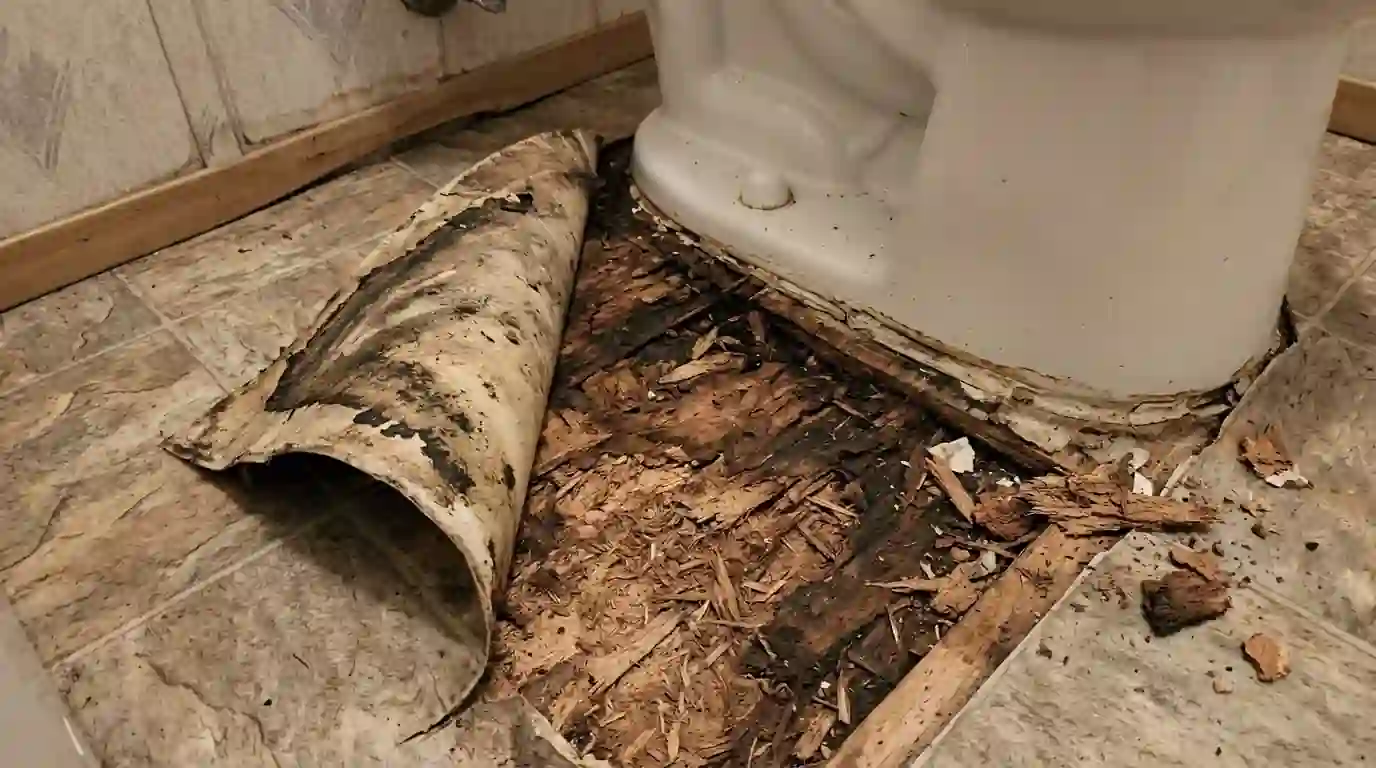
Many manufactured homes have floor decking made of particleboard or OSB, and particleboard loses strength once it soaks up water. A small leak at a toilet or water heater can leave a soft spot you feel when you walk.
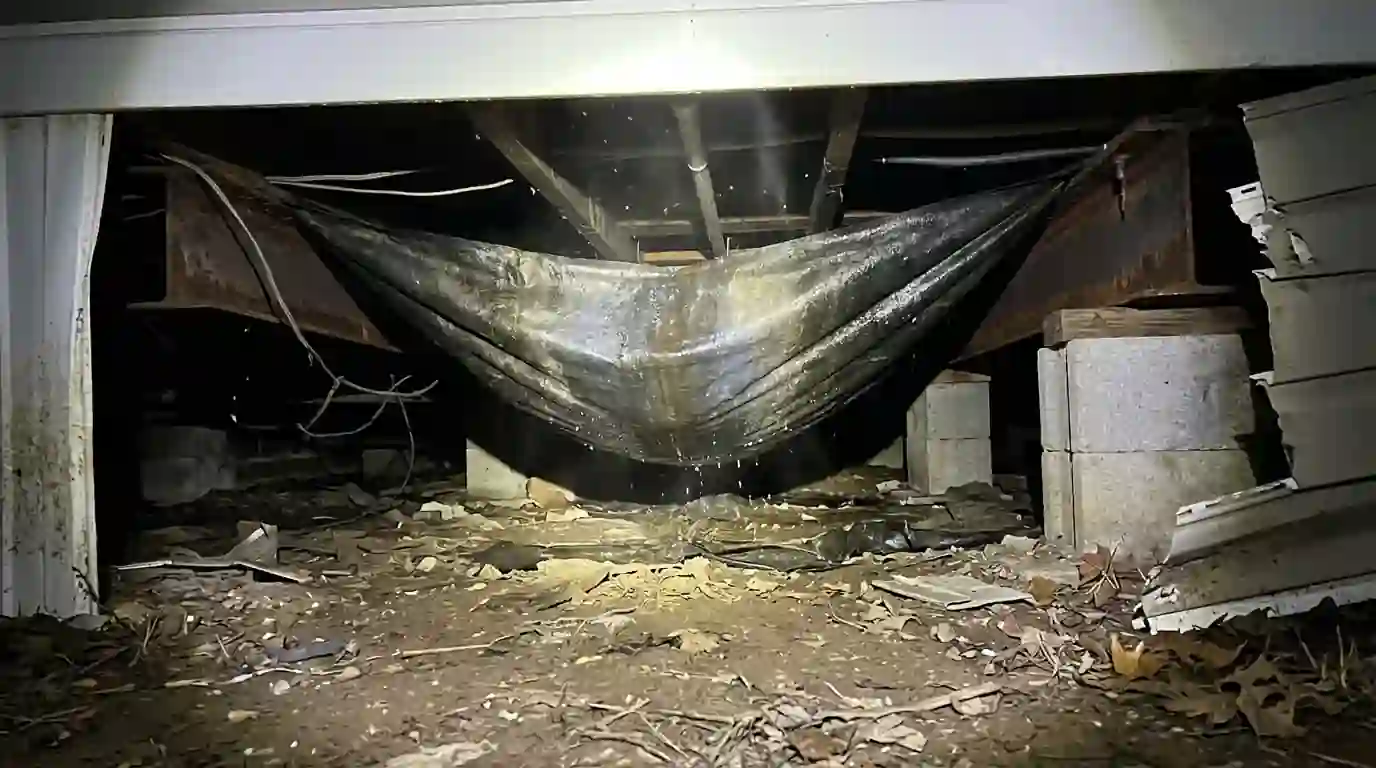
Under the home, a fabric or plastic underbelly wrap encloses the insulation and plumbing. Water from a leaking line can collect in that wrap like a hammock, out of sight, soaking the insulation and floor above.
So mobile home water damage is a two-level job: the floor from inside, and the underbelly from below.
Particleboard floor damage
Particleboard that gets wet swells at the surface and edges and crumbles under load. Once it's soft, drying alone won't restore its strength. We read the floor to find the wet area, pull floor covering back, and replace swollen decking sections between the joists. OSB and plywood decking are more forgiving and can often be dried in place. Where the water came from a toilet, tub or water heater, the decking around that fixture is checked first.
Underbelly water
Water that drips through the floor or comes from a line under the home can collect in the underbelly wrap. We check for sagging or wet sections from outside the skirting, open the wrap where water is pooled, drain it, and pull wet insulation. Once the area is dry, the insulation is replaced and the underbelly is patched or resealed so it keeps out pests and cold air. Skirting panels removed for access are put back the same day.
Plumbing under the home
Supply and drain lines run under the floor inside the underbelly or skirting. Freezing, loose fittings and old lines are common leak sources. A plumber repairs the line; we deal with the water it released into the underbelly and floor above. If heat tape or insulation on the lines was soaked or damaged, we point it out so it can be fixed before the next freeze. We also look at the skirting and vents around the leak, since gaps there let cold air reach the lines.
Step by step
How a mobile home water job runs
- 01
Stop the water
The supply is shut off and the line repair is arranged with a plumber.
- 02
Read the floors
Meters find wet and soft areas of decking from inside the home.
- 03
Check the underbelly
Wet or sagging underbelly sections are opened and drained, and wet insulation comes out.
- 04
Dry
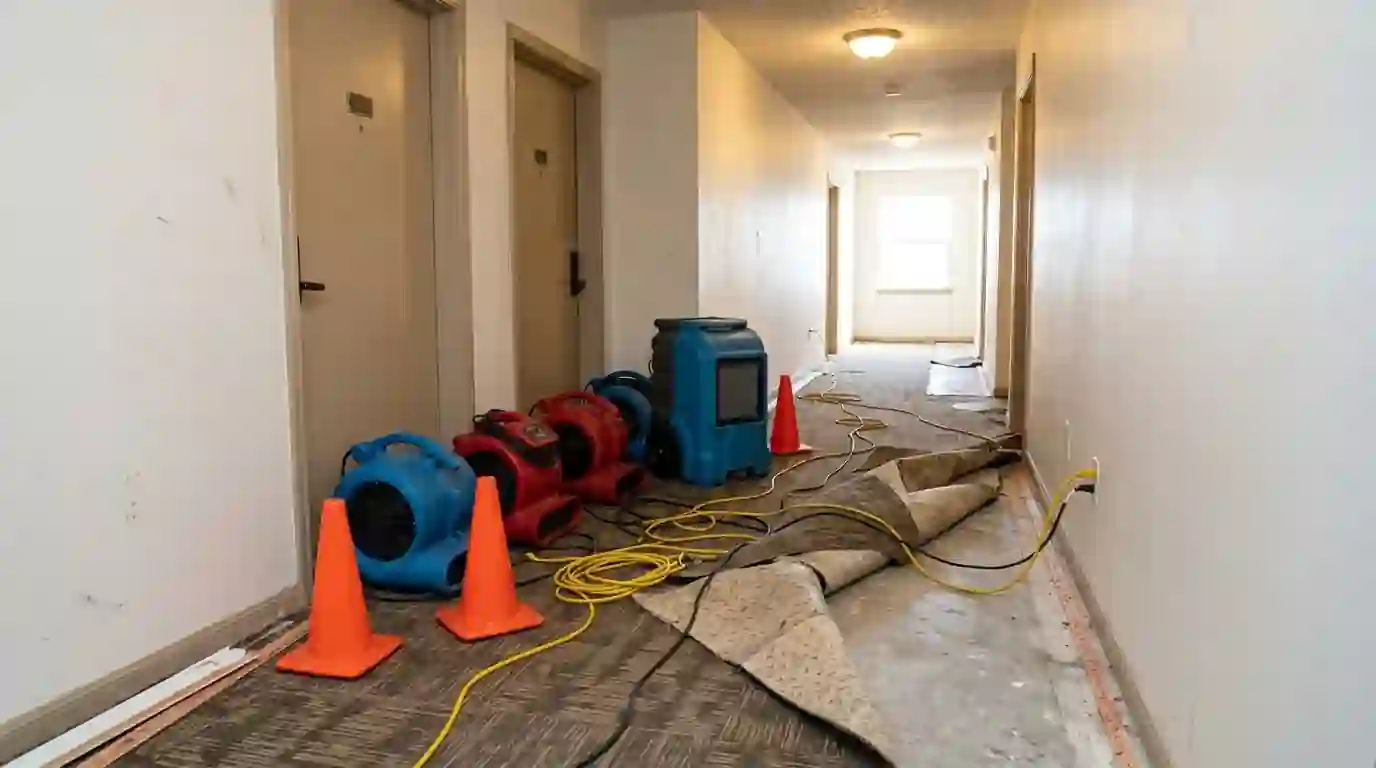
The floor and underbelly are dried with air movers and dehumidifiers.
- 05
Repair
Swollen decking is replaced, insulation restored and the underbelly patched.
Local conditions
Freeze weeks and lines under the skirting
Plumbing under a manufactured home sits in the coldest part of the house. After the January 2024 storm, central Oklahoma stayed below freezing for about four and a half days, and in Oklahoma City lines under skirting with failed heat tape freeze long before anything inside the house does. The leak usually shows up when temperatures climb, as a soft floor near the kitchen or bath and a sagging, wet underbelly beneath it.
Do it yourself or call
What you can check yourself
| Task | Do it yourself | Leave it for us |
|---|---|---|
| Stopping the water | Shut off the main supply to the home | Nothing more for that step |
| Checking the underbelly | Look for sagging or dripping from outside the skirting | Opening, draining and drying the underbelly |
| Soft floor | Stay off soft areas | Reading, drying and replacing decking |
| Freeze prevention | Check heat tape and skirting before winter | Assessing damaged insulation and heat tape after a leak |
What drives the price
What mobile home water damage costs depend on
Mobile home jobs are often smaller in area than a site-built house, but floor decking replacement is common.
Decking replacement
Swollen particleboard has to be replaced rather than dried.
Underbelly work
Opening, draining and resealing the underbelly adds labor.
Floor covering
Carpet, vinyl or laminate over the damaged decking has to come up and go back.
Access
Low clearance under the home makes underbelly work slower.
For the floor decking itself, subfloor water damage repair is published at about $250 to $750 per typical repair area. Source: Royal Restoration, 2026
Straight answers
Questions about this job
Particleboard that swelled or softened usually needs replacing. Decking that got only briefly wet may dry, and OSB or plywood decking is more forgiving.
A slow leak at the toilet, tub or supply line often soaks the decking around it. That section usually needs drying and replacement.
Yes. We open, drain and dry the underbelly, remove wet insulation and patch it once dry.
A plumber repairs the line. We handle the water it released into the floor and underbelly.
Keep heat tape working, keep skirting intact, and let faucets drip during hard freezes.
Sudden leaks are often covered under a manufactured home policy; gradual leaks often aren't. Photos and readings help your claim.