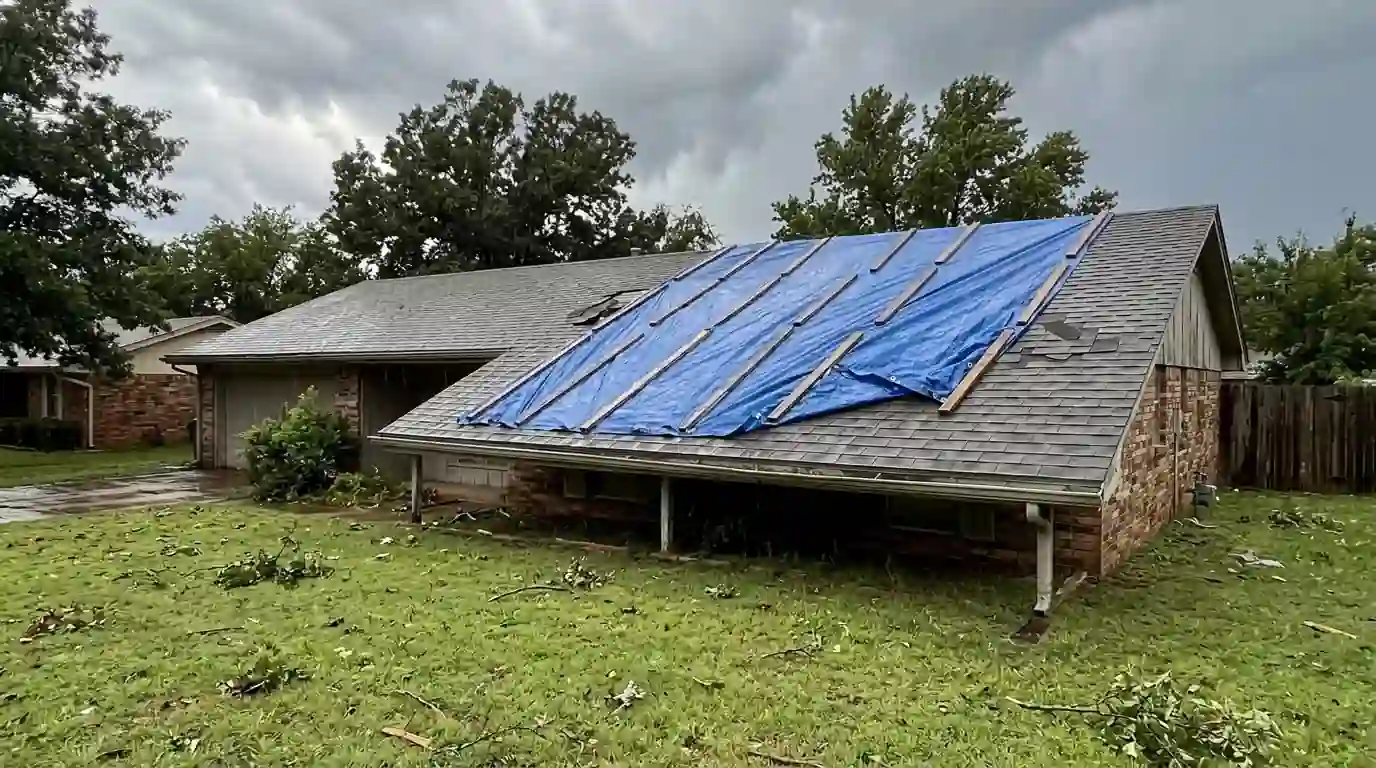
What tarping and board-up are for
Short answer
Emergency tarping and board-up in Oklahoma City are temporary covers that stop more rain and wind from getting into a storm-damaged house until the roof or window is permanently repaired. We secure tarps over damaged roof areas and board broken windows and doors, photograph everything for your claim, and dry the water already inside.
What the job involves
Why the cover comes before the cleanup
Drying a house with an open roof or a broken window is wasted effort, because the next storm puts the water right back. So after wind, hail or a falling limb, the first job is closing the opening.
A tarp has to be secured to the roof structure, not just weighted with bricks, or Oklahoma wind lifts it off in the next gust. Boards over windows and doors need to be fastened into framing so they hold and keep the house secure.
Most insurance policies expect you to take reasonable steps to prevent further damage after a storm. A documented tarp or board-up is that step.
Roof tarping after wind or hail
When shingles are torn off or hail has cracked the roof, we cover the damaged area with a heavy tarp that extends past the ridge so water runs over it, not under it. The edges are fastened with wood battens screwed through the tarp into the deck, which keeps wind from getting underneath. We photograph the damage before covering it, since your roofer and adjuster will want to see it. Inside, we check the attic and ceiling below for water that already came through.
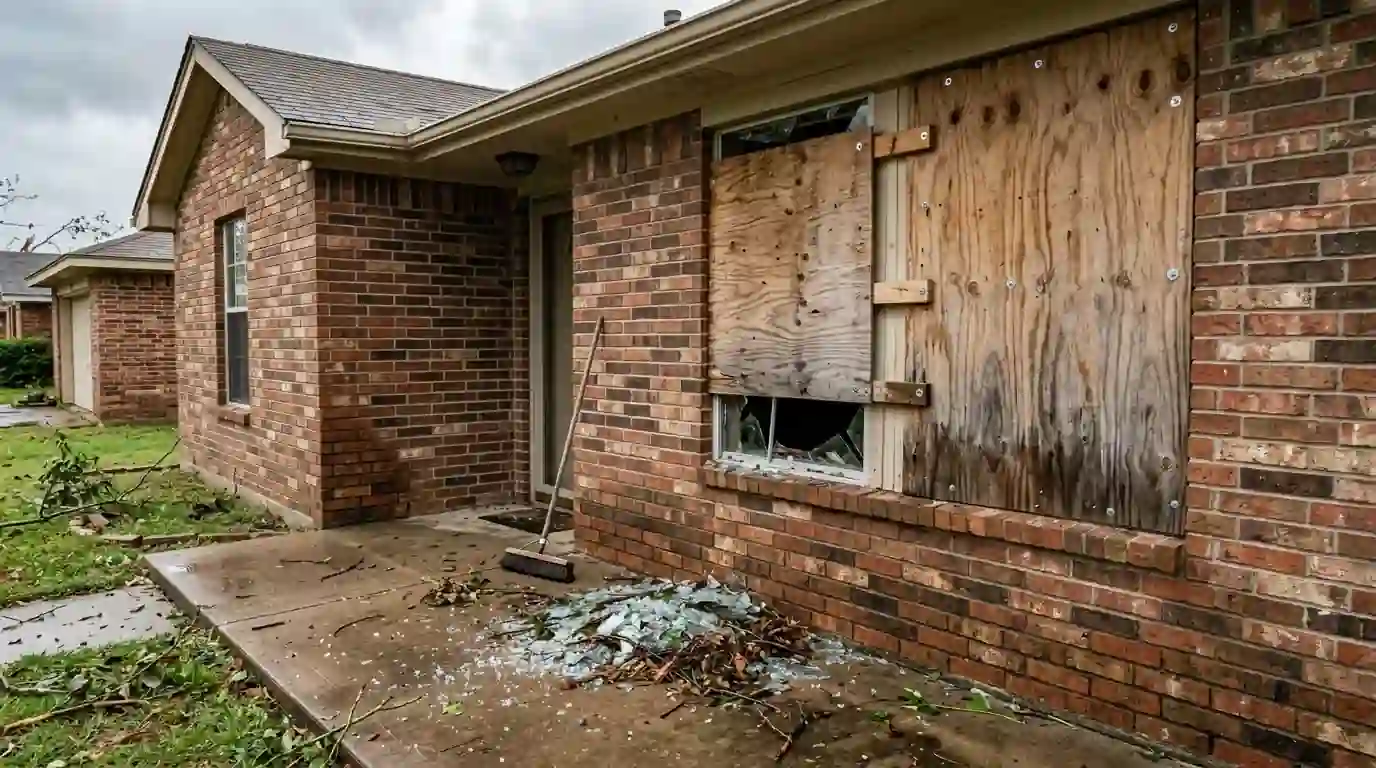
Window and door board-up
Broken windows and doors let in rain and leave the house open. We cut plywood to fit, fasten it into the framing around the opening, and seal the edges where rain blows hardest. Boarded doors can be set up so you can still lock the house. Broken glass is cleaned up inside and out, and wet carpet or drywall near the opening is extracted and dried. The boards stay until the glass or door is replaced.
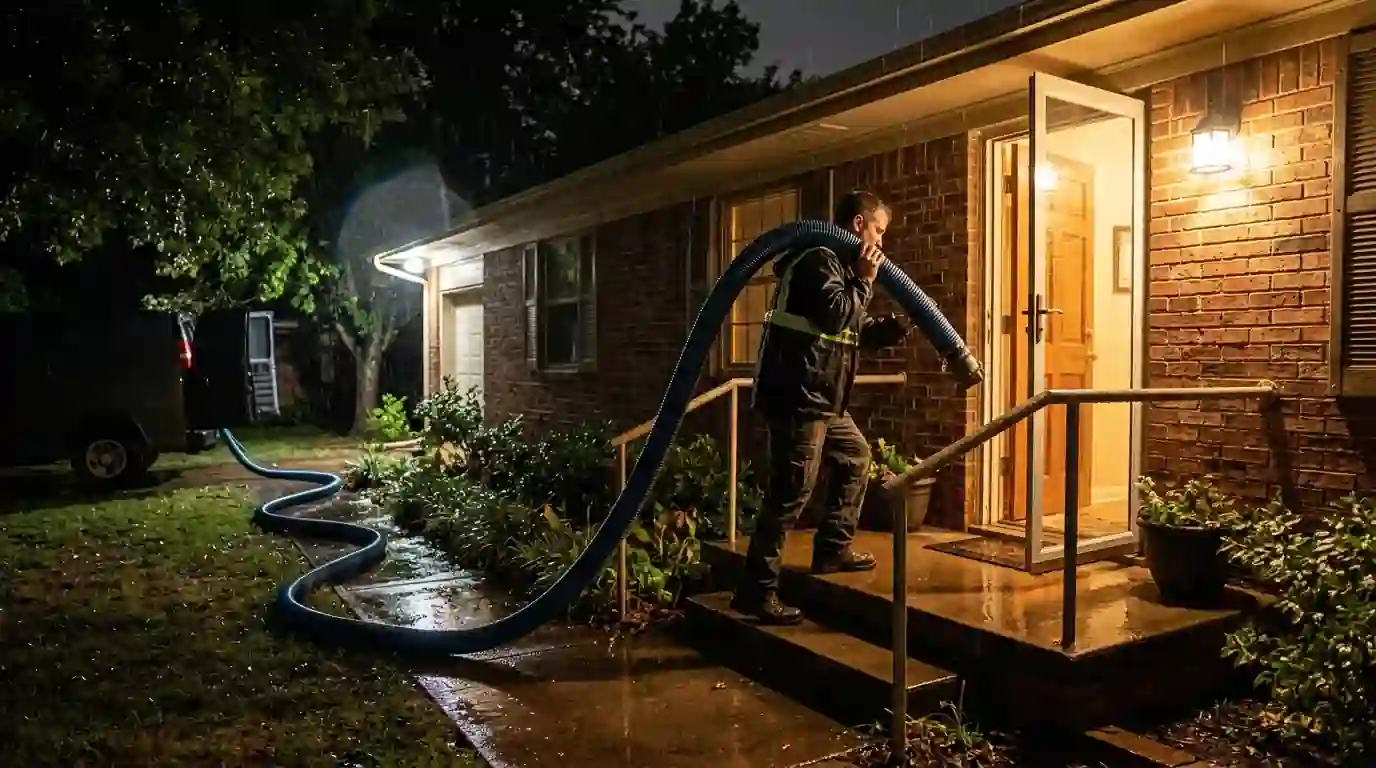
Covering openings after a tree strike
A tree or large limb through the roof or a wall leaves an opening plus debris inside. Large trees on the house need a tree service to remove them safely first. Once the weight is off, we cover the hole with a tarp or framed plywood, depending on its size and location, and clean up the glass, insulation and debris that fell inside. Water that came in with the limb gets extracted and dried like any other leak.
Step by step
How emergency tarping and board-up run
- 01
Safety first
We check for downed lines, gas smells and structural damage before anyone climbs or cuts.
- 02
Photograph the damage
The opening and the damage around it are photographed before it's covered.
- 03
Cover it
Tarps are battened over roof damage; plywood is fastened over windows and doors.
- 04
Clean up inside
Glass, debris and wet insulation are removed and standing water is extracted.
- 05
Dry and hand off
Drying starts inside, and the roofer or glazier has a covered opening to work from.
Timing
How long a tarp or board-up lasts
A properly battened tarp is meant to hold until the roof is repaired, usually a few weeks, and it should be checked after high wind. Boarded windows and doors stay until the glass or door is replaced. If repairs are delayed by a busy storm season, let us know and we'll check the cover.
Local conditions
Storm damage across the east and south metro
Wind damage is part of living in central Oklahoma. In the May 3, 1999 tornado, parts of Midwest City northwest of Tinker took F4 damage, and in February 2023 a strong EF2 hit southeast Norman. Most of the tarping and board-up calls we take come from far smaller storms than those: straight-line wind, hail and fallen limbs that open a roof or break a window. The response is the same either way: close the opening, then dry.
On the visit
What emergency tarping and board-up include
- Hazard check before work starts
- Photos of the damage before covering
- Heavy tarp battened to the roof deck
- Plywood fitted and fastened over broken windows or doors
- Glass and debris cleanup
- Extraction of water that already came in
- Drying equipment where needed
- Photos of the finished cover for your claim
What drives the price
What tarping and board-up cost depends on
Temporary cover is usually priced by the size of the opening, roof pitch and access, plus materials. No published local figure we'd trust covers temporary cover, so it's priced after we see the roof.
Size of the opening
A few missing shingles take less tarp and labor than a large damaged section.
Roof pitch and height
Steep or two-story roofs need more safety setup.
Number of windows or doors
Each opening needs its own fitted board.
Debris removal
Clearing limbs, glass and insulation adds labor.
Straight answers
Questions about this job
Most policies cover reasonable emergency measures to prevent further damage after a covered storm. Keep our photos and invoice for your claim.
Getting on a damaged, wet roof is dangerous. If you can't do it safely, don't; a tarp held with bricks also tends to blow off and do more damage.
No. We cover the openings and dry the inside. A roofer or glazier makes the permanent repair.
We answer 24/7 and schedule on the call. After a big storm the whole metro is busy, so call early and tell us whether water is coming in now.
A tree service removes it first. Once the weight is off, we cover the opening and clean up inside.
Battens are fastened where the damaged area will be repaired anyway, and the tarp is laid to shed water. Your roofer replaces that section as part of the repair.