The short version for a burst pipe
Short answer
After a burst pipe in Oklahoma City, shut off the main, open a faucet to drain the line, and turn off power to wet rooms. A plumber repairs the pipe; we handle the water: extraction, opening wet ceilings or wall sections where needed, and drying the framing until readings match dry areas of the house.
What you will notice
Signs a pipe has burst somewhere you can't see
Water bill or meter jumping
With every fixture off, the meter's leak indicator is still spinning.
Stain spreading on a ceiling
A brown ring that grows, or drywall that sags or feels soft.
Hissing in a wall
A steady hiss or trickle with no fixture running, often near an outside wall.
Wet baseboard or carpet edge
Carpet that's damp along a wall with no spill nearby.
Low pressure after a freeze
Weak flow at one faucet after a cold night can mean an ice plug, or a split behind it.
What the job involves
Why burst pipes cause more damage than they look like
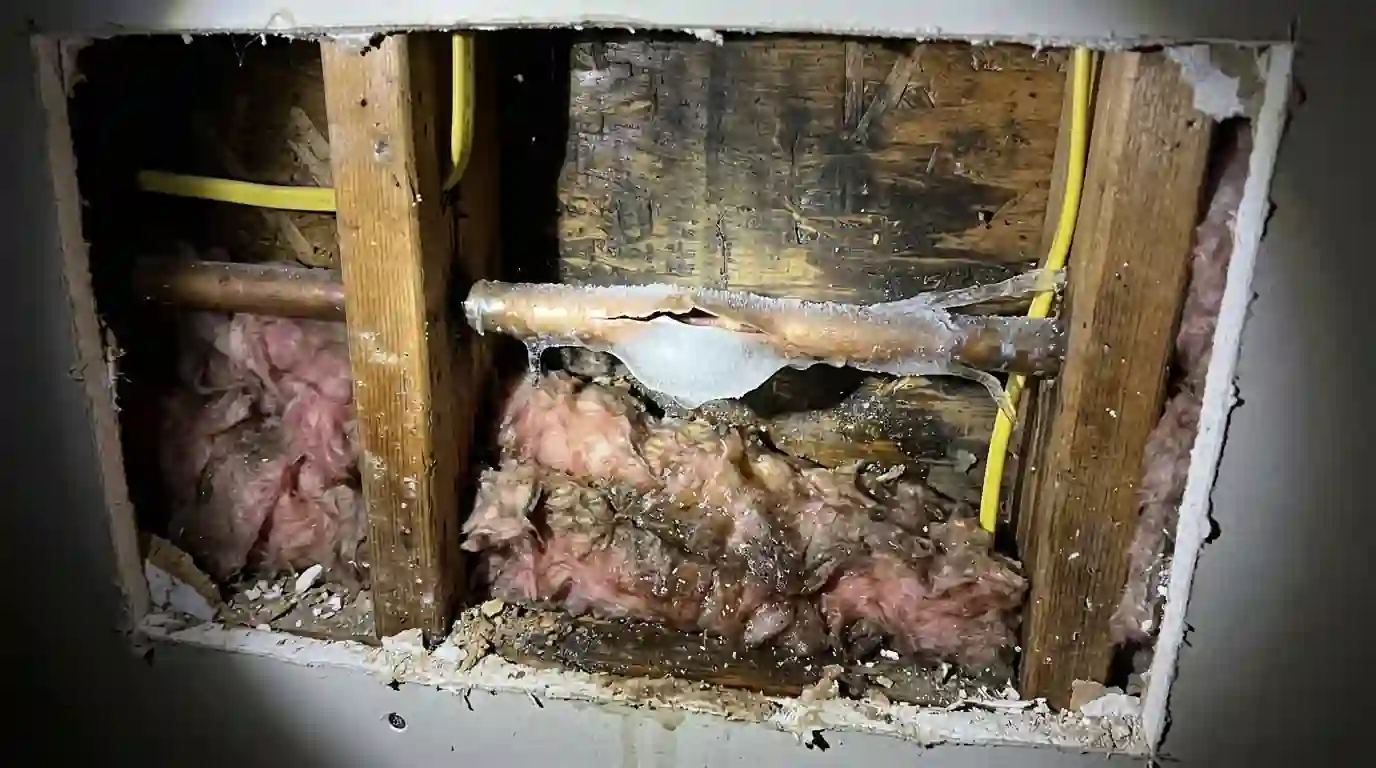
A burst line usually leaks at full house pressure, so a few minutes means a lot of water. Worse, the split is often inside a wall or ceiling, so the water spreads through insulation and along the bottom plate before anyone sees it.
The visible part is the easy part: wet carpet, a stained ceiling, water at the baseboard. The hidden part is wet insulation, a soaked bottom plate and drywall that has wicked water up from behind. Those are what turn into a musty wall a month later if they're not dried.
So the job is less about the puddle and more about tracing where the water traveled, opening only what needs opening, and drying the cavity from the inside.
Frozen pipe bursts
Water expands when it freezes, and the pressure builds between the ice plug and a closed faucet until the pipe splits. The leak often doesn't show until the thaw, when the ice melts and the line runs at full pressure. That's why burst calls spike the day temperatures climb back above freezing. Lines in outside walls, unheated garages, attics and crawl spaces are the usual culprits. We trace the wet path with meters and a thermal camera, since water from a frozen line on one wall often shows up in the room next door.
Supply line and fitting failures
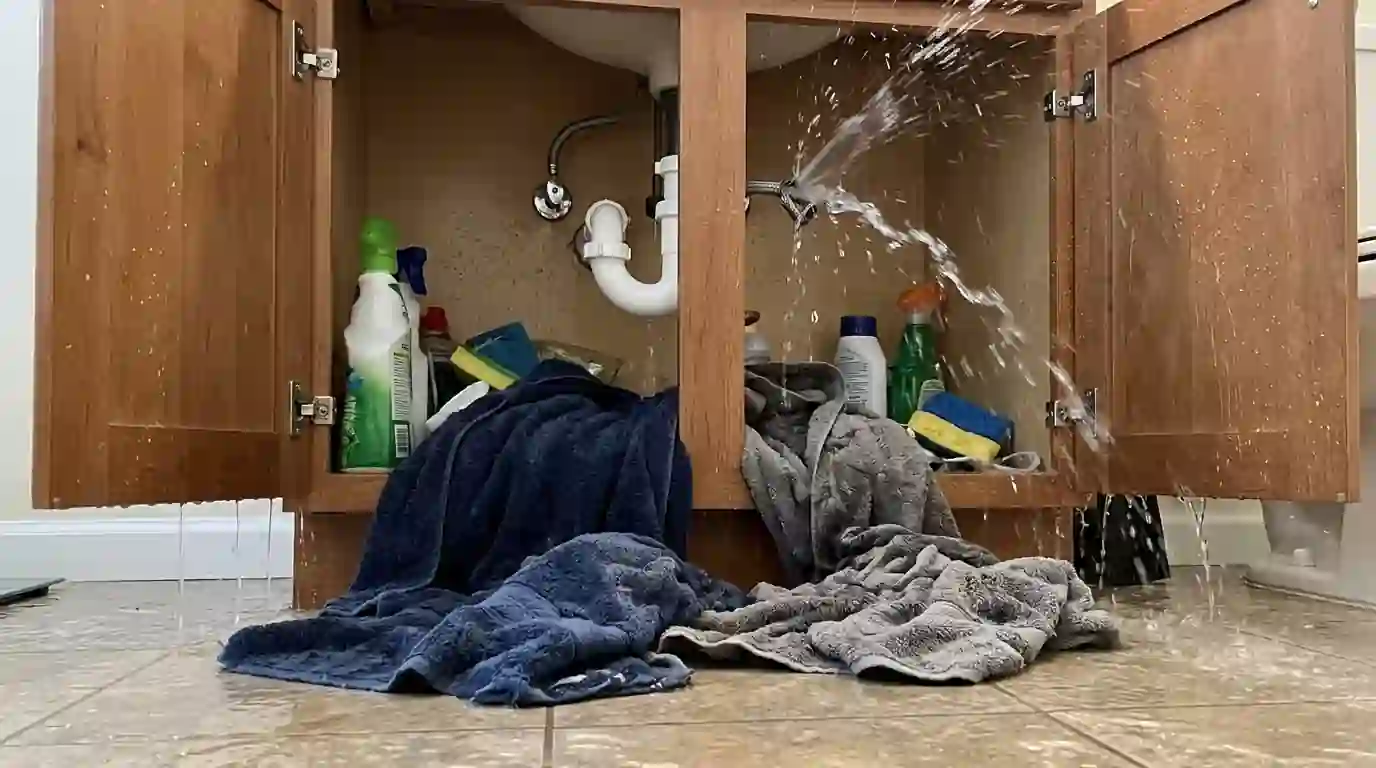
Not every burst is a freeze. Braided supply lines under sinks and toilets, washing machine hoses and push-fit or crimp fittings can fail on an ordinary afternoon. These leaks are usually at floor level, so the water heads straight into carpet, pad and the bottom of the drywall. Keep the failed part for your adjuster; it helps show the loss was sudden rather than a slow leak. We also check the cabinet floor and the wall behind it, since particleboard swells fast and hides water underneath.
Pipes in outside walls and attics
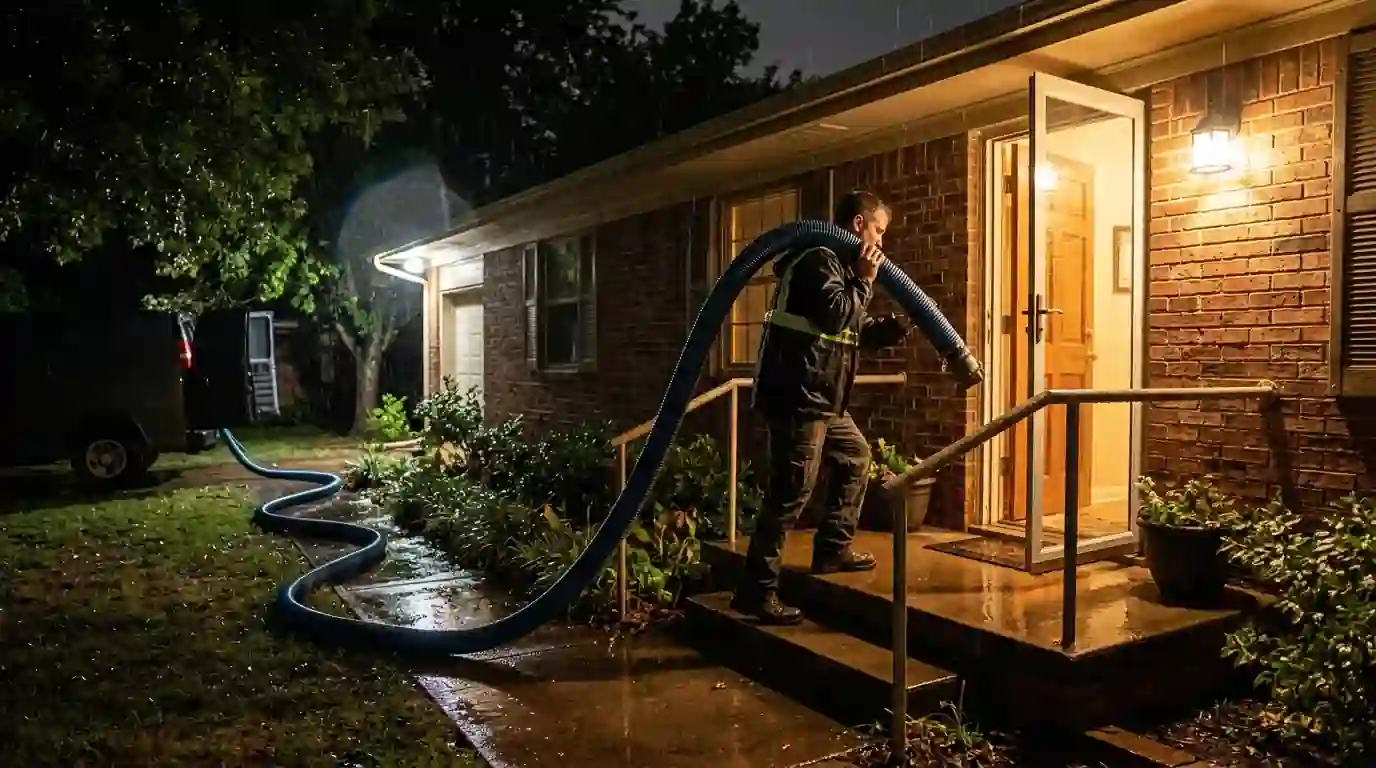
Pipes run through exterior walls or across an attic get the least protection from the house's heat. When one of those lets go, water comes through the ceiling or down the inside of the wall. Ceiling drywall holding water gets relieved first so it drains instead of collapsing, wet attic insulation is pulled where it's matted, and the wall cavity is dried through small openings or by removing a strip of drywall at the bottom.
Step by step
How we handle a burst pipe, start to finish
- 01
Water off, line drained
We confirm the main is closed and the line is drained so the repair and the drying can start.
- 02
Trace where it went
Meters and a thermal camera follow the water through walls, ceilings and under flooring, room by room.
- 03
Extract and relieve
Standing water and soaked carpet are extracted, and wet ceilings are relieved before they fall.
- 04
Open only what's needed
Baseboards, small wall openings or a flood cut let the cavity dry; wet insulation that won't dry comes out.
- 05
Dry, read, close
Equipment runs until readings match dry reference spots, then the walls can be closed and repaired.
Timing
How long drying takes after a burst pipe
Rooms with carpet and drywall often reach dry readings in three to five days of equipment time. Wall cavities dry slower than open rooms, and soaked bottom plates, plaster and slabs slower still. We read the same spots each visit, so you'll know when the walls can be closed instead of guessing.
Local conditions
Why burst pipes in OKC follow the cold snaps
Most burst pipes we see in Oklahoma City come after a run of hard freezes rather than one cold night. The city hit -14°F on February 16, 2021, its second-coldest reading on record, and after the January 2024 storm central Oklahoma stayed below freezing for about four and a half days. Lines in outside walls, attics and unheated garages split first, and the leak often stays hidden until the thaw starts the water running.
Do it yourself or call
What you can do before the crew arrives
| Task | Do it yourself | Leave it for us |
|---|---|---|
| Stopping the water | Close the main and open a low faucet to drain the line | Nothing, unless you can't find or turn the main |
| Ceiling bulge | Put a bucket and tarp under it and keep people clear | Relieving and removing wet ceiling drywall |
| Wet carpet | Lift rugs and move furniture off it | Extracting the pad and deciding what can stay |
| Inside the wall | Nothing; don't cut into it | Tracing, opening and drying the cavity |
What drives the price
What moves the cost after a burst pipe
The plumbing repair is separate. Our side of the bill is the water damage, and it depends mostly on how far the water went before it was shut off.
How long it ran
A line that ran for an hour before anyone was home spreads much further than one caught in minutes.
Where the pipe was
Ceiling and attic leaks add relief, insulation removal and ceiling drying to the job.
What has to come out
Wet insulation, swollen baseboards and drywall that won't dry in place add removal and later repair.
Flooring underneath
Carpet over pad usually dries; laminate and some hardwood may not.
Angi lists ceiling water damage repair at about $450 to $1,600 and drywall repair at about $300 to $850, on top of the drying itself. Source: Angi, 2026
Straight answers
Questions about this job
Dripping helps keep water moving in vulnerable lines, and opening cabinet doors under sinks on outside walls lets house heat reach the pipes. It doesn't protect a line that's already frozen solid.
Keep the faucet open, warm the area gently with a hair dryer or space heater kept away from anything flammable, and never use an open flame. If it splits as it thaws, close the main right away.
Our work is the water damage. A plumber repairs the pipe, and the two can happen the same day; we'll coordinate timing so drying starts as soon as the line is fixed.
Usually only small sections. Often removing baseboards or drilling small holes behind them is enough to dry the cavity. A flood cut is used when drywall is saturated or the water was dirty.
Sudden bursts are commonly covered, while damage from a slow leak often isn't. Photos, moisture logs and the failed part help your adjuster see what happened.
Mold can begin within a day or two in warm, wet materials, which is why drying the wall cavity quickly matters more than how the room looks.