What to do with a wet area rug
Short answer
A wet area rug in Oklahoma City should come up off the floor right away, because wool and cotton rugs can bleed dye and grow mildew within a day. Lift it onto a dry surface or hang it, don't fold it wet, and call. We rinse, treat dye bleed, and dry rugs flat with air on both sides, on site or off site.
Rugs and carpet we dry and clean include Karastan and Masland wool, plus Mohawk and Shaw area rugs.
- Shaw
- Mohawk
- Karastan
- Stainmaster
- Dixie Home
- Masland
- Kane
- Godfrey Hirst
- LifeProof
- COREtec
- Pergo
- Mannington
What the job involves
Why rugs need different handling from carpet
Wall-to-wall carpet is usually synthetic and tacked to the floor. Area rugs are often wool, cotton, jute or silk, with dyes that move when wet and foundations that shrink or brown as they dry.
That means speed and gentleness. A rug left on a wet floor wicks dirty water up through its fibers, and a wool rug left wet for a day can bleed one color into another.
We also check what the rug was lying on, since a rug over hardwood or carpet often hides the worst of the water on the floor underneath.
What drives the price
What area rug water damage cleaning costs depend on
Rug work is usually priced by size and fiber. There's no local benchmark for rug work we'd stand behind, so the price follows a look at the rug.
Size
Larger rugs take more rinsing, handling and drying space.
Fiber
Wool and silk need gentler, slower handling than synthetic rugs.
Dye bleed
Treating bleed adds time, especially if it has started to set.
Off-site drying
Transport and off-site drying add to the cost but help larger rugs.
Do it yourself or call
What to do yourself before we arrive
| Step | Do it yourself | Leave it for us |
|---|---|---|
| Getting it off the floor | Lift it onto chairs or hang it over a railing | Rolling and moving large or heavy rugs |
| Drying | Lay it flat with a fan underneath if it's small and synthetic | Wool, silk and large rugs |
| Dye bleed | Don't rub it; keep the rug from folding | Treating bleed with wool-safe products |
| Cleaning | Nothing until it's dry | Rinsing and cleaning by fiber type |
Wool rug dye bleed
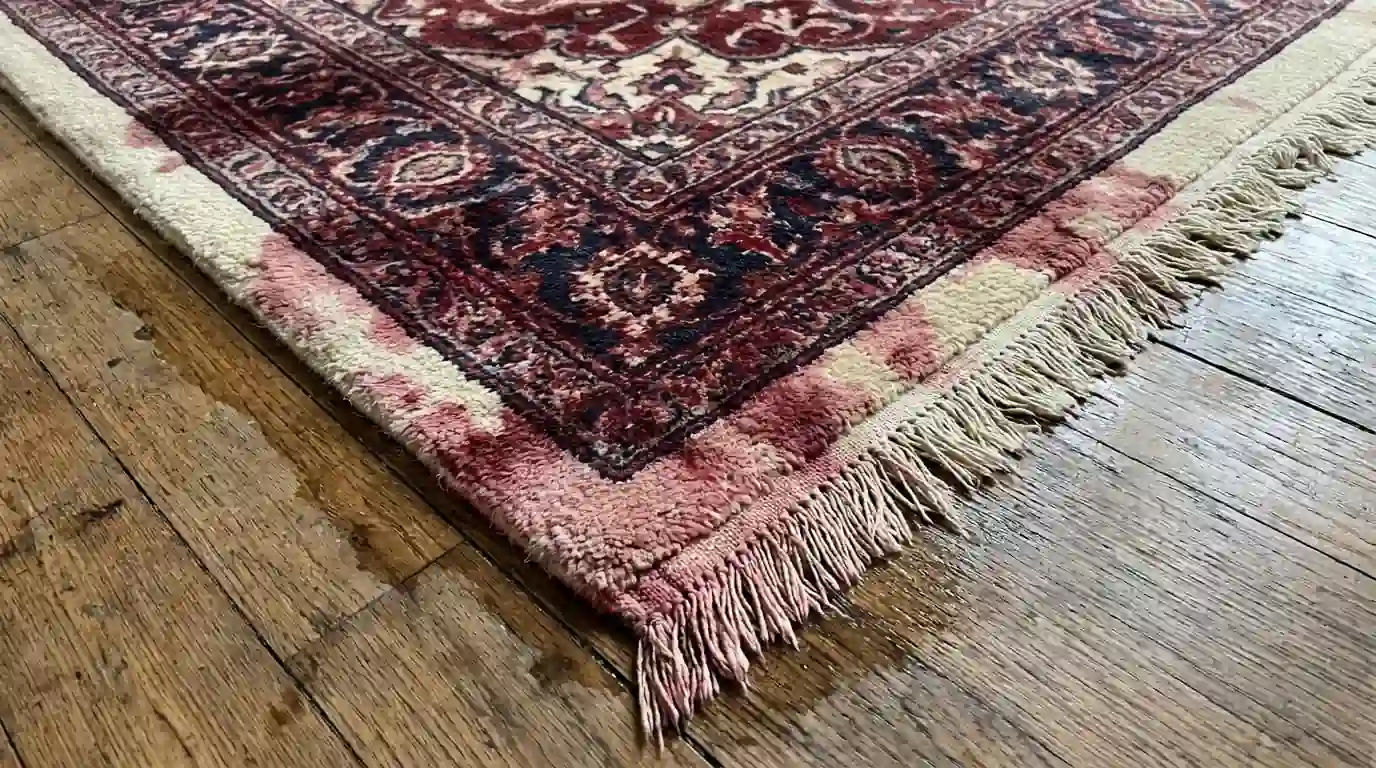
Wool rugs, Karastan and Masland pieces included, can bleed when soaked, especially reds and blues next to light fields. The dye migrates into the lighter areas and sets as it dries. The way to limit it is to keep the rug wet evenly, rinse with cool water and dry it fast and flat, rather than letting it dry slowly in a pile. We treat bleed with products made for wool and dry with air on both sides. Bleed caught early often improves a lot; bleed that dried for days is harder to move.
Fringe and backing damage
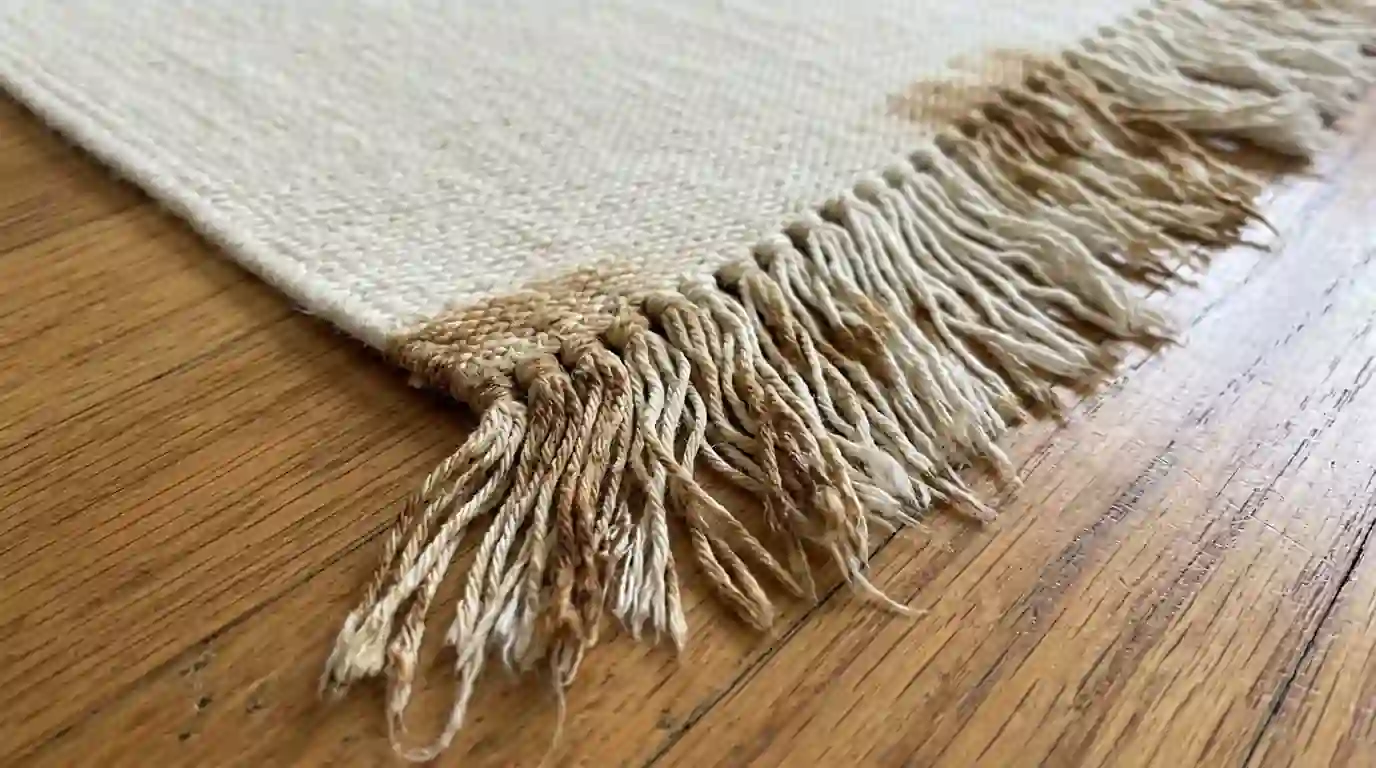
Fringe on hand-knotted rugs is the end of the foundation threads, often cotton, and it browns when it dries slowly after getting wet. Latex-backed and tufted rugs can have the backing soften and separate. We rinse fringe and dry it quickly to limit browning, and check tufted rugs for backing that's letting go. A rug whose backing has delaminated may not lie flat again, and we'll tell you before you spend money cleaning it.
Off-site rug drying
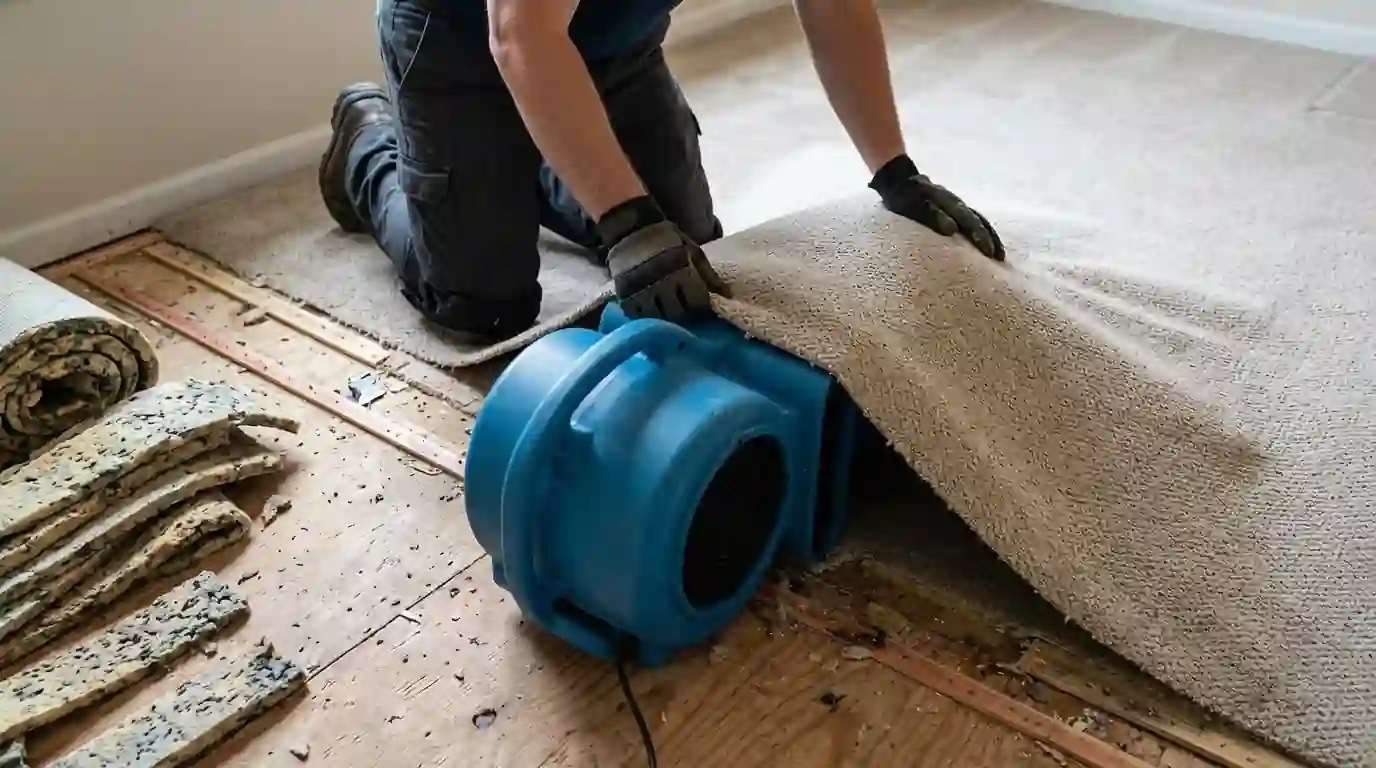
Machine-made synthetic rugs, like many Mohawk and Shaw area rugs, usually dry fine on site. Large or valuable rugs are often better dried away from the wet room, where they can lie flat with air moving above and below and the floor can dry at the same time. We roll them with care, transport them, wash and dry them, then bring them back once the floor is dry. That also keeps a heavy wet rug from holding moisture against a hardwood floor or a slab that's still being dried.
Local conditions
Winter freezes and wet rugs
Rug calls in Oklahoma City spike after hard freezes, when burst pipes soak whole rooms at once. After the January 2024 storm, central Oklahoma stayed below freezing for about four and a half days, and a soaked wool rug can't dry in a cold garage in that weather. That's when moving a rug to a warm, controlled space to dry flat makes the difference between a rug that comes back and one that browns and smells.
Step by step
How area rug water damage is handled
- 01
Lift it off the floor
The rug comes off the wet floor right away so it stops wicking dirty water.
- 02
Check fibers and dyes
We identify the fiber and test dyes before choosing how to rinse and treat it.
- 03
Rinse and treat bleed
The rug is rinsed with cool water and dye bleed is treated before it sets.
- 04
Dry flat with air on both sides
The rug dries flat or suspended, on site or off site, with air above and below.
- 05
Inspect and return
Fringe, backing and colors are checked, and the rug goes back once the floor is dry.
What you will notice
Signs a wet rug needs help fast
Colors running
Reds or blues spreading into lighter parts of the pattern.
Brown fringe
Fringe turning tan or brown as it dries.
Musty smell
A sour or musty odor from the backing a day after it got wet.
Rippling or curling
A rug that won't lie flat, which can mean shrinkage or backing failure.
Stain on the floor below
A dark outline on wood or carpet where the rug sat wet.
Straight answers
Questions about this job
Often, if it's lifted, rinsed and dried quickly. Rugs soaked by sewage or outside flood water are harder to save and are cleaned with extra care or discarded.
Some dyes move when wet, especially reds and blues. Keeping the rug flat and drying it fast limits it; treatment can often improve it.
Not for long. Strong sun can fade colors and dry the rug unevenly. Shade with good airflow is better.
For larger or valuable rugs, often yes, so they can dry flat with air on both sides while the floor dries.
Browning that's caught early often improves with rinsing and fast drying. Old browning is harder to reverse.
Rugs damaged in a covered water loss are commonly part of the contents claim. Photos before cleaning help.