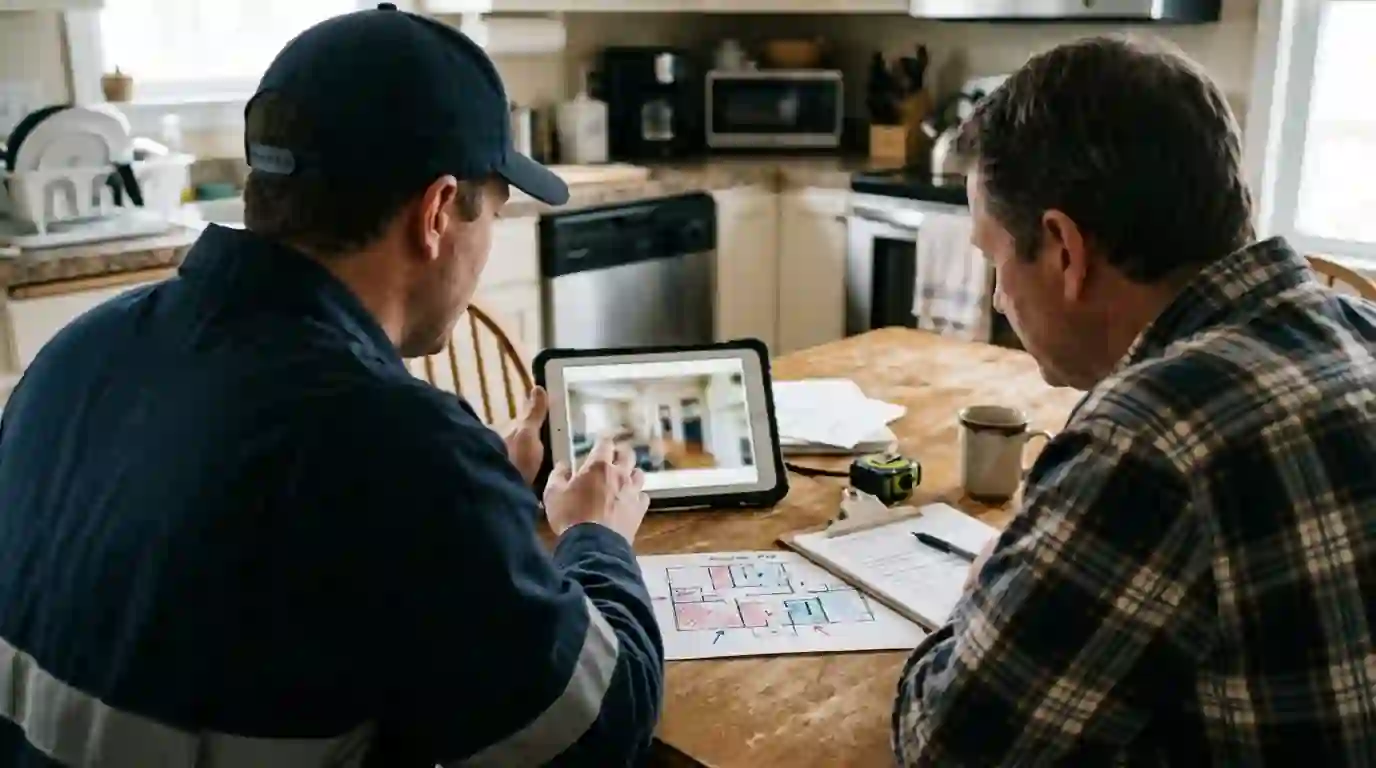
How we help with a water damage claim
Short answer
For a water damage claim in Oklahoma City, we photograph the damage before anything moves, log moisture readings at every visit, record what was removed and why, and share that file with you and your adjuster. Whether a loss is covered is your insurer's decision; our job is making sure what happened is clearly documented.
What the job involves
What adjusters look for
Adjusters need to know three things: what caused the water, how far it went, and what had to be done about it. A clean file answers all three without anyone having to guess.
That file starts on the first visit. Photos before anything moves, the source of the water, readings that show the wet area, and dated readings that show it drying. Later, a list of what was removed with photos of each item.
We don't decide coverage or negotiate on your behalf. We give you and your adjuster accurate, organized documentation, and we answer the adjuster's questions about the work.
What drives the price
What water damage claims typically involve
Claim documentation is part of how we work, not an add-on. The size of the claim depends on the loss itself.
Cause of loss
Sudden water is commonly covered; gradual leaks and flood water often aren't.
Extent
How far the water spread drives drying time and what has to be replaced.
Deductible
Small losses may fall under your deductible, which is worth knowing before filing.
Contents
Damaged belongings are usually a separate part of the claim.
Angi reports most water damage jobs nationally landing between $450 and $16,000, with an average near $3,868, which helps when weighing a claim against your deductible. Source: Angi, 2026
Your options
How the cause of water usually affects a claim
Every policy is different, and coverage is your insurer's call. These are common patterns, not promises.
| Cause | Often treated as | What helps the file |
|---|---|---|
| Burst pipe or failed supply line | Sudden and accidental | The failed part, photos and immediate readings |
| Appliance or water heater failure | Sudden, though the appliance itself may not be covered | Photos of the failure and the spread |
| Slow leak over weeks | Gradual; often excluded | Readings and staining that show the timeline |
| Outside flood water | Flood; needs separate flood coverage | Photos of the water line and the source |
| Sewer backup | Often needs a backup endorsement | Plumber's invoice and photos |
Photos and moisture logs
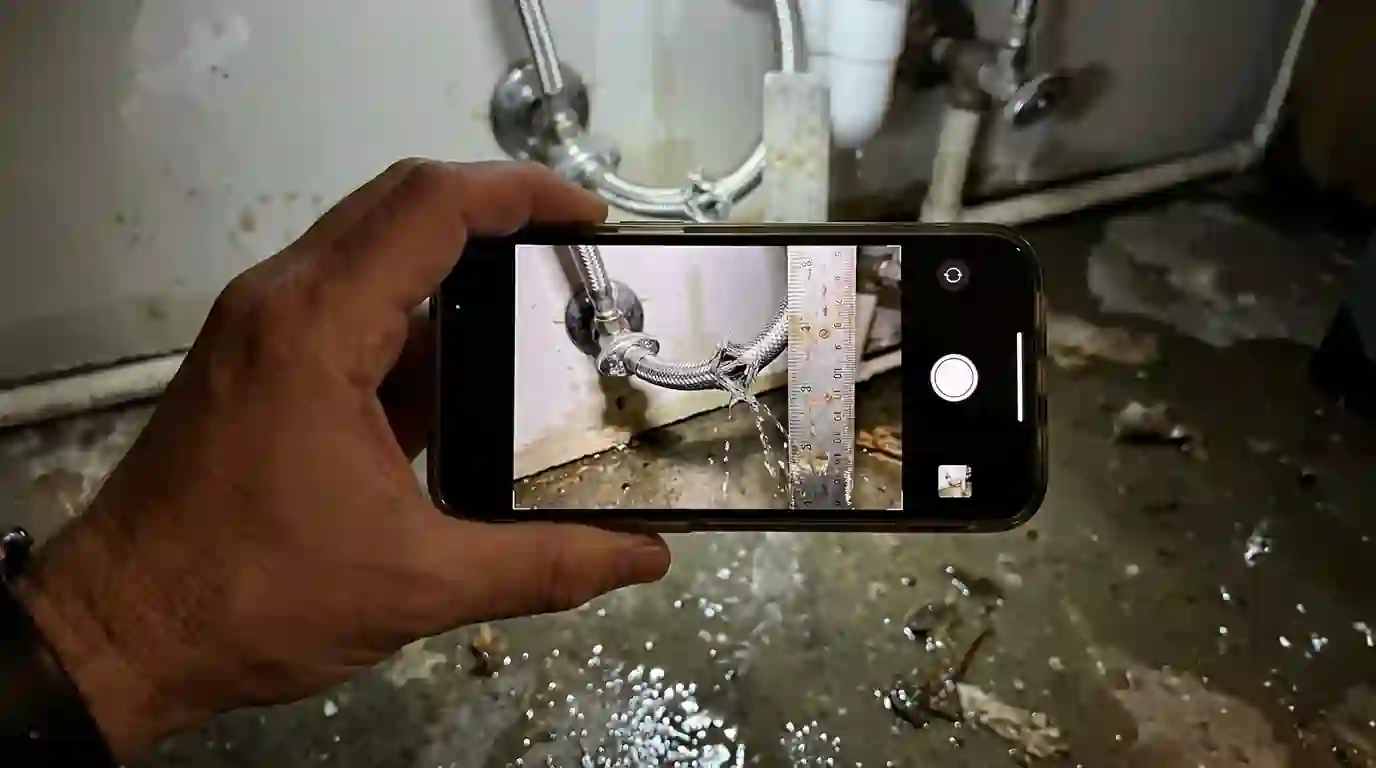
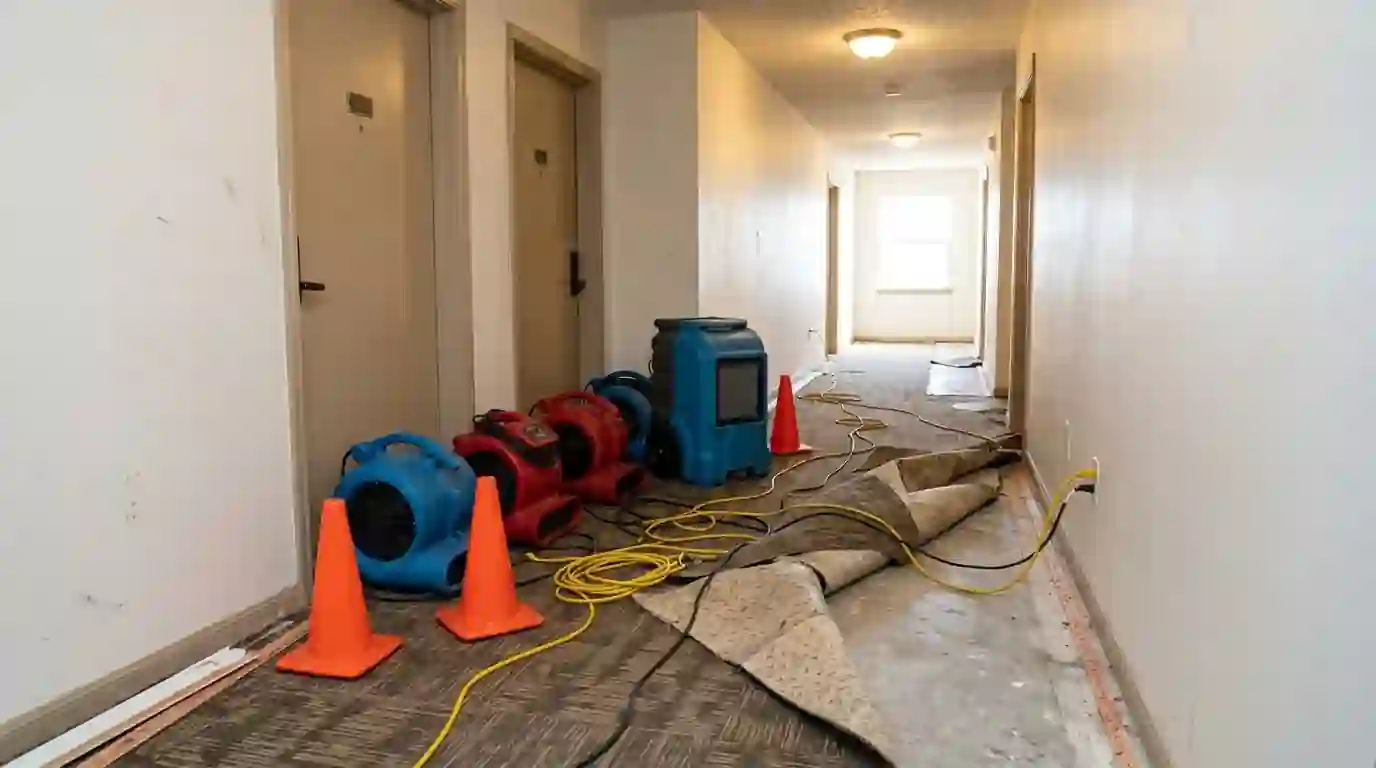
Every job gets photos of the source, the wet areas and the damage before anything is moved or removed, with wide shots for context and close-ups for detail. Moisture readings are logged with the date, the location and the material at each visit, alongside dry reference readings. Together, they show the extent of the damage and why equipment stayed as long as it did, which are the questions that come up most on water claims.
Working with your adjuster
Adjusters may visit in person, review photos remotely, or both. We can meet the adjuster on site, walk them through the moisture map, and answer questions about why something was removed. If the adjuster asks for something specific, such as a particular photo or a reading on a certain wall, we provide it. You stay in charge of your claim; we're the ones who can explain the work. We keep a log of every conversation so nothing said on site gets lost.
Sudden versus gradual leaks
Most homeowner policies treat sudden water, like a burst pipe or a failed supply line, differently from gradual leaks that went on for weeks. Outside flood water is usually excluded and needs separate flood coverage. The evidence matters: a failed part, staining patterns and how far the water spread all help show what happened. We document what we find and leave the coverage decision to your insurer. Keep any failed hose, fitting or valve until the adjuster says it can go.
On the visit
What our claim documentation includes
- Photos of the water source and failed part
- Wide and close-up photos before anything moves
- A moisture map with readings and dry references
- Dated readings at every visit
- A list of removed materials with photos and reasons
- Contents inventory when belongings are affected
- Availability to meet or talk with your adjuster
- A copy of everything for your records
Local conditions
Freeze claims and storm claims
Water claims in Oklahoma City tend to arrive in waves. After the city dropped to -14°F on February 16, 2021, its second-coldest reading on record, burst-pipe claims piled up across the metro at the same time, and adjusters were stretched thin. When everyone files the same week, a clear file with photos, readings and a cause of loss helps your claim move without waiting for a second inspection.
Step by step
How claim documentation runs
- 01
Document the source
The cause of the water and the failed part, if there is one, are photographed first.
- 02
Map the damage
Moisture readings and photos show how far the water went.
- 03
Record every removal
Anything cut out or thrown away is photographed, measured and noted with a reason.
- 04
Log the drying
Dated readings at each visit show the structure drying to dry references.
- 05
Share the file
You and your adjuster get the photos, readings and removal list.
Straight answers
Questions about this job
If water is still coming in, stop it and call us so the damage doesn't grow. Then report the claim. Most policies expect you to prevent further damage.
We provide documentation and talk with your adjuster about the work. You remain the policyholder and decide on the claim.
That's your insurer's decision. We can't promise coverage, but clear documentation helps the claim be judged on the facts.
Compare the likely cost with your deductible. A small, quickly caught leak may cost less than the deductible.
We share the readings and photos behind each decision and answer questions. If something was missed, we can re-check it.
Yes. Insurers generally expect mitigation to start right away. Our photos and readings document the condition before work begins.