What to do about a flooded storm shelter
Short answer
A storm shelter or cellar in Oklahoma City that takes on water should be pumped, cleaned and dried soon, so it's usable in the next warning and doesn't grow mold. We pump standing water, clean the floor, walls and benches, dry the shell and hatch, and look for where the water is getting in.
What the job involves
Why shelters fill with water
Below-ground shelters and cellars sit lower than everything around them, so heavy rain, a high water table or runoff from the yard finds its way in. Garage floor shelters can take on water from a slab that slopes toward the hatch.
Water in a shelter is more than an inconvenience. It makes the shelter hard to use when a warning comes, it rusts hardware and hinges, and stagnant water grows mold and smells quickly in a closed space.
We clear it and dry it, and we tell you where the water came in, whether a seal, a crack or the grading, so you can get it fixed.
Garage floor shelters
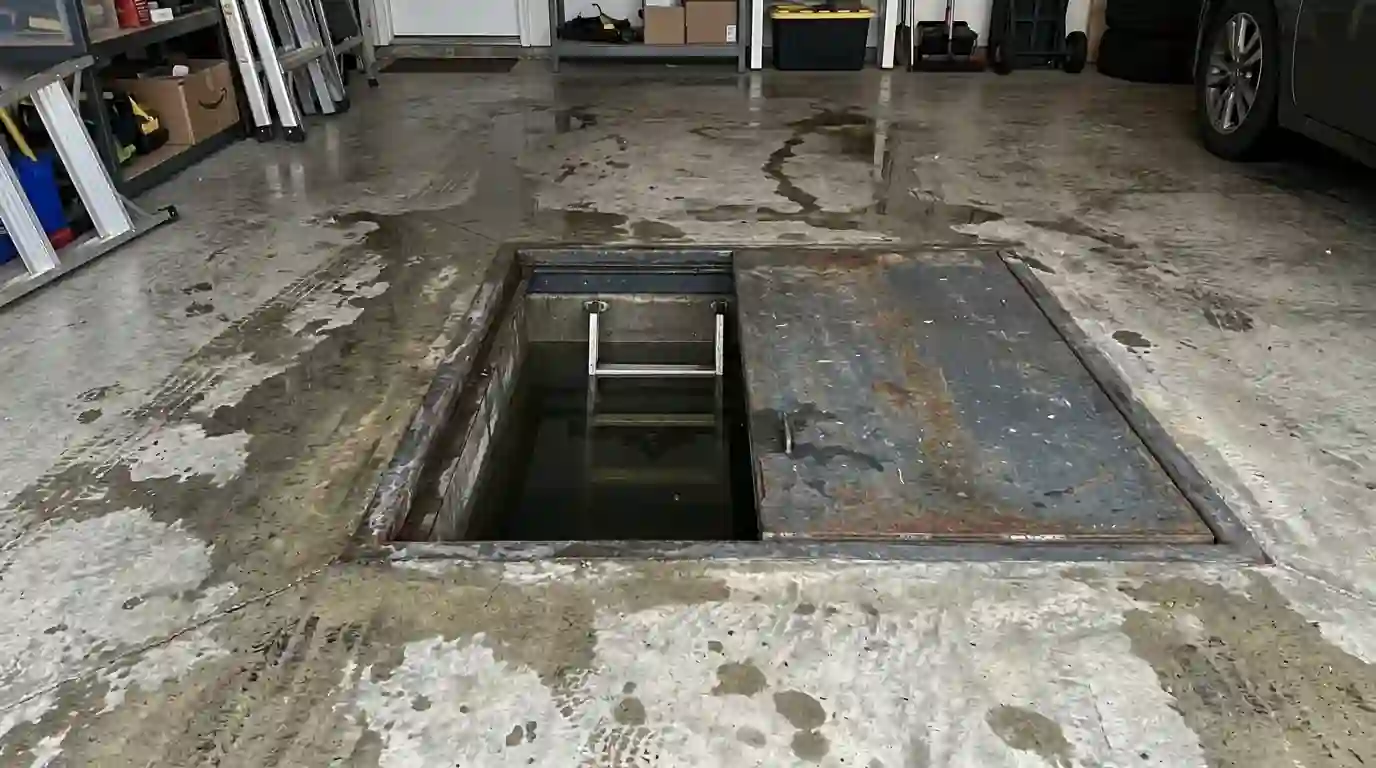
In-garage shelters sit under a sliding hatch in the slab. Water gets in around the hatch track or seal, especially when rain blows in under the garage door or the floor drains toward the shelter. We pump the shelter, wipe down the interior, dry the hatch track and seal, and check that the hatch slides freely. If the garage floor slopes toward the shelter, a threshold seal or regrading near the door can make a big difference.
Backyard underground cellars
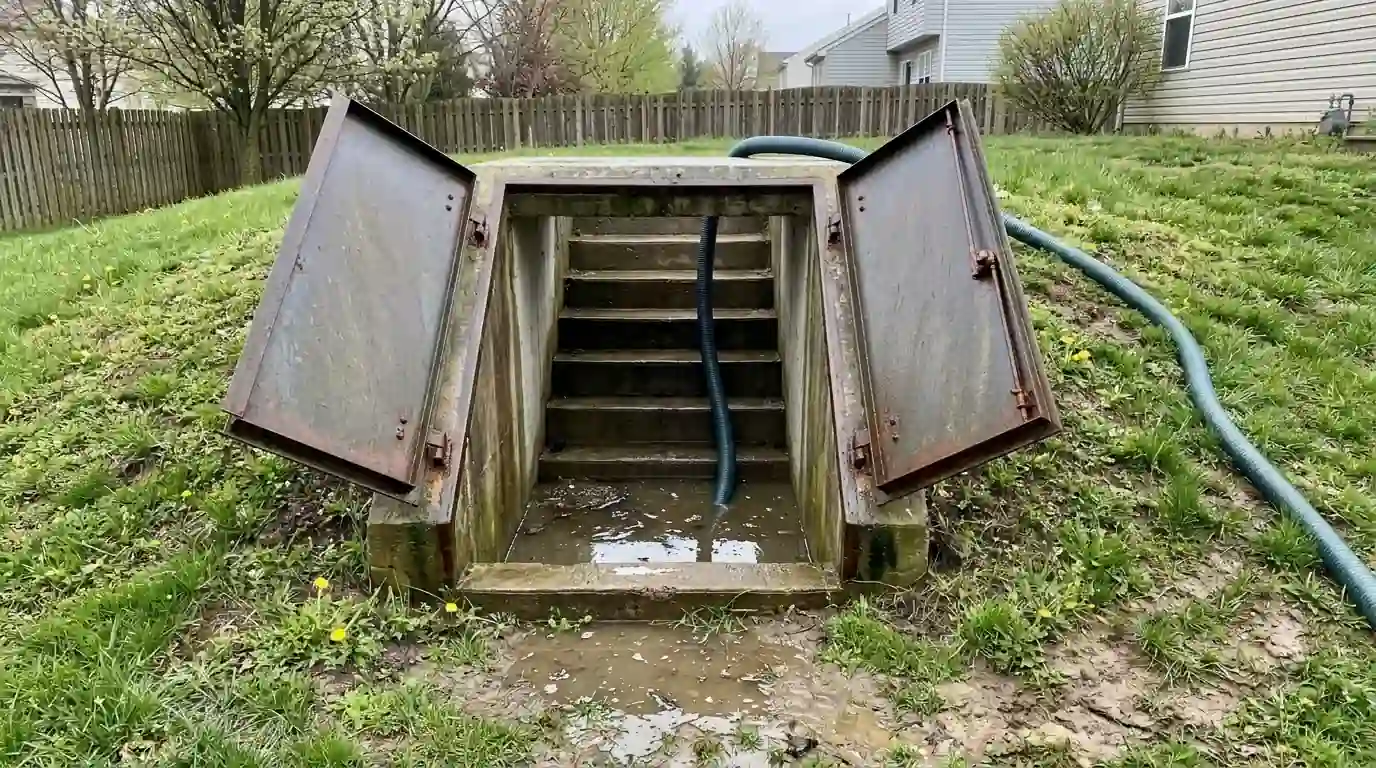
Older backyard cellars and newer buried shelters can collect water through seams, vents, the door frame or simply groundwater after a long rain. We pump out the water, clean silt and debris off the floor and benches, and dry the space with a dehumidifier and air mover run down through the door. Rusted hardware is pointed out so it can be replaced before it seizes. Concrete cellars with cracks may need a sealing contractor; we'll show you where the water is coming through.
Drying the shell and hatch
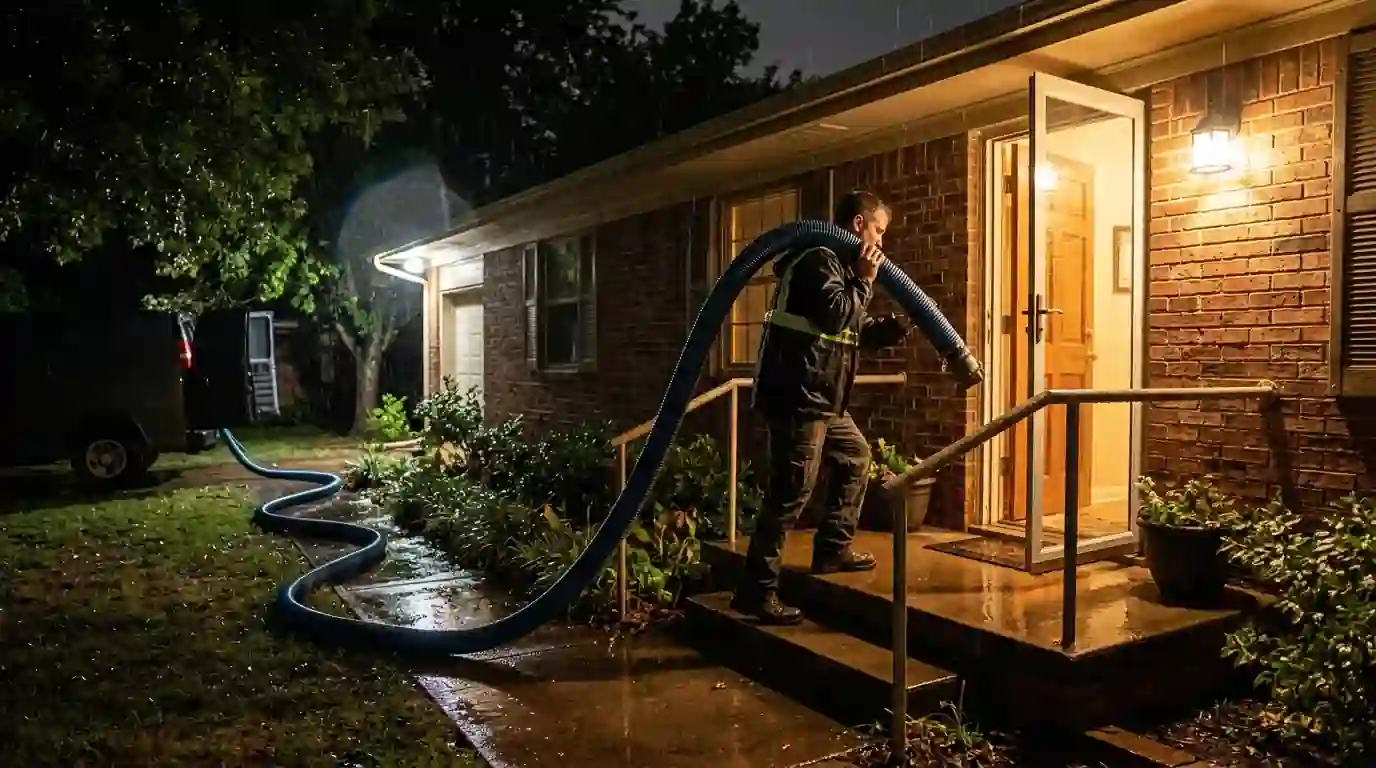
After the water is out, the shell itself has to dry. Concrete and steel shelters hold condensation, and a closed shelter stays damp for weeks if nobody runs equipment. We set a dehumidifier inside with the door cracked for its cord and hose, and check readings on the walls and floor before closing up. Hatch seals and hinges are dried and checked so the door opens easily when it counts.
Step by step
How a shelter water job runs
- 01
Check access
We confirm the hatch or door opens safely and there's no electrical hazard inside.
- 02
Pump it out
A submersible pump removes standing water; silt and debris come out after.
- 03
Clean
Floor, walls, benches and steps are cleaned and treated if the water was dirty.
- 04
Dry the shell
A dehumidifier and air mover run until the walls and floor read dry.
- 05
Find the entry
We show you where the water is getting in so it can be sealed or regraded.
Local conditions
Shelters in tornado country
Oklahoma City is one of the most tornado-prone major cities in the world, and its severe season runs from March through June. Those same months bring the heaviest rain: in May 2015 the city logged 19.48 inches, its wettest month on record. That overlap is the problem. A shelter can fill with rainwater in exactly the weeks you're most likely to need it, so we treat a flooded shelter in spring as urgent.
Do it yourself or call
What you can do yourself
| Task | Do it yourself | Call us |
|---|---|---|
| A few inches of clear water | Bail or use a small pump if you can do it safely | Water deeper than you can safely bail, or muddy water |
| Drying | Leave the hatch open on a dry day | Running a dehumidifier until the shell reads dry |
| Mold or smell | Nothing beyond airing it out | Cleaning and treating the interior |
| Finding the leak | Look for water at seams and the hatch after rain | Tracing the entry and showing you where to seal |
On the visit
What a shelter water job includes
- Access and electrical safety check
- Pumping standing water
- Removing silt and debris
- Cleaning floor, walls, benches and steps
- Treatment if the water was dirty
- Dehumidifier drying of the shell
- Hatch, seal and hinge check
- Notes on where the water got in
What drives the price
What shelter water removal costs depend on
Shelter jobs are usually small, priced by volume and access. We haven't found a dependable local price range for shelter work, so it's quoted on site.
Volume of water
A few inches pumps out quickly; a full shelter takes longer.
Access
Tight garage hatches and steep cellar steps take more time.
Silt and debris
Mud and debris from yard runoff add cleaning time.
Drying time
Closed concrete shells need a dehumidifier running for a few days.
Straight answers
Questions about this job
It makes the shelter slippery and hard to use, and stagnant water grows mold. Don't use electrical devices in a flooded shelter until it's pumped and dry.
The water line is answered around the clock, and in the spring storm season a flooded shelter goes near the top of the list.
We find and show you where water gets in. Sealing cracks or regrading is done by a concrete or drainage contractor.
On a dry, sunny day that helps, but a closed shelter often stays damp for weeks. A dehumidifier dries it much faster.
They can. Drying quickly and checking the hatch hardware keeps the door working.
It depends on the cause and your policy. Groundwater seepage is often excluded. Ask your agent before filing.