Why windows and doors leak into walls
Short answer
Window and door leaks in Oklahoma City usually come from failed seals, blocked weep holes, sliding door tracks that overflow, or worn thresholds, and wind-driven rain makes them worse. Water runs down inside the wall and soaks the carpet below. We dry the wall and floor, trace the entry point and show you where it needs sealing.
What the job involves
A small leak, repeated
Window and door leaks rarely flood a room. They wet the same spot every time the wind drives rain against that side of the house, and the wall cavity and the carpet below never fully dry between storms.
That's what makes them damaging. Drywall at the bottom of the wall softens, the tack strip and pad stay damp, and mold has time to start in a cavity nobody looks into.
The fix has two halves: drying what's wet, and stopping the water from getting in again. We do the first and find the entry point so a window or door installer can do the second.
What drives the price
What window and door leak damage costs depend on
These jobs are usually small in area, but repeat leaks can mean more drywall and flooring come out.
How many storms it has leaked
A first-time leak usually dries in place; repeat leaks often mean wet insulation and drywall.
Floor type
Carpet and pad dry differently from hardwood or plank at a doorway.
Wall opening
Cutting and replacing a drywall strip adds repair work.
Mold
Growth inside the cavity adds cleanup.
Angi puts drywall water damage repair at about $300 to $850, typical for the wall below a leaking window. Source: Angi, 2026
Do it yourself or call
What you can check yourself
| Task | Do it yourself | Leave it for us |
|---|---|---|
| Sliding door weeps | Clear dirt from the track and weep holes | Drying the floor and wall after an overflow |
| Caulk | Look for cracks and gaps around the outside of the frame | Reading the wall to see how far water went |
| Door sweeps | Replace a worn sweep at the bottom of the door | Checking the subfloor at the threshold |
| Wet carpet at the wall | Lift a corner and feel the pad | Drying the pad, tack strip and slab |
Window seal and sill leaks
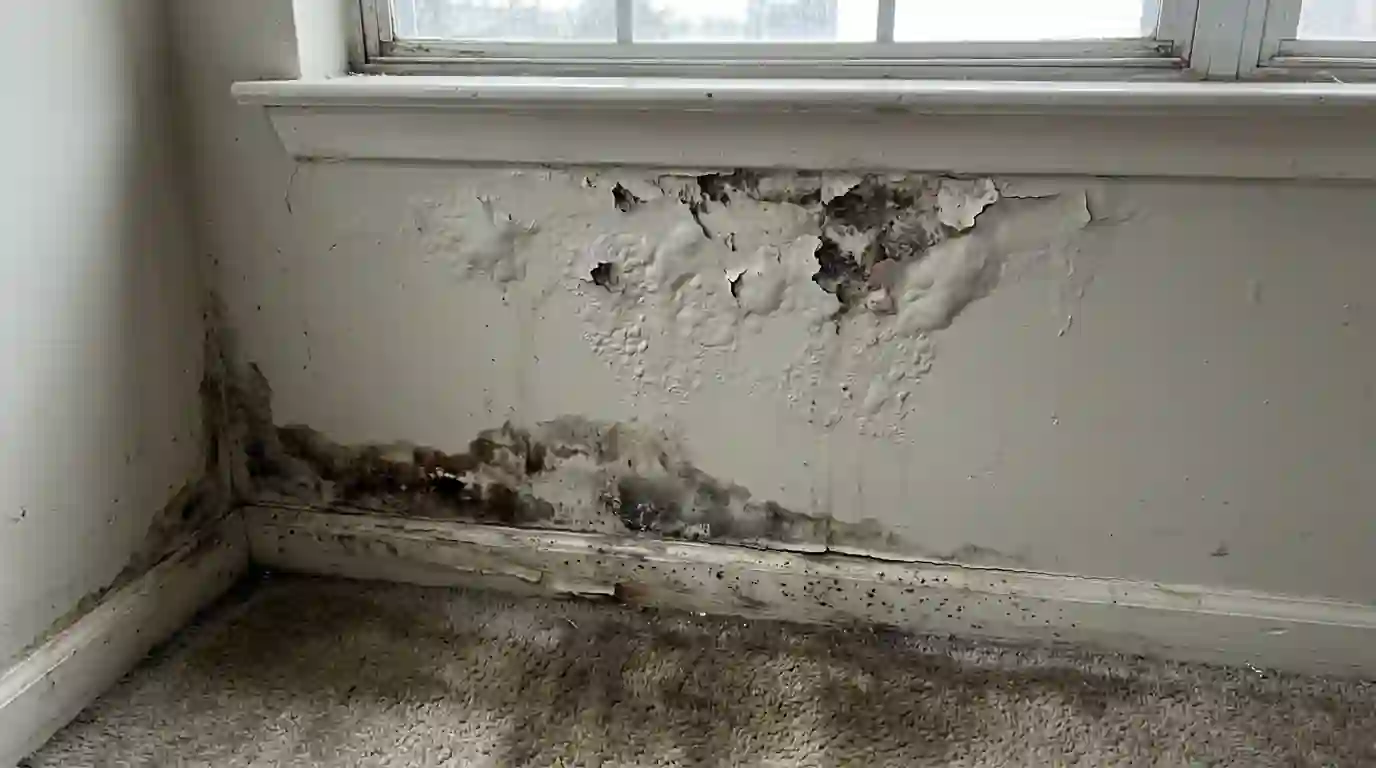
Water gets past windows through cracked caulk around the frame, failed seals at the corners, and sills that slope the wrong way. Wind-driven rain is the usual trigger, so the leak often shows up only on one side of the house. Inside, look for staining at the bottom corners of the window, bubbling paint below the sill and damp carpet along the wall. We read the wall below the window, often find wet drywall and insulation further down than the stain, and dry or open it so the cavity can dry.
Sliding door track overflow
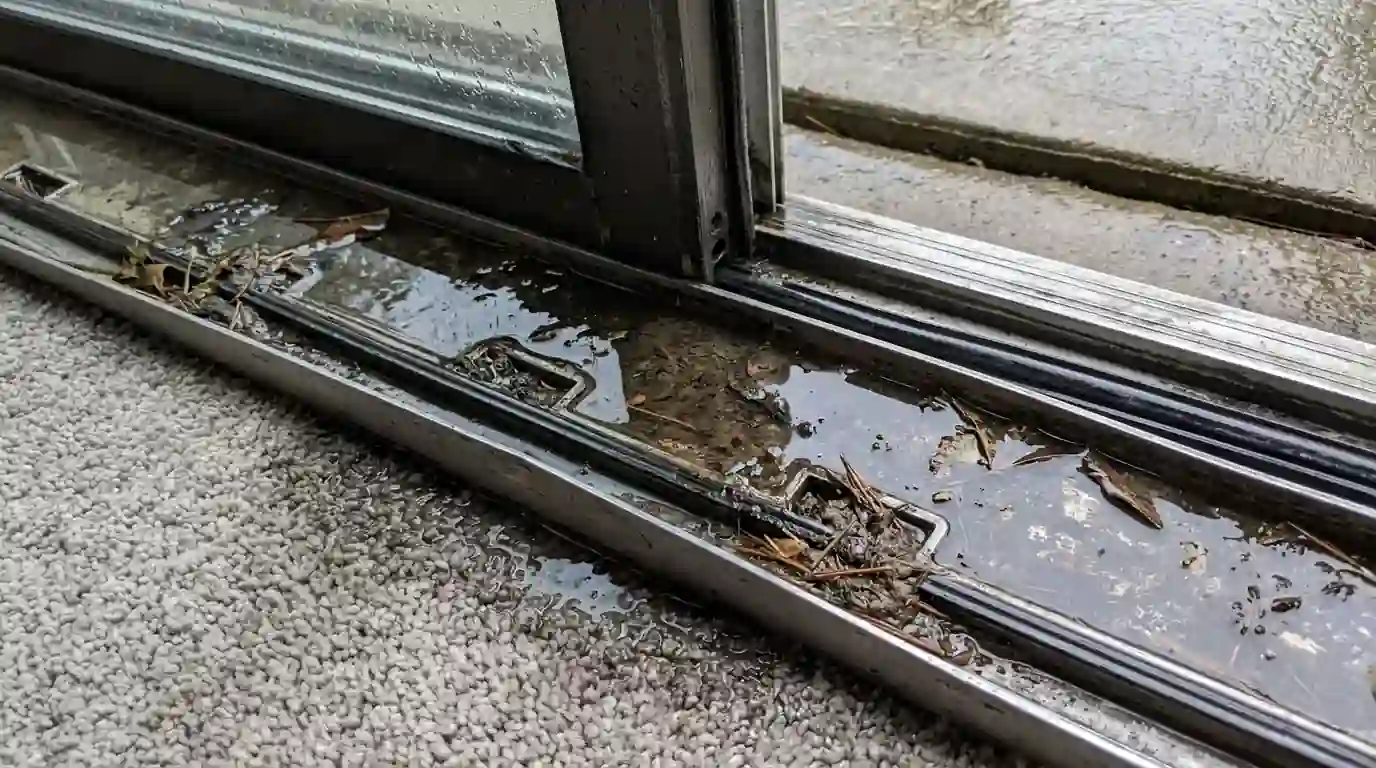
Sliding glass doors have a track with small weep holes that let rain drain to the outside. When the weeps clog with dirt or the track is damaged, rain fills the track and spills over the inside edge onto the floor. Water then runs under the carpet or plank flooring next to the door, sometimes into the room beside it. We dry the floor and slab, check the wall at both sides of the door frame, and show you the clogged or damaged track so it can be cleaned or repaired.
Entry door threshold leaks
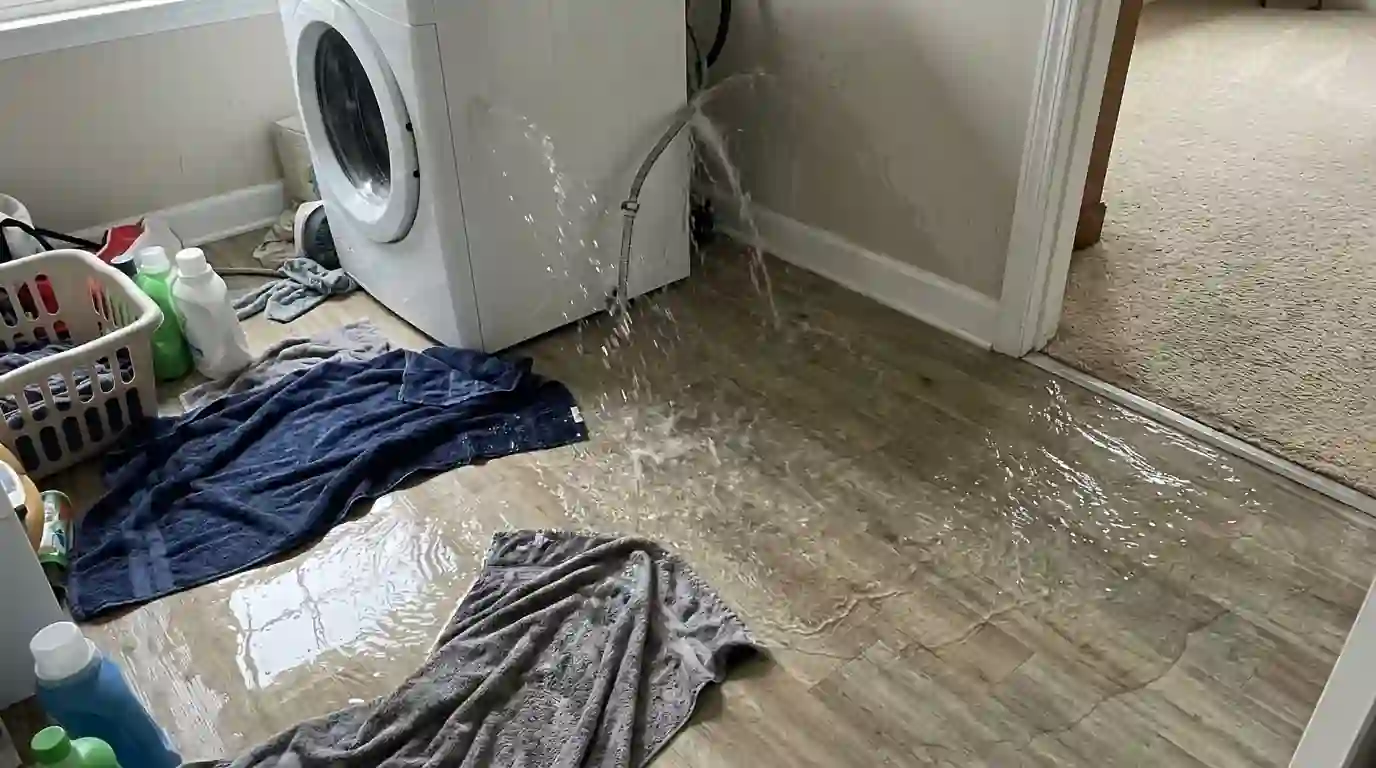
Entry doors leak at worn sweeps, gaps at the bottom of the jamb and thresholds that have pulled away from the floor. In heavy rain, especially with wind, water gets under the door and into the subfloor or onto the slab. Wood floors near entries cup, and carpet and pad stay wet at the door edge. We dry the floor and the bottom of the jamb, check whether the subfloor has softened, and point out the gap that needs sealing.
On the visit
What a window or door leak job includes
- Moisture readings below and beside the opening
- Thermal scan of the wall
- Inspection for failed caulk, weeps and thresholds
- Photos of the entry point
- Baseboard removal where needed
- Drywall and insulation removal if saturated
- Drying of wall, floor and pad
- Final dry readings
Local conditions
Storm-driven rain on the west side
Wind is what turns a tired window seal into a leak. El Reno has seen an EF5 on May 24, 2011, the record 2.6-mile-wide tornado near town on May 31, 2013 and an EF3 on May 25, 2019, and even ordinary spring storms out there drive rain sideways into the west and south walls of houses. When the same window leaks after every one of those storms, the wall cavity below it may never dry out between them, which is why we read past the visible stain.
Step by step
How a window or door leak job runs
- 01
Read the wall and floor
Meters and a thermal camera show how far water has spread below and beside the opening.
- 02
Find the entry point
We look for failed caulk, clogged weeps, worn thresholds and gaps at the frame.
- 03
Open what has to dry
Baseboards come off and, where needed, a strip of drywall is cut so the cavity can dry.
- 04
Dry
Air movers and dehumidifiers run until the wall and floor read dry.
- 05
Show you the fix
You get photos of the entry point for your window or door installer.
What you will notice
Signs a window or door is leaking into the wall
Damp carpet after storms
The same spot along one wall gets wet whenever it rains hard.
Stains at window corners
Brown staining at the bottom corners of the window frame.
Bubbling paint below the sill
Paint lifting or drywall softening under a window.
Water in the door track
Standing water in a sliding door track after rain.
Cupping near an entry
Wood floor boards rising at the edges near a door.
Straight answers
Questions about this job
No. We dry the damage and show you where the water gets in. A window or door installer makes the repair.
Leaks at windows and doors usually depend on wind direction. Rain driven against that side of the house finds the gap.
Sometimes, if the wall and floor are dry. If they've been wet over several storms, they need drying first so mold doesn't start inside.
Only if readings show the cavity is saturated. Often removing the baseboard is enough to dry it.
Damage from a storm that broke a window is often covered; repeated leaks from worn seals are usually treated as maintenance.
After the repair, the wall and floor should read dry and stay dry through the next hard rain. We can re-read it after a storm.