Short answer
Many Oklahoma City rooms with wet carpet and drywall reach dry readings in about three to five days of equipment time. Hardwood, plaster, concrete slabs and crawl spaces usually take longer, often a week or more. Drying is done when readings in the wet materials match the same materials in a dry part of the house.
Why there's no fixed number
Drying time depends on how much water got in, how long it sat, what it soaked into and the air around it. A supply line caught in an hour on carpet over a slab is a different job from a pipe that ran overnight into a plaster wall.
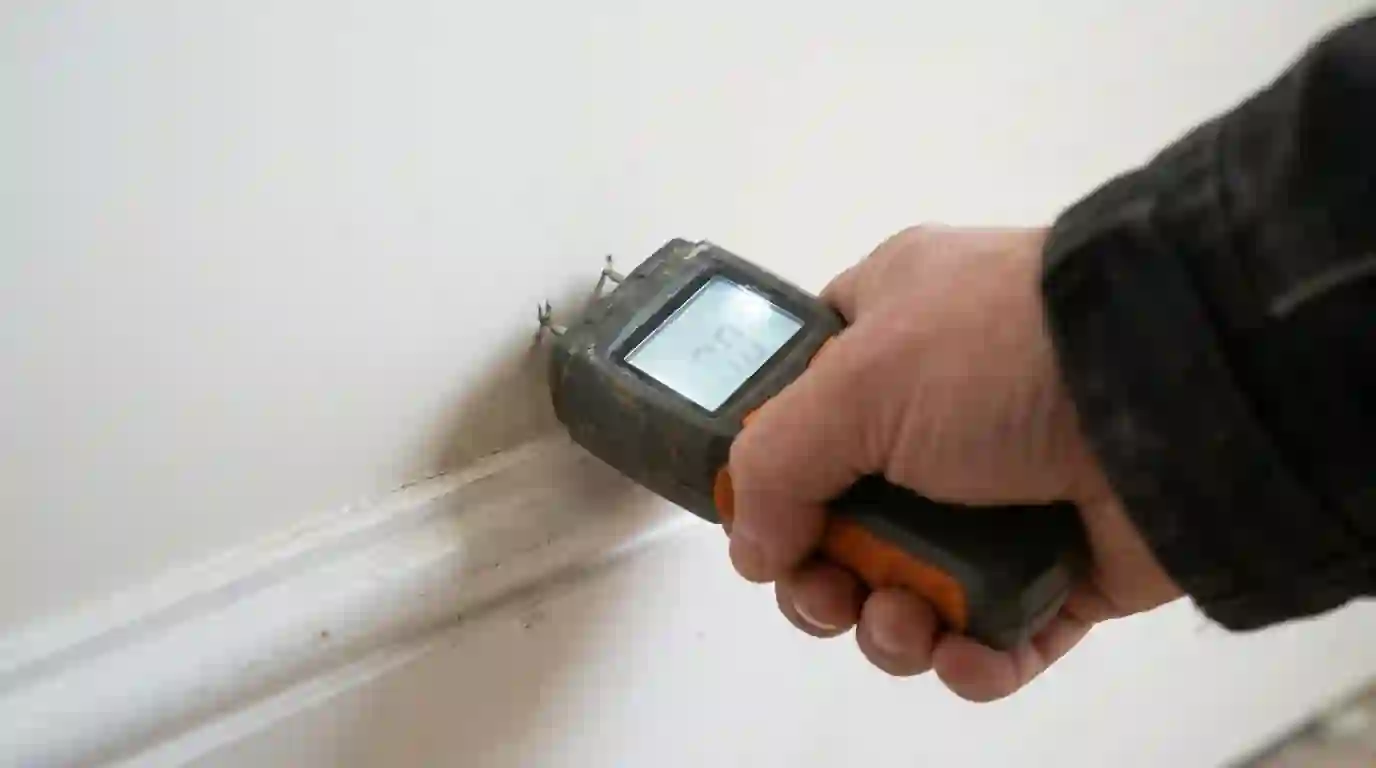
That's why good restoration crews don't promise a date on the first visit. They set dry targets from unaffected parts of your house, read the wet areas at each visit, and pull the equipment when the numbers match.
Typical timelines by material
These are common ranges, not promises. Your readings decide.
- Carpet and pad, floated or with pad replaced: often two to four days
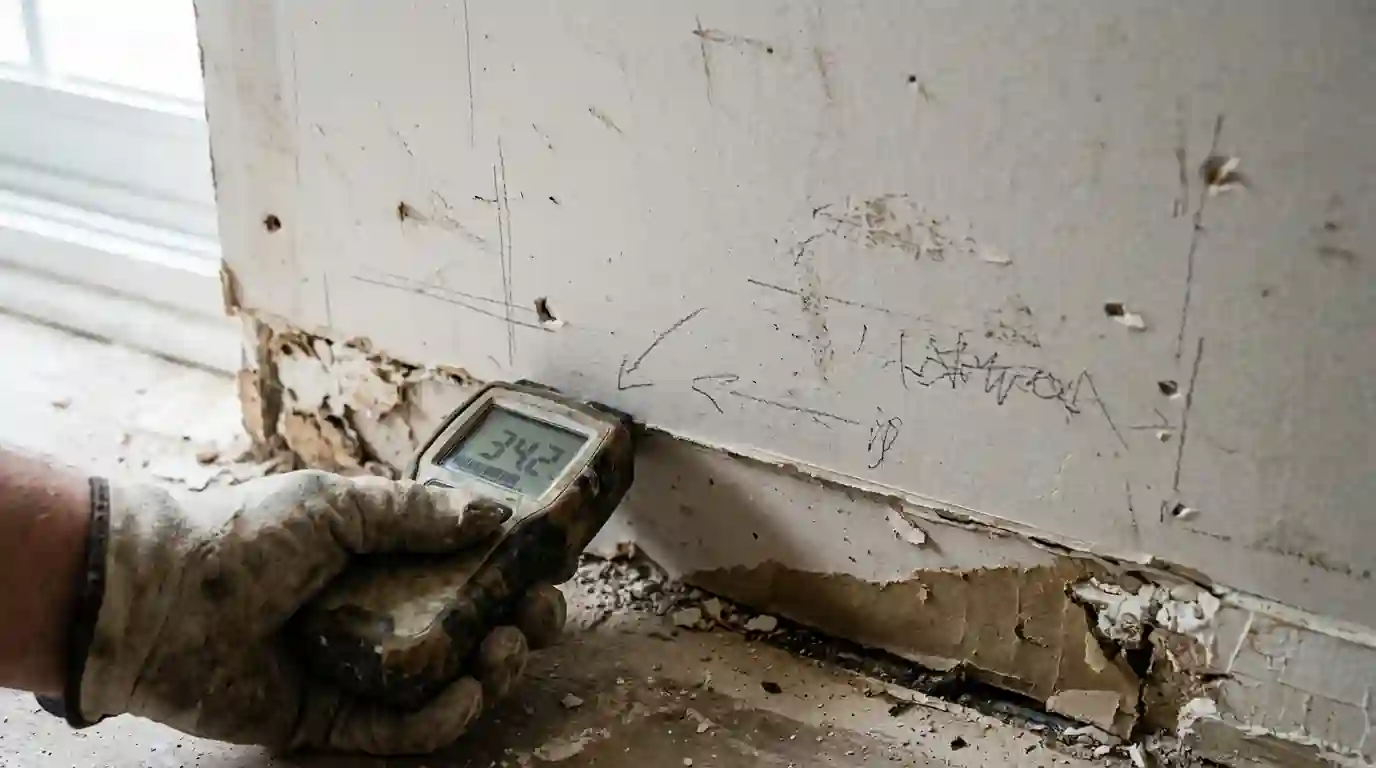
- Drywall with baseboards off or small cavity holes: often three to five days
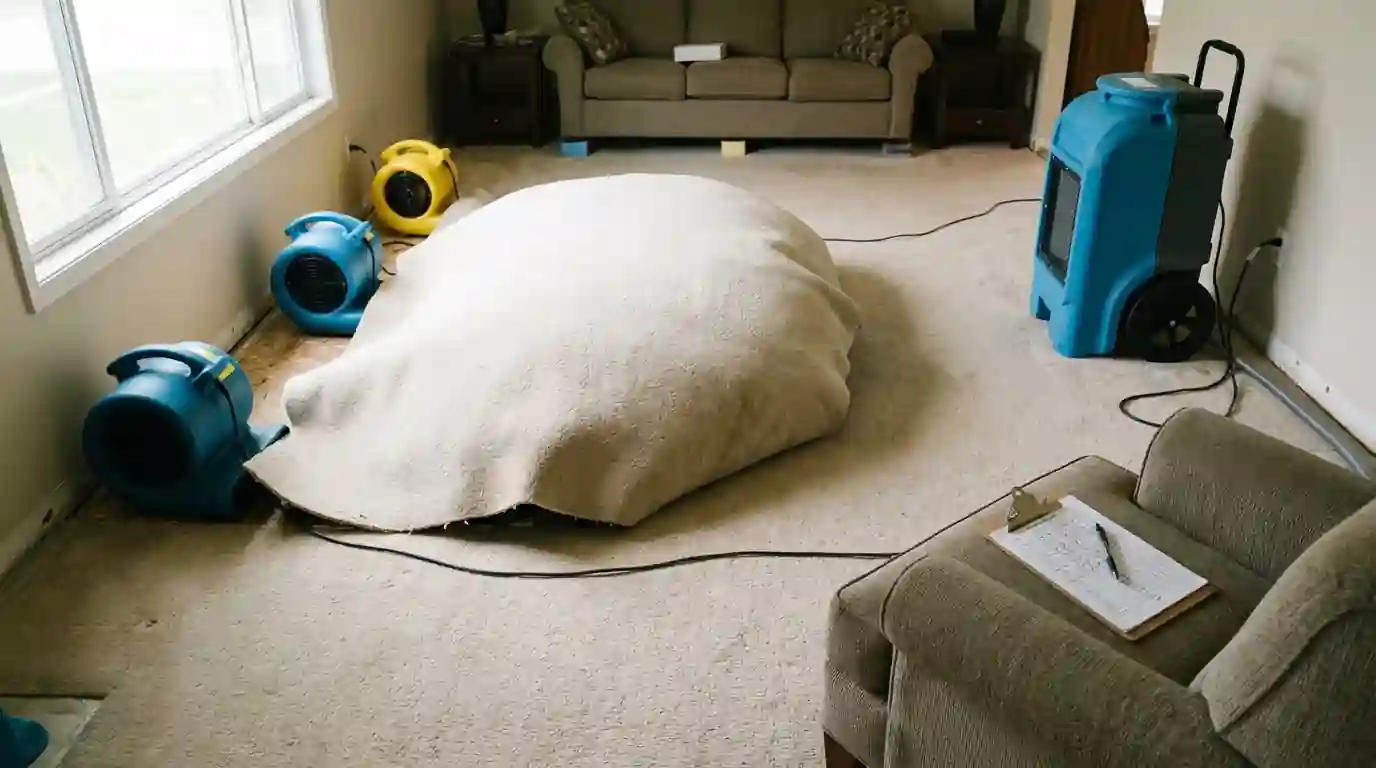
- Hardwood with drying mats: often one to two weeks
- Concrete slab after a heavy soak: often a week or more
- Plaster and masonry: slower than drywall, sometimes much slower
- Crawl space framing: several days after water and insulation are out
What slows drying in Oklahoma
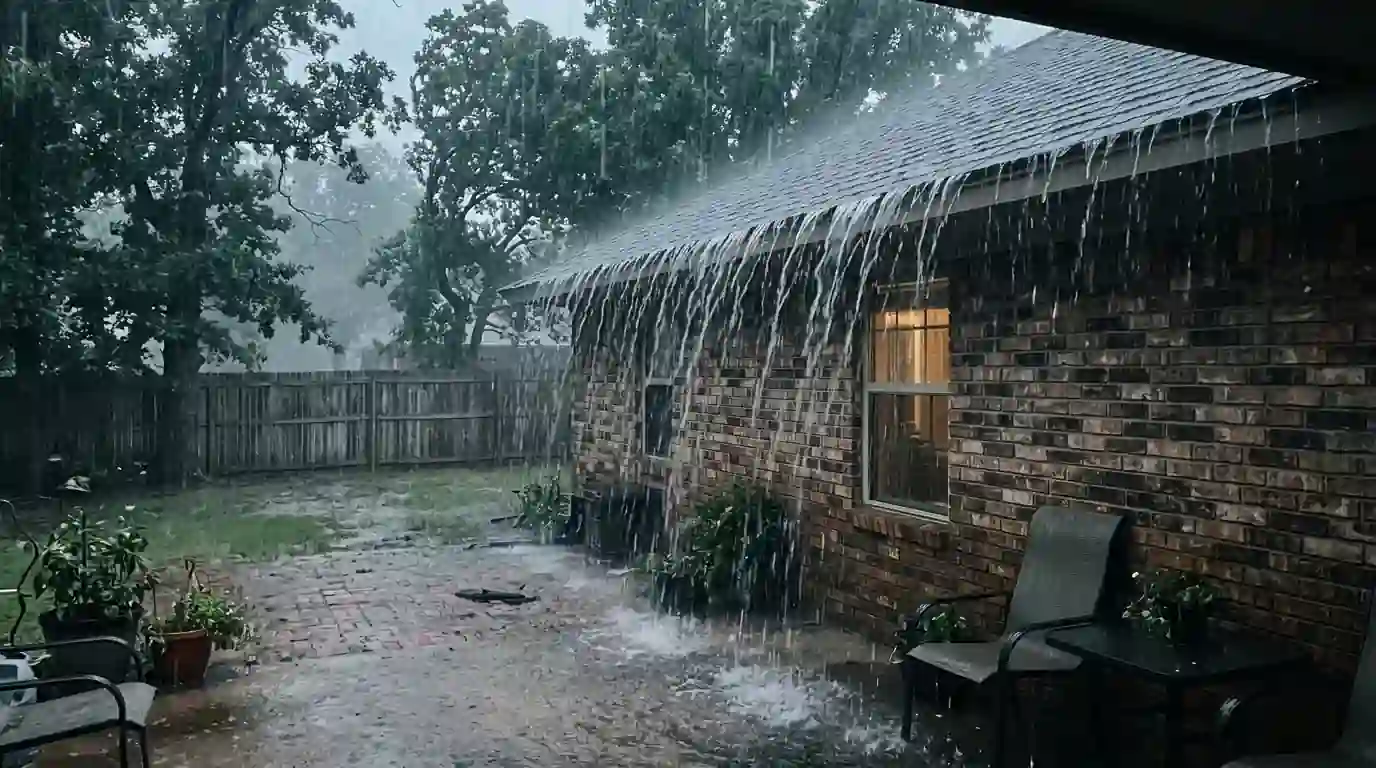
Cold is the big one. Dehumidifiers and evaporation both slow down in a cold house, which is why winter jobs after a freeze can take longer. After the January 2024 storm, central Oklahoma stayed below freezing for about four and a half days, and homes with burst pipes during cold snaps like that dry slowest unless the heat stays on.
Humid outdoor air slows things too, which is why crews keep windows closed and the house conditioned. And slabs, which most Oklahoma City houses sit on, give up water slowly no matter the season.
Water line, open now
Not sure if it's dry?
We'll read the walls and floors and show you the numbers.
What speeds it up
The biggest gains happen early. Every gallon pulled out by extraction is a gallon the dehumidifiers don't have to evaporate. Removing wet pad lets the slab dry directly. Taking baseboards off and venting wall cavities lets air reach the bottom plate.
At home, you help by keeping equipment running day and night, keeping the house closed and the thermostat at a normal setting, and keeping traffic off floated carpet.
How you know it's actually dry
Ask to see the readings. A good drying log shows the same spots read at each visit, next to dry reference readings from rooms the water never reached. When the wet areas match the references, the structure is dry.
Feeling dry isn't the same thing. Carpet can feel dry on top while the pad and slab underneath are still wet, and that's where the musty smell comes from a month later.
Signs drying has stalled
Drying usually makes steady progress for the first few days, then slows as the last moisture comes out of dense materials like the slab or framing. If readings stop moving, something is holding them up.
- The same spots read the same two visits in a row
- The dehumidifier is collecting little water while materials still read wet
- Windows or doors are being left open
- The heat or air conditioning was turned off
- Wet insulation or pad is still in place behind or under something
- A slow leak is still feeding the area
What the dehumidifier tells you
Restoration dehumidifiers pull water out of the air and pump it to a drain or sink through a hose. On the first day of a big job they can collect a surprising amount, and that number dropping is a good sign: there's less water left to remove.
If yours has a hose running to a sink or tub, leave it in place. If it has a tank, the crew will tell you whether and how to empty it. A unit that stops running or shows a full light should be reported, because drying stops when it does.
Living with the equipment
Air movers and dehumidifiers are loud, and they draw real power. Expect a steady hum day and night, warm air from the dehumidifiers, and a few extension cords run to separate circuits so breakers don't trip. If a breaker does trip, reset it and call; the equipment layout may need adjusting.
Keep pets and small children away from the units and cords, and don't move the equipment to a different room without asking. Each unit is placed where the readings said it was needed, and moving it can leave a wet spot behind. If you need a room back for a night, tell the crew and they'll rearrange around it.
Why ending early costs more
Pulling equipment a day early to save rental time is a false economy. Walls closed over damp framing, flooring laid over a damp slab and carpet re-stretched over damp pad are the most common reasons for mold and odor calls weeks later, and those jobs cost more than the extra day would have.