Short answer
Signs of a slab leak in an Oklahoma City home include a warm spot on the floor, damp carpet with no spill nearby, a water meter that keeps moving with every fixture off, a rising water bill and the sound of running water under the floor. A plumber finds and fixes the line; the floor and slab then need drying.
What a slab leak is
Many Oklahoma City houses are built on a concrete slab, with water supply and drain lines running under or through it. A slab leak is one of those lines leaking below the floor, where nobody can see it.
Hot water lines often show up first, because the leak warms the floor above it. Drain line leaks are quieter and slower, and show up as smells, slow drains or damp spots.
Why the clay matters
The Oklahoma Geological Survey notes that more than 75 percent of the state sits on bedrock that can produce expansive soils, and clays like montmorillonite can swell to 1.5 to 2 times their dry volume when wet. Saturation from rain, lawn watering or sewer leakage can damage foundations and utility lines.
That cuts both ways. Seasonal shrink and swell can stress lines under a slab, and a leak that soaks the clay around it can make the soil move more. Finding and fixing a slab leak quickly matters for the floor and for what's under it.
Water line, open now
Floor damp with no spill?
Once the line is fixed, we'll dry the slab and confirm it before new flooring.
Signs to watch for
None of these proves a slab leak on its own, but two or three together are worth a call to a plumber.
- A warm spot on tile or carpet
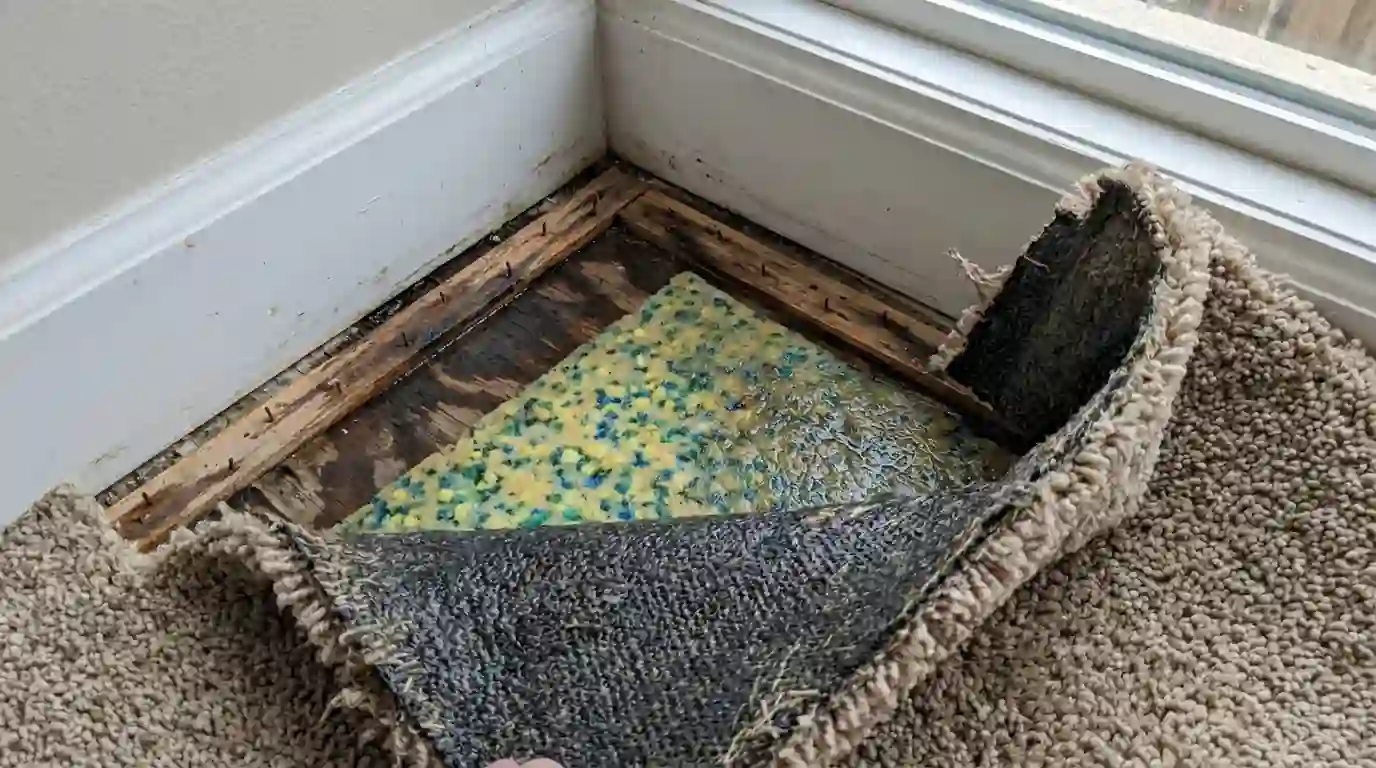
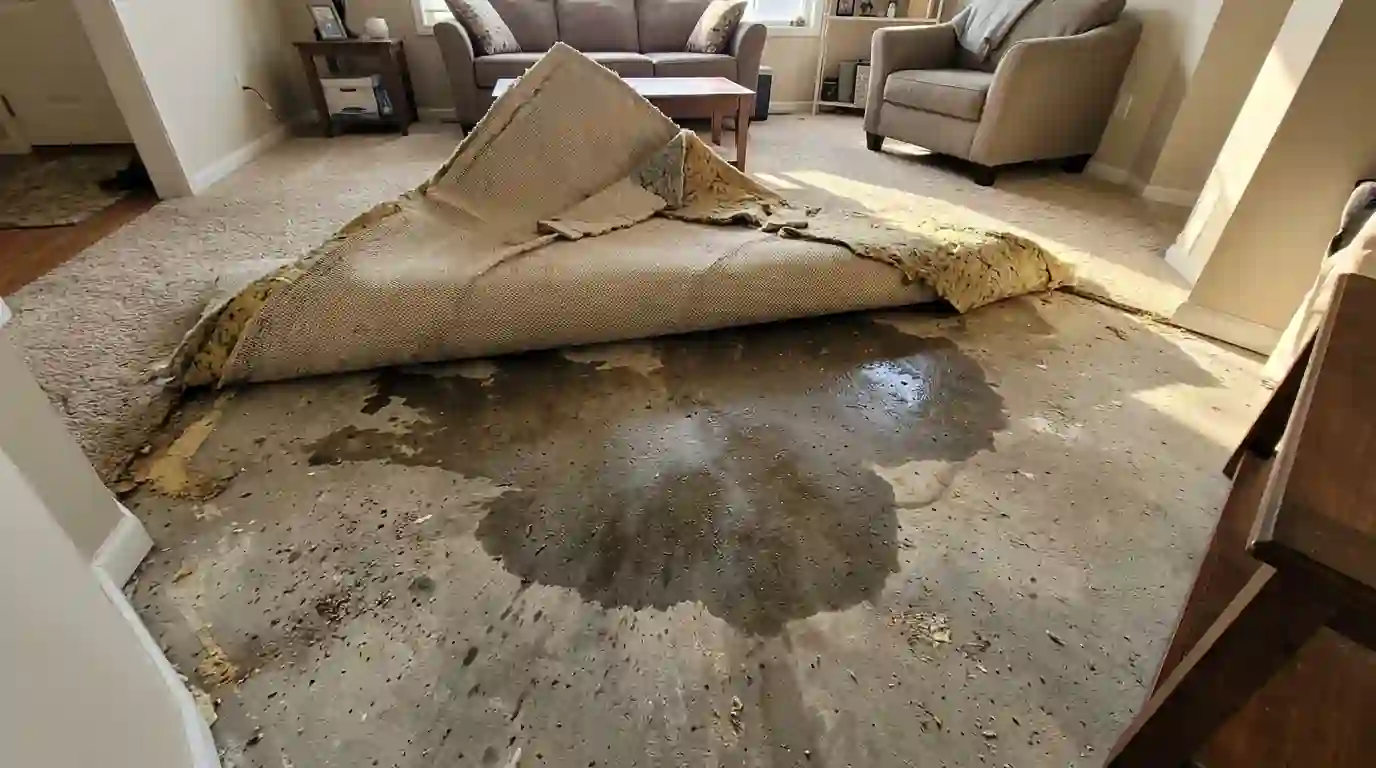
- Damp carpet in the middle of a room, away from fixtures
- The water meter's leak indicator moving with everything off
- A water bill climbing with no change in habits
- Running water sounds under the floor
- New cracks in tile or a musty smell with no visible source
How to check your meter
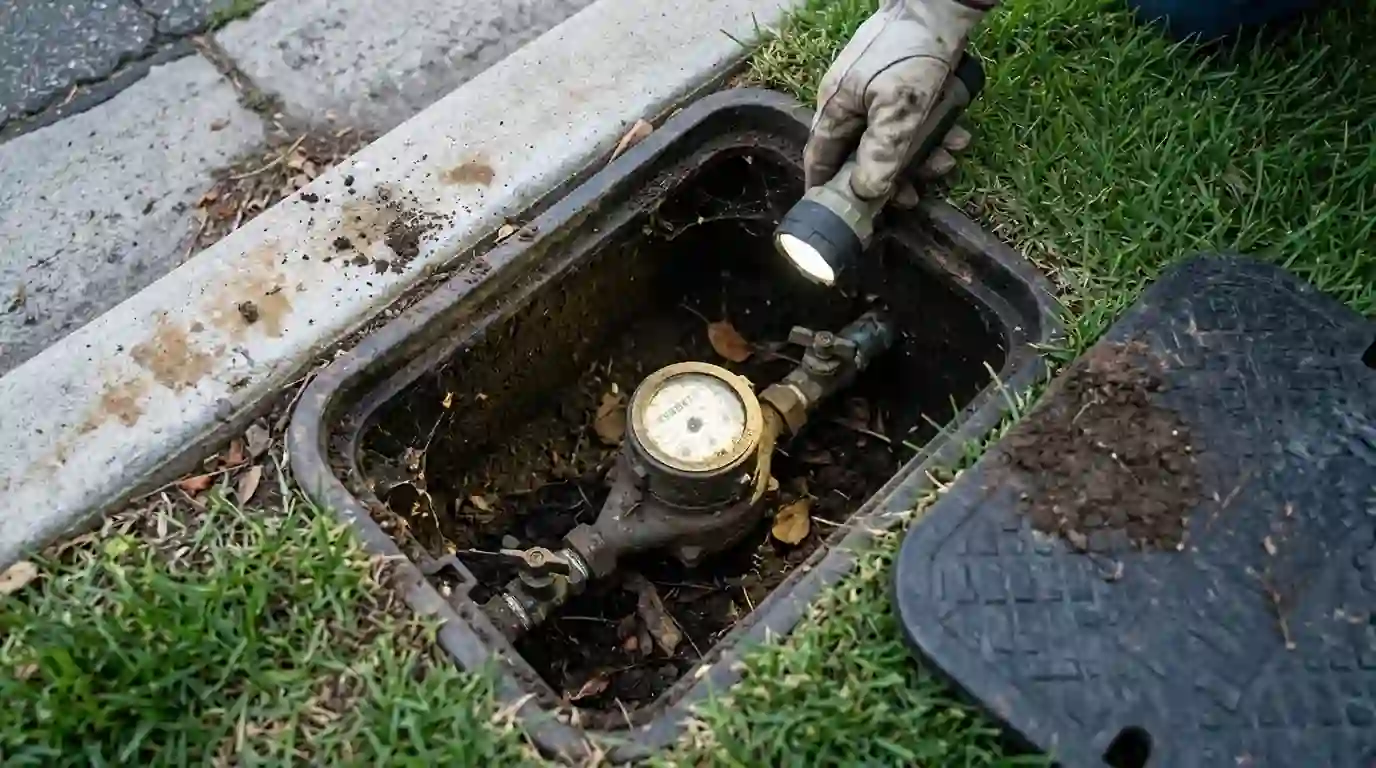
Turn off every faucet, appliance and the irrigation system, and make sure nobody uses water. Then look at the water meter, usually in a box near the street. Most meters have a small dial or triangle that spins when water is flowing. If it moves with everything off, water is going somewhere.
Close the main shutoff and check again. If the meter stops, the leak is inside the house side of the main. A plumber can narrow it down from there.
Hot line or cold line?
Which line is leaking changes the clues. A hot water leak under the slab often makes a warm spot on the floor, keeps the water heater running more than usual and can make the gas or electric bill climb along with the water bill.
A cold water leak gives fewer clues: the meter keeps moving, the bill rises, and eventually carpet or flooring gets damp somewhere unexpected. Drain line leaks under the slab usually don't show on the meter at all, which is why slow drains, sewer smells and damp spots near bathrooms are worth mentioning to the plumber.
Repair options and what they mean for your floor
Plumbers usually offer either a spot repair, opening the slab at the leak to fix that section of pipe, or a reroute that abandons the old line and runs a new one through walls or the attic. A spot repair means a hole in the floor, which usually means lifting flooring around it. A reroute usually avoids the floor but involves holes in walls and ceilings.
Either way, the water that already came up is still in the slab and the flooring. Ask which option the plumber recommends, then plan the drying and flooring around it.
After the plumber fixes it
Plumbers often reroute a leaking line through walls or the attic rather than breaking the slab, but either way the water that already came up stays behind. Carpet and pad over the area need to be lifted, and the slab has to dry before new flooring goes down.
Concrete gives up water slowly, so slab drying often takes a week or more with dehumidifiers and drying mats. The flooring installer should see dry readings before laying anything over it.
Slab leak, or something else?
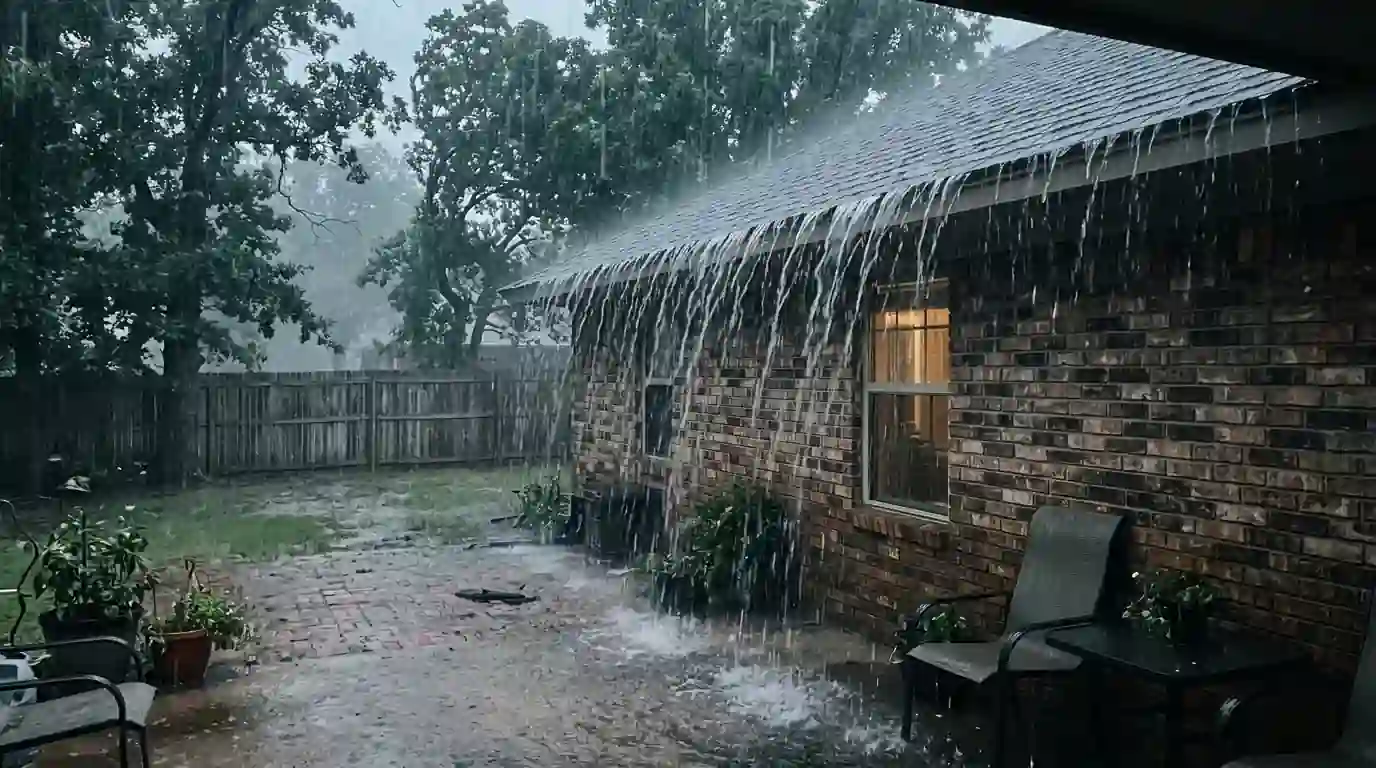
Damp carpet on a slab isn't always a slab leak. Water heater pans, AC condensate lines in a closet, a leaking shower pan or a supply line inside a wall can all send water across the slab from the side. Rain getting under an exterior door or through a crack where the slab meets the wall can do the same after storms.
That's why the meter test matters. If the meter is still with everything off, the water is probably coming from something that only runs sometimes, like a drain, the AC or the weather, and the moisture readings help trace it.
Insurance and slab leaks
Many homeowner policies cover water damage from a sudden slab leak and sometimes the cost of accessing the line, but not the repair of the pipe itself. Policies vary, so check yours, and keep the plumber's report and photos of the wet area.