Short answer
Mold can begin growing on damp drywall, wood and carpet backing within a day or two in a warm house, which is why fast extraction and drying matter more than any treatment. If materials are dried to normal readings quickly, mold rarely gets started. If they stay wet, growth inside walls and under floors is likely.
Why speed matters more than spray
Mold spores are everywhere, indoors and out. They only become a problem when they land on something that stays damp long enough to grow. That's why mold prevention after a leak is really moisture control: get the water out and the materials dry before growth starts.
Spraying a product on wet drywall doesn't change that. If the wall stays wet, mold grows inside it whatever was sprayed on the surface.
Where mold starts after water damage
Mold starts where water sat longest and air moved least.
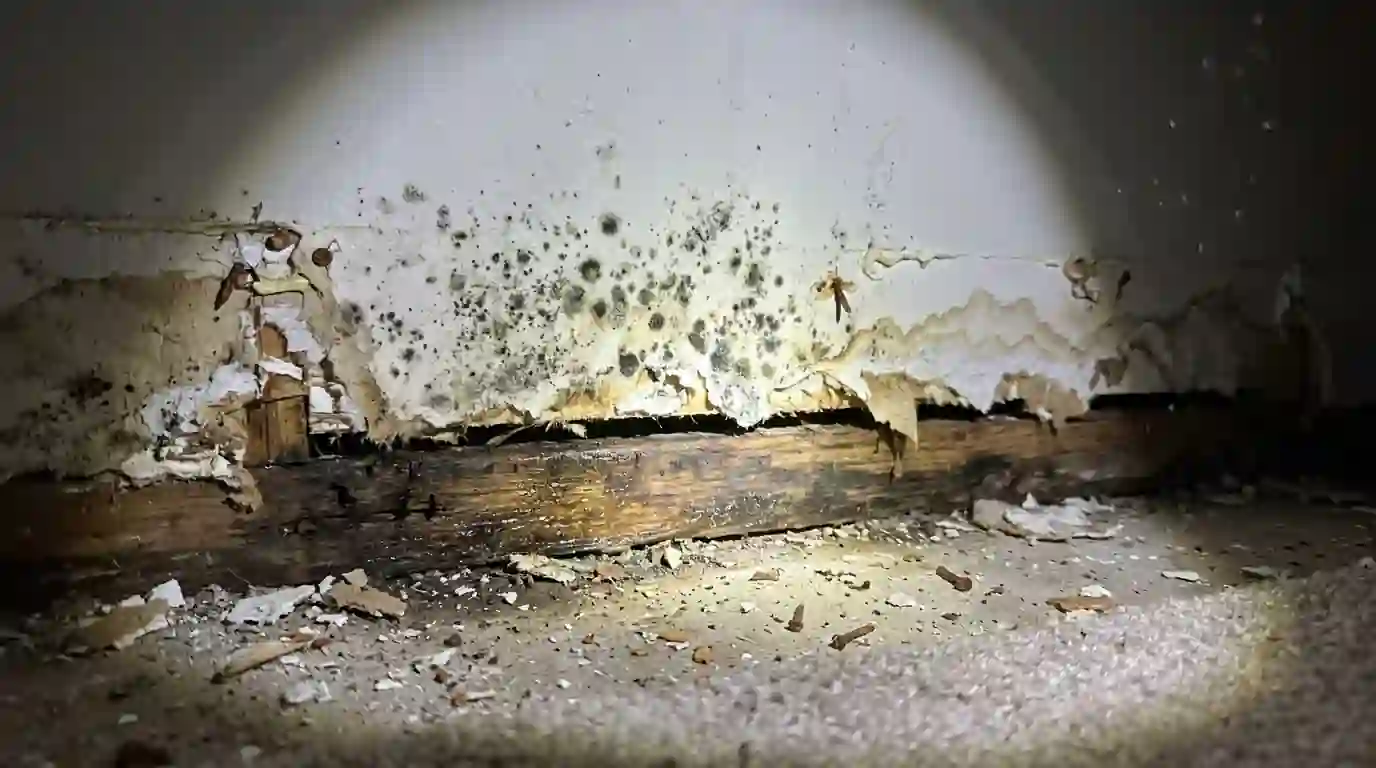
- The bottom of drywall and the bottom plate behind it
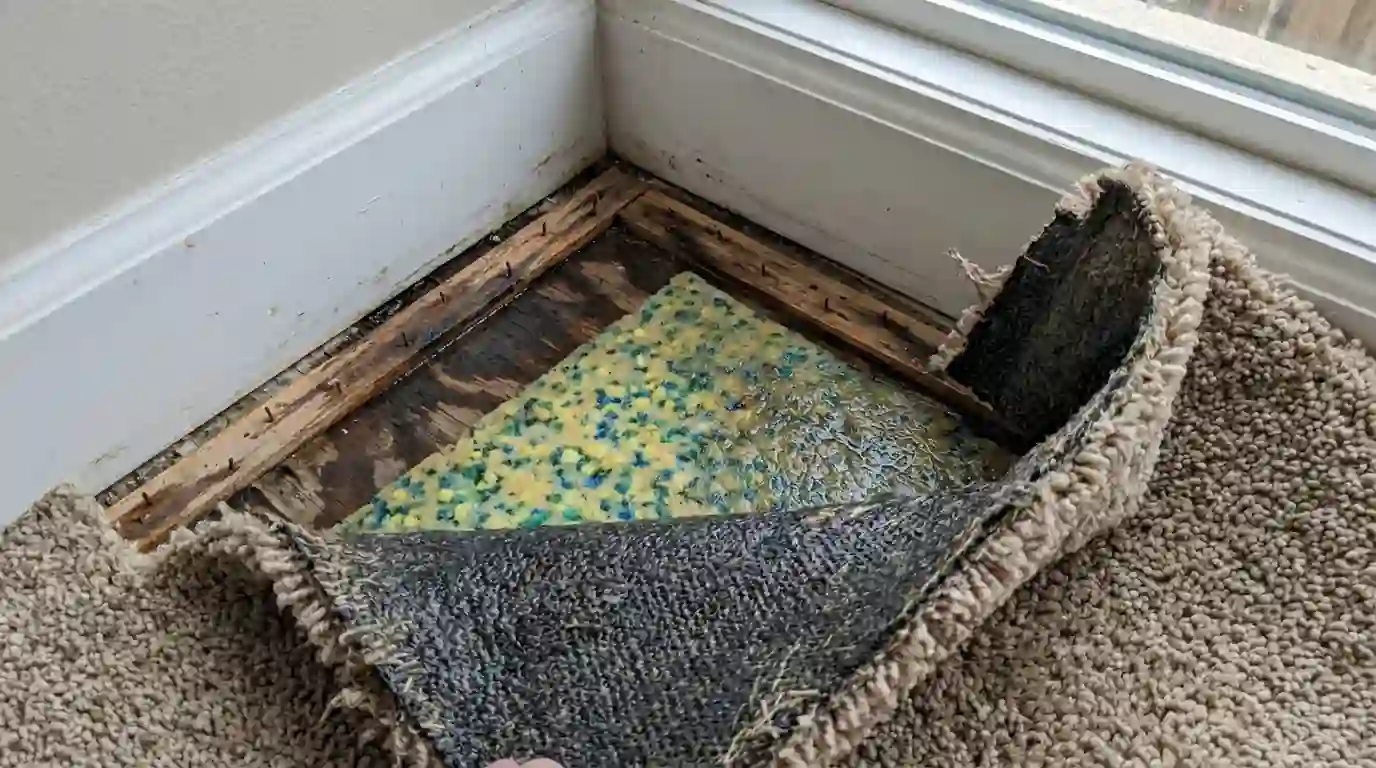
- The back of carpet pad and the tack strip
- Under cabinets and behind toilets
- Inside wall cavities on outside walls
- Attic insulation and roof decking after roof leaks
- Crawl space joists and the underside of subfloors
Signs it has already started
A musty, earthy smell is usually the first sign, often before anything is visible. Next comes speckling or staining at the bottom of a wall, behind a baseboard, or on the back of carpet that's lifted.
Paint that bubbles or peels on a wall that got wet, and baseboards that swelled, are signs the wall stayed damp. A smell when the air conditioning starts can mean growth near the air handler.
Water line, open now
Smell something musty?
We'll find the moisture behind it first.
What to do if you see or smell it
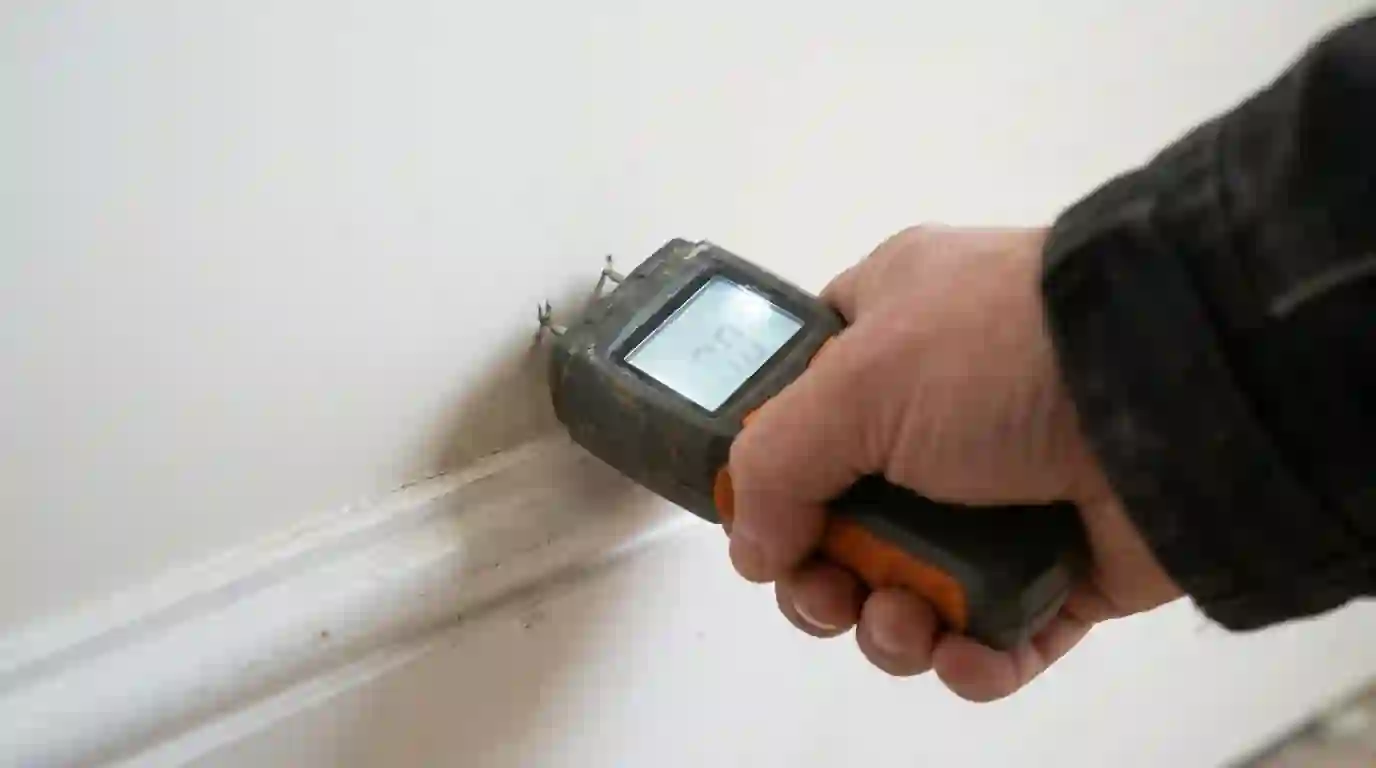
Find the moisture first. A meter will show whether the wall or floor is still wet. If it is, the water source needs fixing and the area needs drying, or the mold will come back after any cleanup.
Small spots on hard, non-porous surfaces like tile and glass can be cleaned by a homeowner. Growth on drywall, carpet, insulation or wood, or anything larger than a doormat, is better handled with containment so spores don't spread when the material is removed.
How remediation works
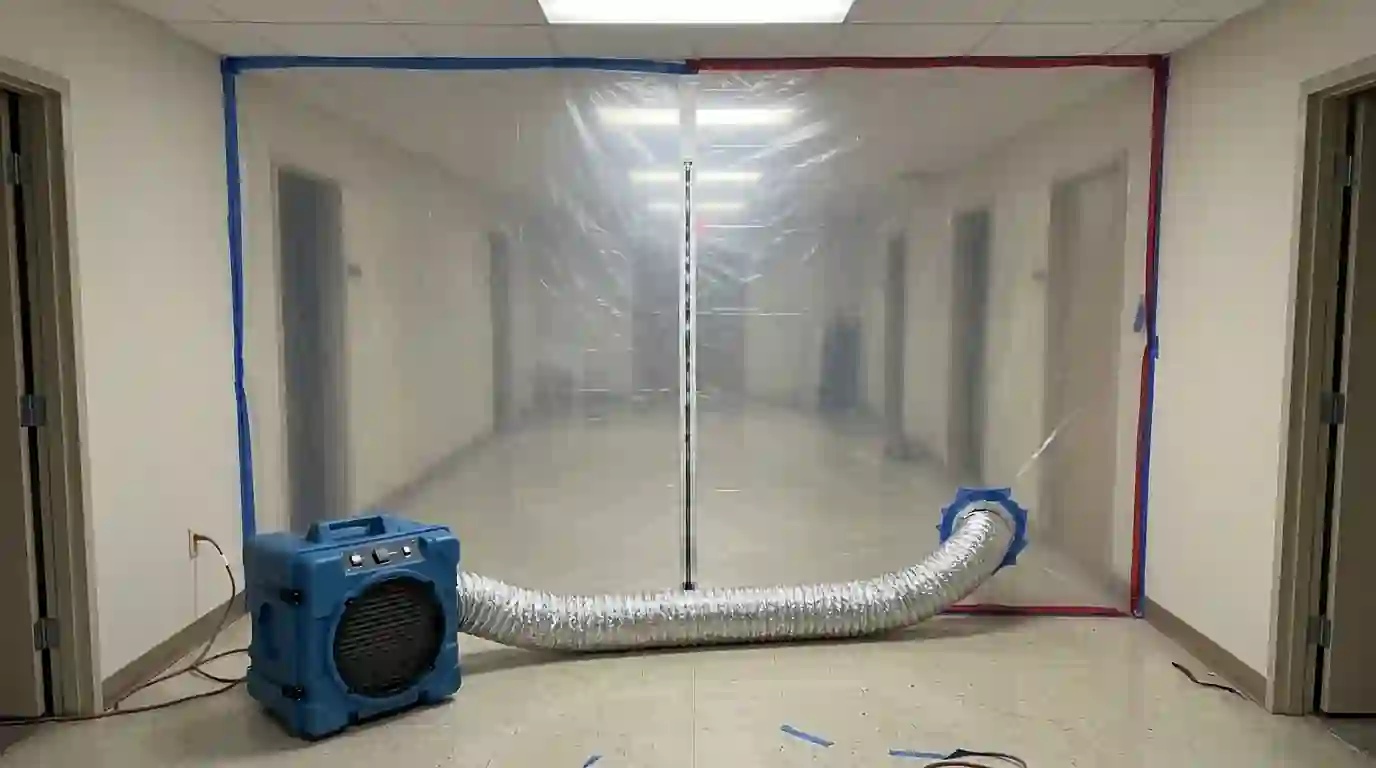
Remediation means containing the area with plastic and negative air, removing porous materials the mold has grown into, cleaning the framing and hard surfaces, and drying everything before the wall is closed up. Color doesn't tell you how risky a particular mold is; any significant growth indoors should be removed and the moisture fixed.
Testing is useful when there's a smell and nothing visible, or to confirm an area is clear after remediation. When mold is visible and the cause is known, removal comes first.
Closets, furniture and other dead-air spots
Mold often shows up first in places air doesn't move: the back of a closet on an outside wall, behind a dresser pushed against a damp wall, under a bed, or inside a sink cabinet. After a leak, those spots stay damp longer than open floor.
During drying, pull furniture a few inches away from walls, leave closet doors open and keep cabinet doors open under sinks. After drying, it's worth checking those spots again in a week or two, especially in an Oklahoma summer when the air conditioning runs hard and condensation adds its own moisture.
Who to ask about health concerns
We can find moisture and remove mold, but we're not doctors. People with asthma, allergies or a weakened immune system can be more sensitive to mold, and anyone with symptoms they think are related should talk to their own doctor.
If someone in the house is sensitive, tell the crew before work starts. Containment, air scrubbing and keeping that person away from the work area can all be planned around it.
What a mold check after a leak looks like
A useful check starts with moisture, not mold. Meters and a thermal camera show which walls, floors and cabinets are still damp around the old leak. Baseboards may come off in suspect spots so the bottom of the drywall and the plate behind it can be seen.
Air or surface samples are added when there's a smell and nothing visible, or when you need a record, such as before selling the house. The result should tell you what was found, where, and whether anything needs removing, in plain language rather than a page of lab codes.
Keeping it from coming back
The same rule applies after remediation as before: dry and stay dry. Fix the leak, keep humidity in check, and don't close walls or lay flooring until readings say the area is dry. In Oklahoma summers, keeping the air conditioning running and the condensate line clear also matters.