Short answer
An attic AC drain pan overflows in Oklahoma City when the condensate line clogs, usually with algae, or the pan itself rusts or cracks, and water spills onto the ceiling drywall below. Switch the system off at the thermostat, put a bucket under any drip, and have the line cleared and the ceiling and insulation dried.
Why attic units overflow
An air conditioner pulls water out of the air as it cools, and that condensate drains through a small line to the outside or a drain. Over a cooling season, algae and debris build up inside the line until it clogs, and water backs up into the pan under the coil.
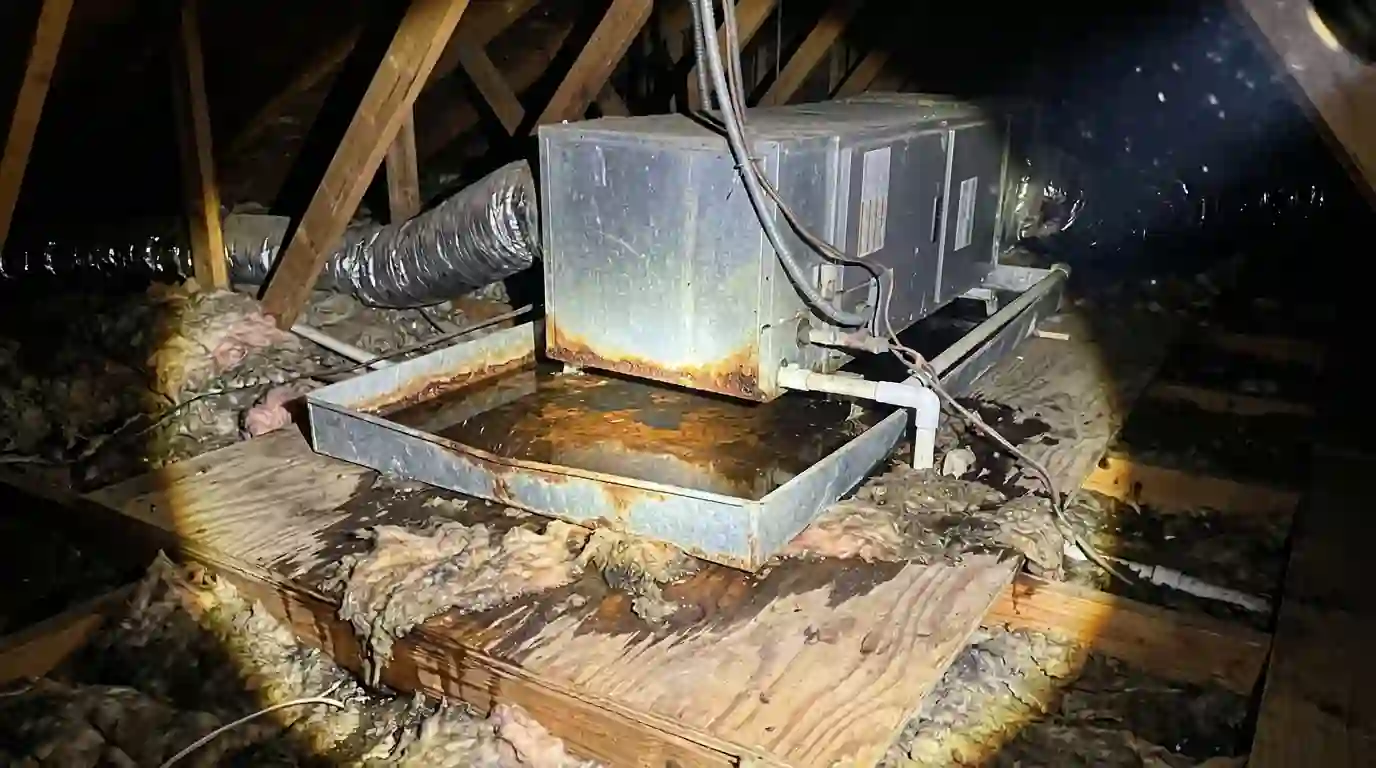
Many attic units sit in a secondary pan as a backup. When that pan is rusted, cracked or its own drain is blocked, the water has nowhere to go but the ceiling.
Why Oklahoma summers make it worse
Oklahoma City's July and August run hot and dry, after a stormy spring, and air conditioners run hard for months. A condensate line that started the season clean can be clogged by late summer. Attic heat also wears on plastic pans and fittings over the years.
That's why most overflow calls come in mid to late summer, not when the system first starts in spring.
Signs on the ceiling
Overflow shows up below the air handler before you'd ever see it in the attic.
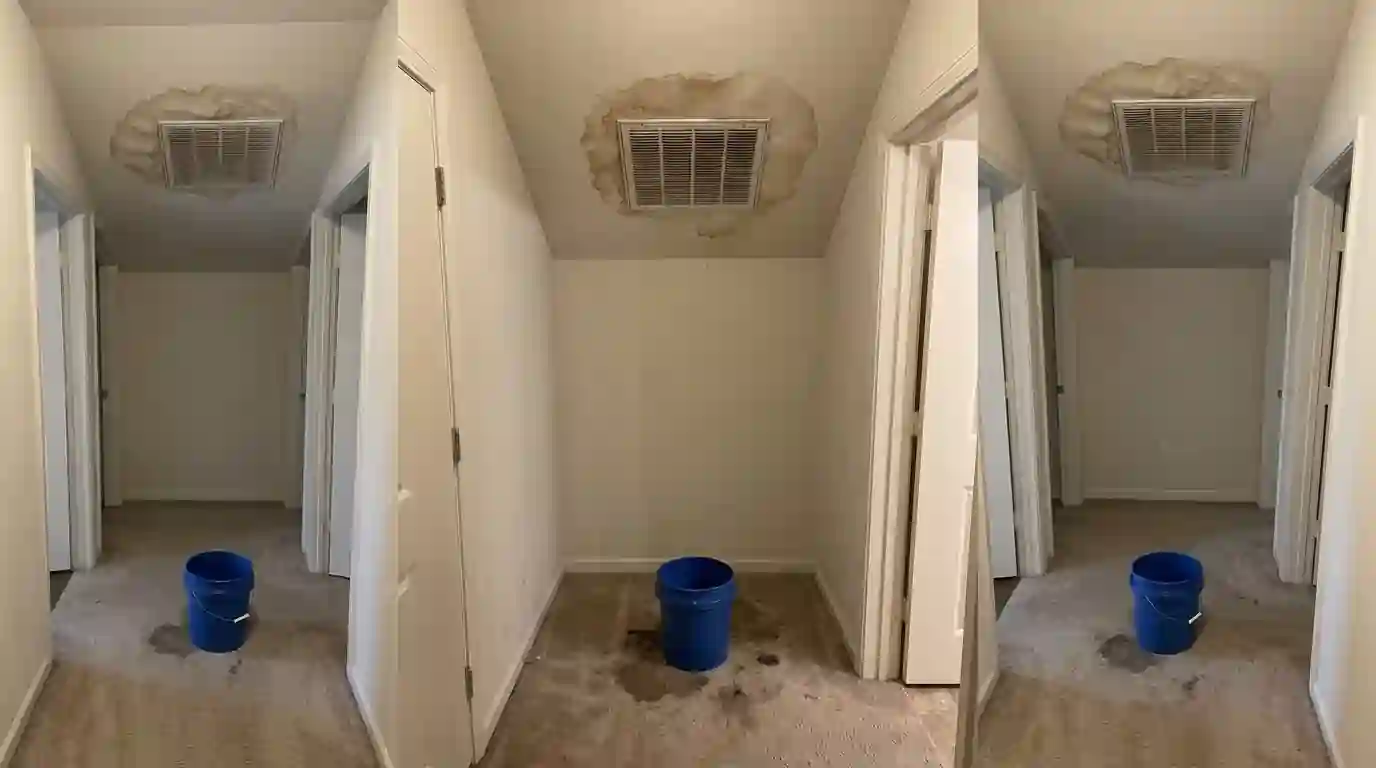
- Water dripping from a supply vent
- A stain spreading on the ceiling of a hall or closet
- A sagging or soft spot in the ceiling drywall
- The AC shutting itself off, which can mean a float switch tripped
- A musty smell when the system starts
What to do first
Turn the system off at the thermostat so it stops making condensate. Put a bucket and a tarp under any drip and keep people out from under a sagging spot.
If you can safely get into the attic with a flashlight, look at the pan. Standing water in it confirms the overflow. Don't step off the joists or the walkway; ceiling drywall won't hold your weight.
Water line, open now
Water coming through a vent?
Turn the AC off and call. We'll dry the ceiling while the line gets cleared.
Who fixes what
Your HVAC company clears the condensate line, checks the pan and float switch, and fixes any cause like a frozen coil. The water damage is the other half: relieving trapped water in the ceiling, removing wet insulation around the unit, drying the drywall from above and below, and repairing the ceiling once it's dry.
Doing both the same day keeps the ceiling from staying wet while the system is down.
Float switches, explained
A float switch is a small sensor in the drain pan or on the condensate line. When water rises to a certain level, it cuts power to the air conditioner so it stops making condensate before the pan overflows. When it works, your first clue is an AC that won't cool rather than a wet ceiling.
If your air conditioner shuts off on a hot day and the pan is full, the float switch has done its job. The fix is clearing the drain, not bypassing the switch. Ask your HVAC company to test it at the next tune-up.
How the ceiling gets put back
Once the ceiling and the insulation above it are dry, a stain that didn't sag can usually be sealed with a stain-blocking primer and painted. Drywall that sagged or softened is cut out to the nearest framing and replaced.
New insulation goes in from above before the patch is finished, and the texture is matched so the repair blends in. Repairs wait for dry readings; closing up a damp ceiling brings the stain and the smell back.
When the overflow went on for weeks
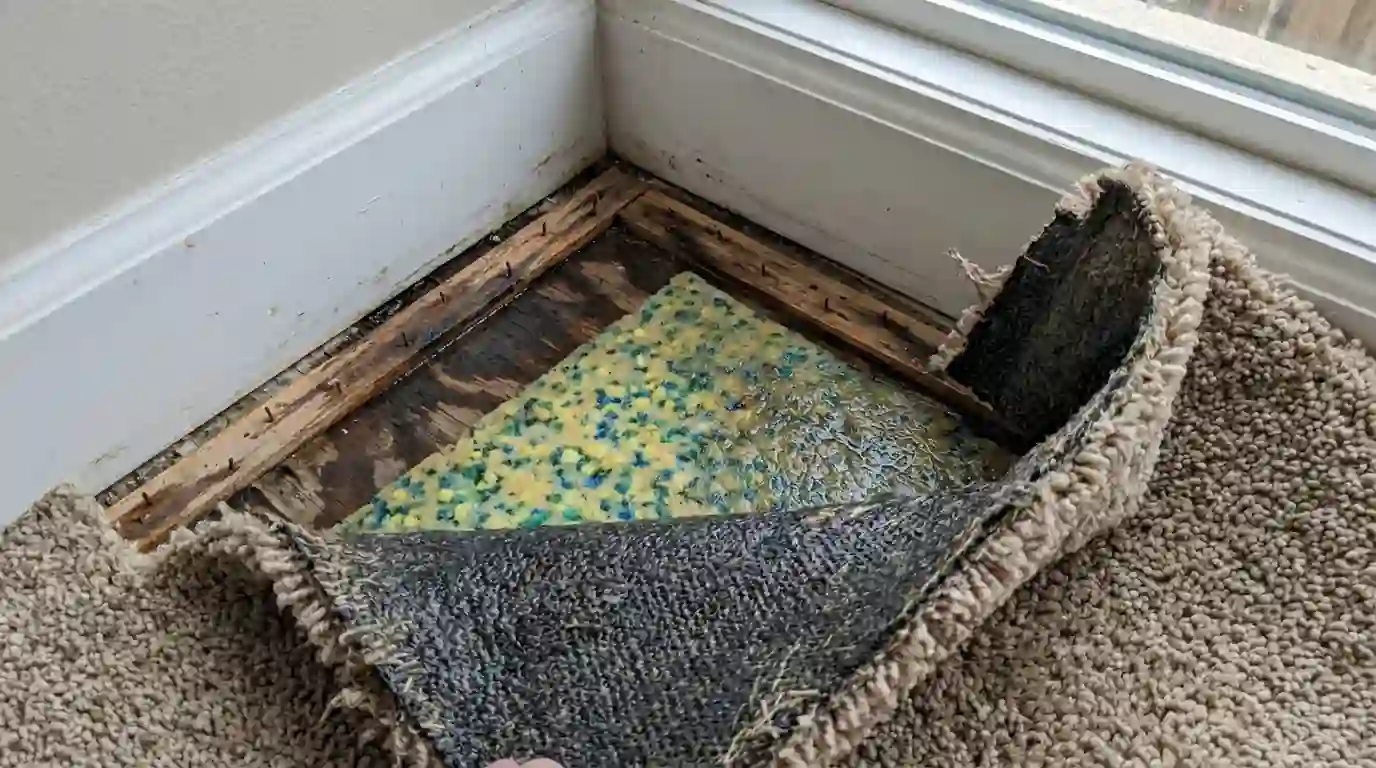
Not every overflow is sudden. A pan that drips slowly through a hairline crack can soak the ceiling drywall and the insulation for weeks before a stain shows below. By then the joists and the top of the drywall may have darkened, and mold may have started in the insulation.
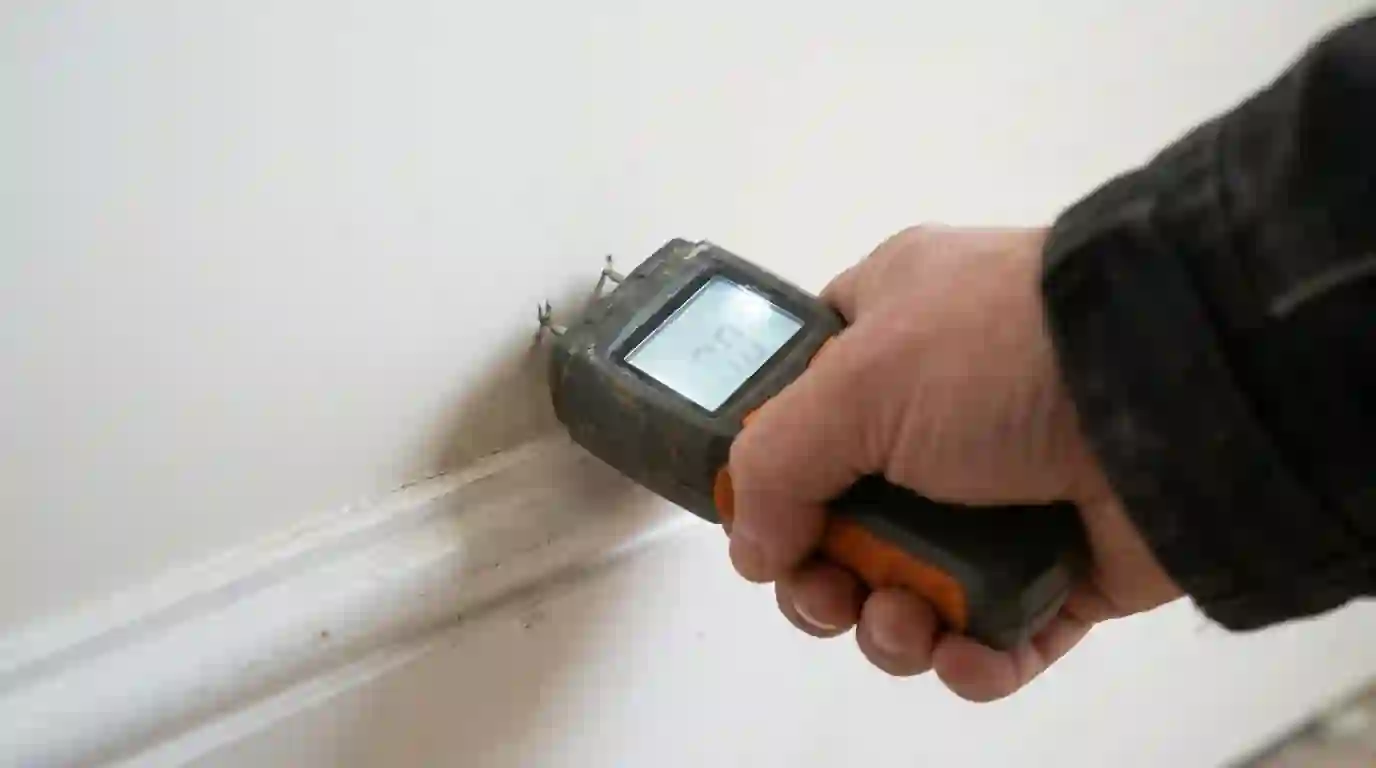
Those jobs take more removal: wet insulation is bagged out, stained drywall is cut out, and the joists and decking are cleaned and dried before the ceiling is replaced. Insurers also tend to treat long-running leaks differently from sudden ones, so photos of the pan and the staining matter.
Preventing the next one
Have the condensate line flushed at every tune-up, and ask whether your attic unit has a working float switch that shuts the system off before the pan overflows. Replace a rusted secondary pan before it fails. Changing filters on schedule also helps prevent the coil freeze-ups that dump a lot of water at once.