Short answer
In Oklahoma City's storm season, which runs from March through June, water usually gets into homes through hail-damaged roofs and flashing, wind-driven rain at windows and doors, runoff against the slab, and flooded storm shelters. After a storm, check ceilings, the attic, carpet along outside walls and your shelter.
A season, not a single storm
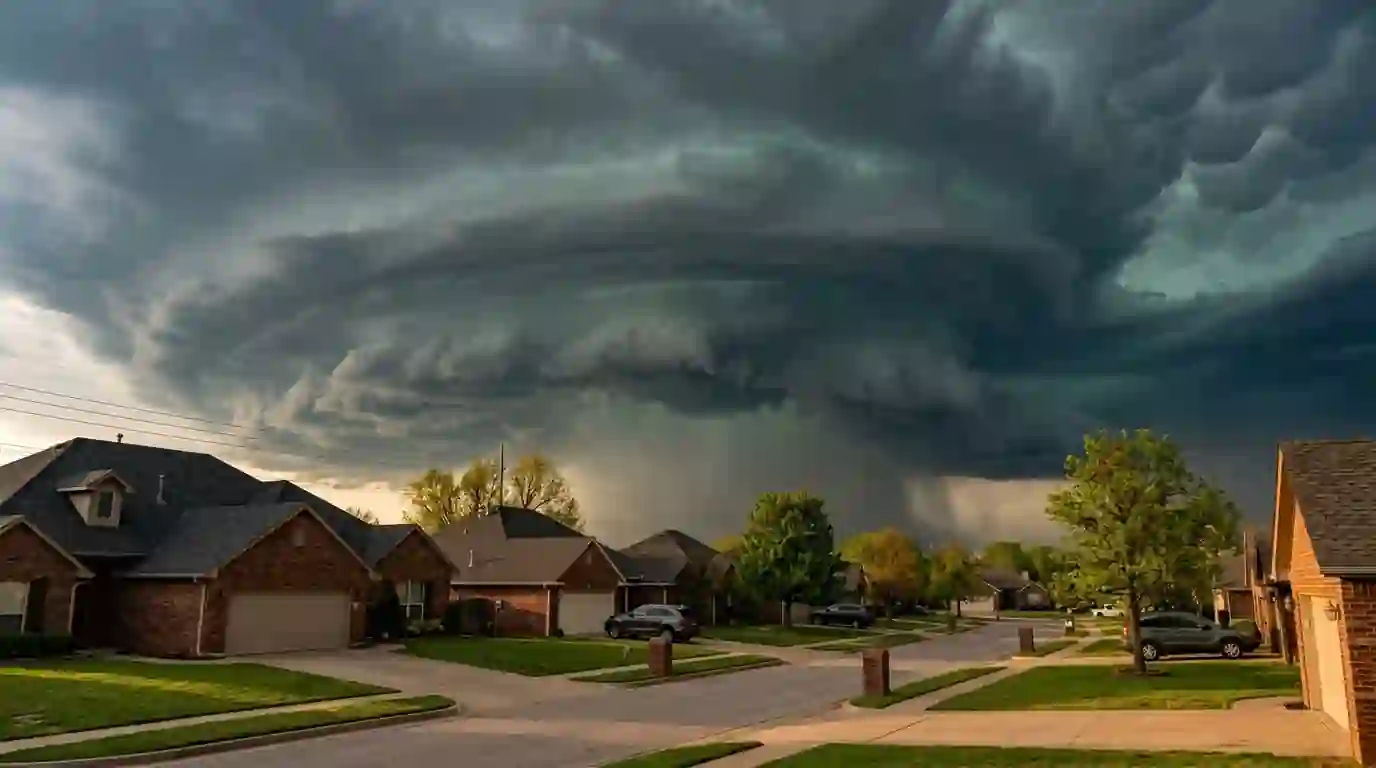
Oklahoma City is one of the most tornado-prone major cities in the world, with an active severe weather season from March through June that peaks in April and May. Tornadoes get the headlines, but most storm water damage comes from hail, straight-line wind and heavy rain.
Heavy rain can pile up fast. In May 2015 the city recorded 19.48 inches of rain, its wettest month on record, against a May average of about 4.65 inches. The city also sees a second rainy stretch in September and October.
Through the roof
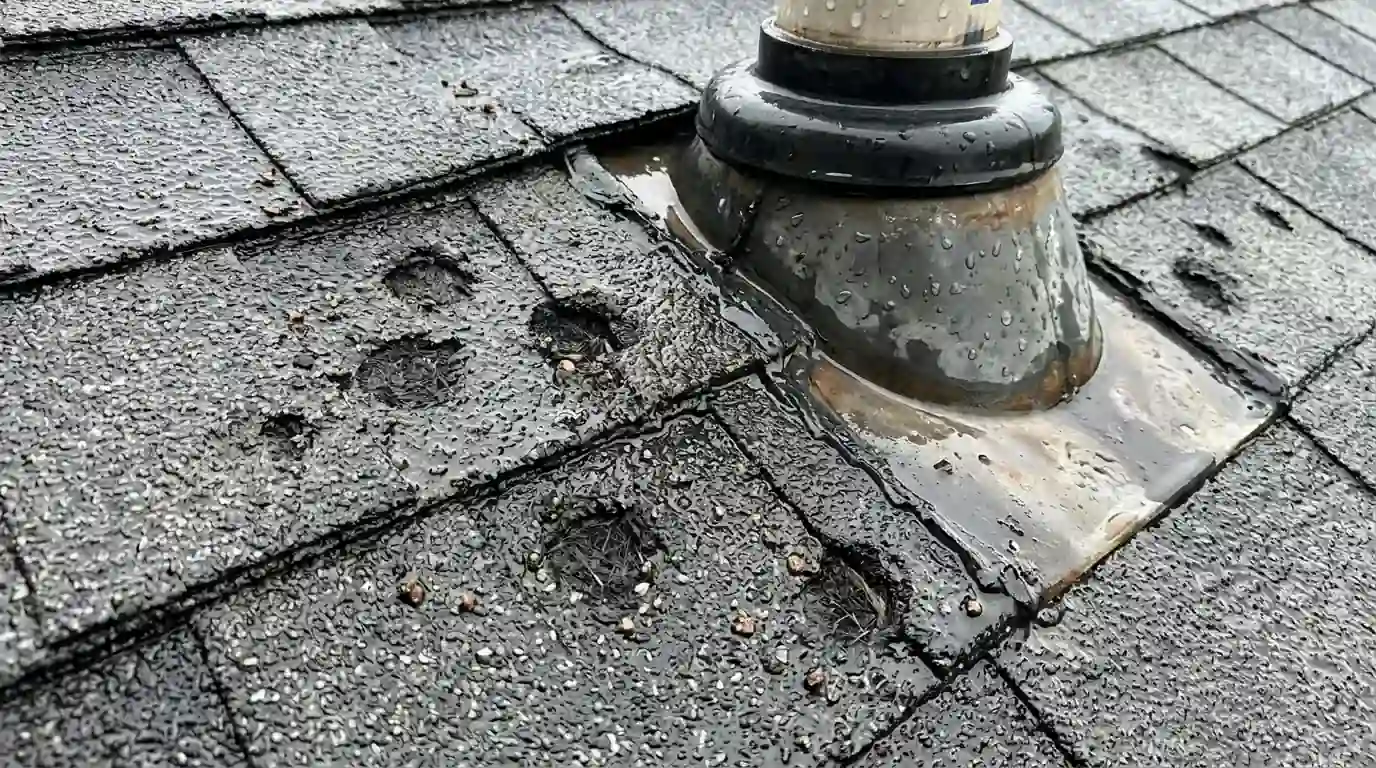
Hail cracks shingles and knocks off granules, and wind lifts shingles and flashing. The damage often doesn't leak until the next hard rain, sometimes weeks later, when water gets under a cracked shingle, around a vent boot or along a chimney flashing.
Inside, it shows up as a ceiling stain, a drip at a light fixture or vent, or wet insulation you won't see unless someone checks the attic.
Through windows and doors
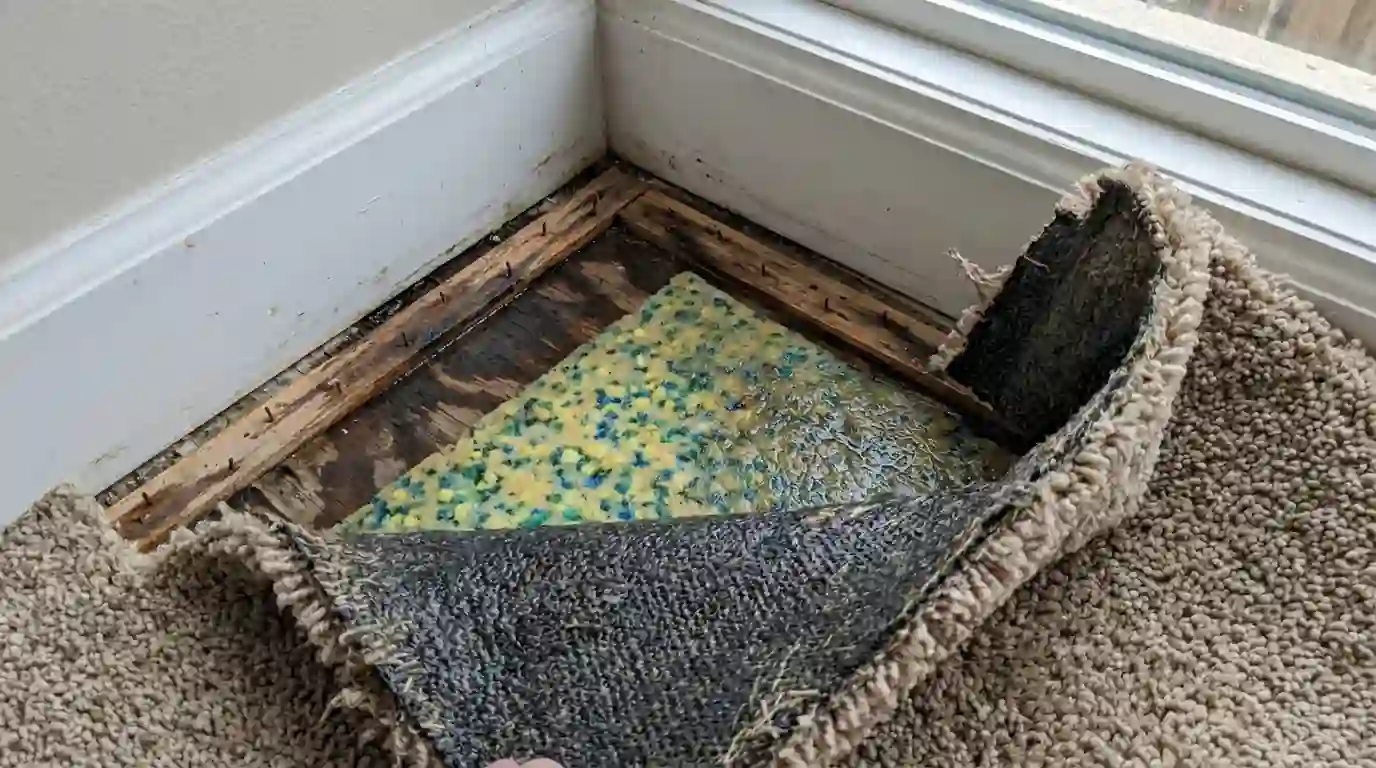
Wind-driven rain gets forced past window seals, sliding door tracks and door thresholds. The water often runs down inside the wall and appears as damp carpet along the wall below the window, or bubbling paint near the floor.
From the ground up
When yards slope toward the house or downspouts dump next to the foundation, runoff can push water through gaps at the edge of the slab or into a crawl space. Flash flooding through a garage or front door brings outside water, which is treated as contaminated, so carpet and pad it soaks usually come out.
Storm shelters sit lower than everything around them and can fill with rainwater in the same spring weeks you're most likely to need them.
Water line, open now
Storm water inside?
We'll cover what's open and dry what's wet.
What to check after a storm
Once it's safe, walk the house and the yard.
- Ceilings, especially under valleys, vents and chimneys
- The attic, with a flashlight, for wet insulation or decking
- Carpet along outside walls and below windows
- Door thresholds and the floor inside the garage door
- Your storm shelter or cellar
- Downspouts and the slope of the yard against the house
When the power goes out too
Storms that bring water in often take the power with them, and that changes the plan. Without power, air conditioning and dehumidifiers can't run, so the house can't start drying, and a closed-up house in warm weather gets humid fast.
Do what you can without power: get standing water out with towels and buckets, lift rugs and furniture, and open the house only if the air outside is drier than inside. Empty the freezer and refrigerator before ice melts onto the floor. Tell us when you call that the power is out, so the crew can plan around it or bring generator-powered equipment if the job calls for it.
Who does what after a storm
After a storm, three different trades are usually involved. A roofer or window company repairs the opening for good. Your adjuster decides what the policy covers. We cover openings temporarily, dry the inside, remove what can't be saved and document it all.
Getting the order right saves time: temporary cover first, drying second, permanent repairs once the structure is dry. If a roofer is booked out for weeks, a properly secured tarp keeps the house dry in the meantime.
Documenting storm damage for a claim
Storm claims move faster when the file is clear. Photograph the outside first: missing shingles, dented gutters and vents, broken windows, fallen limbs, all from the ground. Then the inside: ceiling stains, wet insulation if you can see it from the attic hatch, and water at windows and doors.
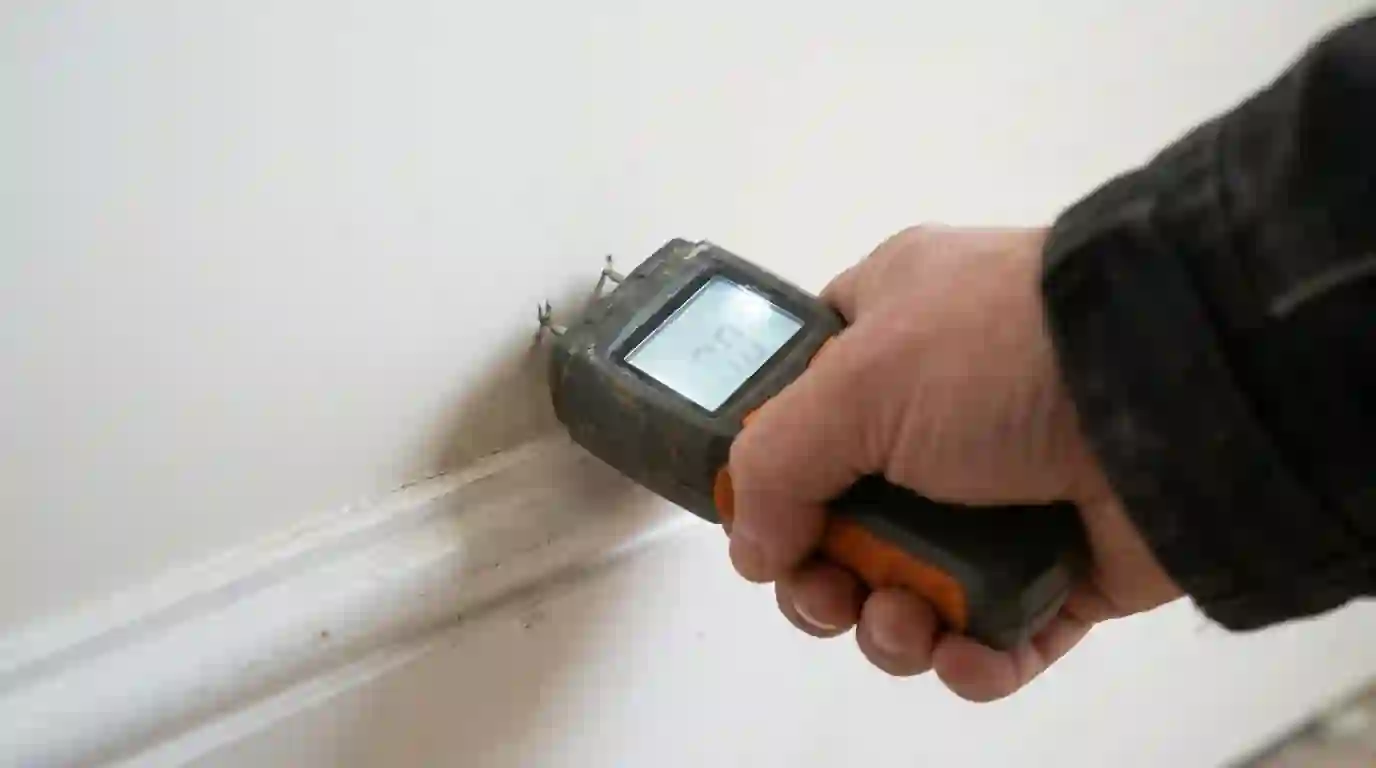
Write down the date and time of the storm, keep receipts for tarps or emergency repairs, and don't throw away damaged materials before your adjuster says it's fine. Moisture readings showing how far the water spread inside help explain why drying and repairs were needed.
Before the next storm
Clean gutters and make sure downspouts discharge well away from the foundation. Check window and door seals, and keep a tarp and a few boards on hand. Photograph the roof and the inside of the house now, so you have a before picture if a storm hits.
If a storm opens the roof or breaks a window, cover it as soon as it's safe, from inside if you can't safely get on the roof, and document it before cleanup.