Short answer
In the first hour after water damage in an Oklahoma City home, stop the source at the fixture valve or the main, cut power to wet rooms if the panel is dry, move rugs and wood furniture off wet floors, photograph everything, and call for extraction. Leave wet carpet, sagging ceilings and dirty water to the crew.
Stop the water first
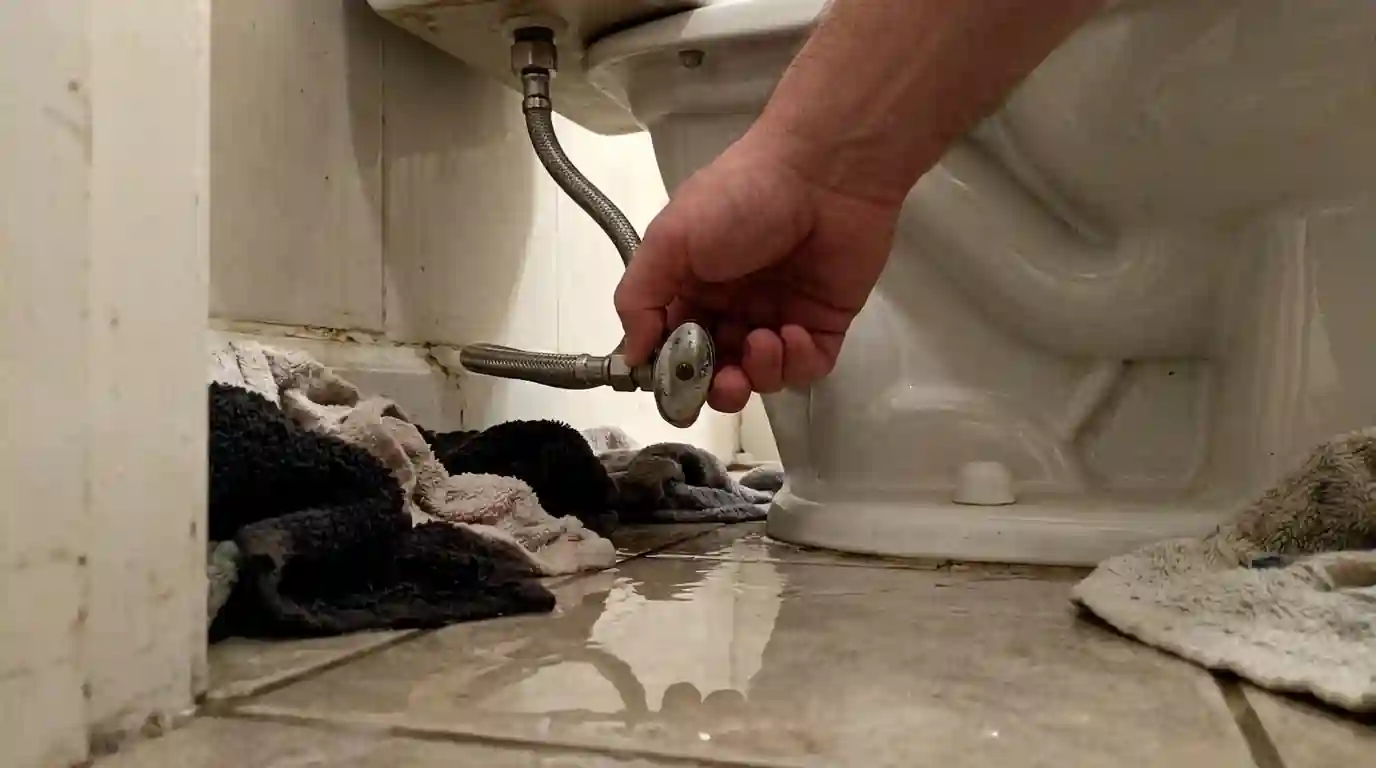
Everything else waits until the water stops. The fastest shutoff is usually the one closest to the leak: the oval valve behind a toilet, the two valves under a sink, the valves behind the washer, or the cold supply on top of a water heater.
If you can't find a fixture valve, or it won't turn, go to the main. In most Oklahoma City houses that means the meter box near the street, where a meter key or a wrench turns the house side of the meter, or a shutoff where the line enters the house in the garage or a utility closet. Older pier-and-beam homes sometimes have it under the house.
- Toilet: oval valve on the wall behind the bowl
- Sinks: two valves inside the cabinet
- Washer: hot and cold valves in the wall box
- Water heater: cold supply valve on top of the tank
- Whole house: the main at the meter or where the line enters
Make the house safe
Water and electricity are the real hazard. If outlets, cords or the electrical panel are wet, don't wade through standing water to reach them. If the panel is dry and you can reach it from a dry spot, switch off the breakers for the wet rooms.
Look up before you walk under anything. A ceiling holding water sags and can come down in one piece. Put a bucket and a tarp under the drip and keep people and pets out from under the bulge.
If the water came from a toilet with waste, a floor drain or a sewer backup, treat it as contaminated. Stop using water anywhere in the house and keep children and pets away from it.
Water line, open now
Water still coming in?
Call now. We'll stay on the line while you find the shutoff.
Move what water ruins fastest
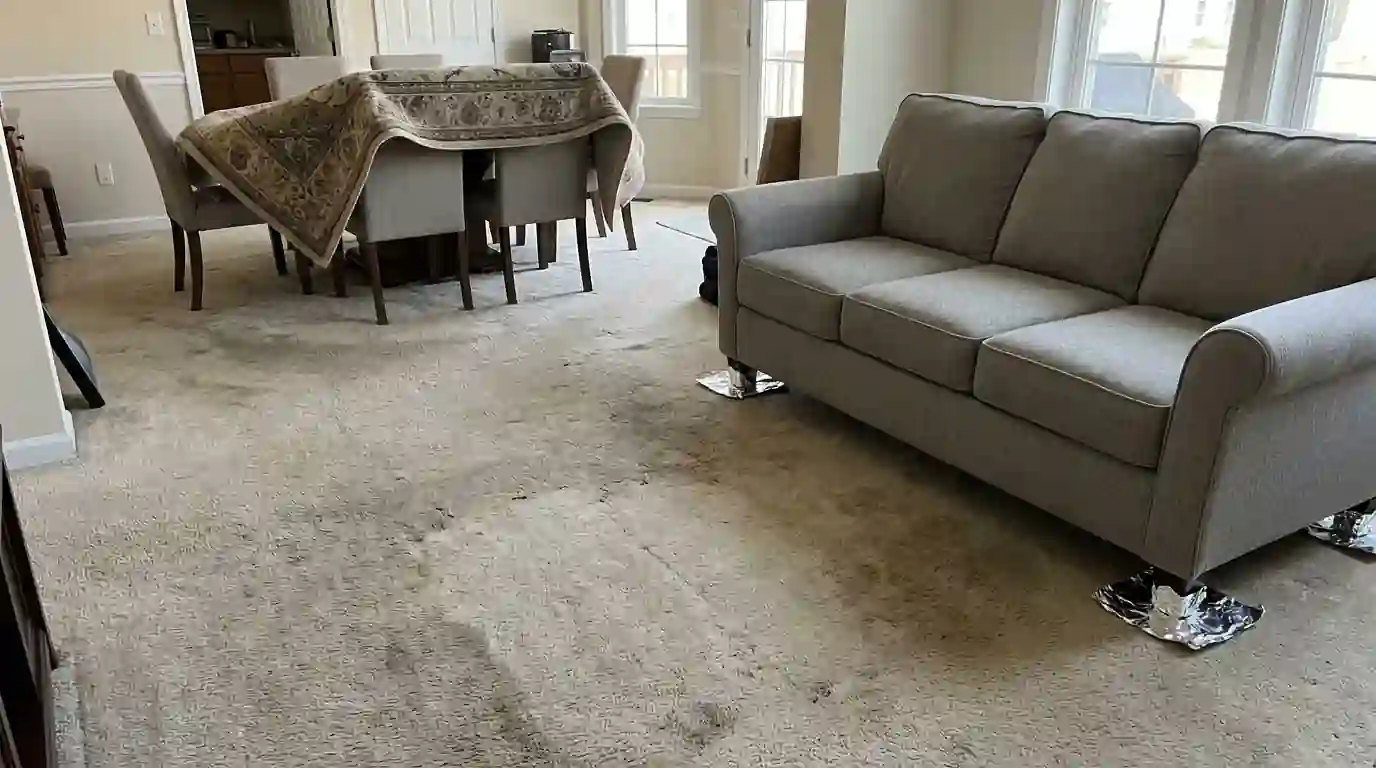
Some things are damaged in minutes, not days. Area rugs bleed dye into carpet, wooden furniture legs stain it, metal glides leave rust rings, and cardboard boxes collapse and wick water up into whatever is inside.
Lift rugs onto chairs or hang them, get electronics and cords off the floor, and move photos and papers to a dry room. For heavy furniture you can't move, slide foil, plastic lids or wood blocks under the legs.
Photograph before you clean
Before anything moves, take photos and a short video of every wet room: wide shots for context and close-ups of the damage. Photograph the source too, whether it's a split hose, a leaking tank or water coming under a door.
Keep the failed part, the plumber's invoice and anything you throw away, or at least a photo of it. If you file a claim, the adjuster will want to see what happened before cleanup changed it.
What to leave alone
Some well-meant moves make the job bigger. Pulling wet carpet back yourself can tear the backing off the tack strip, and then it can't be re-stretched. A household vacuum isn't built for water and can shock you. Fans on sewage-soaked materials spread contamination.
If water reached the air handler or ductwork, switch the HVAC off at the thermostat. Otherwise, leave it running; conditioned air helps drying.
- Don't pull up wet carpet yourself
- Don't use a household vacuum on water
- Don't poke a sagging ceiling unless you can do it safely with a bucket under it
- Don't run fans on sewage
- Don't paint, caulk or close anything up
If you rent, or the water came from next door
Renters should call the landlord or property manager right away, even at night, and still take the same first steps: shut off what you can reach, move your belongings and photograph everything. Your belongings are usually covered by your own renters policy, not the building's, so your photos matter.
If water is coming from the unit above or the house next door, knock or call the neighbor and the manager at the same time. The shutoff is in their unit, and every minute it runs adds to the ceiling and walls on your side.
If the water is coming through a ceiling
Ceiling leaks look worse than floor leaks and are more dangerous. Water pools on top of the drywall, and wet drywall gets heavy. A bulge that's growing can drop all at once, along with wet insulation.
Move furniture and electronics out from under it, put down a tarp and a bucket, and keep people clear. If you can safely reach it from a ladder with the bucket below, a small hole at the lowest point of the bulge lets it drain in a controlled way. If you're unsure, leave it for the crew.
If you're not home when it happens
Plenty of leaks are found by a neighbor, a property manager or a phone alert from a leak sensor while you're at work or out of town. If someone else is there, the first steps are the same: shut off the water at the fixture or the main, switch off power to wet rooms if the panel is dry, and take photos.
If nobody can get inside, call us anyway and tell us how to get access. When you get home, photograph the thermostat setting and anything that shows how long the water ran, such as the water line on drywall or the spread across the floor. Those details shape both the drying plan and the conversation with your insurer.
What happens when the crew arrives
The crew confirms the water is off, then walks every wet room with a moisture meter, often a thermal camera too, and photographs what they find. Standing water is extracted first, then carpet and pad.
By the end of the first visit you should have air movers and dehumidifiers running where the readings say, and a plain explanation of what's wet, what may need to come out, and when the next readings will be taken.