Short answer
Ice storms in Oklahoma City cause water damage in a few ways: ice-laden limbs fall through roofs, ice builds up along roof edges and gutters and backs water under shingles, and long power outages leave homes without heat, so pipes freeze and nothing can dry. Cover openings first, protect pipes, and start drying as soon as power returns.
What an Oklahoma ice storm looks like
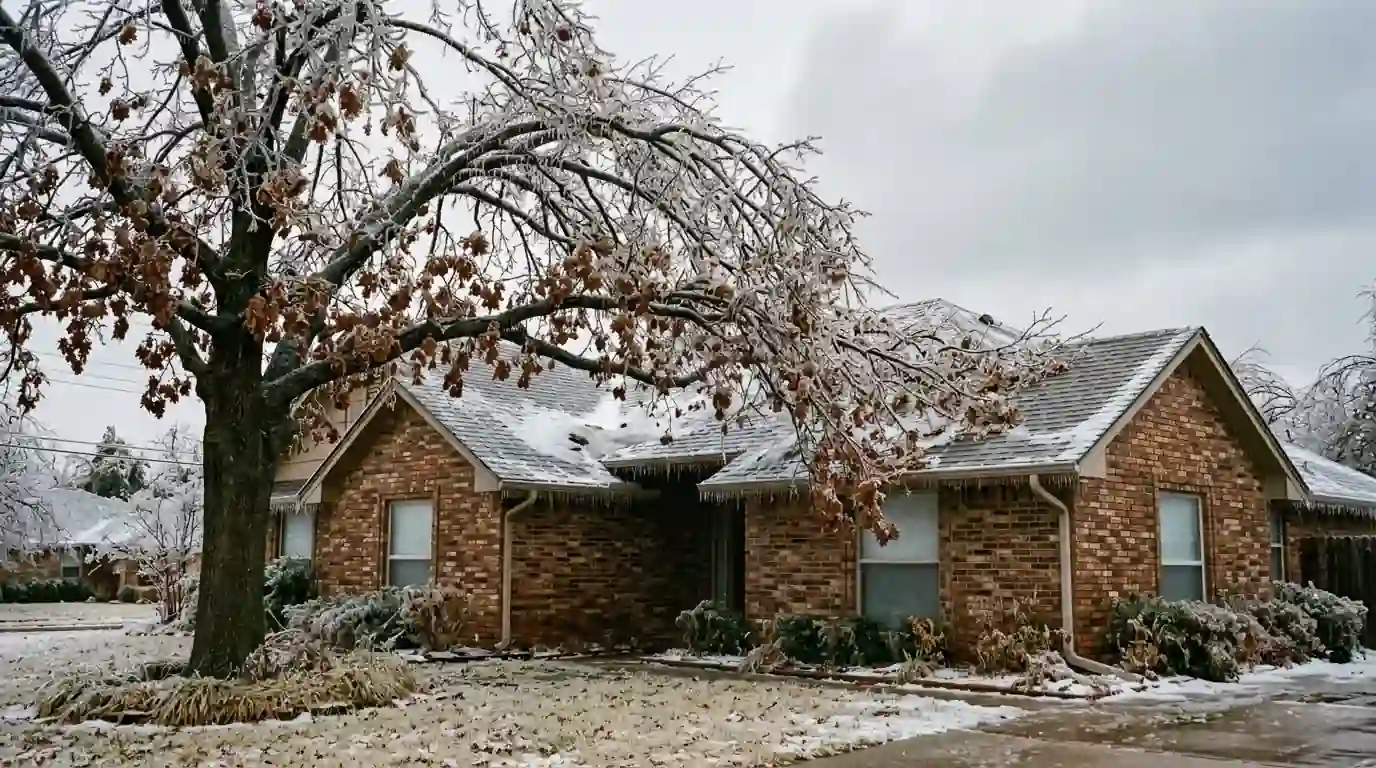
Oklahoma's ice storms can be severe even though the state doesn't see them every winter. The October 2020 storm was the earliest ice storm on record in Oklahoma, with up to a half-inch of ice forecast near and southwest of Oklahoma City while trees still had their leaves. The leaves held extra ice, and limbs came down across the metro.
That storm left about 615,000 Oklahomans without power, including 445,000 OG&E customers, nearly 60 percent of the utility's Oklahoma customers. Outages measured in days are what turn a small leak into a big one.
Limbs through the roof
The most dramatic damage is a limb through the roof. Ice can add a lot of weight to branches, and a limb that lands on the house can crack decking or punch straight through, opening the attic to melting ice and the next rain.
Once a tree service has the weight off safely, the opening needs a tarp or framed cover right away. Inside, the attic insulation and ceiling below are usually wet, and debris has come in with the limb.
Ice along the roof edge
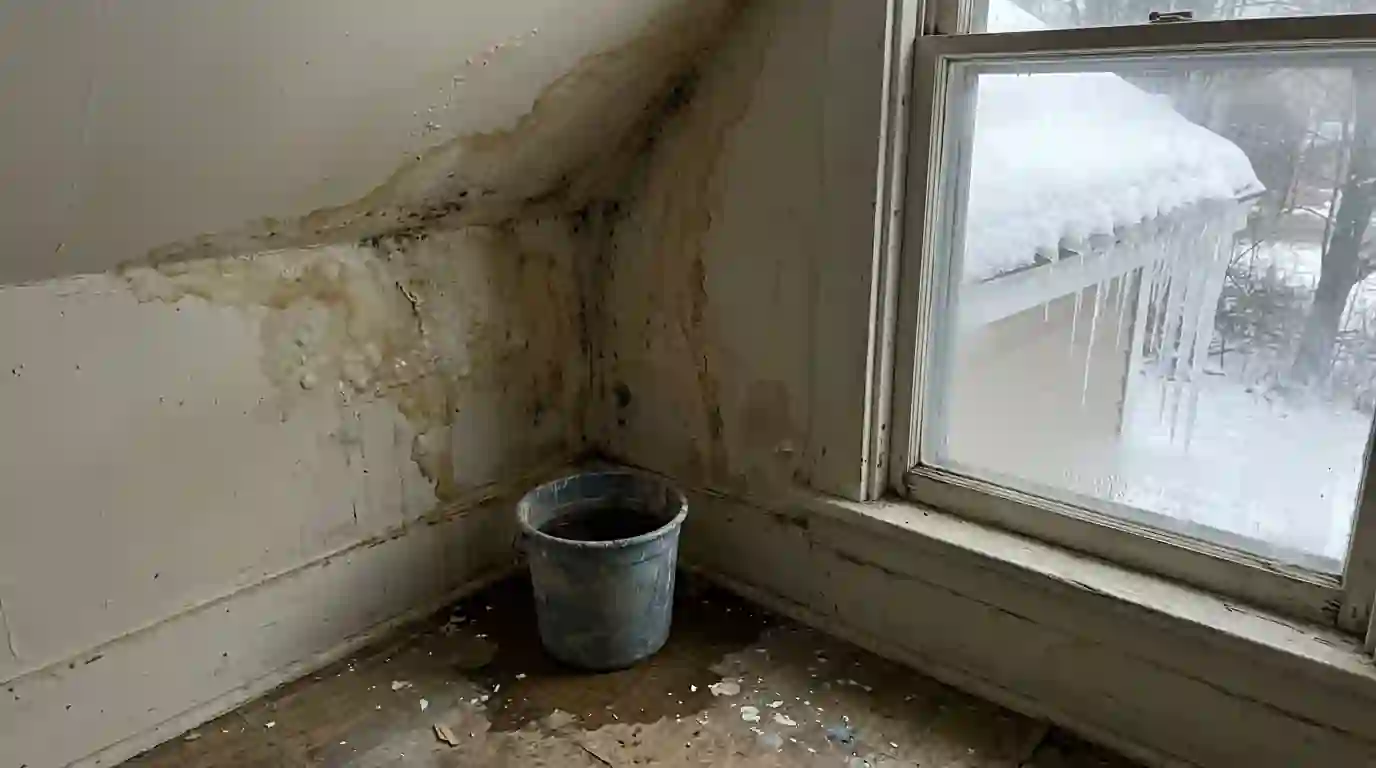
Ice that builds up in gutters and along the eaves can hold back meltwater on the roof. When it melts during the day and refreezes at night, water can back up under shingles at the edge and show up inside as a damp ceiling along an exterior wall or a stain at the top of a window.
These leaks usually stop once the ice clears, but the wet insulation and drywall they leave behind don't dry on their own in a cold attic.
When the power goes out for days
Without power, there's no heat, and without heat, pipes in outside walls, attics, garages and crawl spaces can freeze. Without power there's also no drying: dehumidifiers and air movers can't run, and a wet room just sits.
- Shut off and drain the water if the house will be cold for days
- Open cabinet doors under sinks on outside walls while there's still some heat
- Never use a grill, camp stove or generator indoors
- Move belongings away from any drip and catch water in buckets
- Tell us when you call that the power is out, so the crew can plan around it
Water line, open now
Limb through the roof or a pipe burst after the outage?
Call the water line. We'll cover the opening and start drying as soon as there's power.
When the power comes back
The first warm hours after power returns are when frozen pipes start leaking, so walk the house, look and listen, especially near outside walls and in the garage.
If anything got wet during the outage, call promptly. Water that sat for days in a cold house may not have grown mold yet, but it will start quickly once the heat is back on.
Who handles what after an ice storm
Several trades end up involved. A tree service removes limbs from the roof and yard. If the limb tore the power line or the mast where it attaches to the house, OG&E noted after the 2020 storm that damage to the weather head, service cable or meter socket has to be repaired by an electrician before power can be reconnected.
A roofer makes the permanent roof repair, a plumber fixes any pipe that froze, and we cover openings, extract, remove wet insulation and drywall, and dry the house. Getting the order right, cover first, dry next, repair last, keeps the bill from growing.
Getting ready for the next one
Before winter, have overhanging limbs looked at by a tree service, clean gutters so ice has somewhere to drain, and know where your main water shutoff is. Insulate pipes in garages and crawl spaces, and keep a tarp, a flashlight and a battery radio where you can find them in the dark.